Mom's Best Recipes
Recipe

Ultimate Mongolian Beef Recipe

Crispy-edged steak in a glossy, garlicky brown-sugar soy sauce that clings to every bite. Faster than takeout, louder in flavor.

Author By Matt Campbell
4.8
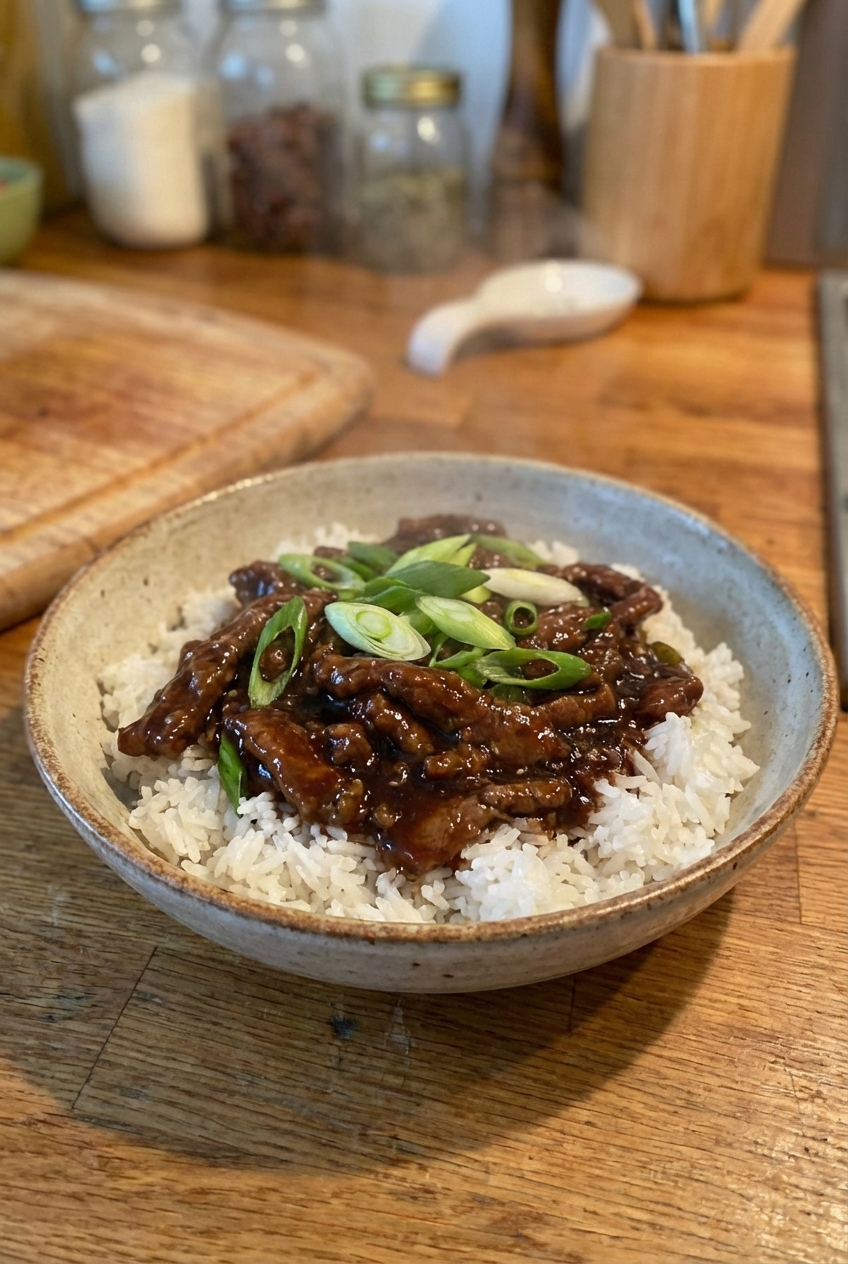
A bowl of Mongolian beef with glossy dark sauce, sliced flank steak, and green onions served over white rice on a wooden table

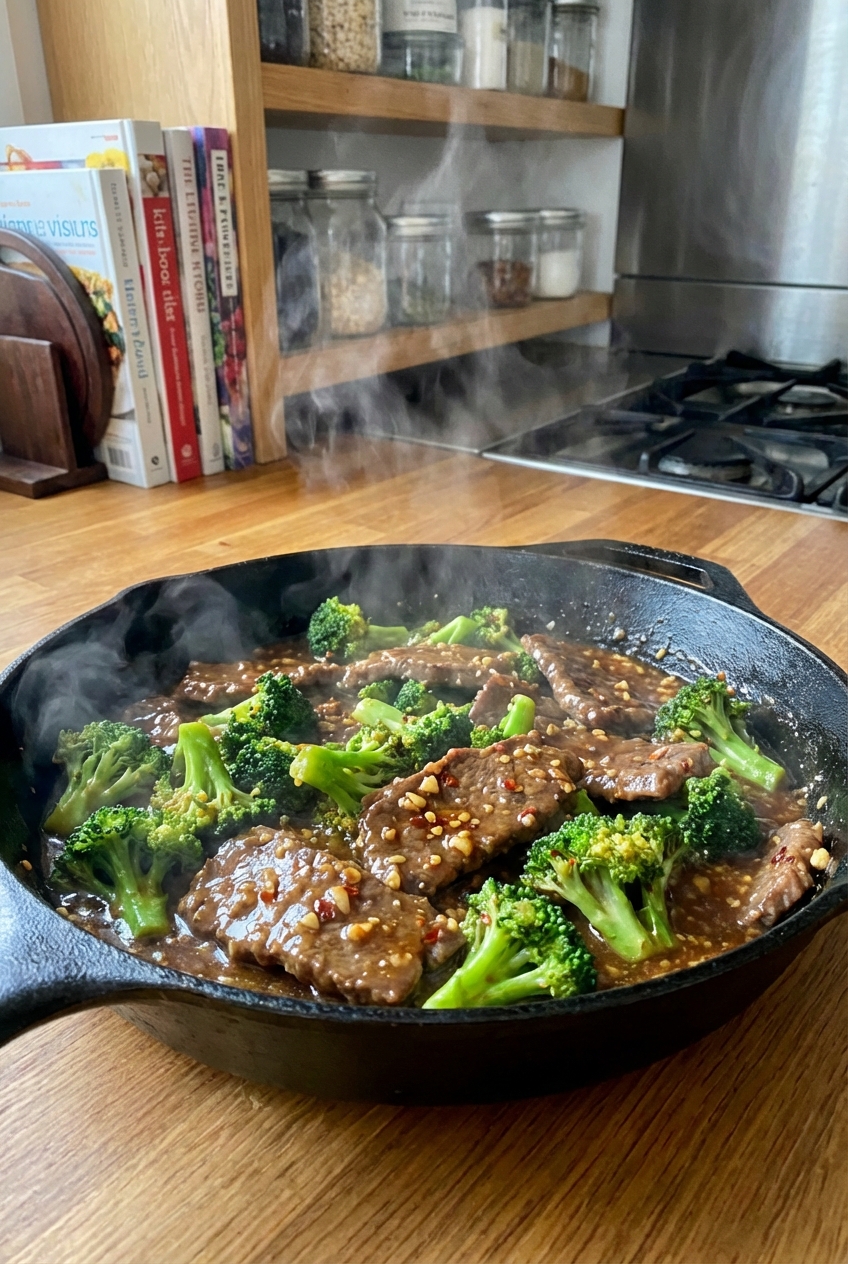
Mongolian beef is one of those restaurant staples that feels like a magic trick: tender beef, caramelized sauce, and that sweet salty punch that makes you go back in for “just one more” bite. The good news is the trick is totally doable at home, and you do not need a wok the size of a satellite dish to pull it off.

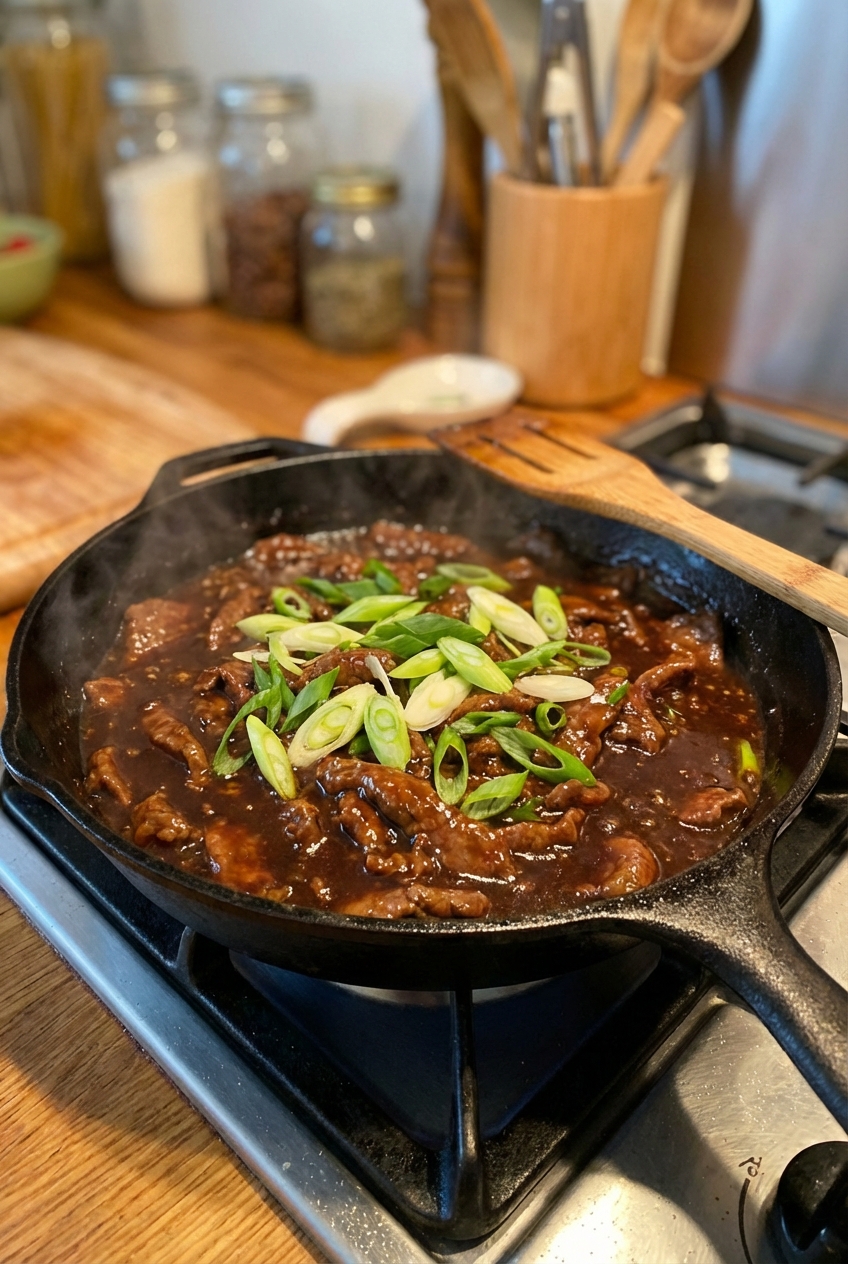
This version is rich, savory, and glossy, with crisp edges on the beef and a sauce that grabs onto everything in the pan. It is weeknight-friendly, but it still has that “I made something serious” energy. We are using a quick cornstarch coating for texture, a short high-heat sear, and a sauce built around soy, brown sugar, ginger, and a little heat if you want it.
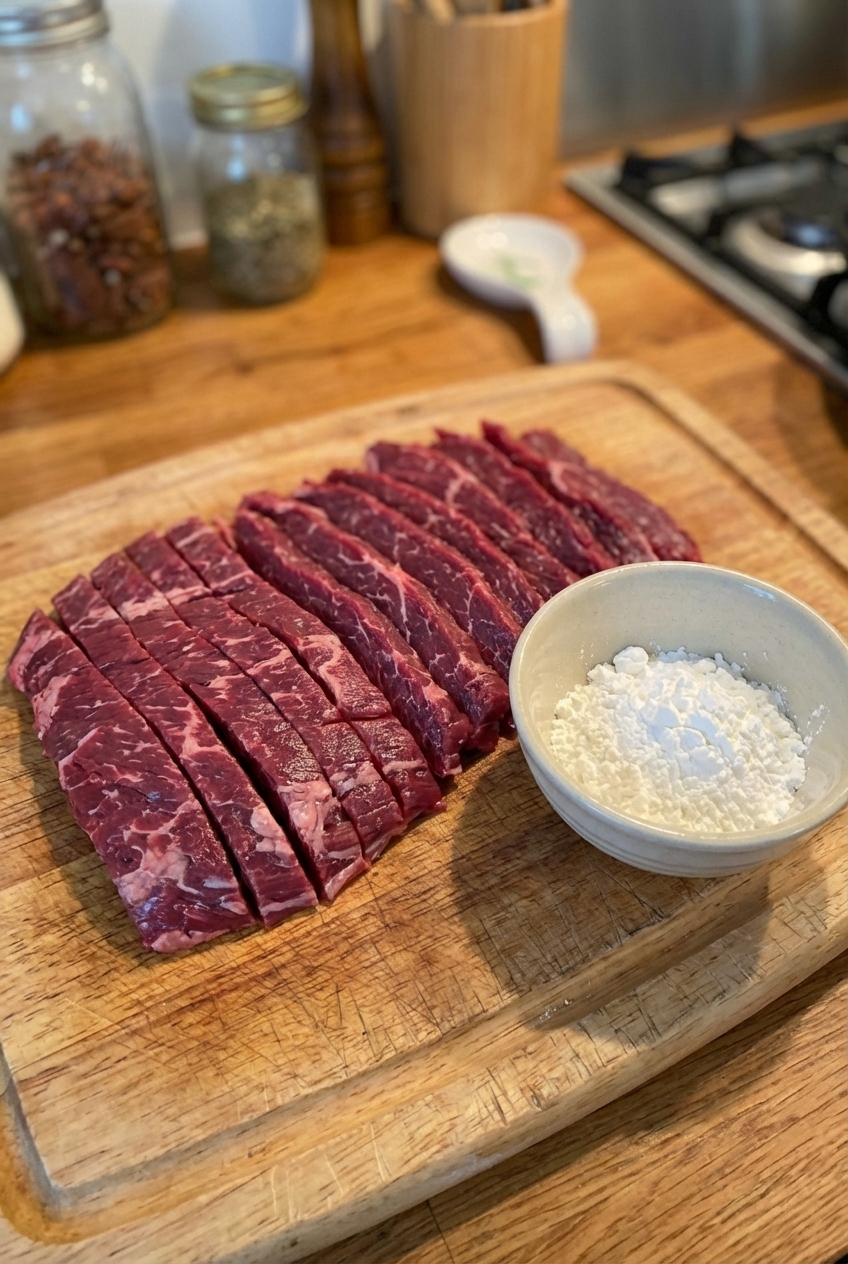
Thinly sliced raw flank steak on a cutting board with a small bowl of cornstarch nearby

Why It Works

  • Crisp edges, tender center: A light cornstarch coating plus a fast sear gives you that signature takeout texture without deep frying.
  • A sauce that actually clings: A quick simmer to dissolve the sugar, plus a little starch from the beef coating, creates that shiny glaze instead of a puddle.
  • Big flavor, simple pantry: Soy sauce, brown sugar, garlic, and ginger do the heavy lifting. Hoisin is optional, but it adds a little extra depth.
  • Controlled sweetness: You get that classic caramel vibe, but it stays balanced with vinegar and aromatics so it tastes savory first.

Pairs Well With

Storage Tips

Refrigerate: Store Mongolian beef in an airtight container for up to 3 to 4 days. Keep rice separate if you can so everything reheats more evenly.

Reheat: Best move is a skillet over medium heat with a small splash of water to loosen the sauce. Microwave works too, but do it in short bursts and stir so the sugar sauce does not over-reduce.

Freeze: You can freeze it for up to 2 months, but the coating will soften after thawing. Thaw overnight in the fridge, then reheat in a skillet and add fresh scallions at the end to wake it back up.

Common Questions

What cut of beef is best for Mongolian beef?

Flank steak is the classic because it stays beefy and tender when sliced thin against the grain. Skirt steak also works. If you want a more budget-friendly option, use sirloin and keep the slices thin.

How do I slice the beef so it is tender?

Slice across the grain into thin strips. If the steak is wiggly, pop it in the freezer for 15 to 20 minutes to firm up, then slice. Your knife will behave and your beef will chew like a dream.

Is Mongolian beef spicy?

Typically it is more sweet-savory than spicy. In this recipe, the heat is optional. Add red pepper flakes or a spoon of chili crisp if you want it to hum a little.

Can I make it gluten-free?

Yes. Use tamari or gluten-free soy sauce. Also double-check your hoisin if you use it, since many brands contain wheat.

Why is my sauce too thick or too thin?

Too thick: Add a splash of water or broth and stir over low heat until glossy again. Too thin: Let it bubble a little longer after you add the beef. The sauce tightens up fast once the cornstarch from the coating hits the liquid.

The first time I tried making Mongolian beef at home, I treated it like any other stir-fry. I tossed everything in the pan at once and ended up with beef that was fine, but not that beef. The kind you get in restaurants with crisp edges and a sauce that sticks like it has something to prove.

So I started cooking it like I actually wanted it: hot pan, quick sear in batches, aromatics bloomed in the oil, sauce added at the end, and scallions like confetti. It turned into one of my favorite “I need comfort but I also need speed” dinners. The best part is how forgiving it is. Even if you are a little chaotic in the kitchen, this one still comes out glossy and bold.