Mom's Best Recipes
Recipe

Ultimate Roasted Chicken

Crisp skin, juicy meat, and a rich pan sauce you will want to spoon over everything. A reliable roast chicken with big flavor and low drama.

Author By Matt Campbell
4.9
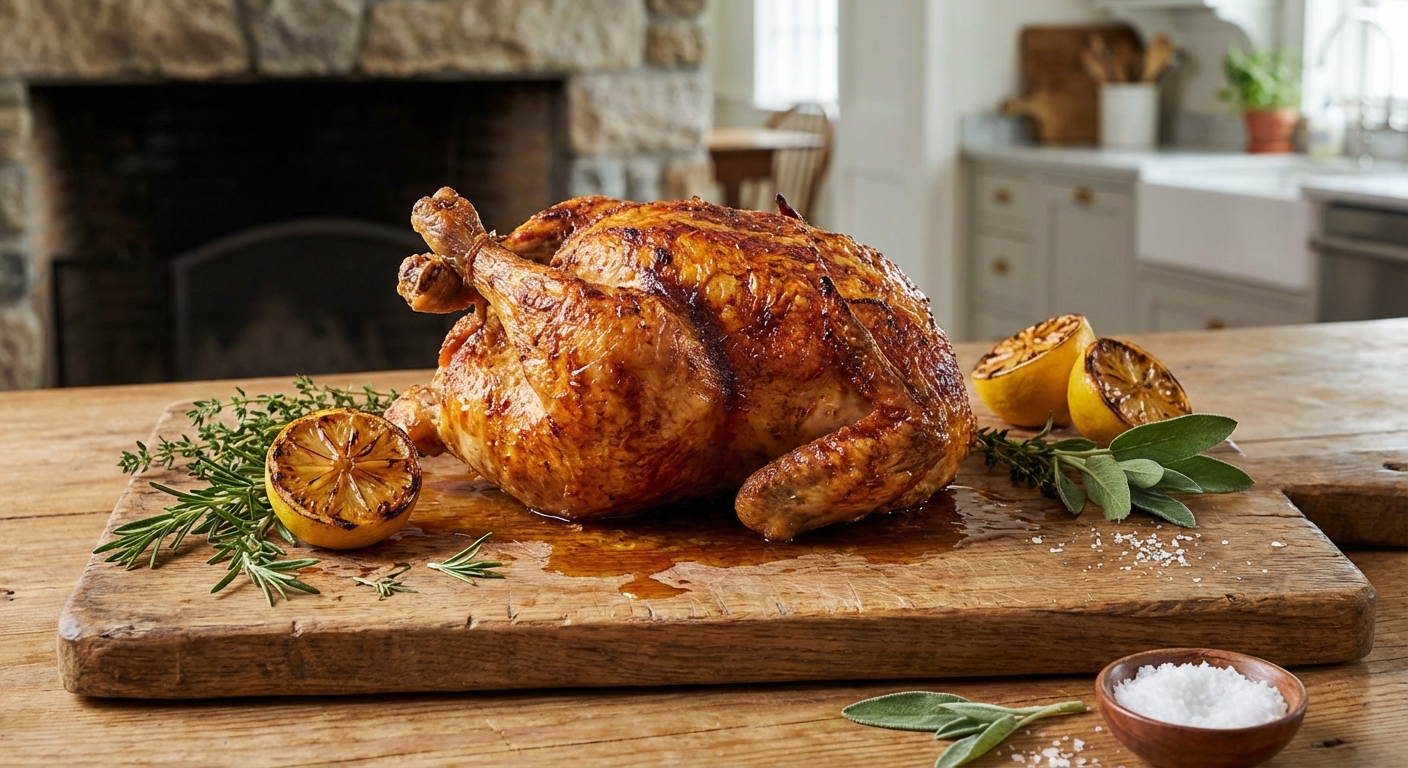
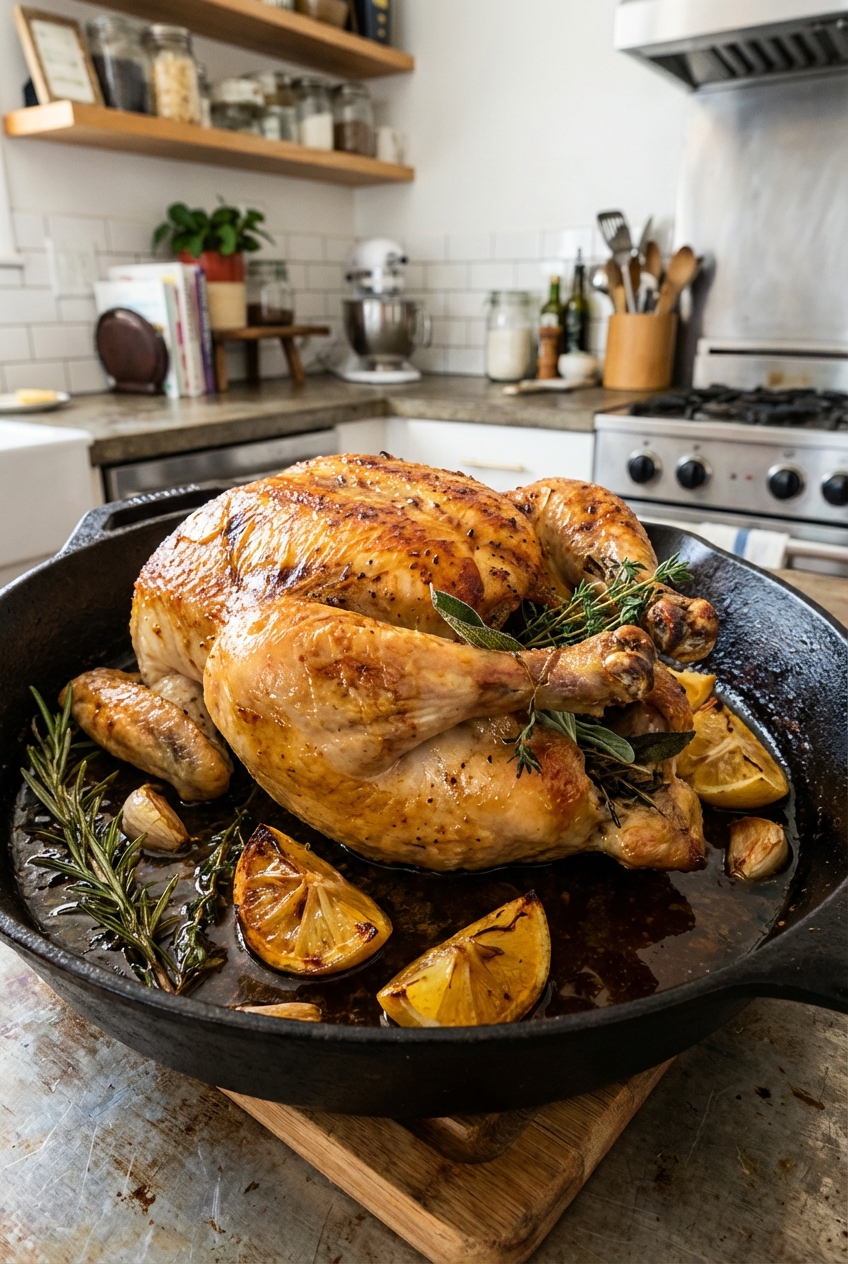
A golden roasted whole chicken in a cast iron skillet with herbs and lemon, surrounded by pan juices

Roast chicken is one of those dishes that feels like you did something, even when it was mostly your oven doing the heavy lifting. This version is my go-to when I want crackly, salty skin, tender meat that actually stays juicy, and a pan sauce that tastes like you spent all day building it.

The vibe here is simple: dry the bird, season it like you mean it, roast it hot enough to get crisp edges, then turn the drippings into a glossy, savory sauce. No fussy brining schedule required. Just smart steps that stack flavor fast.

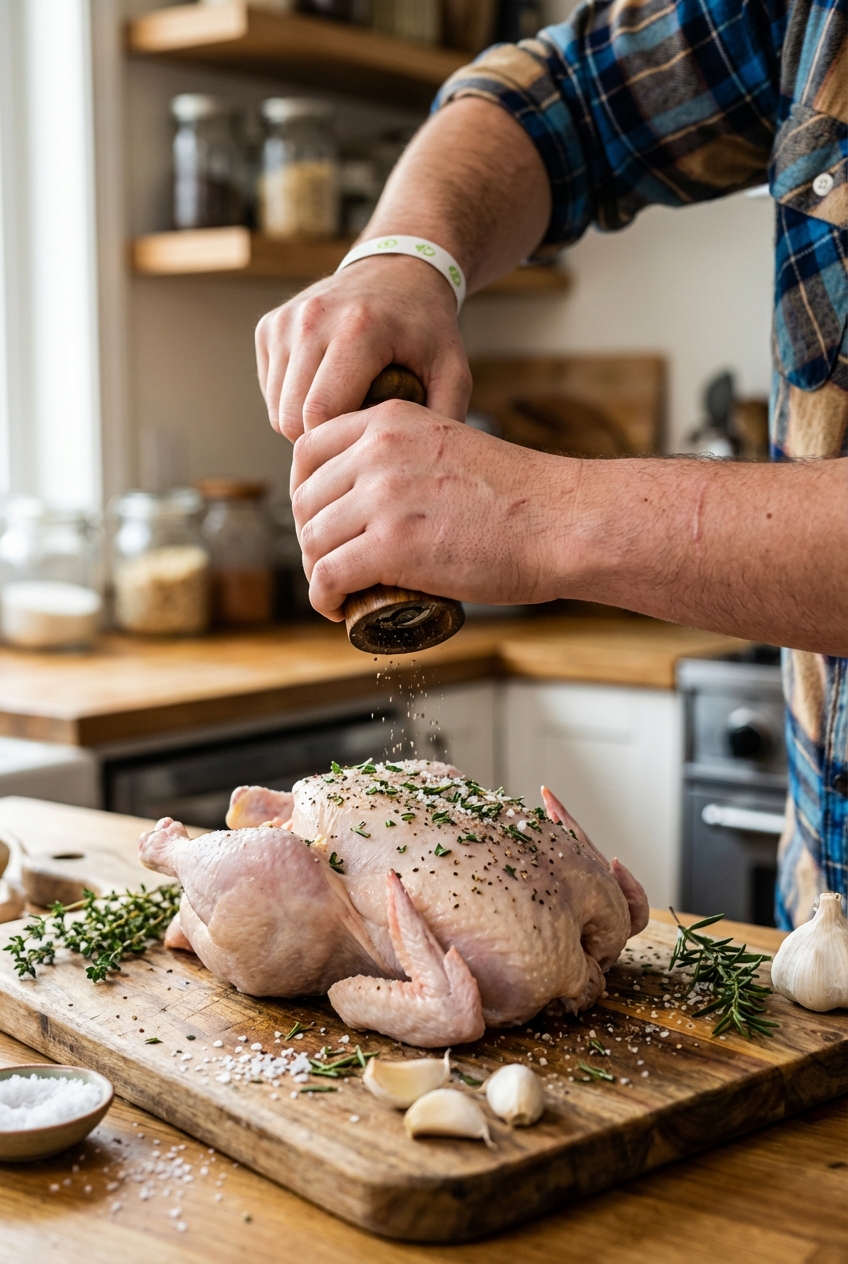
Hands seasoning a whole chicken on a cutting board with salt, pepper, garlic, and herbs

Why It Works

  • Dry skin equals crisp skin. A quick pat-down and a little air-dry time in the fridge makes a bigger difference than most fancy tricks.
  • Herb butter under the skin. It bastes the breast meat from the inside while the outside browns like a champ.
  • Hot start, steady finish. High heat jumpstarts browning, then we let the chicken cook through without drying out.
  • Pan sauce from real drippings. Deglaze, reduce, finish with a little cold butter if you want that glossy, restaurant energy.
  • Resting is not optional. Ten to fifteen minutes lets the juices redistribute so your cutting board does not become a soup bowl.

Pairs Well With

Storage Tips

Keep It Juicy Tomorrow

  • Refrigerate: Cool leftover chicken within 2 hours. Store in an airtight container for up to 4 days.
  • Freeze: Pull meat off the bones, wrap well, and freeze up to 3 months. Freeze pan sauce separately in a small container.
  • Reheat (best method): Add chicken and a splash of broth (or water) to a covered baking dish. Warm at 325°F until hot. This keeps it moist.
  • Reheat (quick method): Slice chicken, microwave at 50 to 70% power with a damp paper towel over the top.
  • Bonus move: Simmer the carcass with onion, celery, and a bay leaf to make an easy stock. It tastes like you planned ahead.

Common Questions

Common Questions

What internal temperature should roasted chicken be?

For safety, aim for 165°F in the thickest part of the breast. For best texture, the thigh is usually happiest around 175°F to 185°F (it gets more tender and less chewy there).

Best practice is to check both breast and thigh when you can. If you only check one spot, the thigh near (but not touching) the bone is a solid indicator that the dark meat is done, but the breast can still lag behind in some ovens. When in doubt, check both.

Do I need to rinse the chicken?

No. Rinsing can splash bacteria around your sink. Just pat the chicken very dry with paper towels and wash your hands and surfaces well.

How do I keep the breast from drying out?

Three things help the most: herb butter under the skin, not overcooking, and resting before carving. A thermometer is your best friend here.

Can I roast it without a rack?

Yes. A cast iron skillet or roasting pan works great. If you want more airflow, set the chicken on a bed of thick-sliced onions and carrots. It acts like a veggie rack and tastes incredible later.

Why is my skin not crispy?

Usually one of these: the chicken was not dry enough, your oven runs cool, or the pan was overcrowded with wet vegetables. Pat dry, roast hot, and keep the pan relatively uncluttered.

Can I use dried herbs instead of fresh?

Absolutely. Use about one-third the amount of dried herbs compared to fresh (dried is more concentrated). For this recipe, dried thyme and rosemary work well.

Do I need to truss the chicken?

Not required, but it helps. Trussing (tying the legs together and tucking the wings) makes the bird a little more compact, which can cook more evenly and keep the wing tips from overbrowning. If you skip it, just tuck the wing tips under the chicken so they do not burn.

I chased “perfect roast chicken” the way some people chase a perfect playlist. I tried the complicated versions, the super precise ones, and the ones that somehow needed three different ovens. The method that stuck was the one that felt like a friend cooking next to you: dry the bird, season boldly, roast it hot, and do not waste those pan drippings.

This is the chicken I make when I want the house to smell like Sunday, even if it is a random Tuesday. And if the sauce ends up getting spooned over noodles later, that is not an accident. That is the plan.