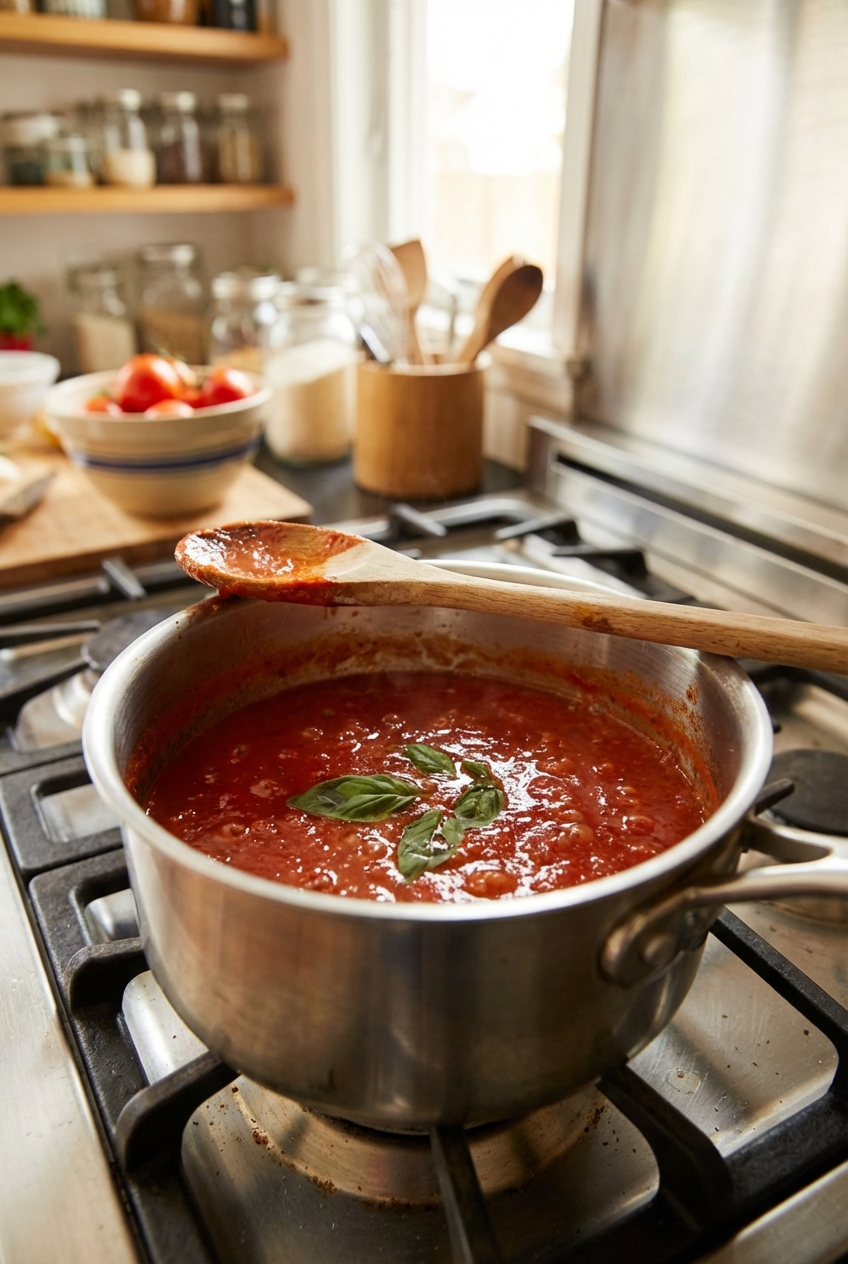
Whip up a modern marinara sauce in minutes with pantry staples and bold tomato flavor. Perfect for pasta, pizza, meatballs, dipping, and easy weeknight meals.
Ricotta has a reputation for being “that soft white cheese” you buy once for lasagna and then forget in the back of the fridge. Not today. This is the ultimate ricotta situation: plush, warm, and savory, with enough seasoning to make you swipe the spoon through it like it owes you money.
We are making a homemade ricotta that feels a little fancy but is actually very low drama. It is just milk, cream, an acid, and salt. Then we take it from mild to memorable with olive oil, lemon zest, herbs, and pepper. Use it on toast, fold it into pasta, dollop it onto soup, or eat it straight from the bowl while pretending you are “tasting for quality.”