Mom's Best Recipes
Recipe

Comforting Bok Choy Recipe

Tender bok choy in a gingery garlic broth with a lightly glossy soy sesame finish. Fast, cozy, and perfect over rice or noodles.

Author By Matt Campbell
4.8
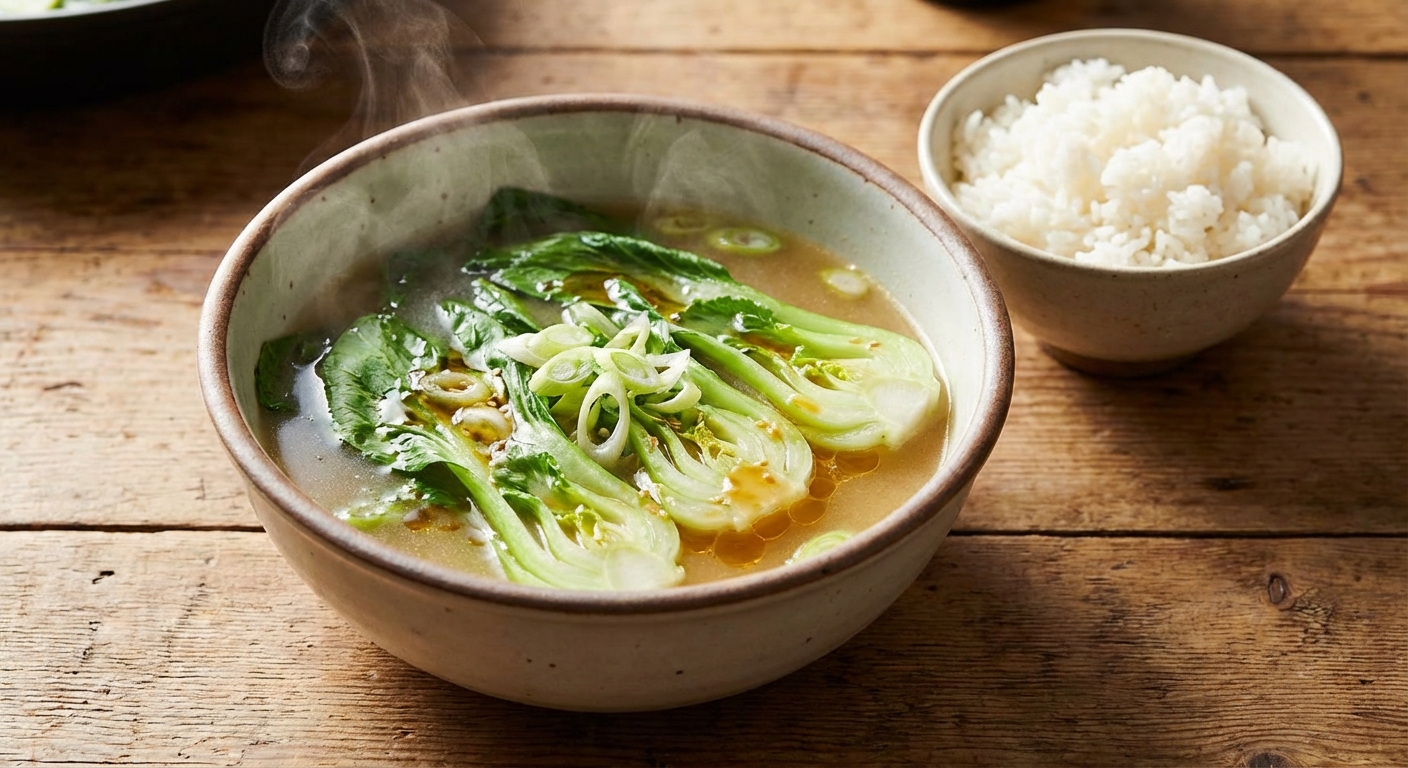
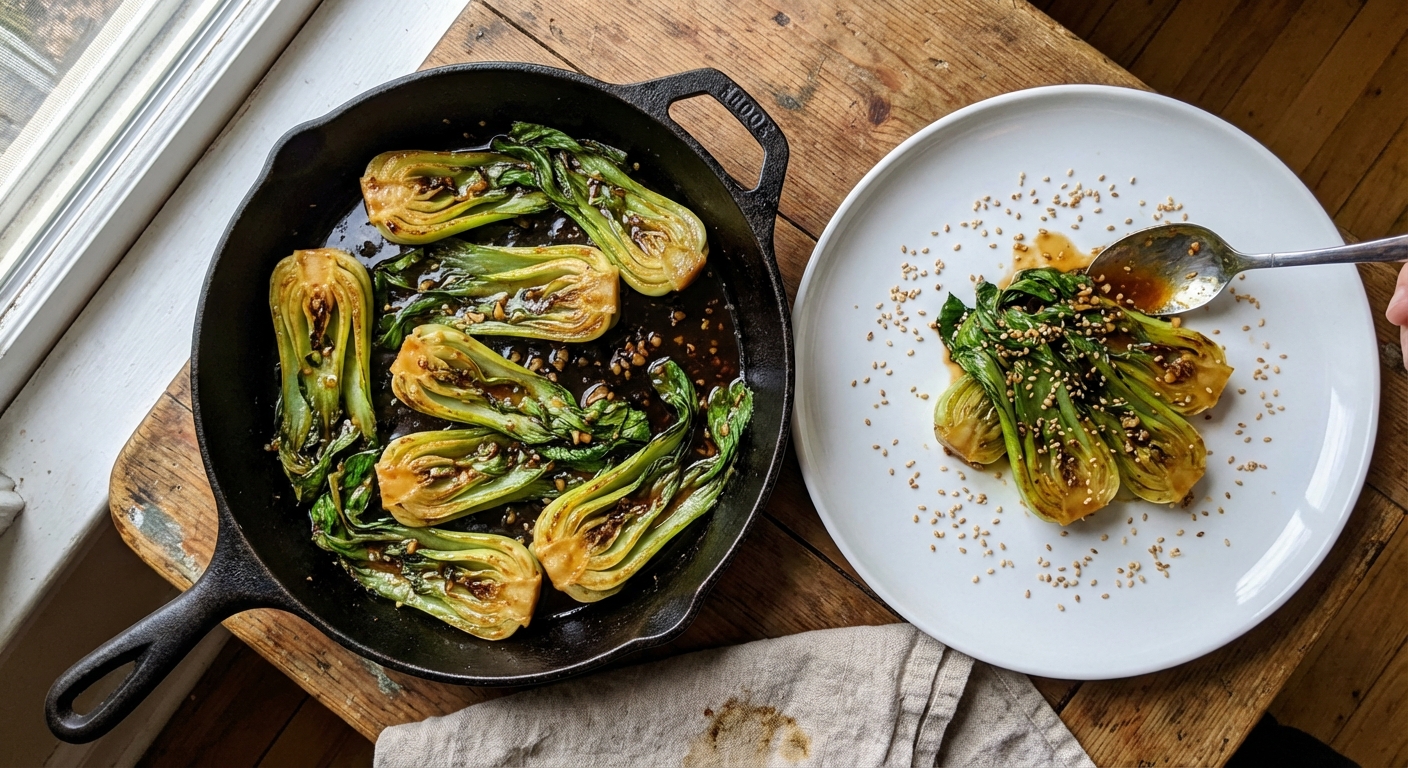
A steaming bowl of bok choy in a gingery garlic broth with sesame oil and sliced scallions, served with rice on a wooden table

Bok choy has a reputation for being “healthy stir-fry stuff,” which is true, but also deeply unfair. When you treat it like comfort food, it shows up like comfort food. The stems turn sweet and juicy, the leafy parts go silky, and the whole pan smells like ginger and garlic doing the most.

This warm and cozy bok choy is my go-to when I want something soothing but not bland. It is basically a quick broth plus a brothy, lightly glossy sauce situation, and it comes together faster than deciding what to watch while you eat. If you can chop, stir, and taste as you go, you have got this.
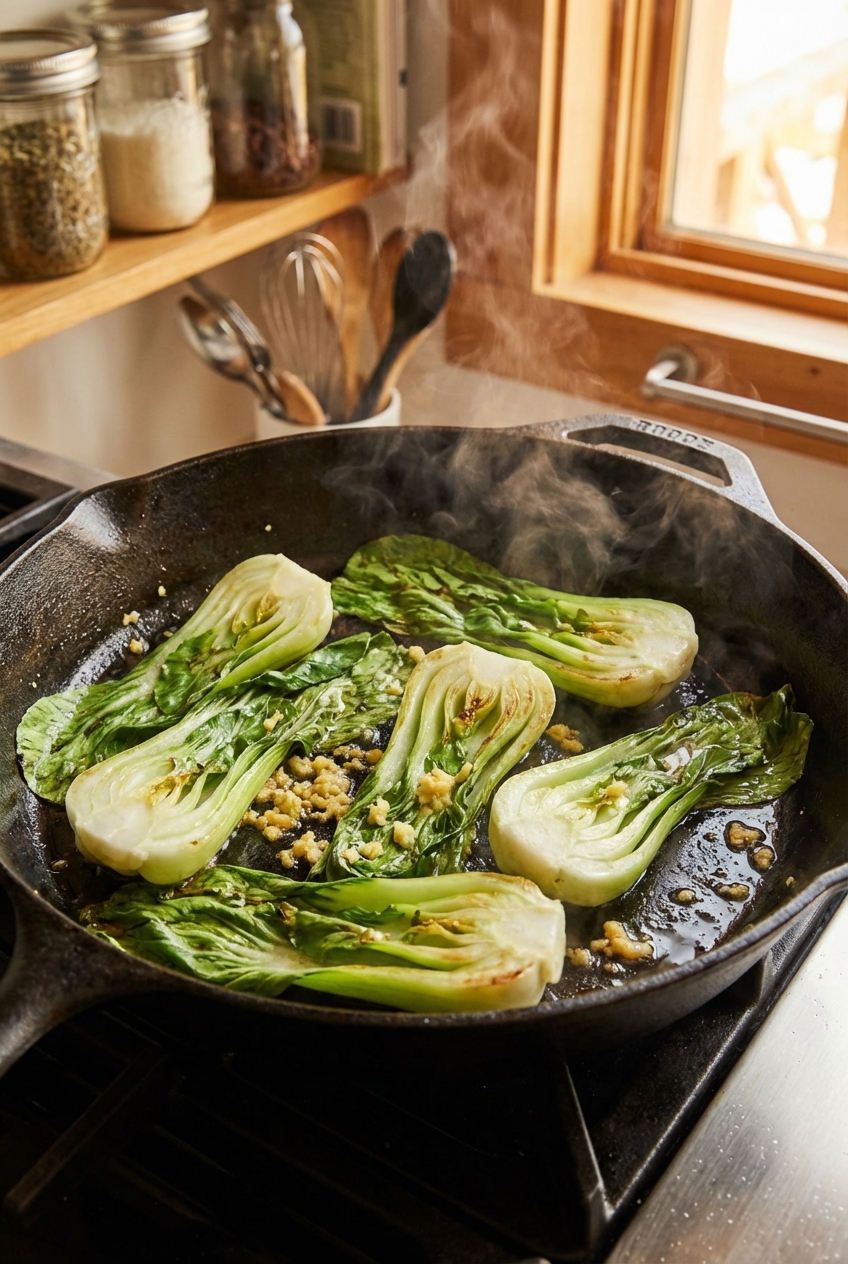

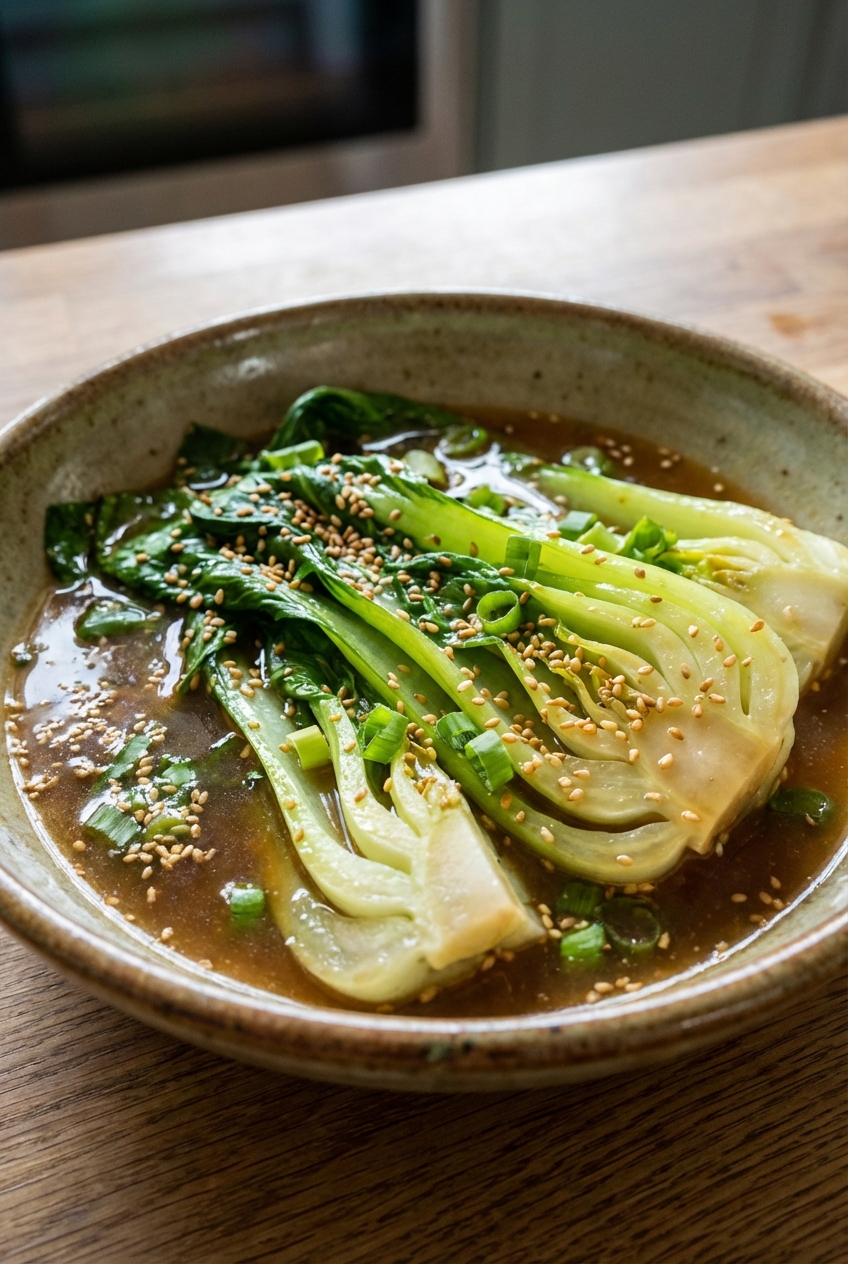
Bok choy halves and chopped ginger cooking in a shallow skillet with light steam rising

Why It Works

  • Cozy, slurpable broth: A gingery garlic base that tastes like you tried harder than you did.
  • Perfect texture: Crisp-tender stems, soft leaves, zero sad sog.
  • Big flavor with pantry staples: Soy sauce, sesame oil, and a tiny hit of sweetness to round it out.
  • Weeknight flexible: Serve it as a side, make it a bowl meal, or add protein without changing the method.

Pairs Well With

Storage Tips

Storage Tips

Fridge: Cool promptly and refrigerate within 2 hours. Store leftovers in an airtight container for up to 3 days. Keep as much bok choy submerged in the broth as possible to prevent drying out.

Reheat: Warm gently in a saucepan over medium-low heat until steaming. If the sauce tightened up, splash in 1 to 2 tablespoons water or broth and stir.

Freezing: I do not recommend freezing. Bok choy turns watery and limp after thawing. If you want to prep ahead, mix the sauce ingredients and chop aromatics, then cook fresh.

Common Questions

Common Questions

What kind of bok choy should I buy?

Either works. Baby bok choy is sweeter and cooks fast. Regular bok choy is bigger and needs a minute or two longer for the stems. Look for firm pale stems and dark green leaves with no slimy spots.

How do I clean bok choy without grit?

Keep the heads intact so you can still sear them later. Trim just the dry end of the base (do not cut so far up that the leaves fall apart), then halve lengthwise. Swish the halves in a big bowl of cold water, gently fanning the layers so any sand can float out. Lift the bok choy out, do not pour, so the grit stays behind. Repeat if your bowl looks like beach day. If the leaves are extra sandy, rinse between layers without fully separating the head.

Can I make it spicy?

Absolutely. Add chili crisp at the end, or sauté 1 to 2 teaspoons gochugaru with the garlic and ginger. You can also stir in a little sriracha with the sauce.

What protein can I add?

Sliced chicken thighs, shrimp, tofu cubes, or an egg on top all work. If adding raw meat, sear it first, remove it, then cook the bok choy and return the protein at the end to warm through.

Why did my bok choy turn mushy?

Two usual suspects: the pan was not hot enough, or it cooked too long. Keep it at a gentle simmer, not a rolling boil, and pull it as soon as the stems are crisp-tender. The leaves will keep softening off the heat.

The first time I really fell for bok choy was on a cold, empty fridge kind of night. I had rice, a lonely knob of ginger, and a bundle of baby bok choy that I bought with good intentions. Ten minutes later, the kitchen smelled like something you would walk past in a tiny noodle shop, and I was eating straight from the pan like it was a blanket. Now it is one of my favorite ways to make a vegetable feel like dinner.