Mom's Best Recipes
Recipe

Warm & Cozy Pickles

Buttery, garlicky dill pickles warmed on the stove until they turn extra juicy and ridiculously snackable. A comfort-food side you didn't know you needed.

Author By Matt Campbell
4.8
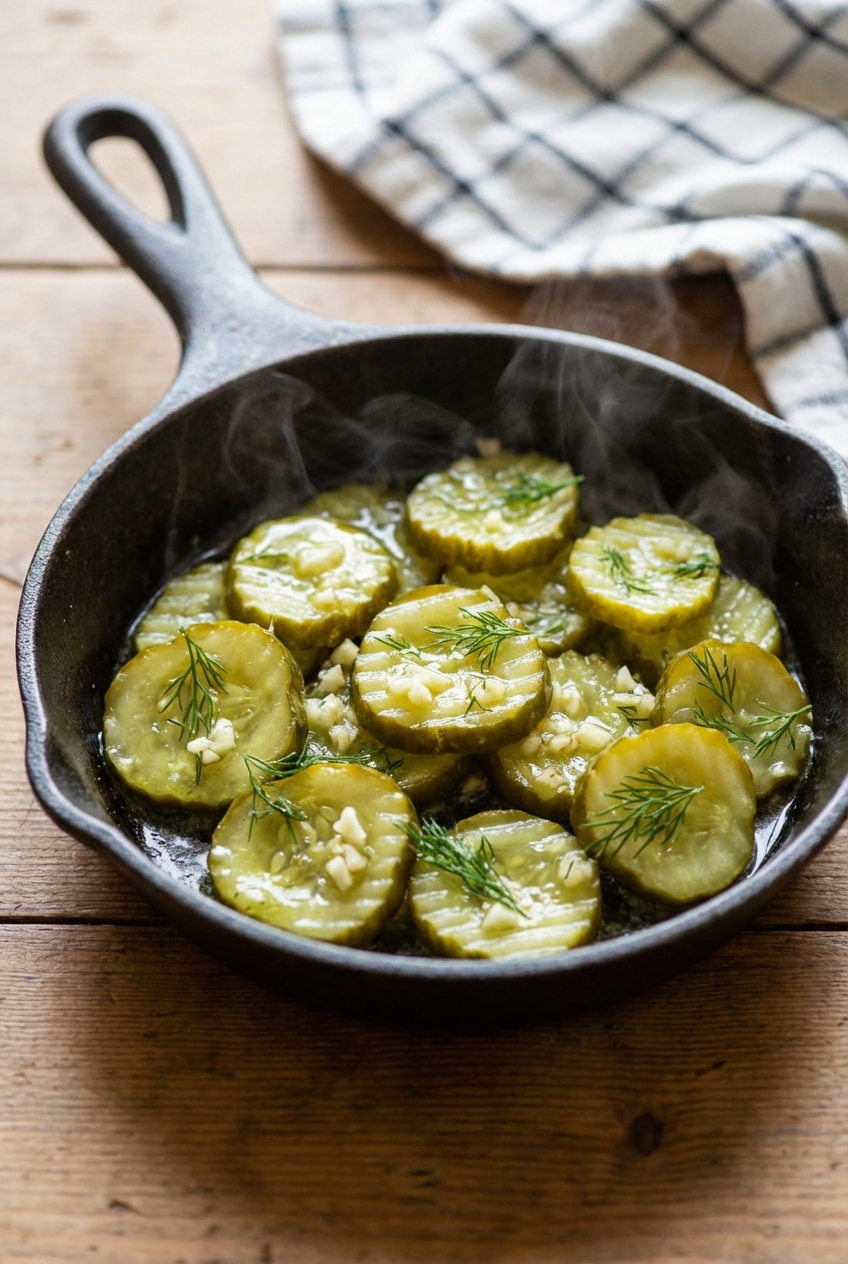
A small cast iron skillet filled with warm dill pickle slices glistening in butter with garlic and dill, steam rising

If you've ever stood at the fridge eating pickles straight from the jar like it's a hobby, this one's for you. Warm pickles sound a little chaotic on paper, but the moment they hit a skillet with butter, garlic, and dill, it all clicks. They go from sharp and cold to cozy and savory, like the pickle version of garlic bread energy.

These aren't meant to replace your classic crunchy dill spear. This is a comfort pickle. Warm, glossy, tangy, and perfect for spooning over potatoes, tucking into a grilled cheese, or eating right out of the pan while you taste for seasoning a few too many times.
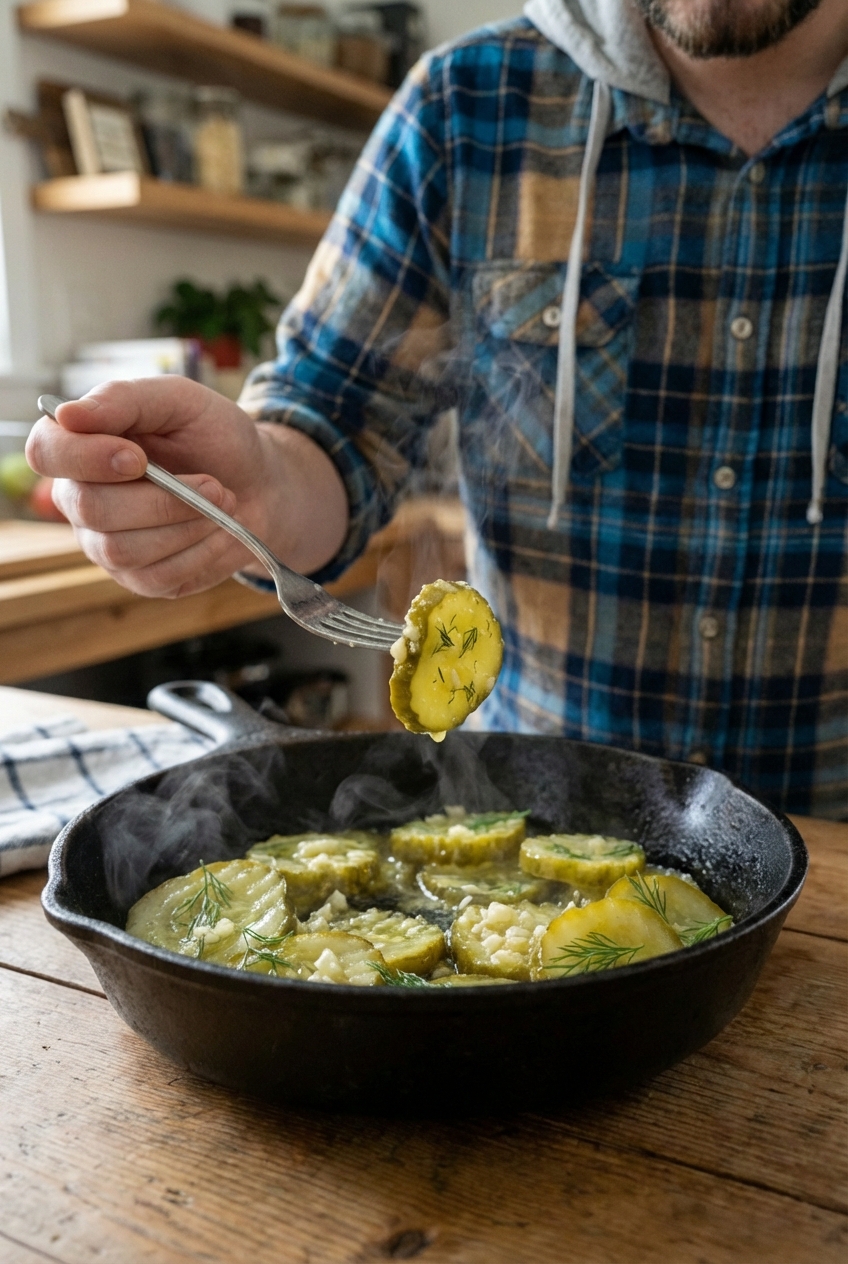
A hand holding a fork with a warm buttery pickle slice above a skillet

Why It Works

  • Fast comfort factor: 10 minutes from jar to skillet to snack.
  • Big flavor, small effort: butter plus garlic plus dill equals instant cozy.
  • Balanced bite: the heat softens the sharp edge while keeping that briny tang.
  • Versatile: serve as a side, a topping, or a late night kitchen snack.

Pairs Well With

Storage Tips

Best eaten warm, right after cooking, when they're glossy and buttery.

  • Refrigerate: Cool completely, then store in an airtight container for up to 3 days.
  • Reheat: Warm gently in a skillet over low heat with a small pat of butter or a splash of pickle brine. Microwaving works, but the skillet keeps the flavor cleaner.
  • Don't freeze: The texture gets oddly mushy and watery.

Common Questions

Do warm pickles get mushy?

They can if you cook them too long. Keep the heat at medium and aim for 3 to 5 minutes total. You want them warmed through and glossy, not simmered into softness.

What kind of pickles work best?

Classic dill chips are perfect. Spears work too, just slice them. Avoid sweet pickles for this version unless you're intentionally going for a sweet and savory vibe. If you love heat, spicy dill pickles are incredible here.

Can I make this dairy-free?

Yes. Swap the butter for olive oil or a plant-based butter. You'll lose a little of the cozy richness, but the garlic and dill still deliver.

What should I do with the leftover pickle brine?

Save it. Add a splash to salad dressings, potato salad, or to brighten soups. It's basically liquid seasoning.

Are warm pickles safe to eat?

Absolutely. You're just heating a preserved food and adding aromatics. Treat them like any quick sautéed side.

I first made warm pickles by accident while trying to rescue a pan sauce that was headed straight into the too salty, too sad zone. I tossed in a splash of pickle brine to wake it up, then looked at the jar like, well, you're already here. A few pickle chips hit the skillet, I tasted one, and suddenly I was standing over the stove like a goblin with a fork thinking, this is either genius or I need to go outside more.

Turns out it's genius. It's briny comfort in a skillet, and it makes even a basic weeknight plate feel like it has a little personality.