Is this buttercream stable enough for piping?
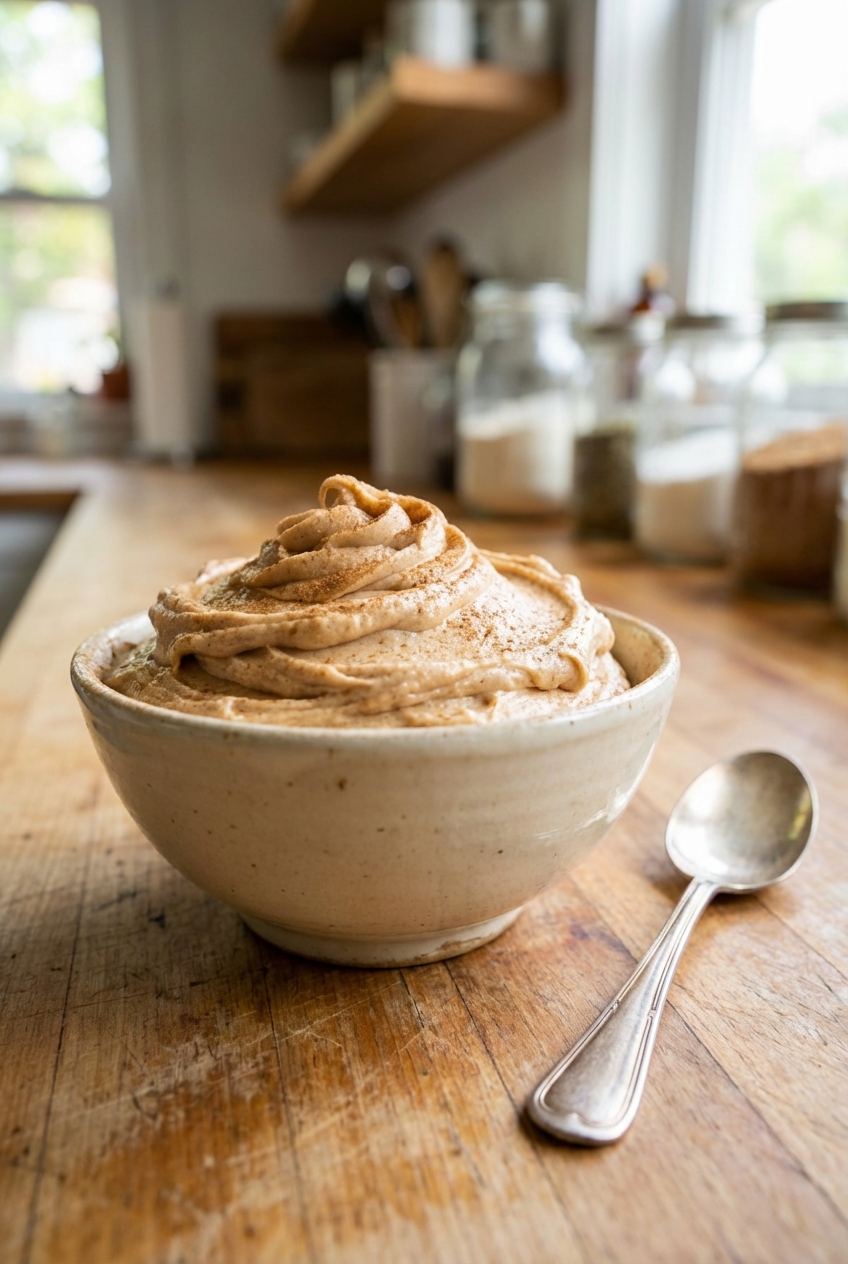
Yes. As written, it pipes well for rosettes, borders, and cupcake swirls. If your kitchen is warm or humid, use the smaller amount of liquid, chill the frosting for 10 minutes, then rewhip briefly before piping. Heavy cream can soften the frosting a bit more than milk, so keep that in mind if you want very sharp edges.
Can I use salted butter?
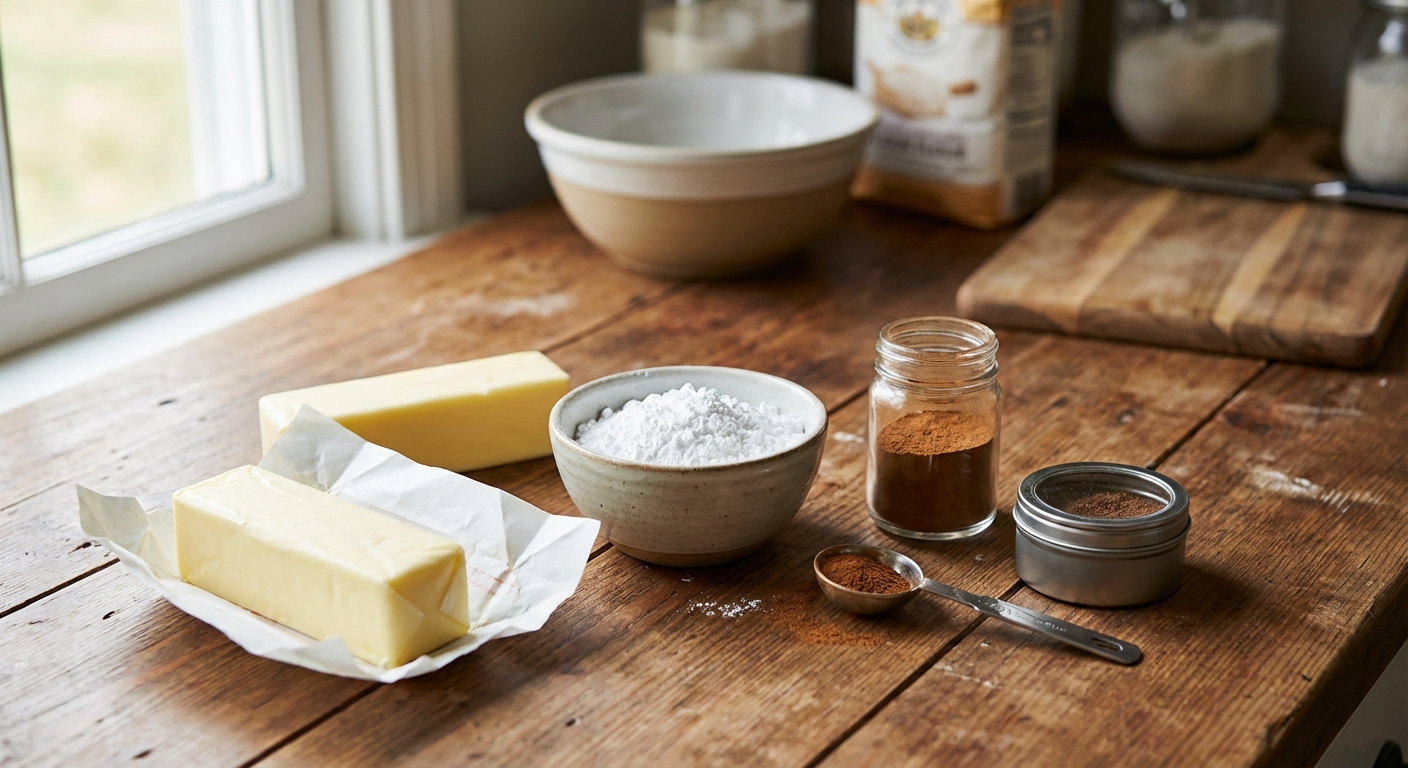
You can. Reduce the added salt to a tiny pinch, then taste. Salt levels vary a lot between brands, so adjust like you mean it.
Why does my buttercream taste powdery or gritty?
Usually the powdered sugar was not beaten long enough, or the butter was too cool. Beat the frosting an extra 1 to 2 minutes, and make sure the butter is fully softened next time. Sifting the sugar helps. A tablespoon more cream or milk can also smooth the mouthfeel.
Can I make it less sweet?
American buttercream is sweet by nature, but you can nudge it: add a bit more salt, go heavier on spice, or use the cream cheese variation below for tang. For a truly less-sweet frosting, you would want a Swiss or Italian meringue style.
Can I turn this into a cream cheese version?
Yes. Swap 4 ounces of the butter for 4 ounces softened cream cheese. Beat the butter first, then beat in cream cheese, then proceed. It will be tangier and slightly softer, so chill briefly if piping. Food safety note: if you use cream cheese, store the frosting (and frosted desserts) in the refrigerator.
How much does this frost?
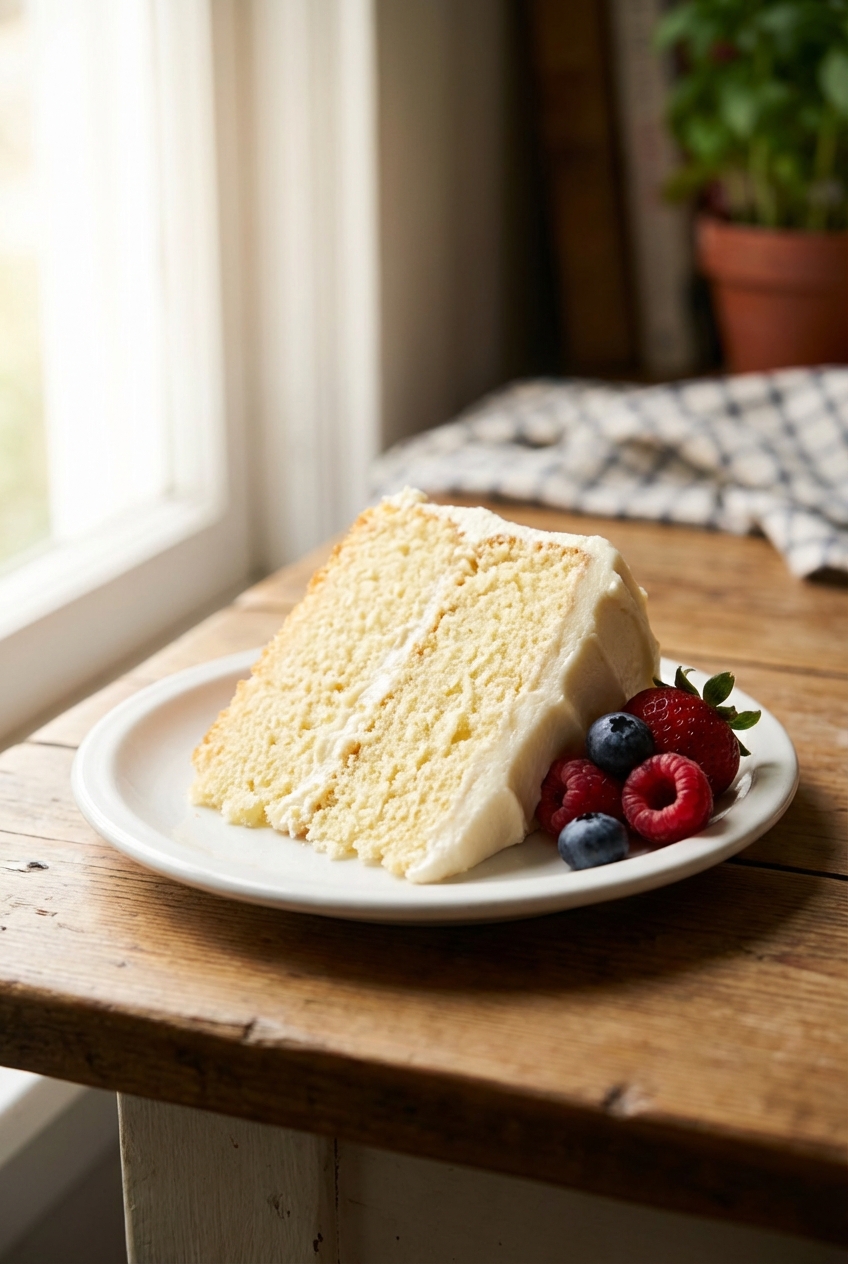
This recipe makes about 4 to 5 cups of frosting (depending on how much you whip it). That is enough for 12 to 16 cupcakes generously, a 9x13-inch sheet cake in a thick layer, or a two-layer 8-inch cake with a moderate layer of frosting.
Does this recipe scale well?
Yes, it doubles well. If you scale up, mixing may take a little longer, and you will want to scrape down the bowl more often for even texture.
Any allergen or diet notes?
Contains dairy. (Also: sugar, which feels obvious, but still.)