Mom's Best Recipes
Recipe

Weeknight Basil Pesto

A classic-ingredient basil pesto you can blitz in minutes. Bright, garlicky, and just salty enough to make everything taste like you tried harder than you did.

Author By Matt Campbell
4.9
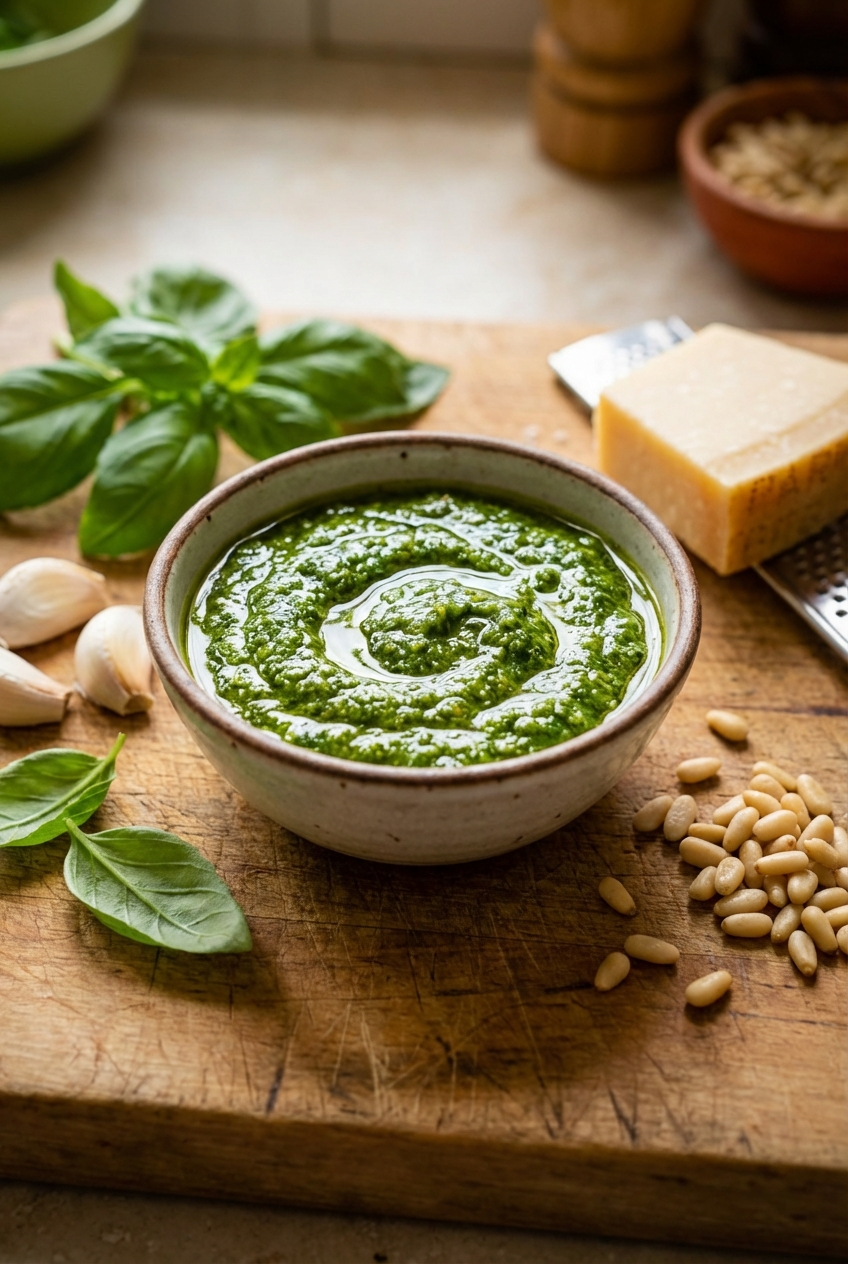
A small bowl of glossy basil pesto on a wooden cutting board with fresh basil leaves, garlic cloves, pine nuts, and a wedge of Parmesan nearby

There are two kinds of weeknight cooking: the kind where you stare into the fridge like it owes you money, and the kind where you have one sauce that makes everything instantly feel intentional. This basil pesto is that sauce.

It’s traditional-style and classic-ingredient, meaning basil, garlic, pine nuts, Parmigiano-Reggiano, Pecorino, olive oil, and salt. No kale. No spinach “for volume.” Not because those swaps are illegal, but because the real deal tastes like summer decided to show up and help you.

It is also weeknight-friendly because we are using a food processor, keeping the ingredient list tight, and leaning on a couple small tricks so your pesto stays bright and not bitter. Toss it with pasta, spoon it onto chicken, smear it on sandwiches, or swirl it into soup. Taste as you go. That is not optional.

Fresh basil leaves being added to a food processor with garlic and pine nuts

Why It Works

  • Bright, punchy basil flavor: A quick blanch is optional, but it keeps the pesto greener longer and softens any harshness.
  • Balanced salt and tang: The classic combo of Parmigiano-Reggiano and Pecorino gives you nutty depth and a little sharp edge.
  • Not bitter, not muddy: We pulse instead of over-blending, and we stir the olive oil in at the end so it stays silky.
  • Built for weeknights: About 10 minutes, one processor bowl (plus a spoon and a bowl if you stir in the oil), and you have a sauce that rescues plain carbs on demand.

Pairs Well With

Storage Tips

How to Store Pesto

Fridge: Spoon pesto into a small jar, smooth the top, then pour a thin layer of olive oil over the surface. Cover tightly and refrigerate up to 5 days. That oil cap helps slow browning.

Freezer: Freeze in an ice cube tray for weeknight portions. Once solid, pop cubes into a freezer bag. Keeps well for up to 3 months. Thaw in the fridge, or melt a cube directly in a warm pan with a splash of pasta water.

Reheating tip: Pesto hates high heat. Warm it gently off heat, or toss with hot pasta and a bit of starchy pasta water to turn it glossy and clingy.

Common Questions

Common Questions

Do I have to use pine nuts?

For classic pesto flavor, yes, pine nuts are the move. They are buttery and sweet in a way other nuts are not. If you are in a pinch, walnuts or almonds work, but the flavor shifts.

Should I toast the pine nuts?

Lightly, if you want a deeper, rounder flavor. Keep it subtle. You are not making them brown and roasty, you are just waking them up. If you are truly speed-running dinner, you can skip toasting.

Why is my pesto bitter?

It is usually one of these: over-processing (which can heat and bruise the basil), blending the olive oil at high speed, or using an extra peppery olive oil. Pulse in short bursts, scrape the bowl, and stop before the basil turns into green baby food. For the smoothest, least bitter result, stir the olive oil in by hand at the end instead of letting the machine whip it.

Can I make pesto without a mortar and pestle?

Absolutely. A mortar and pestle is traditional, but the food processor is what makes this weeknight-friendly. You still get a classic flavor profile with the standard ingredients.

How do I keep pesto from turning brown?

Use fresh basil, work quickly, and store with an olive oil layer on top. Optional but helpful: blanch the basil for 10 seconds, then ice bath and dry well before blending.

Is it okay to add lemon juice?

It is not classic Genovese style, but a tiny squeeze can brighten things if your basil is less fragrant. Keep it subtle so it does not turn into “basil lemon sauce.”

Is this “authentic” pesto?

It is traditional-style with the classic lineup: basil, garlic, pine nuts, cheese, olive oil, and salt. For the cheeses, I use the very common combo of Parmigiano-Reggiano plus Pecorino. In Liguria you may see Pecorino Sardo (often Fiore Sardo) instead of Romano, so use what you can find and love.

I used to think pesto was one of those “special occasion” sauces, mostly because pine nuts felt fancy and my college-era blender sounded like it was fighting for its life. Then I started treating pesto like a weeknight tool. Make it once, stash it in the fridge, and suddenly Tuesday dinner has a plan.

My favorite part is how it rewards a little chaos. You toast the nuts a touch too far? Still good. Your garlic clove is aggressive? Even better if you are making sandwiches. The only rule I care about is this: taste it, adjust the salt, and stop blending before it gets bitter. After that, pesto takes care of you.