Common Questions
What is the standard hummingbird nectar ratio?
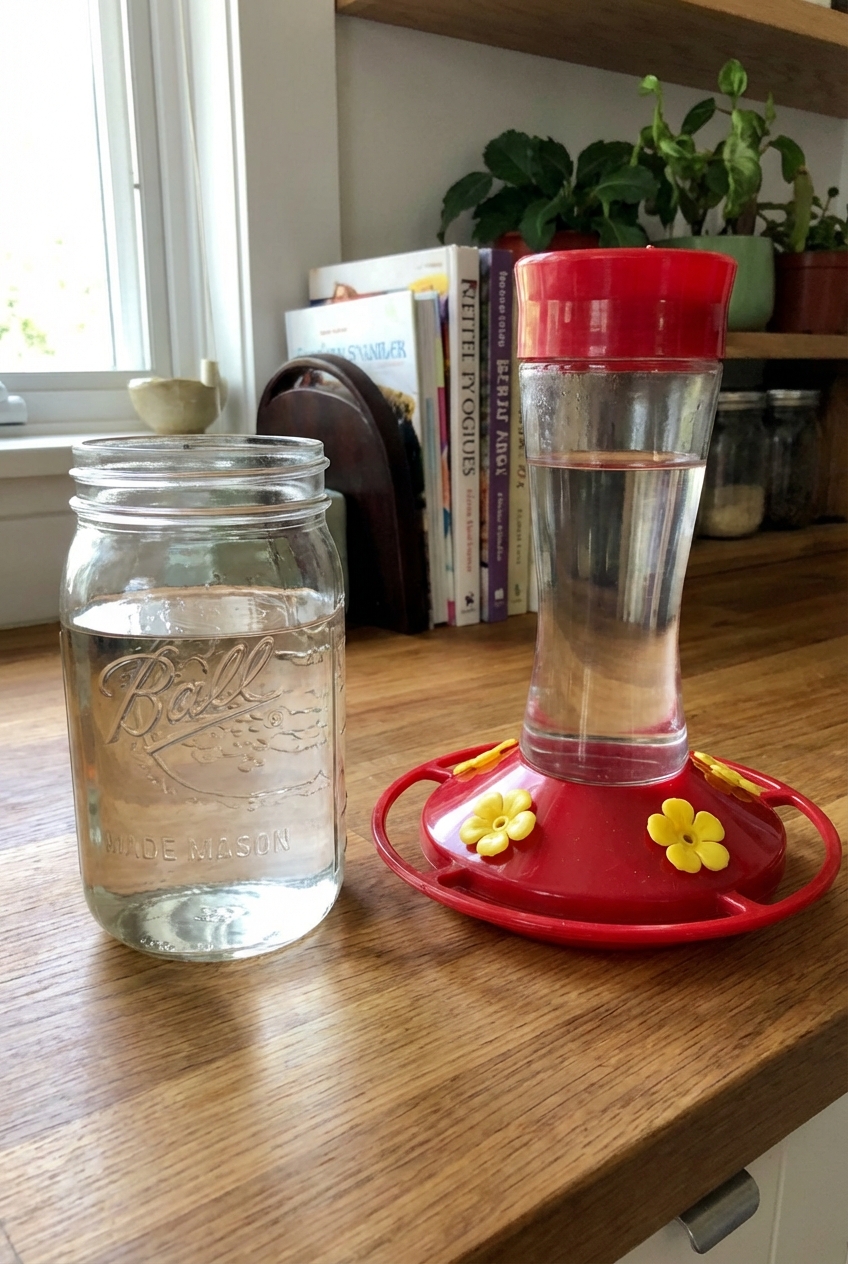
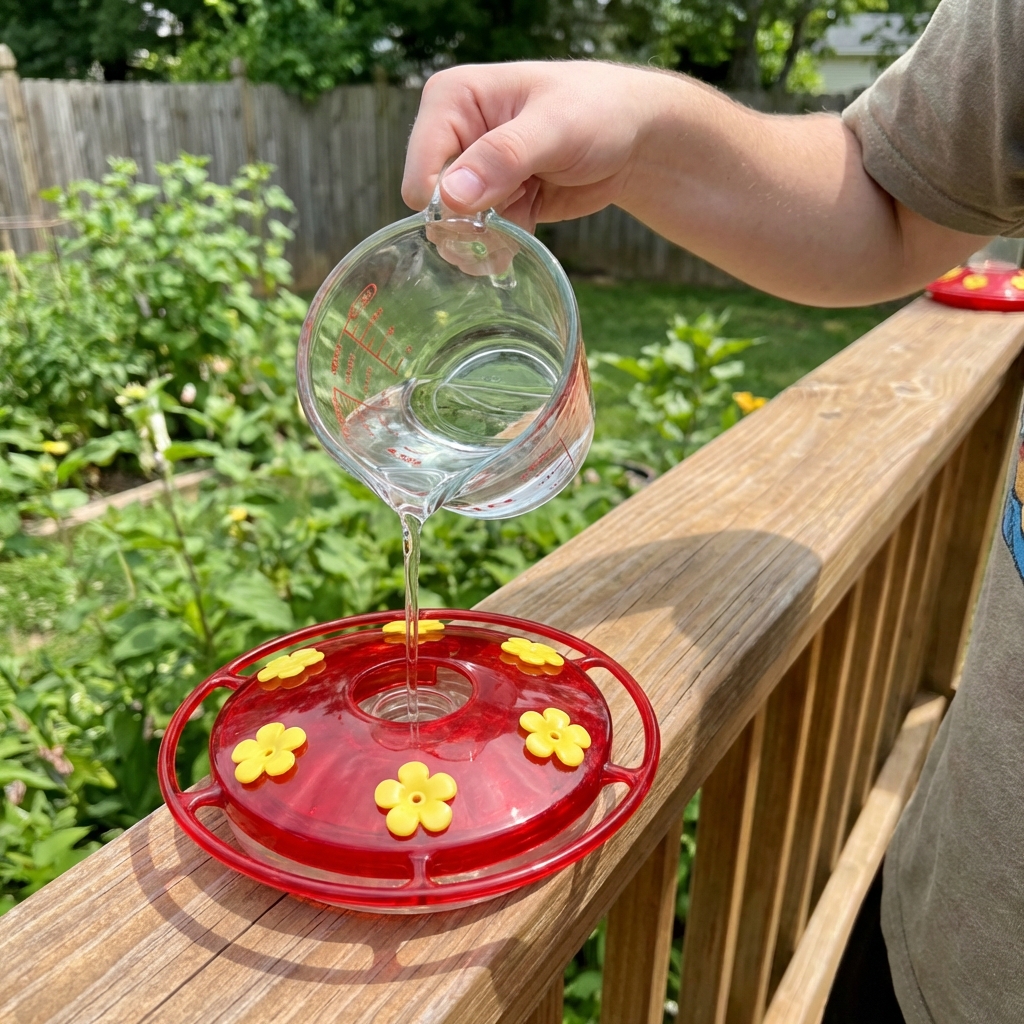
The standard mix is 1 part granulated white sugar to 4 parts water by volume. Example: 1 cup sugar + 4 cups water.
Do I need to boil hummingbird nectar?
No. Heat is optional. Warming the water helps the sugar dissolve faster, and a brief simmer can slow spoilage a bit, especially in hot weather. But it does not sterilize your feeder. The real safety wins are a clean feeder and fresh nectar on schedule.
If you want the quick method: heat the water until steaming. No need for a rolling boil. If you prefer a no-heat method, stir until fully clear.
Can I use red dye or red food coloring?
No. Skip dyes completely. Most feeders already have red parts that attract hummingbirds. The safest nectar is clear sugar water.
Can I use honey, brown sugar, coconut sugar, raw sugar, or maple syrup?
Do not. Honey can ferment quickly and may encourage harmful microbial growth. Brown sugar, raw sugar, and syrups contain extra compounds that are not recommended for feeders.
Can I use powdered sugar?
No. Powdered sugar often contains cornstarch or anti-caking additives. Stick with plain granulated white sugar.
Can I use artificial sweeteners?
No. Hummingbirds need real sugar for energy. Artificial sweeteners do not provide the calories they rely on.
Why does my nectar turn cloudy?
Cloudiness usually means spoilage or contamination, often from heat, an unclean feeder, or old nectar. Dump it, scrub the feeder well, and refill with fresh nectar.
How do I clean a hummingbird feeder safely?
Wash with hot water and a bottle brush. Mild, unscented dish soap is OK if you rinse very thoroughly. For deep cleaning, use a mild solution of white vinegar and water, then rinse very well. Avoid scented, antibacterial, or harsh chemical cleaners.
How often should I change nectar in extreme heat?
In very hot weather (around 90°F/32°C and up), plan on changing nectar daily or every 1 to 2 days. Shade helps slow spoilage.