Mom's Best Recipes
Recipe

Weeknight Roast Chicken

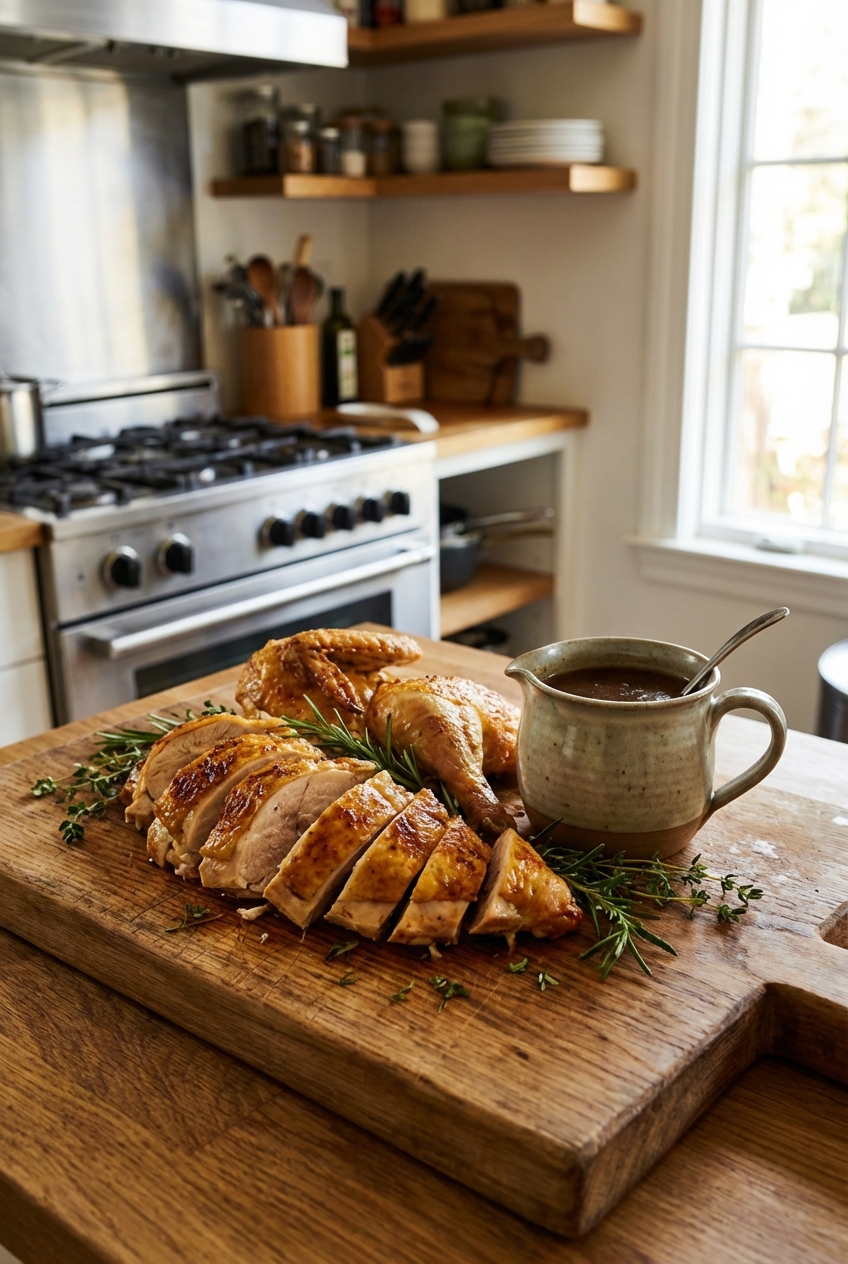
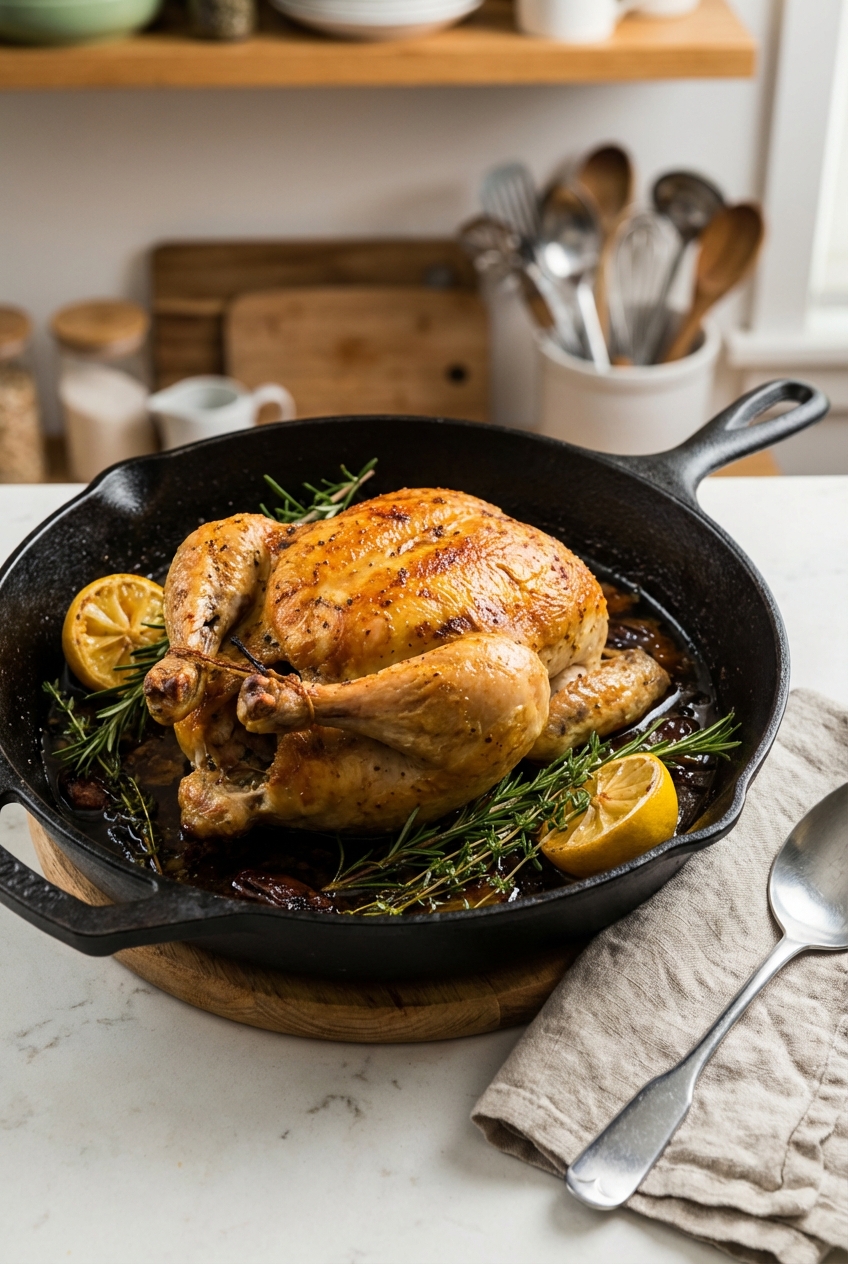
A classic-flavored roast chicken dinner that fits a weeknight: crisp skin, juicy meat, and a simple pan gravy made right in the same skillet (or a quick saucepan version if you used a sheet pan).

Author By Matt Campbell
4.8
A golden-brown roast chicken in a cast iron skillet with herbs, lemon, and pan juices

Some nights you want dinner to feel like you have your life together, even if the sink is full of cups and somebody is asking what’s for dessert before you have even started cooking. This is that meal.

This weeknight-friendly roast chicken keeps things classic without turning your kitchen into an all-day project. We spatchcock the bird so it cooks fast and evenly, then build a simple pan gravy from the drippings. The result is crispy skin, juicy meat, and that cozy, Sunday-dinner vibe on a Tuesday.
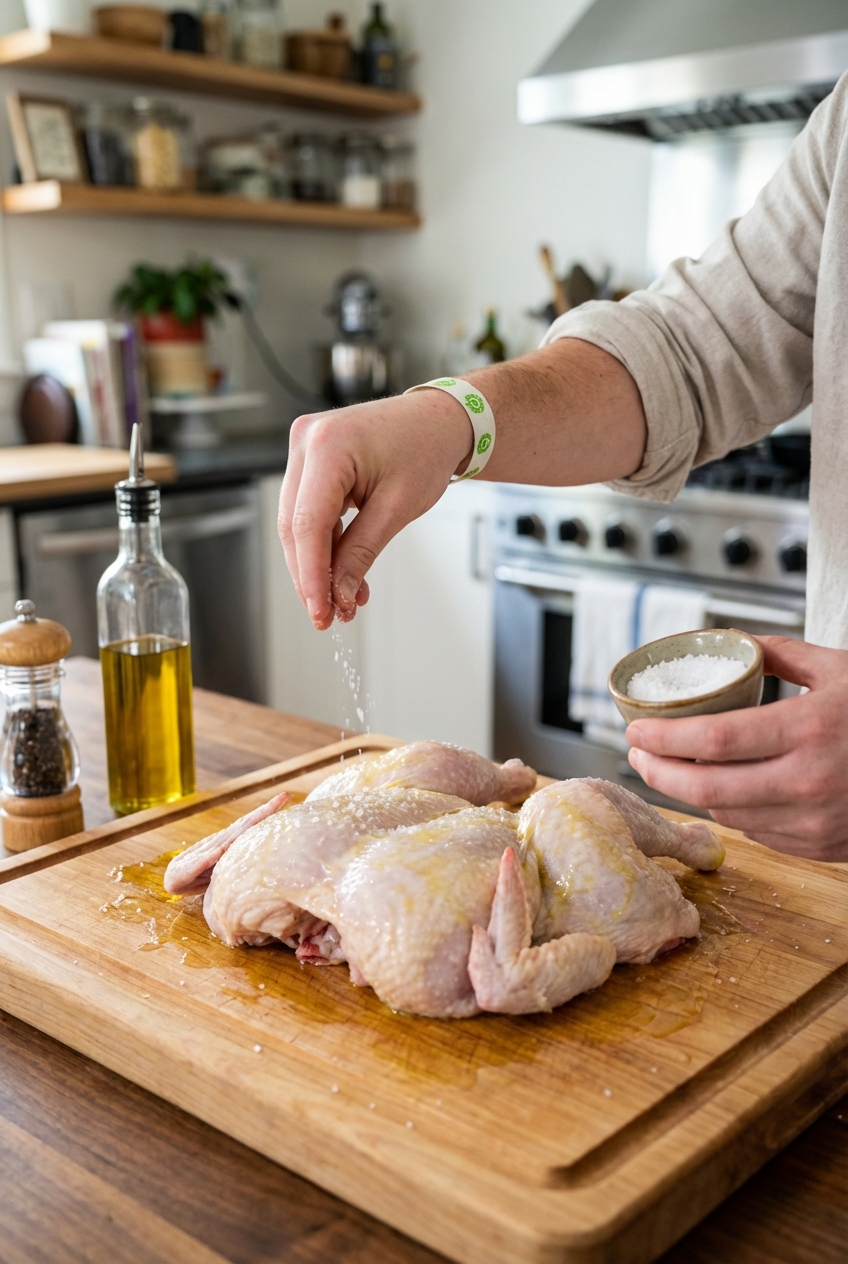
Hands seasoning a spatchcocked chicken on a cutting board with salt, pepper, and olive oil

Why It Works

  • Spatchcocking = speed + even cooking. Flattening the chicken helps white and dark meat finish at the same time, usually in about 35 to 45 minutes.
  • Dry skin gets crisp skin. A quick pat-down and a generous seasoning with salt makes the skin brown and blister instead of steaming.
  • Simple aromatics, classic flavor. Lemon, garlic, and thyme are classic for a reason. They make the drippings taste like you worked harder than you did.
  • Pan gravy, no drama. Flour plus hot drippings plus broth. Whisk, simmer, taste, win.

Pairs Well With

Storage Tips

How to Store Leftovers

Refrigerate: Pull the meat off the bones once it is cool and store in an airtight container for up to 4 days. Store gravy separately.

Freeze: Freeze shredded chicken in a zip-top bag or container for up to 3 months. Gravy can be frozen too, but it may separate a bit. Reheat gently while whisking.

Reheat: For juicy chicken, reheat covered in a 325°F oven with a splash of broth, or in a skillet with a little butter. Microwave works, but go low power so it does not turn rubbery.

Leftover magic: Toss chicken into chicken salad, quesadillas, fried rice, or a quick noodle soup. If you saved the bones, you are one simmer away from homemade stock.

Common Questions

Common Questions

Is this really “traditional” if we spatchcock it?

Spatchcocking is just a technique. The flavors are still the classic roast chicken ones, you just get it faster and more evenly.

Can I roast it whole instead?

You can, but it will take longer, usually 60 to 75 minutes at 425°F depending on size. Use an instant-read thermometer and cook until the thickest part of the breast reaches 165°F.

What temperature should the chicken be?

For safety, cook chicken until the thickest part of the breast hits 165°F (avoid touching bone). Thighs usually land in the 175 to 185°F zone and get even more tender there. Rest 10 minutes before carving so the juices settle down.

My gravy tastes bland. How do I fix it?

Add salt first, then a squeeze of lemon. If it still feels flat, whisk in a small pat of butter at the end, or add a splash more pan drippings if you have them.

Do I need a cast iron skillet?

No. Any oven-safe skillet or a rimmed sheet pan works. If you use a sheet pan, make the gravy in a saucepan and scrape the roasted bits off the pan with a little broth.

I used to think “roast chicken” automatically meant a whole Sunday production, like you needed three hours and a spotless kitchen to earn it. Then I started chasing practical skills over perfect vibes, and spatchcocking became my favorite little shortcut. It feels mildly chaotic in the best way, like you are doing something chef-y, but the payoff is straight-up comfort food.

Now this is my go-to when I want dinner to taste classic and familiar, but I also want to be done before the night turns into a snack scavenger hunt. Crisp skin, lemony drippings, and a quick gravy that makes everyone suddenly interested in mashed potatoes. That is the kind of weeknight teamwork I can get behind.