Mom's Best Recipes
Recipe

Weeknight Slow Cooker Beef Stew

Classic, cozy, and actually doable on a weeknight. This classic-style slow cooker beef stew has tender beef, hearty potatoes and carrots, and a rich, savory broth that tastes like it simmered all day because it basically did.

Author By Matt Campbell
4.8
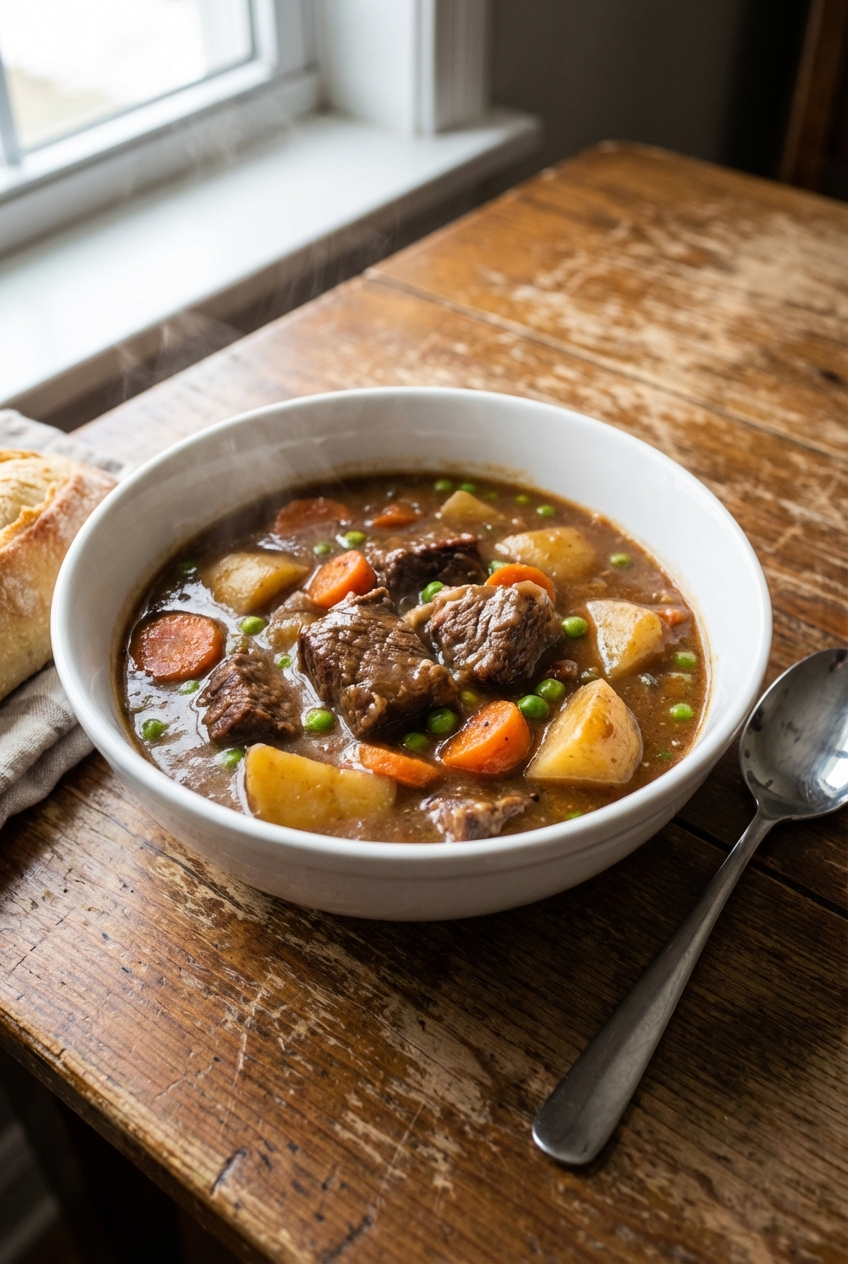
A real photo of a bowl of classic beef stew with tender beef chunks, potatoes, carrots, and peas in a rich brown broth on a wooden table with a spoon beside it

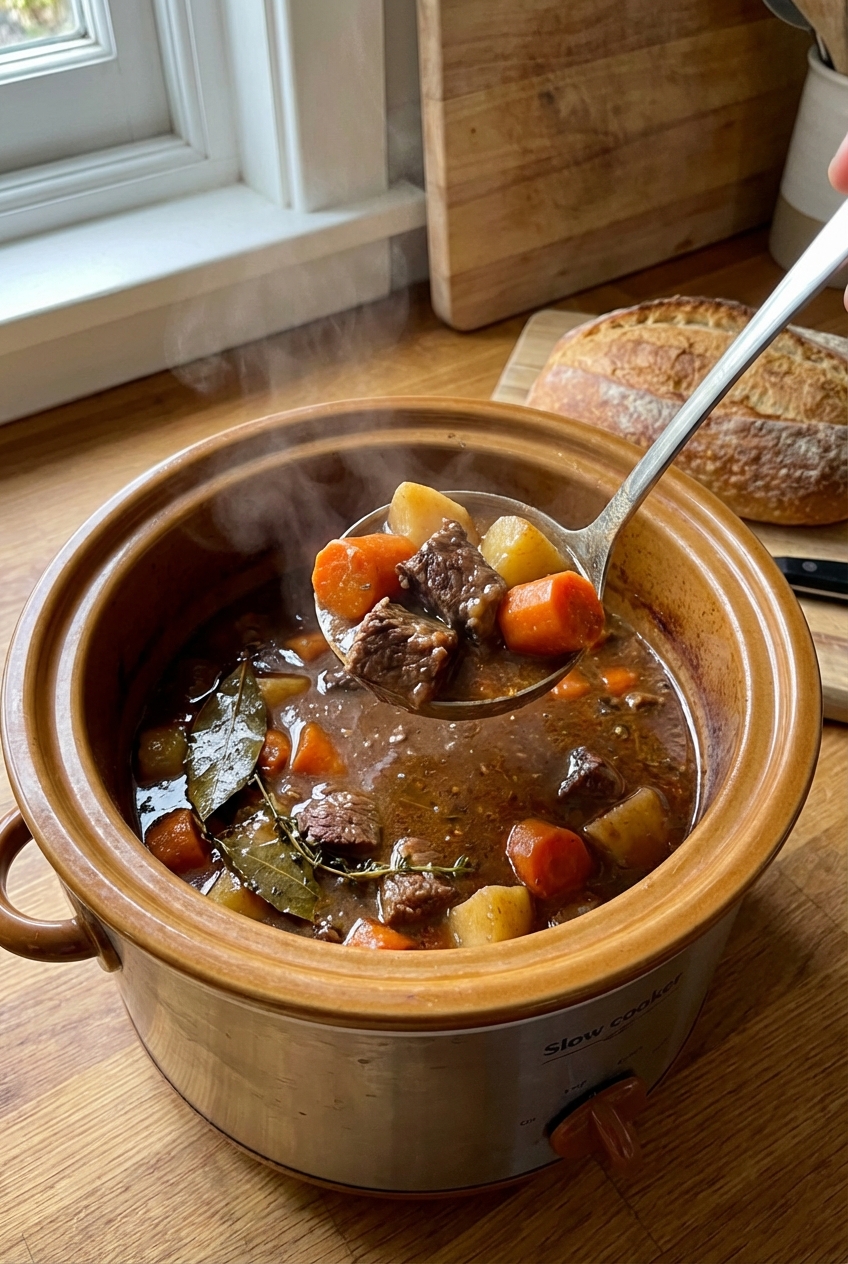
Beef stew is one of those meals that makes the whole house smell like you have your life together, even if your day was pure chaos. This is a classic-style slow cooker version that leans into the basics: seared beef, onions, carrots, potatoes, thyme, bay leaf, and a broth that turns silky and beefy without needing anything weird or hard to find.

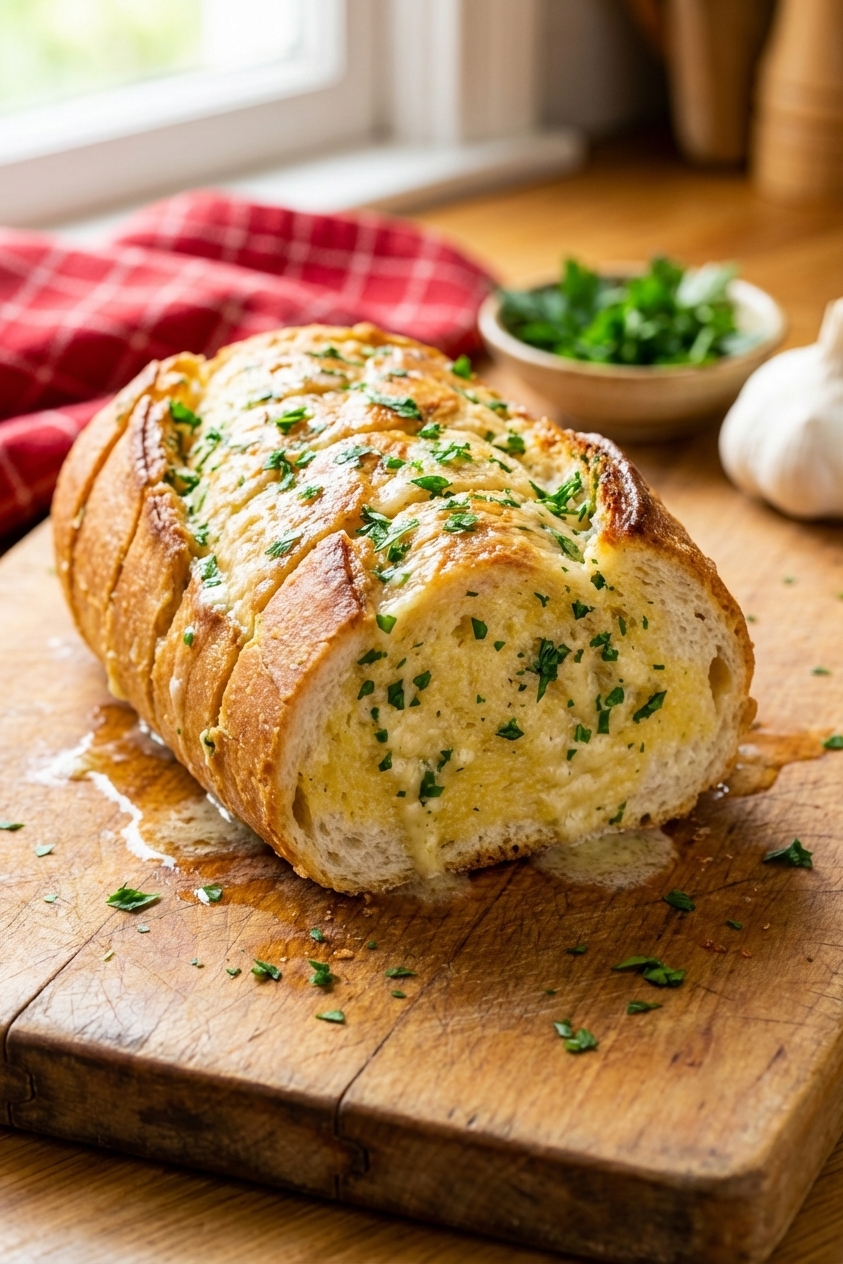
It is also built for real weeknights. You can do the quick sear in the morning or the night before, dump everything in, and come back to dinner that feels like a warm blanket, especially if you toast some bread. I am not here to make stew complicated. I am here to make it good.
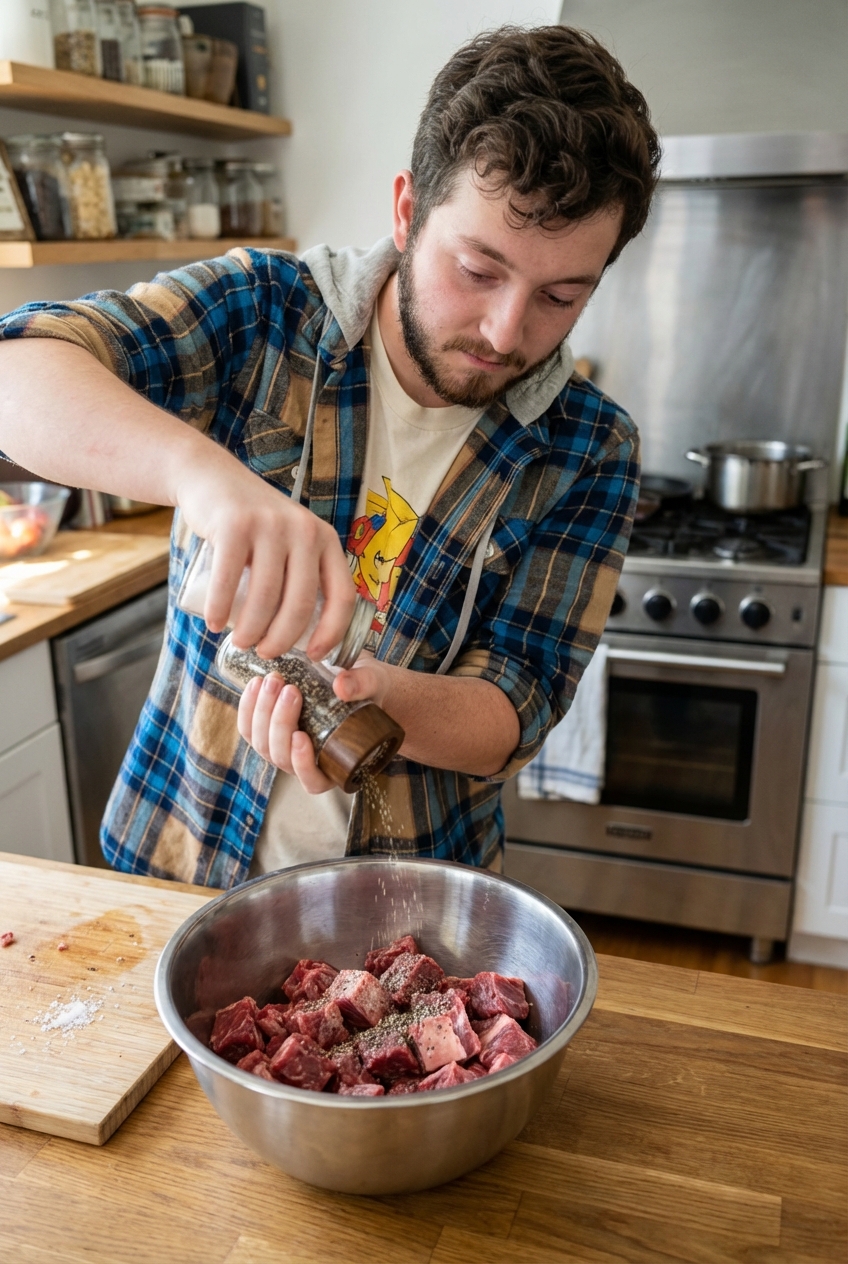
A real photo of raw beef chuck cubes being seasoned with salt and pepper in a mixing bowl on a kitchen counter

Why It Works

  • Classic flavor, slow-simmered vibe: Tomato paste, thyme, bay, and Worcestershire give that familiar stew depth without tasting like a packet.
  • Tender beef that stays chunky: Using chuck and searing it first keeps the flavor bold and the texture spoon-tender.
  • Thickened two ways: A light flour toss plus a hot finish helps, and a cornstarch slurry is the most reliable option when your slow cooker refuses to reduce.
  • Weeknight flexible: Prep in the morning, or chop everything the night before so you can just hit “on” and walk away.

Pairs Well With

Storage Tips

How to Store Leftovers

  • Fridge: Cool and refrigerate within 2 hours, then store in an airtight container for up to 4 days. The flavor gets even better on day two.
  • Freezer: Freeze in portioned containers for up to 3 months. Leave a little headspace for expansion. Potatoes can soften a bit after freezing, but it is still very worth it.
  • Reheat: Warm gently on the stovetop over medium-low, stirring occasionally. Add a splash of beef broth or water if it thickened too much.
  • Best texture tip: If you know you are freezing most of it, consider swapping potatoes for parsnips or adding potatoes fresh when reheating. Not required, just a nerdy option.

Common Questions

Common Questions

Do I have to sear the beef first?

No, but it is the difference between “pretty good slow cooker stew” and “why does this have steakhouse-gravy depth.” If you are slammed, you can skip it. If you have 8 to 10 minutes, do it.

Can I put raw potatoes in the slow cooker?

Yes. Yukon Golds or red potatoes hold their shape best. Cut them into 1 to 1 1/2 inch chunks so they do not disappear.

Why is my stew watery?

Slow cookers trap moisture, so the stew will not reduce like it would on the stove. Start with a bit less broth (this recipe does), and if you still want it thicker, use the cornstarch slurry. Cooking uncovered on HIGH for 20 to 30 minutes can help in some models, but it is not a guarantee.

Can I add peas or green beans?

Absolutely. Add frozen peas in the last 10 minutes so they stay bright. For green beans, add in the last 30 to 45 minutes so they stay snappy.

What cut of beef is best for stew?

Chuck roast is the classic. It has enough fat and connective tissue to become tender and rich after a long cook. Avoid very lean stew meat if you can, since it can turn dry.

Does the cook time vary by slow cooker?

Yes. Slow cookers run all over the place, and cube size matters. Start checking at the early end of the window. When it is ready, the beef should be fork-tender without fighting you.

Can I skip the wine?

Yep. Use more broth, or add a teaspoon or two of balsamic vinegar at the end for a similar “something’s missing” fix. If you use wine, the alcohol cooks off over the long simmer, but the flavor stays.

I wanted to study culinary arts in college, but I ended up chasing the hands-on kind of learning. Beef stew is exactly that for me: a practical, humble dish where technique matters, but not in a fussy way. The first time I nailed it, it was not because I used fancy ingredients. It was because I browned the beef until it smelled like something worth waiting for, and I tasted the broth before serving like it was my job. Now it is my go-to when I want dinner to feel steady and familiar, even if the day was anything but.