Can I make whipped feta without a food processor?
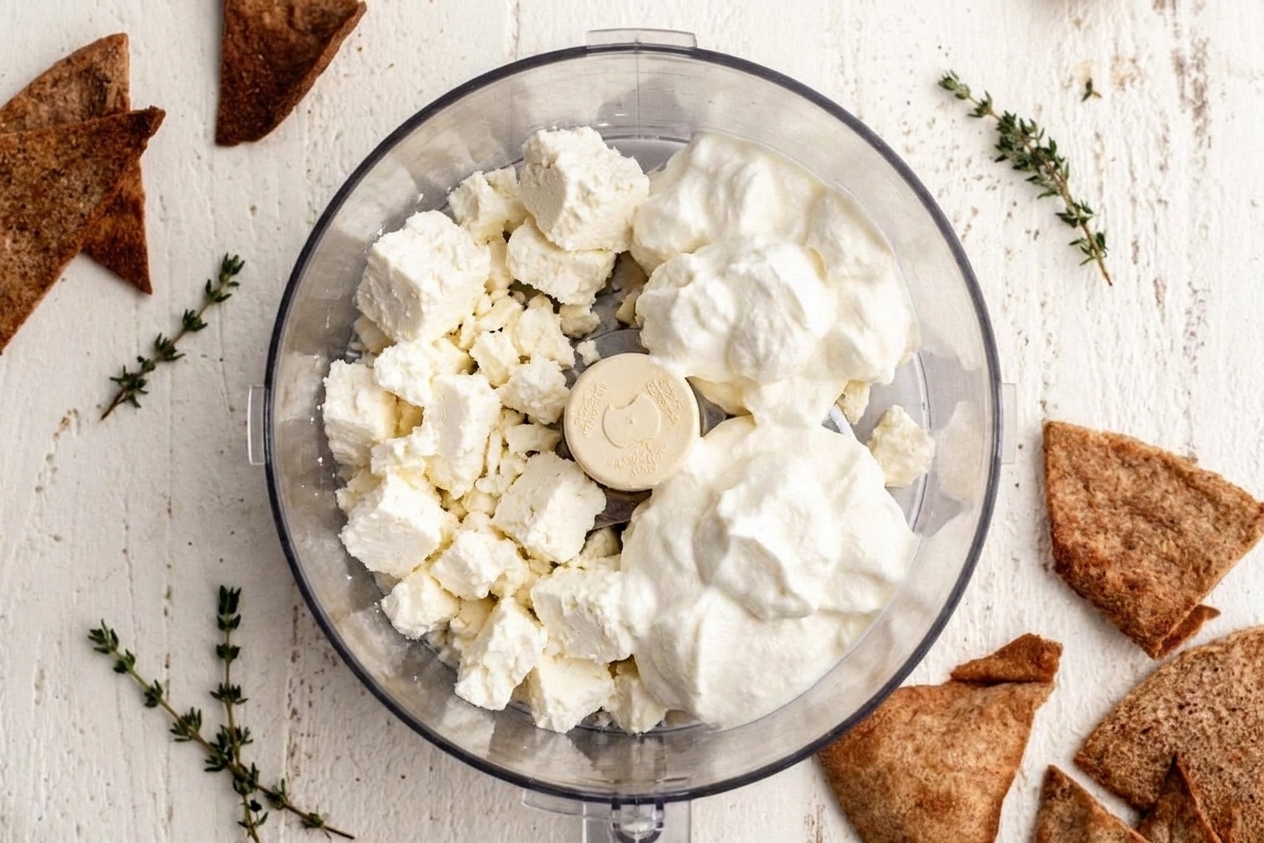
Yes. A high-powered blender works great. If you only have a hand mixer, crumble the feta very finely first, then beat with the yogurt and olive oil. It will be a little more rustic, but still delicious.
Why is my whipped feta grainy?
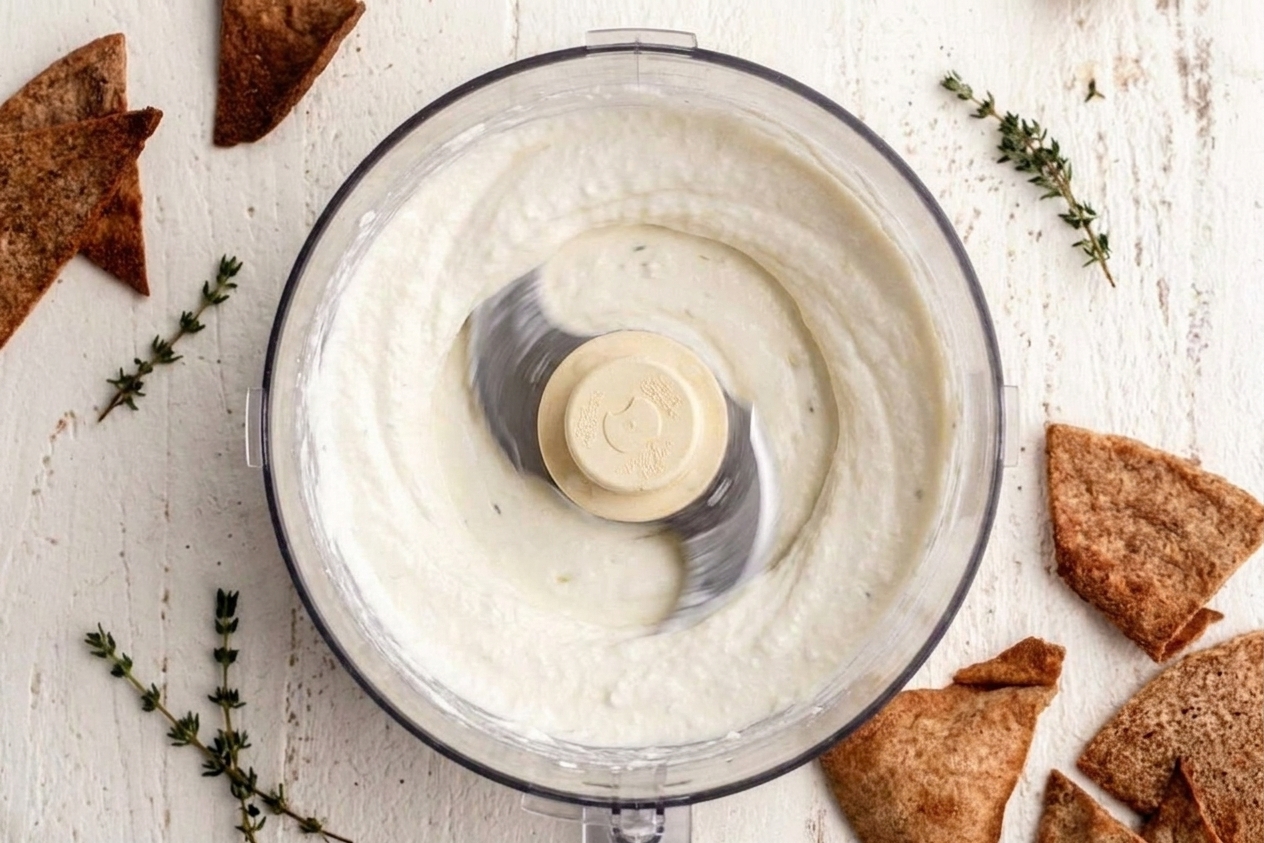
Usually it is one of four things: the feta is very dry, the mixture needs more blending time, the mixture needs a splash more olive oil, or you used pre-crumbled feta (anti-caking agents can make it less silky). Blend for a full minute, scrape down the bowl, then blend again. If it is still stiff, add 1 to 2 teaspoons olive oil and keep going.
What kind of feta is best?
Block feta in brine tends to whip up creamier and tastes fresher than pre-crumbled feta. If you only have crumbles, it still works. Expect a slightly less silky finish.
Is whipped feta the same as feta dip?
Pretty much, yes. Whipped feta is the method. “Feta dip” can mean lots of things, including versions with cream cheese or sour cream. This one stays bright and tangy with Greek yogurt and lemon.
How do I serve it for a party?
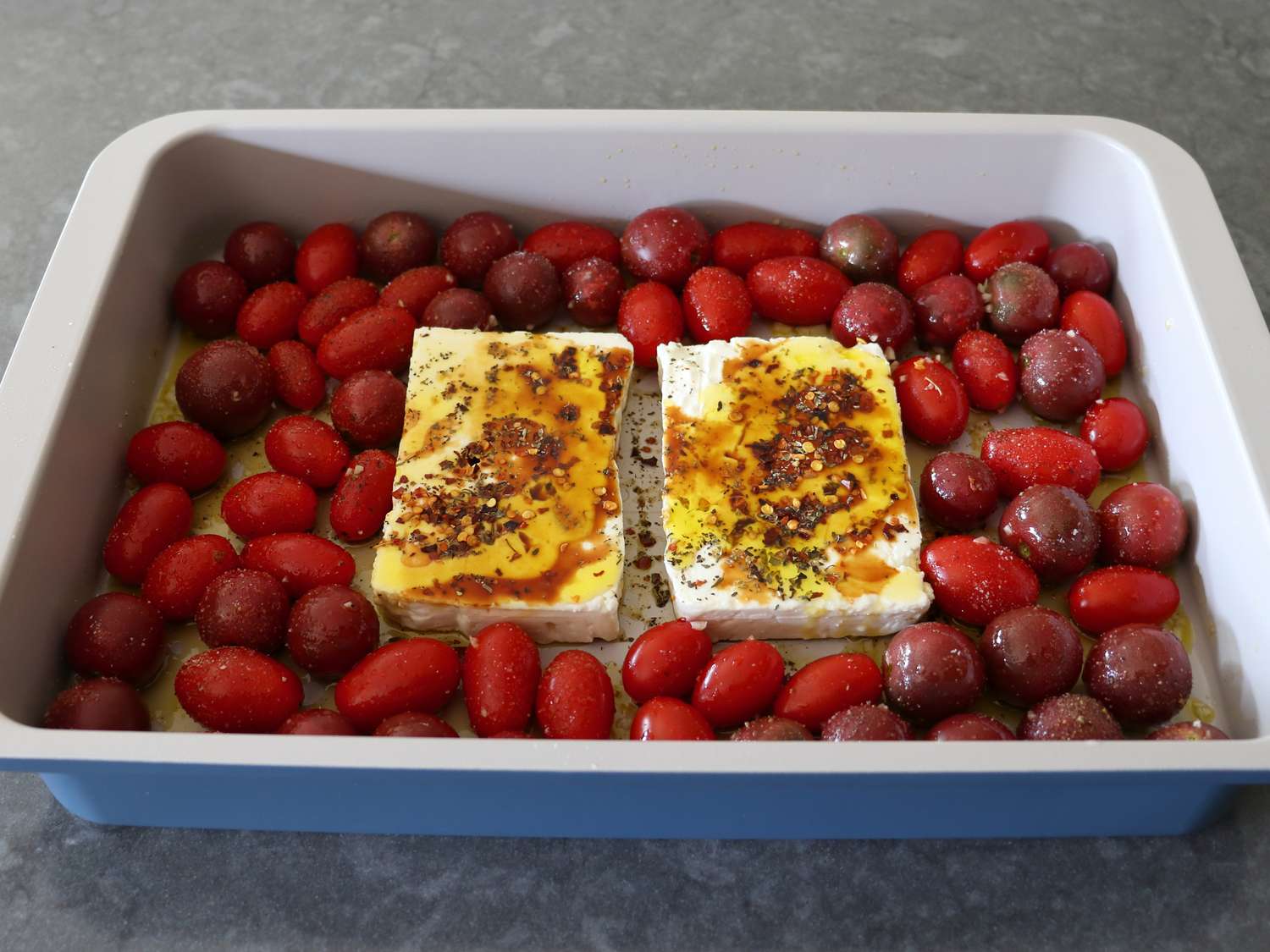
Spread it on a plate, swirl the top with the back of a spoon, then finish with olive oil and one bold topping like chili crisp, chopped herbs, or roasted tomatoes. Put pita, cucumbers, and bell peppers around it and call it a day.
Do I need to add salt?
Probably not. Feta is already salty, so make the dip first, then taste. If your feta is extra salty, you can briefly rinse it, pat it dry, and continue (it will mellow the salt a bit).
Can I make it ahead?
Yes. Make it up to 1 to 2 days ahead and refrigerate. Before serving, let it sit out for 10 to 15 minutes, then stir and add a small drizzle of olive oil to bring back the creamy, fluffy texture.
How do I adjust the thickness?
If it is too thick (common with some blenders), add 1 to 2 teaspoons yogurt, olive oil, or even water and blend again. If it is too thin, blend in a little more feta.