Common Questions
How ripe should the bananas be?
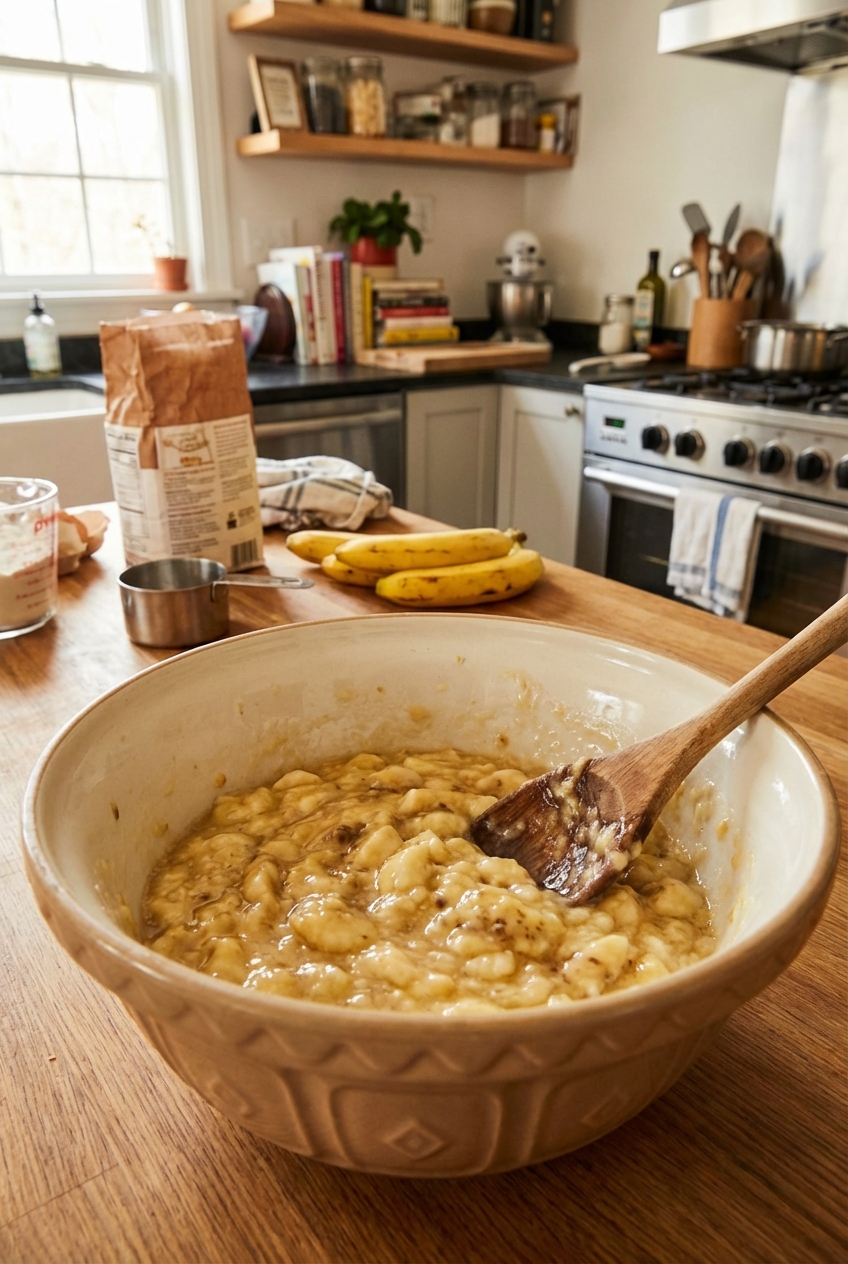
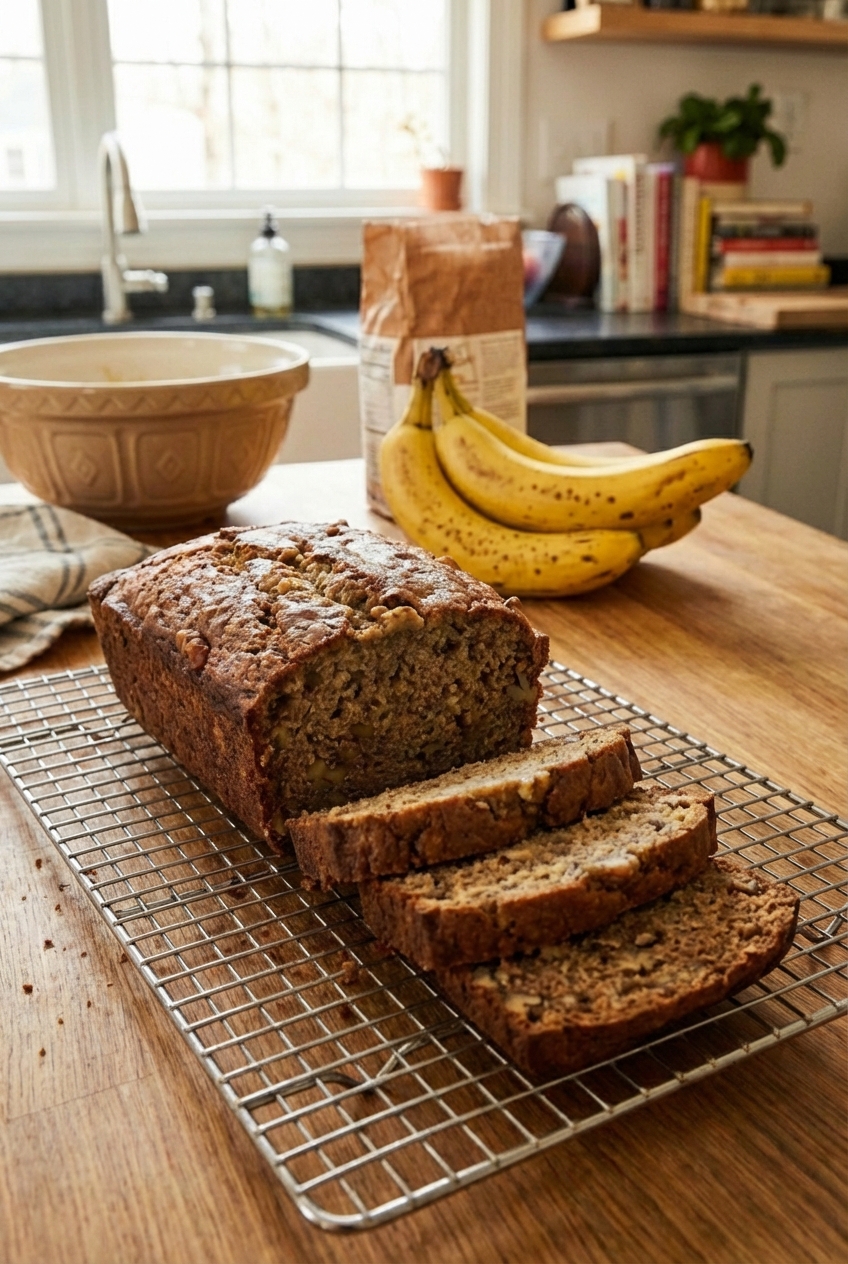
Very ripe. You want bananas that are heavily speckled or mostly brown. That is where the sweetness and strong banana flavor come from. If yours are still yellow, the bread will bake up less flavorful.
Can I make this with all all-purpose flour?
Yes. Swap the whole wheat flour for the same amount of all-purpose. The loaf will be a bit lighter and less nutty, but still moist.
Why did my banana bread sink in the middle?
Most often it is underbaking, overmixing, too much leavening, or too much moisture (extra banana, too much yogurt). Oven temperature issues (too hot or inaccurate) can also cause a rapid rise and then a collapse. Bake until the center springs back when gently pressed and a tester comes out with moist crumbs, not wet batter.
How do I know it is done without drying it out?
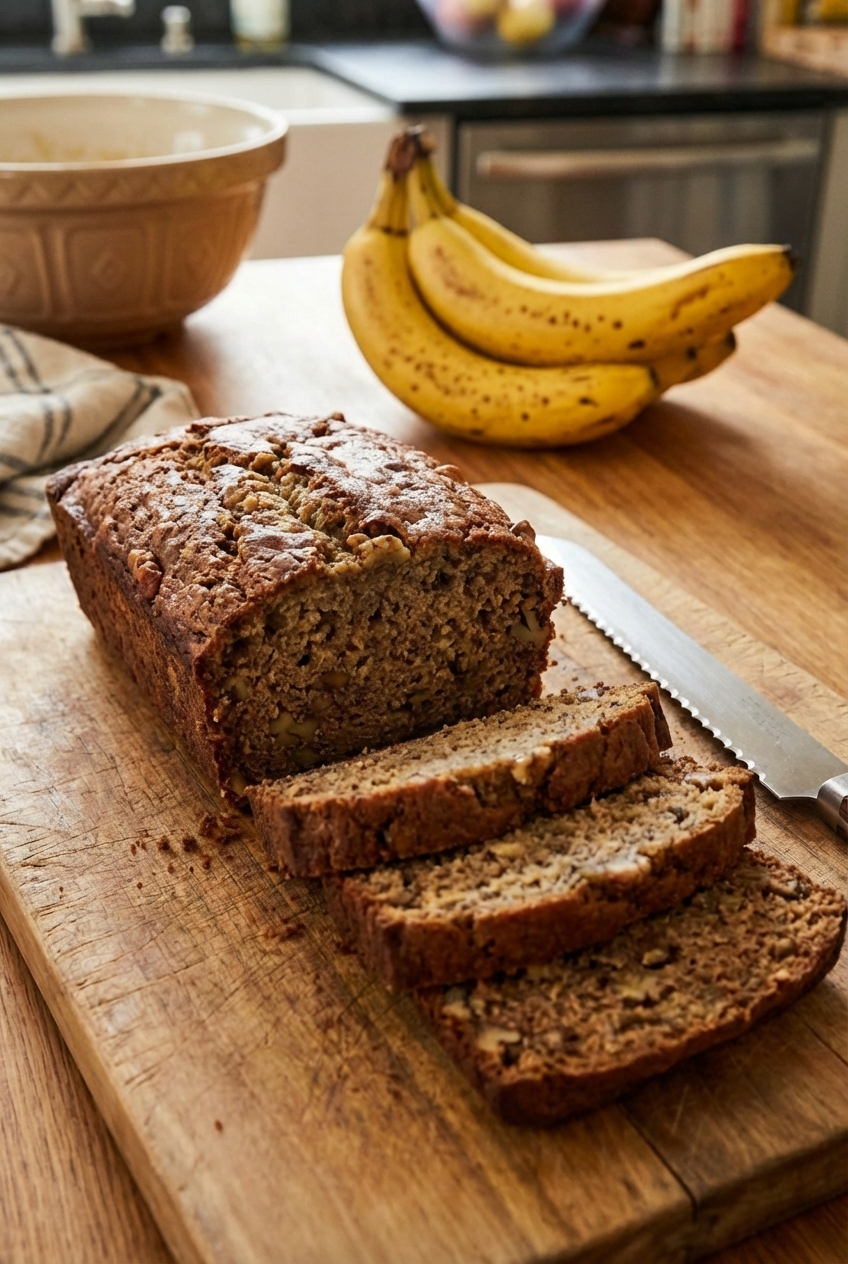
Look for a deep golden top with a firm dome, and a toothpick coming out with a few moist crumbs, not wet batter. For extra peace of mind, the center should read about 200 to 205°F (93 to 96°C). If the top is browning too quickly, tent loosely with foil for the last 15 minutes.
Can I reduce the sugar?
You can reduce the brown sugar to 1/2 cup without major texture issues, especially if your bananas are very ripe. The loaf will be a little less caramel-y but still good.
Can I add mix-ins?
Absolutely. Fold in 1/2 to 3/4 cup chocolate chips, chopped walnuts, pecans, or dried cranberries. Toss chips or nuts with a teaspoon of flour to help prevent sinking.
Does the pan material matter?
Yes, a little. This bake time is written for a standard metal 9 x 5-inch loaf pan. Glass or ceramic can bake slower and can brown the edges more. If using glass, consider lowering the oven to 325°F and plan on a slightly longer bake, using the doneness cues to guide you.