Mom's Best Recipes
Recipe

Wholesome Baked Salmon

A rustic, homestyle salmon dinner with lemon, garlic, and herbs, roasted on one pan until the edges sizzle and the center stays juicy.

Author By Matt Campbell
4.8
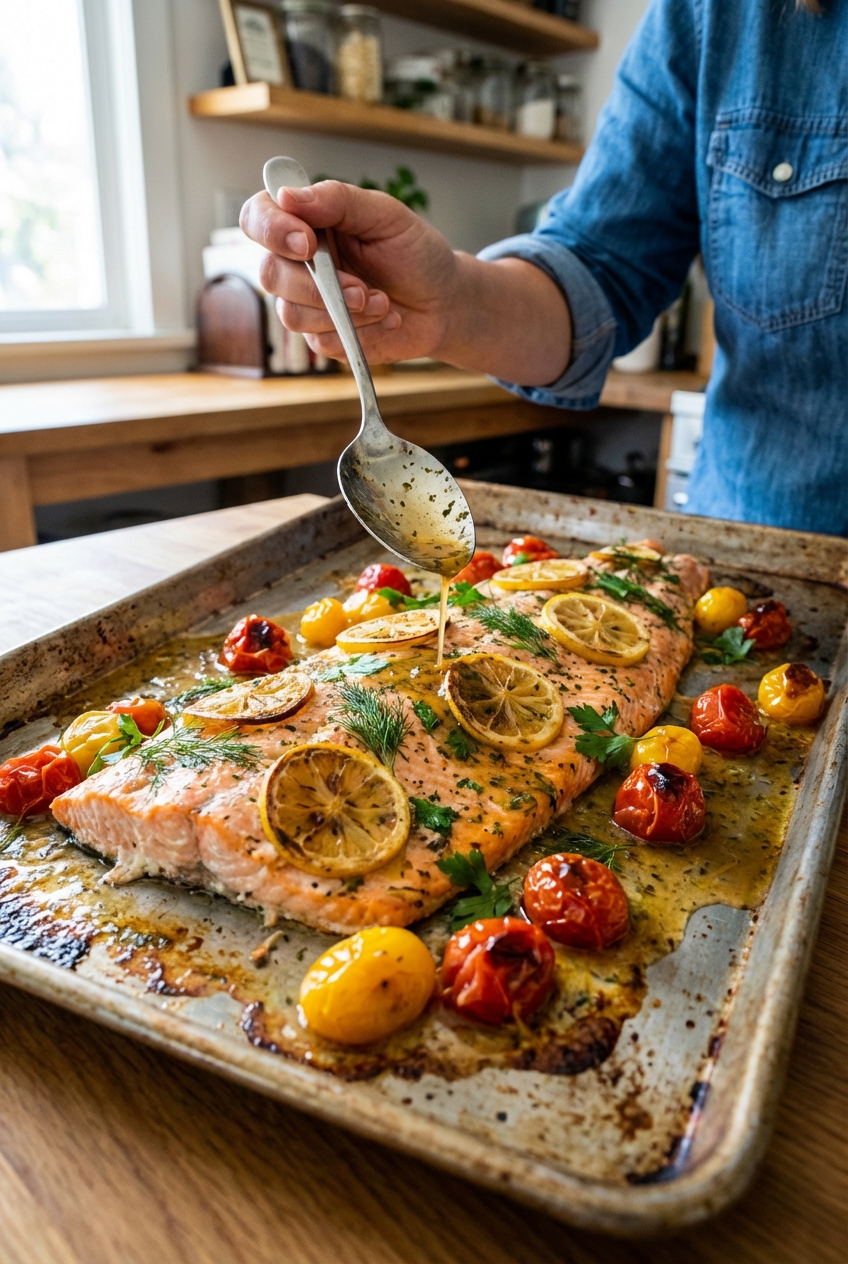
A rustic sheet pan of baked salmon with lemon slices, herbs, and roasted cherry tomatoes, served with a spoonful of pan juices

This is the baked salmon I make when I want dinner to feel like a warm kitchen, not a science project. It is simple, cozy, and bright all at once, with lemon and garlic doing the heavy lifting and a little Dijon giving the sauce that quiet, savory backbone that makes you keep going back for just one more bite.

The vibe here is rustic and homestyle, meaning: no fussy steps, no rare ingredients, and no weird timing math. You get crisp edges, a juicy center, and pan juices that beg to be dragged up with bread, rice, or whatever you are serving.
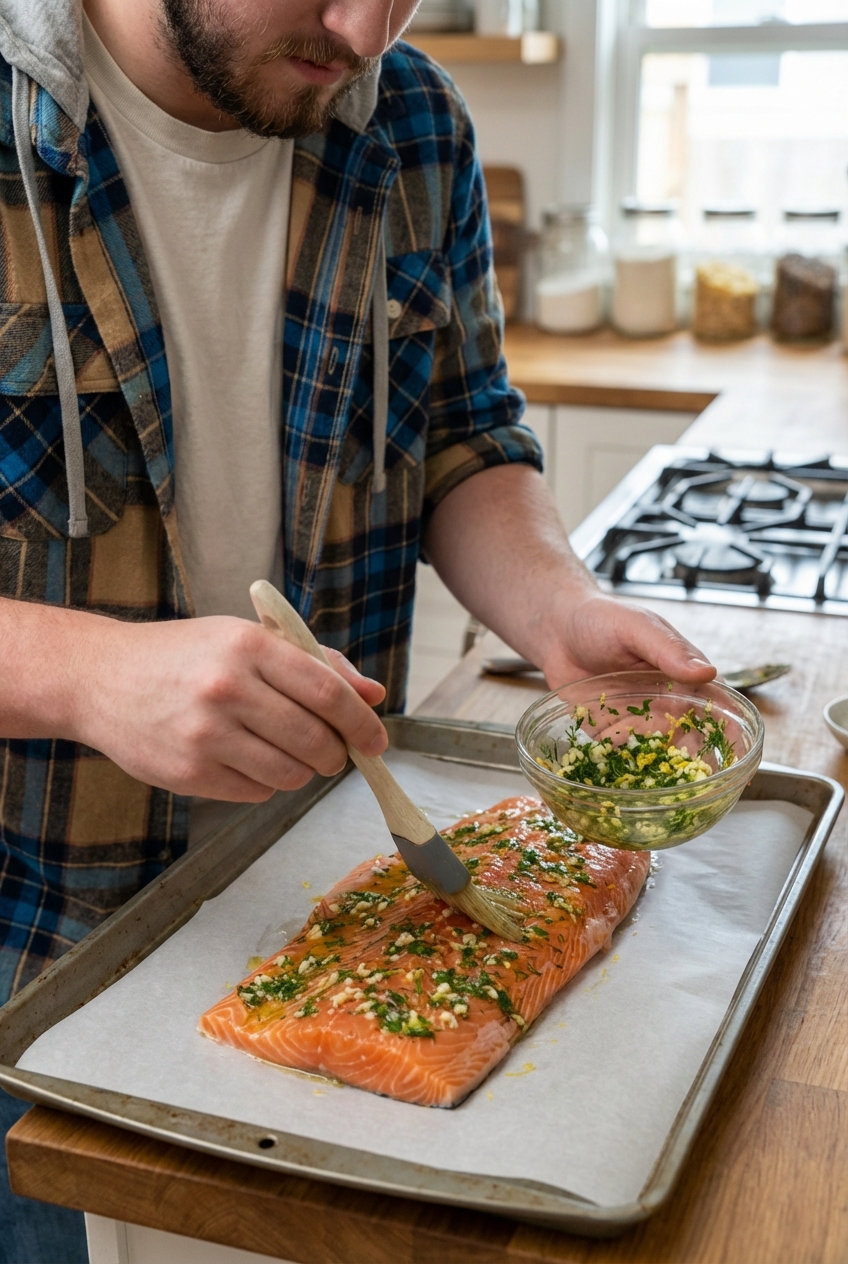
A close-up of a salmon fillet being brushed with a lemon garlic herb mixture on a parchment-lined baking sheet

If you are new to salmon, this is a friendly entry point. If you already love it, this is the kind of weeknight staple you will memorize without trying.
Why It Works

  • High flavor, low drama: Lemon, Dijon, garlic, and herbs create a sauce that tastes like you tried harder than you did.
  • Moist salmon every time: A quick roast at a higher heat cooks fast and keeps the fish tender.
  • One pan cleanup: Parchment or foil turns this into the kind of meal you can make on autopilot.
  • Rustic flexibility: Works with fillets or a whole side of salmon, and you can swap herbs based on what is in your fridge.

Doneness target: Pull the salmon when it flakes easily and is still slightly glossy in the thickest part. For best texture, many cooks aim for an internal temperature of 125°F to 130°F for medium. If you prefer it more done, aim for 135°F to 140°F. USDA guidance is 145°F at the thickest part. It will carry over a few degrees as it rests.

Pairs Well With

Storage Tips

Leftover salmon is a gift, as long as you treat it gently.

Refrigerator

  • Cool leftovers within 2 hours.
  • Store salmon in an airtight container for up to 3 days.
  • Keep any pan juices separate if you can, then spoon them over when reheating.

Freezer

  • Freeze in a tightly sealed container for up to 2 months.
  • Thaw overnight in the fridge for best texture. Avoid thawing fish on the counter.

Best ways to reheat

  • Oven (best): 275°F for 10 to 15 minutes, covered loosely with foil, until just warmed through.
  • Skillet (fast): Low heat with a splash of water or broth, lid on, 3 to 5 minutes.
  • Microwave (if you must): 50% power in short bursts. Stop early. Salmon goes from tender to dry in seconds.

Leftover idea: Flake cold salmon into a salad with cucumbers, capers, and a lemony yogurt dressing, or tuck it into a wrap with greens and pickled onions.

Common Questions

Do I need to rinse salmon before cooking?

No. Rinsing can spread bacteria around your sink. Pat it dry with paper towels instead so the surface roasts, not steams.

Should I bake salmon covered or uncovered?

Uncovered gives you better texture and a little edge caramelization. Covering can be helpful if your fillets are very thin and you are worried about drying out, but most of the time uncovered wins.

How do I keep salmon from sticking to the pan?

Use parchment paper (my favorite), or foil brushed with oil. If you are using foil or a bare pan, let the salmon cool for a minute or two after roasting, then lift gently with a fish spatula.

Can I use frozen salmon?

Yes. For the most even results, thaw overnight in the fridge, then pat very dry. You can also bake from frozen, but it often cooks less evenly at higher heat. If you do it, plan on adding time and keeping a close eye so the outside does not dry out before the center is cooked through.

What is the white stuff that comes out of salmon?

That is albumin, a protein that coagulates when salmon cooks. It is safe to eat. To reduce it, avoid overcooking and consider letting the salmon sit at room temp for 10 minutes before baking.

How do I know it is done without a thermometer?

Use a fork at the thickest part. If it flakes easily and the center is slightly translucent but not raw-looking, you are in the sweet spot.

I learned pretty quickly that homestyle food is not about doing less, it is about doing the right things. This salmon is one of those recipes I started making when I wanted practical kitchen skills more than perfect plating. One pan, a sauce you can memorize, and a result that tastes like you had a plan. The first time I nailed that juicy center with a little crisp edge, I remember thinking: okay, this is restaurant energy, but in sweatpants. That is the kind of win I am always chasing.