
Pull up a chair. Let’s take this zucchini bread mystery one clear step at a time.
When a classic cinnamon zucchini loaf sinks in the middle, it usually means the center never set firmly enough to hold its own once it cooled. Zucchini brings a lot of moisture to the party (bless it), and quick breads are extra sensitive to small changes in wet-to-dry balance, pan size, mixing, and oven heat.
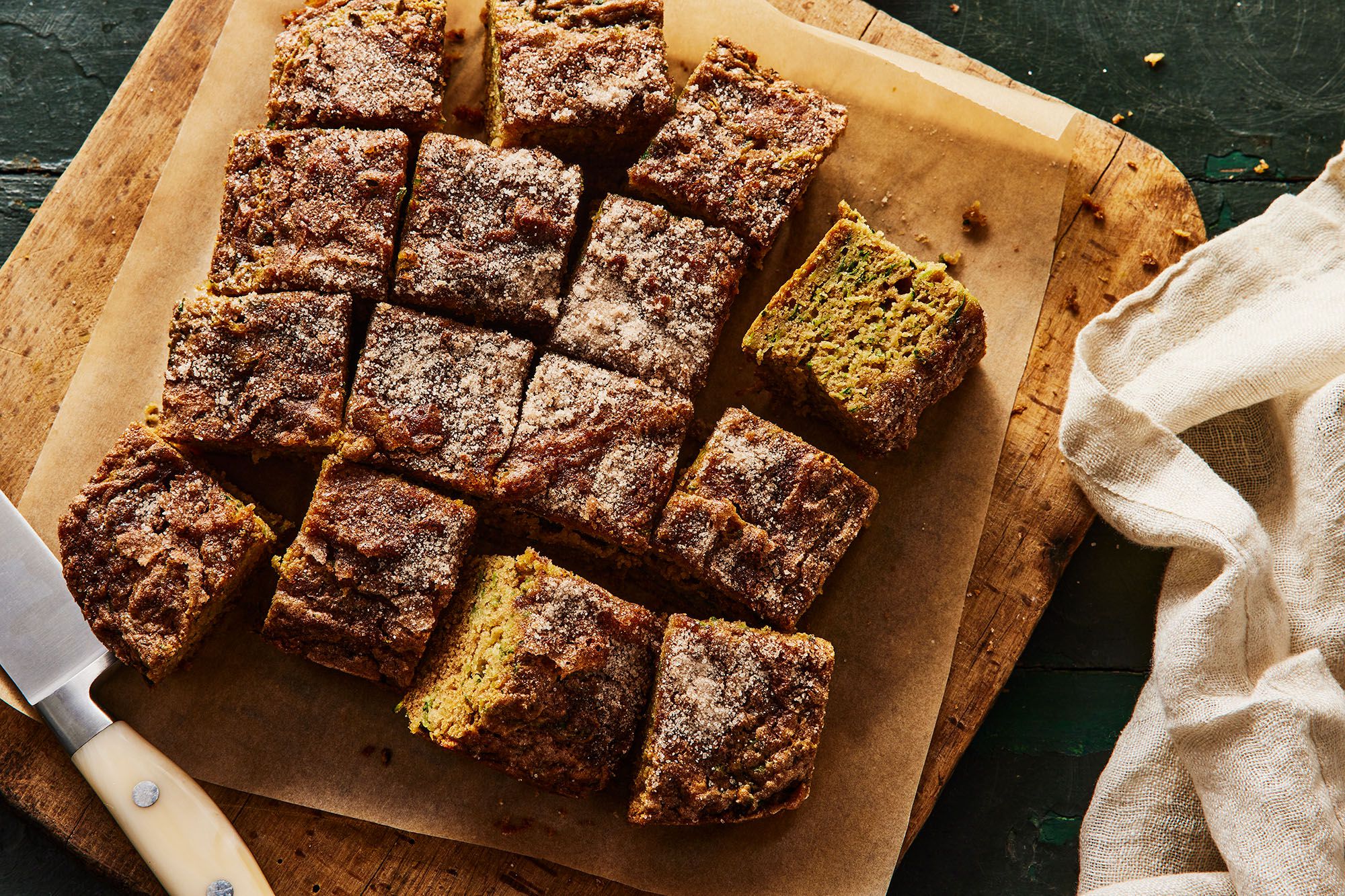
First, do a quick diagnosis
Before we blame your baking powder or start interrogating innocent eggs, check these clues. They point you toward the most likely cause.
- Sank a lot and looks damp or gummy in the center: underbaked, too much moisture, or oven running cool.
- Sank a little with a tight, heavy line through the middle: often too-wet zucchini or overmixing, sometimes underbaking.
- Rose high then collapsed dramatically: pan overfilled, too much leavening, or big temperature swings during baking.
- Edges look done but center is still soft: oven temperature issue, wrong pan size, pan color/material browning too fast, or loaf too thick for the bake time.
Cause 1: Zucchini was too wet
Zucchini is basically a tiny sponge in a green jacket. If you grate it and toss it straight in, you might accidentally add an extra splash of water to the batter. That extra moisture can keep the center from setting, so it rises in the oven, looks proud, then sinks as it cools.
Fix
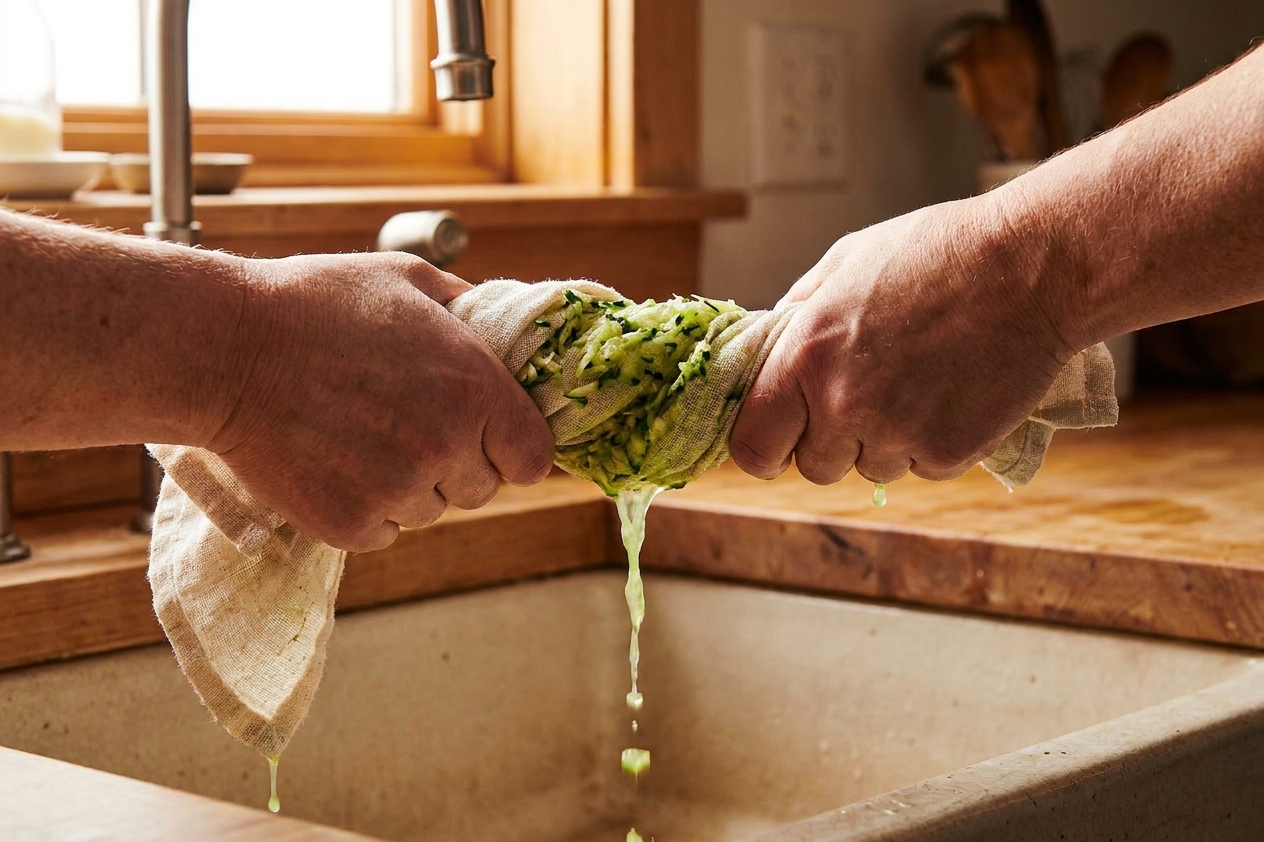
- Squeeze the grated zucchini: Put it in a clean kitchen towel (or several layers of paper towel) and wring out moisture over the sink.
- Aim for “damp, not dripping”: The zucchini should still feel pliable and moist, but you should not be able to squeeze out more liquid with a gentle press.
- If your zucchini is huge and seedy: Scoop out the watery seed core before grating. The center is where a lot of extra liquid hides.
Doneness cue tied to this problem
Look for a fully set center dome: When the loaf is done, the center should look matte and baked, not shiny or wet. If the center still looks glossy, it needs more time even if the edges look perfect.
Cause 2: The pan was overfilled
Quick breads need room to rise and then finish baking through. If the pan is too full, the batter climbs fast, the outside sets first, and the inside struggles to catch up. That can lead to a dramatic dip right down the middle once the loaf leaves the oven.
Fix
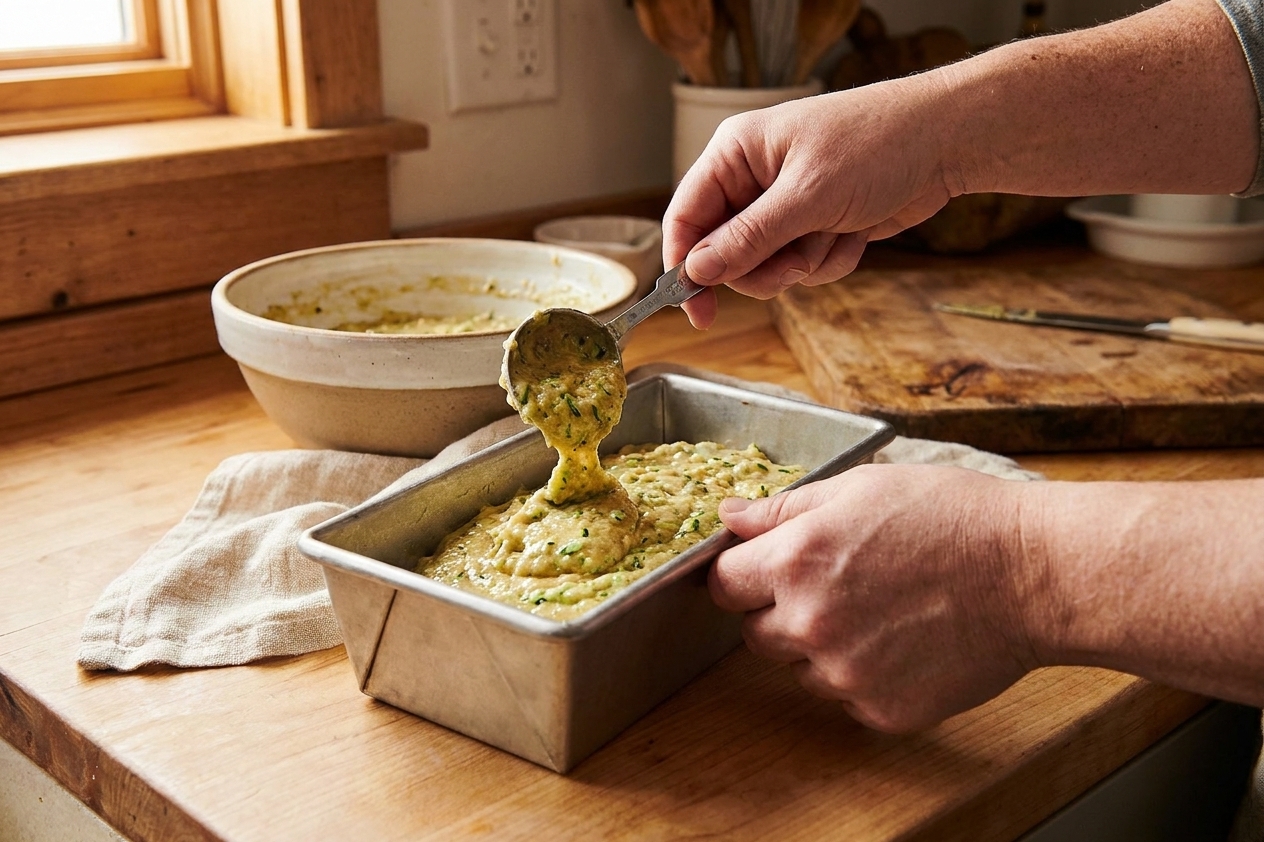
- Fill only 2/3 to 3/4 full: That’s the sweet spot for most zucchini bread batters.
- If you have extra batter: Bake the remainder in a muffin tin or mini loaf pan rather than packing the main pan.
- Use the right size loaf pan: Many classic zucchini breads are written for a 9 x 5-inch loaf pan. An 8.5 x 4.5-inch pan is smaller and effectively “overfills” faster.
Doneness cue tied to this problem
Check the deepest part, not the prettiest: Insert a toothpick or thin skewer into the center. You want it to come out with a few moist crumbs, not wet batter. If you hit a stretchy, underbaked pocket, keep baking.
Cause 3: It was underbaked
Zucchini bread can fool you because the top can brown beautifully while the center is still finishing up. If you pull it when the middle is just barely set, it can sink as steam escapes and the structure relaxes.
Fix
- Extend baking time in small increments: Add 5 to 10 minutes at a time, checking the center each round.
- Use foil if the top is getting too dark: Loosely tent the loaf with foil for the last part of baking so the middle can finish without the crust overbrowning.
- Let it rest in the pan briefly: Cool 10 to 15 minutes in the pan, then turn out to a rack. Turning it out immediately can stress a still-soft center.
Doneness cue tied to this problem
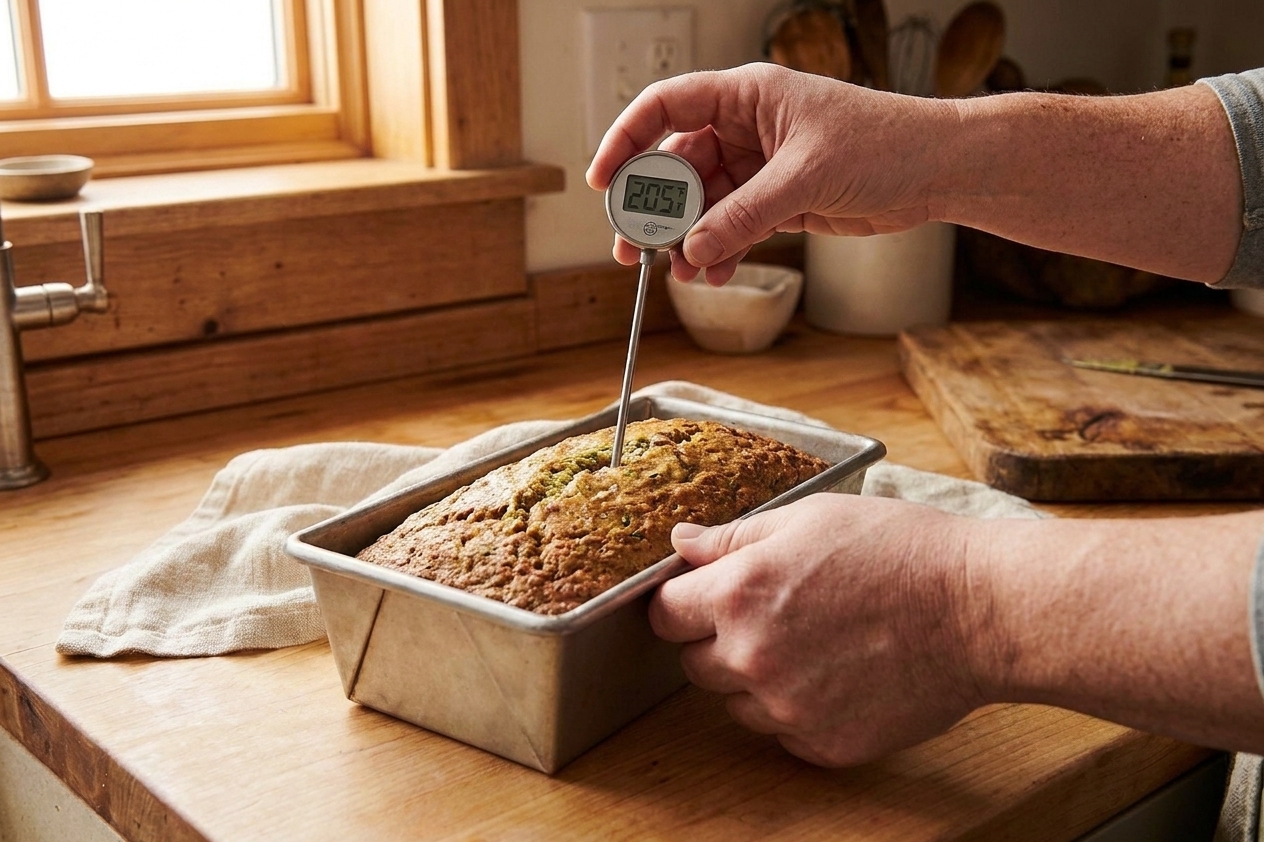
- Internal temperature: If you use an instant-read thermometer, many zucchini breads are done around 200°F to 205°F in the center. Use this along with the skewer test. If you still see wet batter, it is not ready yet.
- Touch test (secondary): Gently press the center of the loaf top. It should spring back. If it leaves a dent, it is not done yet. This is a helpful hint, but pair it with a skewer or thermometer for the final call.
Cause 4: Your oven runs cool
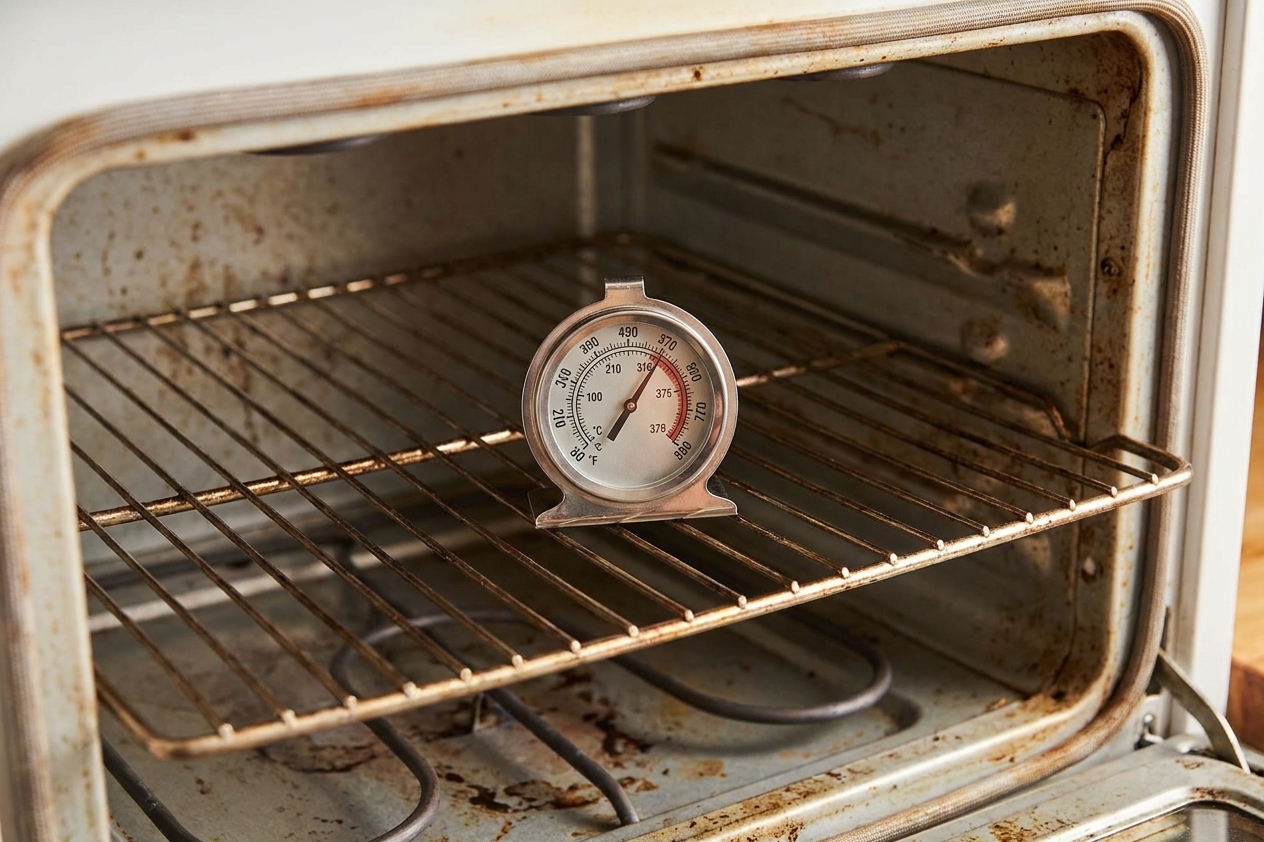
If your oven temperature is lower than the dial says, the outside of the loaf may brown eventually, but the center may never get the heat it needs in time to set properly. That’s how you end up with a loaf that looks finished, then sinks and turns gummy as it cools.
Fix
- Use an inexpensive oven thermometer: Place it in the center of the oven and preheat fully. Check whether your oven is actually at the set temperature.
- Give your oven extra preheat time: Many ovens beep “ready” before they are truly stable.
- Adjust bake time or temperature if needed: If your oven runs consistently cool, you may need a small temperature bump (often 15 to 25°F) or a longer bake time. Make changes gradually.
Doneness cue tied to this problem
Don’t trust color alone: In a cool oven (or in a dark pan), the loaf can brown from sugar and spices before the crumb sets. Use the toothpick test and, if you can, the internal temperature cue to confirm the center is done.
Cause 5: Overmixing the batter
Quick breads are not looking for a workout. If you mix hard and long, you can overdevelop the gluten, which often shows up as a dense line or a tight, heavy strip through the middle. That heavier center can struggle to set and may sink as it cools.
Fix
- Mix just until combined: Stir until you no longer see dry flour. A few small lumps are fine.
- Fold in zucchini gently: Add it at the end and stir only enough to distribute it.
Doneness cue tied to this problem
Look at the crumb, not just the height: Overmixed loaves can look tall but slice up gummy or tight in the center. Use the skewer test and give it time to cool before judging the texture.
Cause 6: Leavening issues
Too much baking soda or powder can make a loaf rise fast, then fall when it cannot support itself. On the flip side, old leavening can leave you with a dense loaf that never quite sets right in the middle. Either way, it can look like a sinking problem.
Fix
- Measure carefully: Level off measuring spoons. In quick breads, a small extra scoop can matter.
- Check freshness: Baking powder and baking soda lose strength over time. If yours has been living in the back of the pantry since a different administration, replace it.
Doneness cue tied to this problem
Watch for an early, dramatic rise: If the loaf domes quickly, browns fast, and then dips before it is even out of the oven, double-check your leavening measurements next time.
Two sneaky helpers that prevent sinking
Let the loaf cool correctly
A hot quick bread is still setting up inside. Cool it 10 to 15 minutes in the pan, then turn it out onto a rack so steam can escape without making the bottom soggy. Cooling too long in the pan can trap moisture, but turning it out too soon can collapse a delicate center.
Measure flour the same way every time
If you scoop flour straight from the bag, it’s easy to pack in extra flour one day and less the next. That changes structure and how the loaf sets. A simple fix is to spoon flour into the measuring cup and level it. (A kitchen scale is even steadier, but I won’t make you buy one before breakfast.)
Can you still eat a sunken loaf?
Usually, yes. A sunken center is often a texture issue, not a safety issue. That said, if the middle is wet, gluey, or looks like raw batter, treat that part like undercooked batter and do not eat it.
If the loaf is only slightly underdone, you can often salvage it by slicing and toasting pieces, or laying slices on a baking sheet and warming them in a low oven until the centers feel baked through. If there are pockets of clearly raw batter, discard those portions.
Quick checklist for next time
- Squeeze grated zucchini until damp, not dripping.
- Fill loaf pans 2/3 to 3/4 full, not to the brim.
- Mix gently just until no dry flour remains.
- Confirm doneness with a skewer test and a set, matte center.
- Use internal temp as a guide (often around 200°F+, plus no wet batter).
- Verify oven temperature with an oven thermometer if sinking keeps happening.
- Measure leavening carefully and replace old baking powder or soda.
And if you want a tiny hedgehog-host secret: most sinking problems are solved by one unglamorous move, giving the loaf a little more time in the oven and confirming the center is truly done. Cozy baking rewards patience. Even when it tries to prank us.