What kind of vinegar is best for chicken adobo?
Many Filipino households use cane or coconut vinegar (and sometimes palm), but availability varies. Distilled white vinegar is a common, sharp option with a clean tang, rice vinegar is softer, and apple cider vinegar adds a gentle fruity note. If you want a brighter, punchier adobo, go with distilled white. If you want a more traditional, rounded vibe, reach for cane or coconut vinegar.
Do I have to follow the “don’t stir” rule?
Some traditional methods avoid stirring right after adding vinegar to prevent a raw vinegar taste. In this recipe, we stir to lift the browned bits (flavor), then simmer it covered so the vinegar cooks through and mellows. The key is a gentle simmer, not a hard boil.
Can I use chicken breast instead of thighs?
You can, but thighs are more forgiving and stay juicy. If using breasts, cut them into large pieces and simmer just until cooked through, then stop. Aim for 165°F (74°C) in the thickest part. Timing can range from about 12 to 18 minutes depending on size, so temperature is the safer guide.
Is adobo supposed to be sour?
It is supposed to be tangy, yes. The vinegar bite mellows as it simmers and mixes with soy sauce and chicken juices. If it ends up too sharp for your taste, stir in 1 to 2 teaspoons of brown sugar or add a splash of water and simmer 2 minutes more.
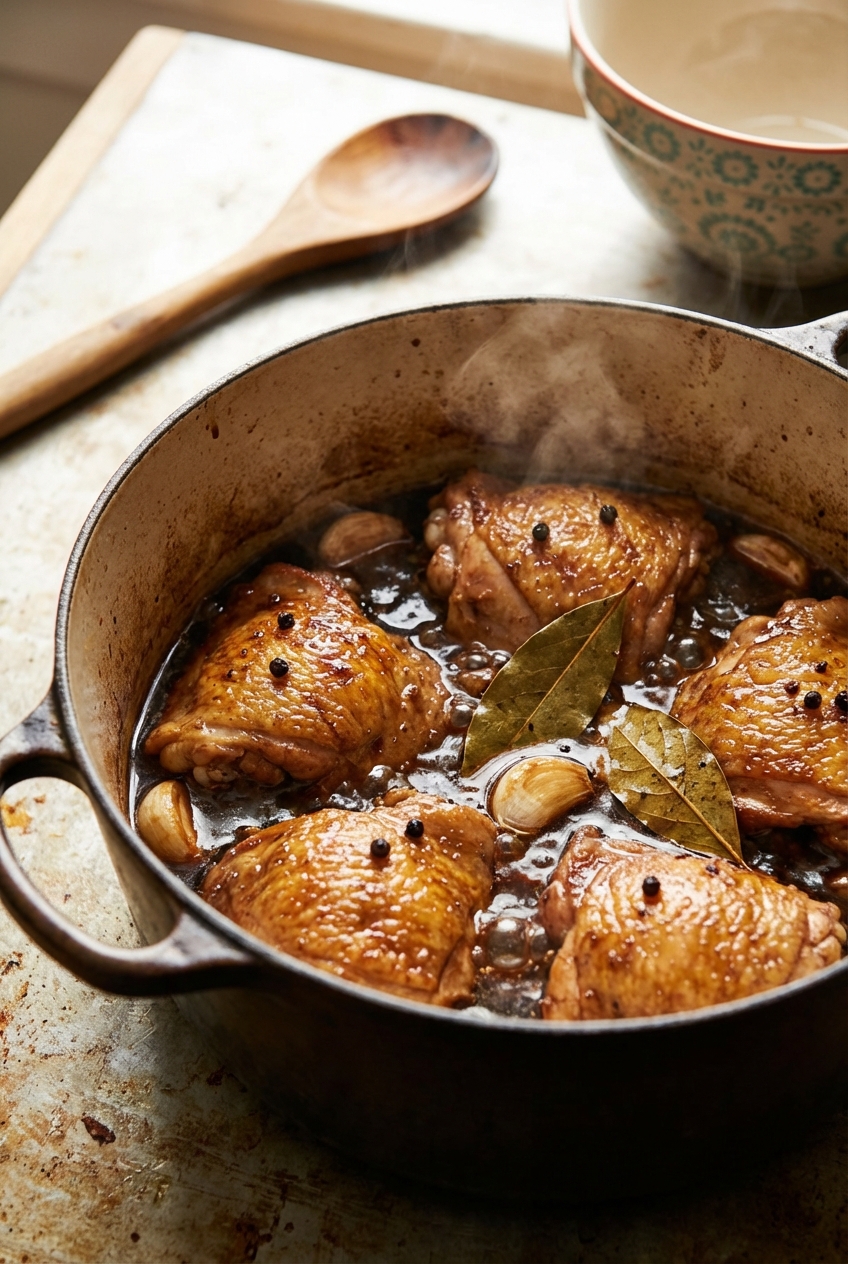
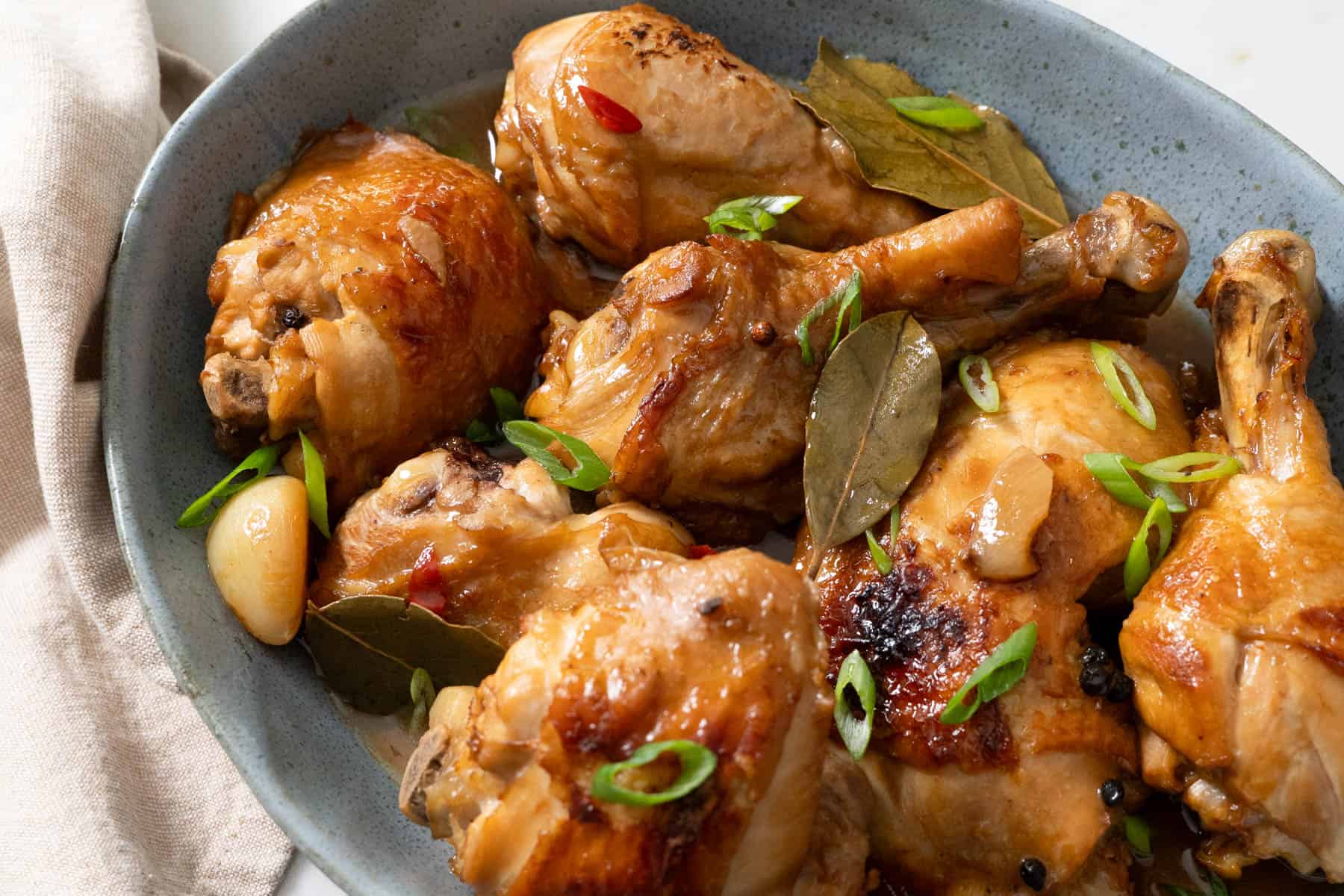
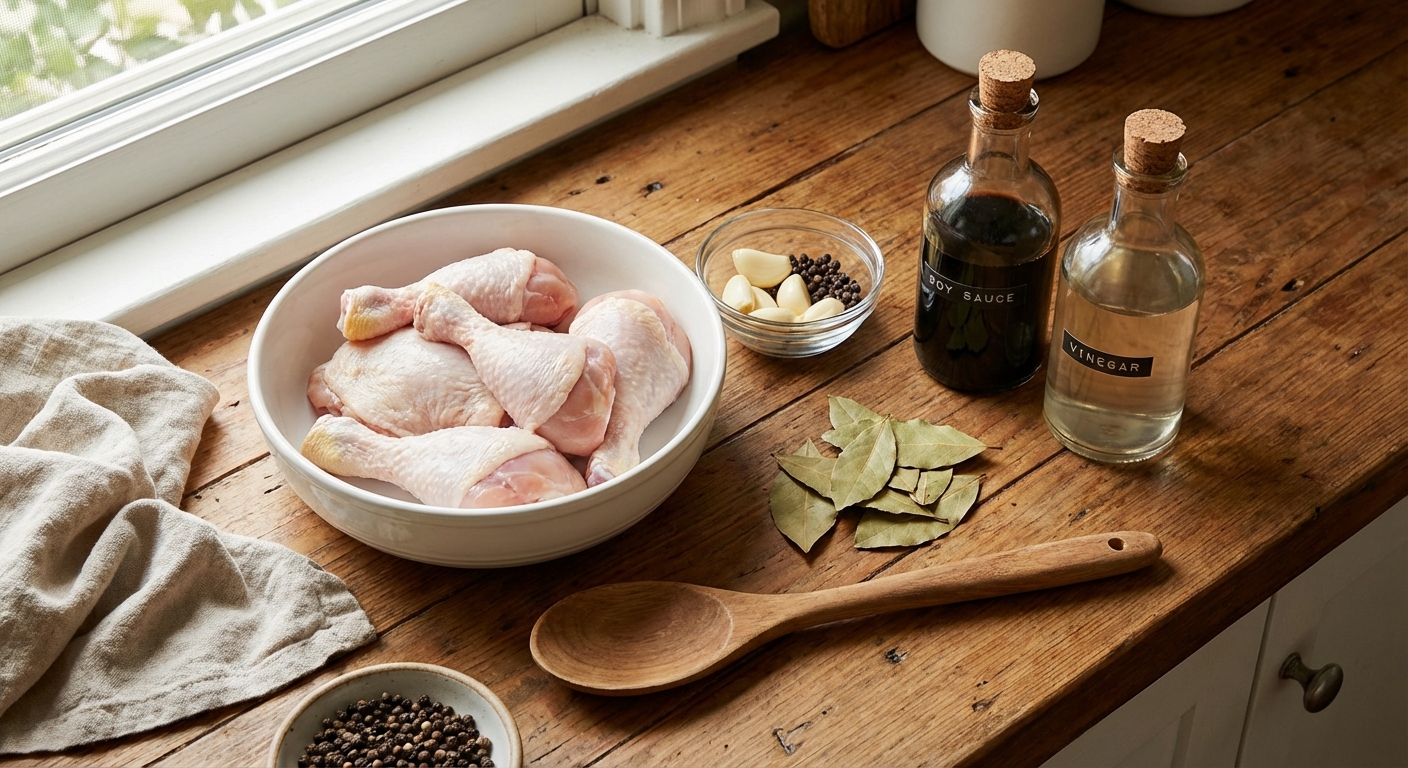
Why are there whole peppercorns and bay leaves?
They are part of the signature adobo aroma. Whole peppercorns give a slow-building warmth without turning the sauce gritty, and bay adds that savory, cozy backbone. Just remove the bay leaves before serving.