Can I use chicken breasts instead of thighs?
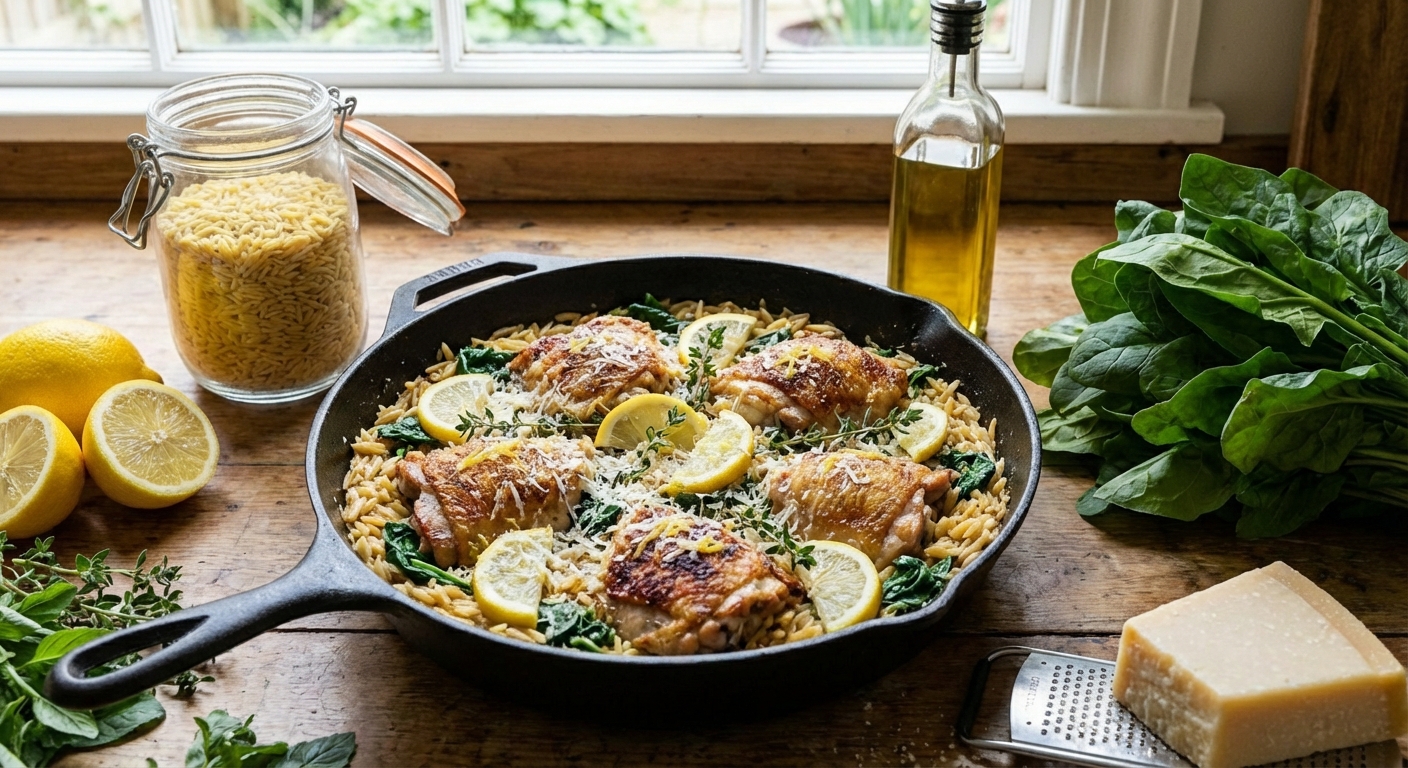
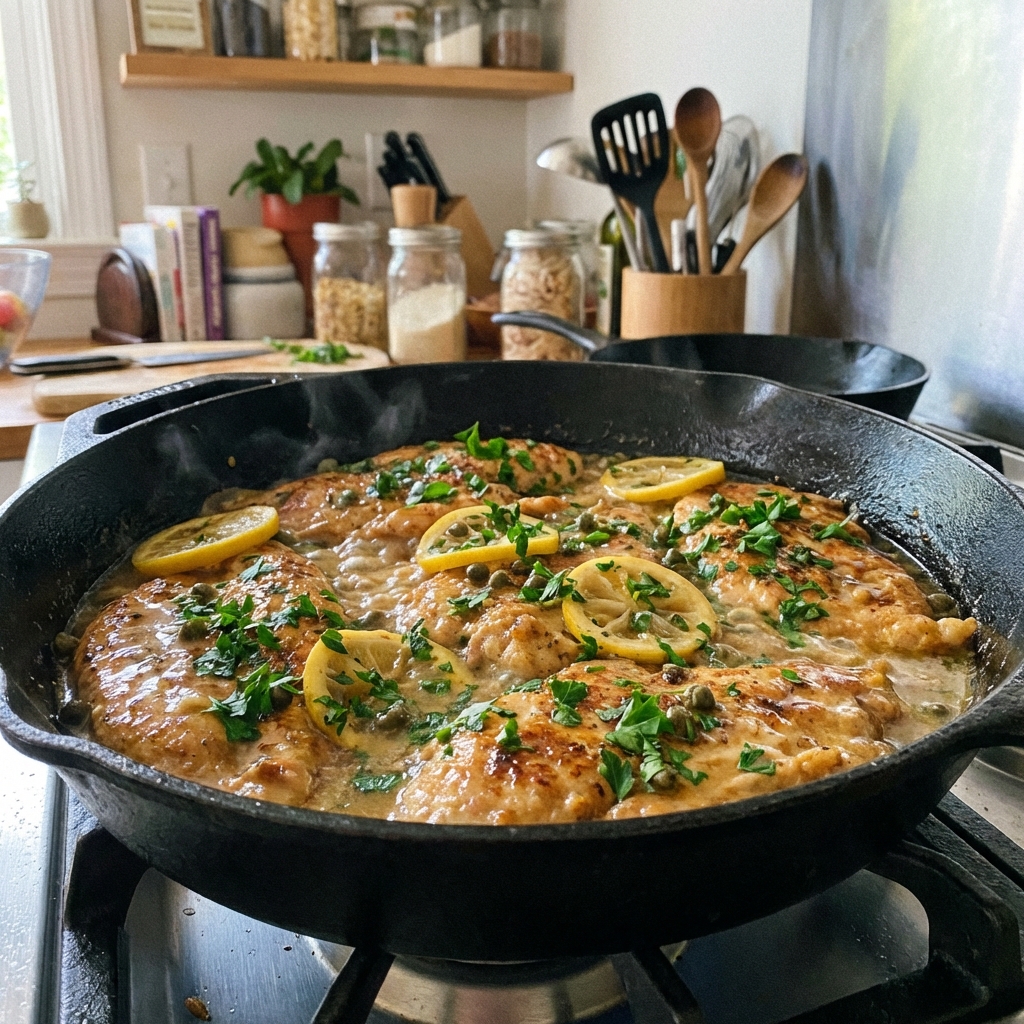
Yes. Pound them lightly so they cook evenly, then sear until just cooked through (165°F). Breasts dry out faster, so pull them earlier and let them rest while the orzo finishes.
Why is my orzo sticking or getting too thick?
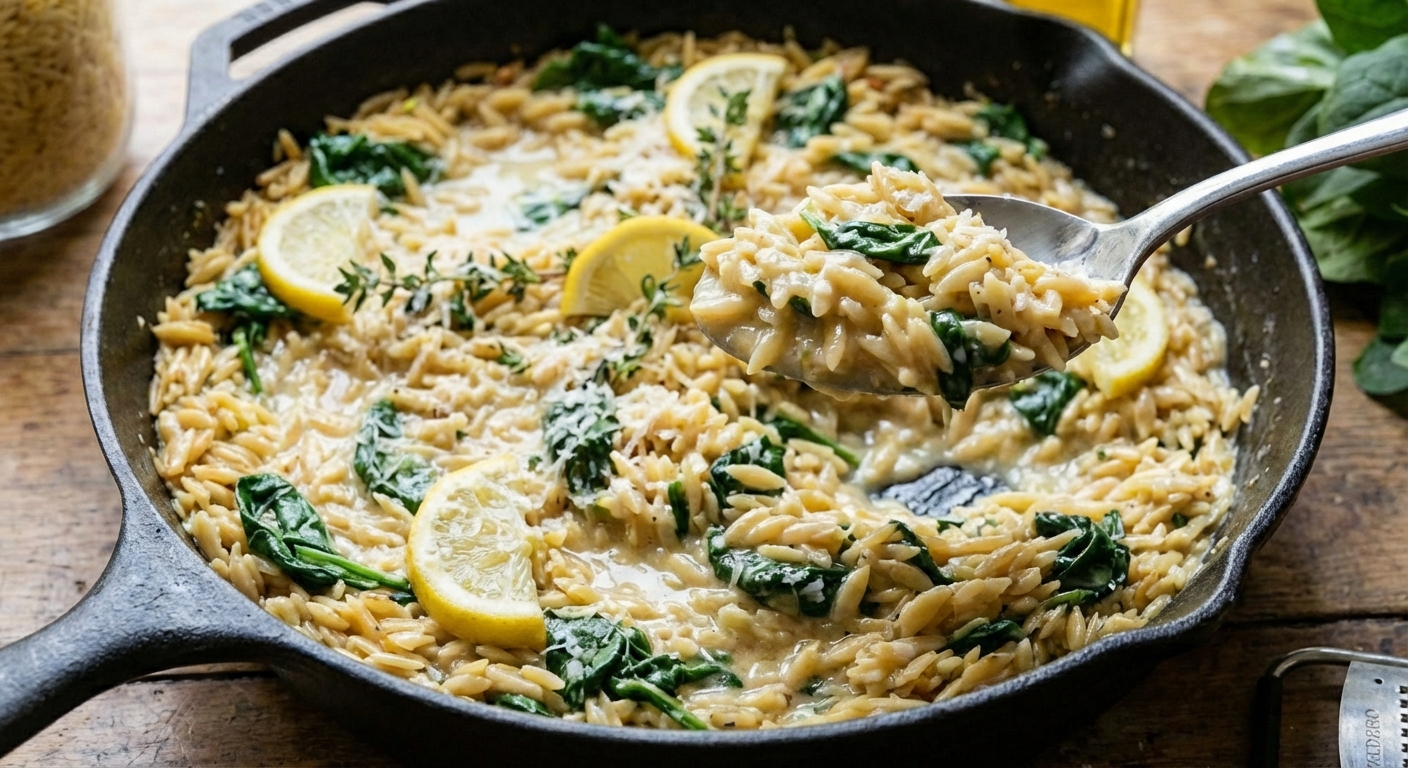
Orzo is a thirsty little pasta. Keep your heat at a gentle simmer (not a hard boil), stir often, and scrape the bottom when you stir. If it looks tight before the orzo is tender, add broth 2 to 4 tablespoons at a time.
My orzo looks soupy. What happened?
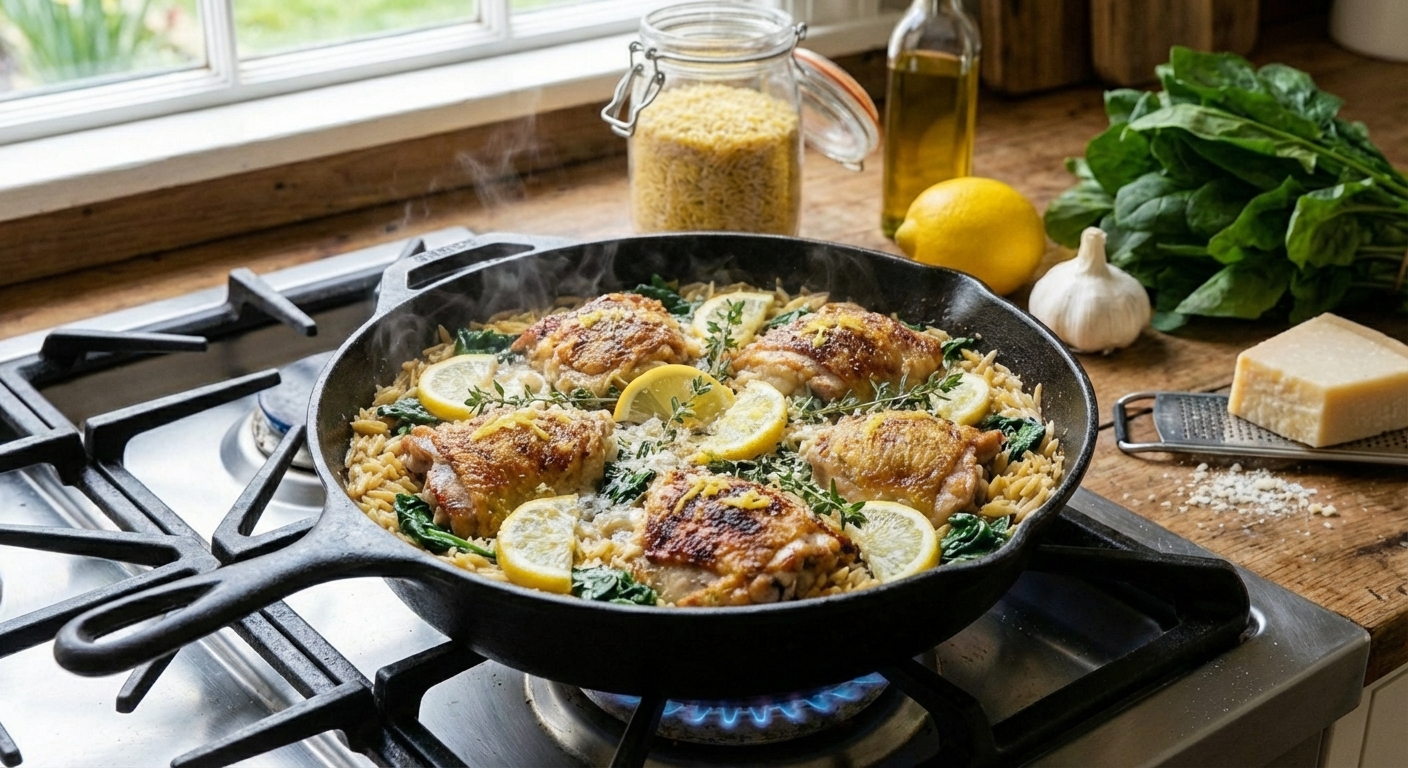
This dish is meant to be glossy and saucy, but pan size and simmer strength really matter. A wide 12-inch skillet plus a steady simmer helps the extra liquid reduce. If you are using a smaller pan or your simmer is very gentle, start with 3 cups broth and add more only as needed.
Can I make this dairy-free?
Absolutely. Skip the Parmesan and finish with extra lemon zest, a drizzle of olive oil, and maybe a spoonful of dairy-free pesto if you have it.
What if I do not have fresh spinach?
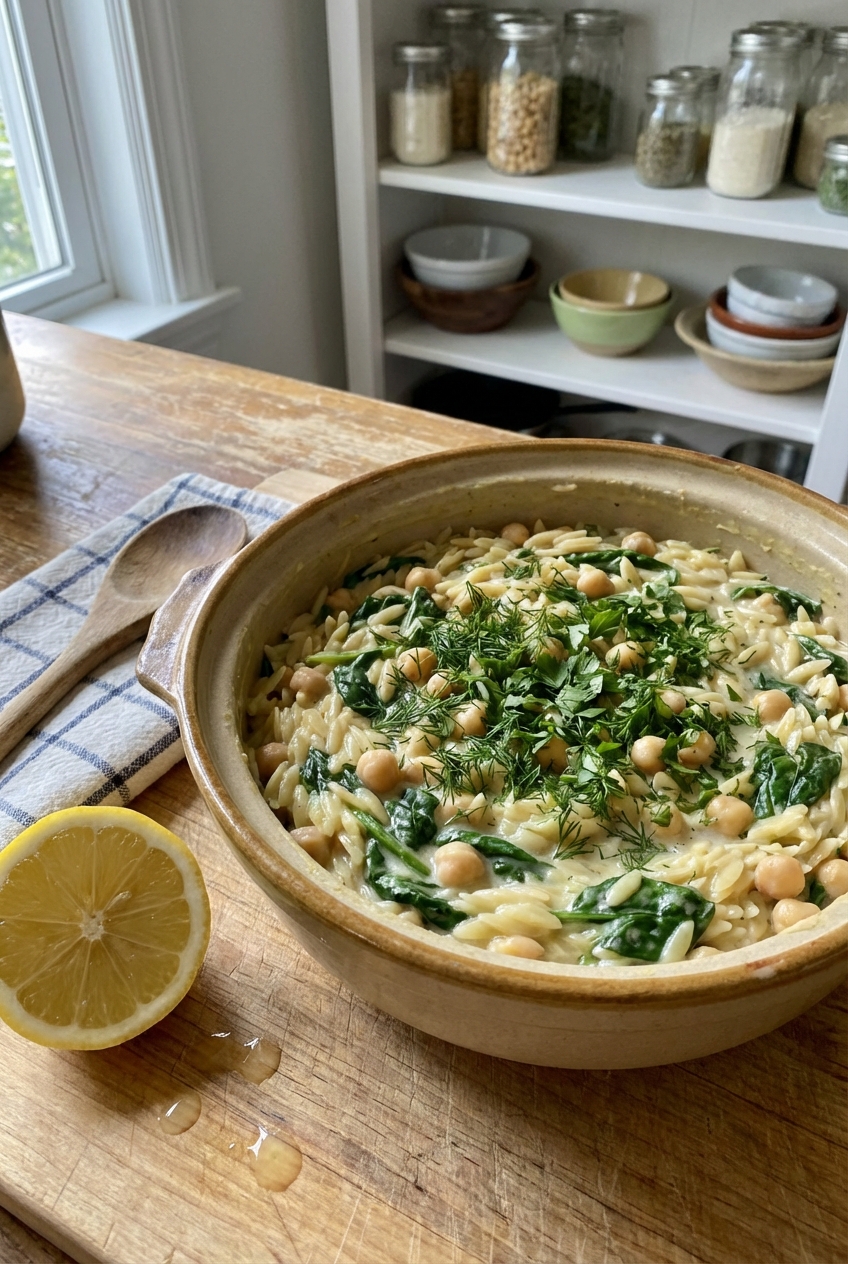
Use kale (slice it thin and give it an extra couple minutes), or stir in frozen peas at the end. Even chopped parsley works for a fresh finish.
How do I keep the chicken skin crispy?
The biggest trick is avoiding steam. After the initial sear, simmer the orzo mostly uncovered (or with the lid slightly ajar) and keep the chicken skin above the liquid. Serve right away, and do not cover the pan at the end. If you are holding it for a few minutes, rest the chicken on a plate, skin-side up, not buried in steam.
How do I know the chicken is done?
The easiest way is a thermometer. Aim for 165°F minimum, but thighs are happiest around 175°F to 185°F for that tender bite. If they are not there when the orzo is done, keep simmering a few more minutes, adding a splash of broth if the pan gets dry.