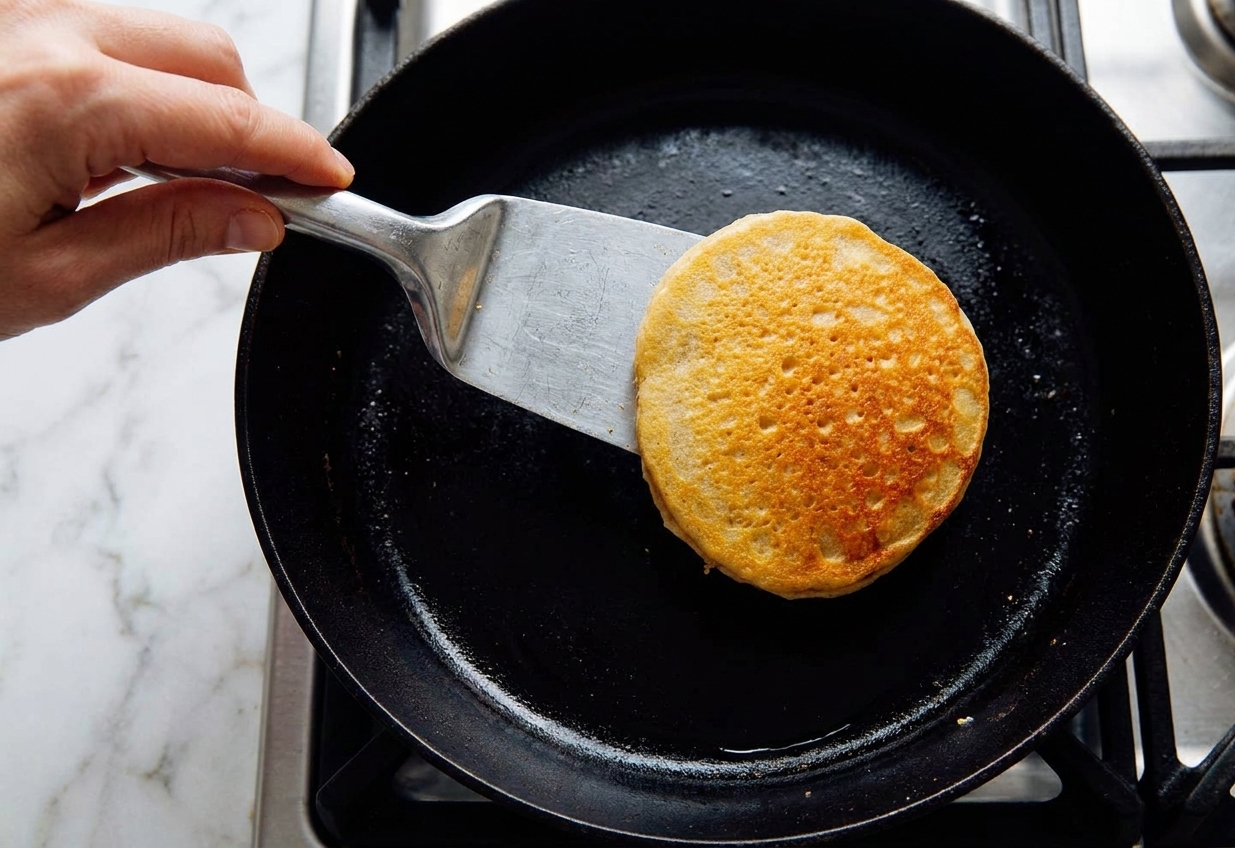
Why are my almond flour pancakes falling apart?
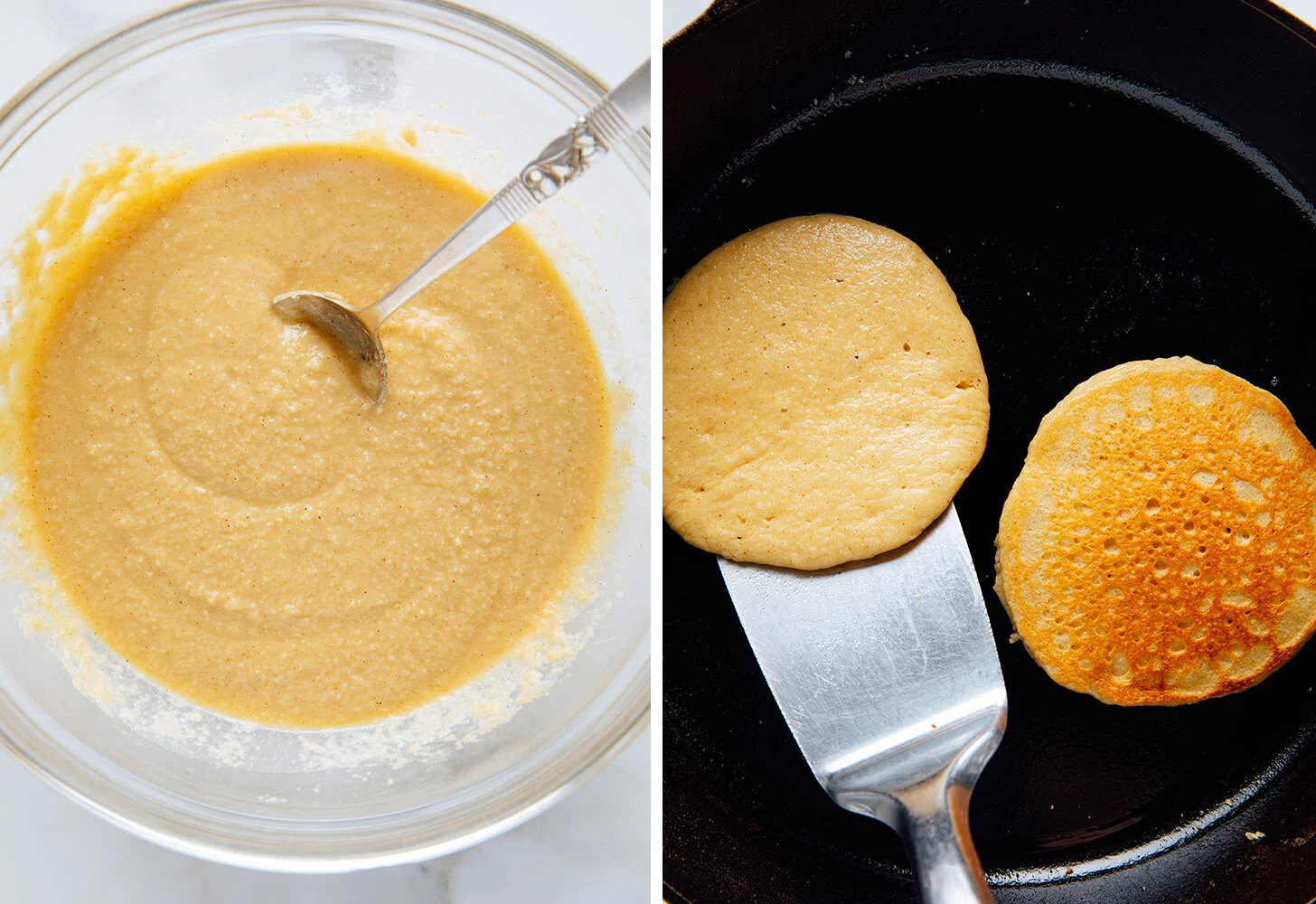
Usually one of three things: the batter is too wet, the pan is too hot, or you are flipping too early. Thicken the batter with 1 to 2 tablespoons almond flour (or a teaspoon of starch), cook on medium-low, and wait until the edges look set and the center has a few bubbles before flipping.
Do almond flour pancakes need a rest?
Yes, even 5 minutes helps. Almond flour tends to thicken as it sits. That short rest gives you a sturdier batter, easier flips, and more even cooking.
Can I make these dairy-free?
Absolutely. Use coconut oil instead of butter and a non-dairy milk (almond milk or oat milk work great). The flavor shifts slightly, but the texture stays solid.
Can I use only almond flour with no starch?
Yes. The pancakes will be a bit more tender and fragile, but still tasty. If you want a sturdier flip and a slightly fluffier bite, add 1 tablespoon tapioca starch. (Cornstarch also works for structure, but it is not keto-friendly.)
Are these pancakes keto?
They can be, depending on sweetener and any starch add-ins. For a more keto-friendly version, skip the cornstarch, use a keto-friendly sweetener, and keep toppings low-carb (butter, sugar-free syrup, or berries in moderation). You can also omit starch entirely for a stricter approach.
How do I know they are cooked through?
They should look set on top (not glossy), feel springy when gently pressed, and be nicely browned on both sides. Keep the heat lower than you think. Almond flour browns fast.
Any allergy notes?
These are made with almond flour (a tree nut). If you are cooking for someone with allergies, always double check labels for cross-contamination and swap as needed.
Does baking powder type matter?
Any baking powder works, but if you are sensitive to the taste, choose an aluminum-free baking powder.