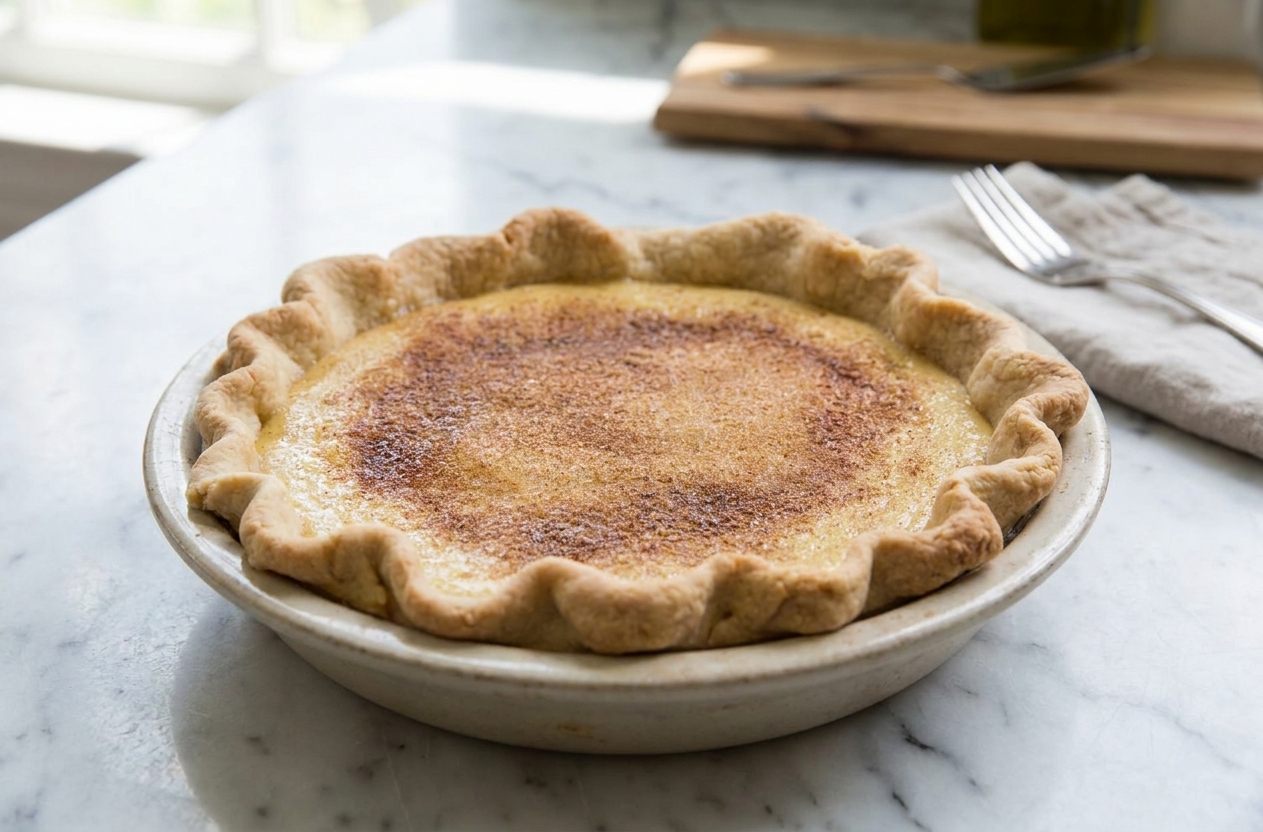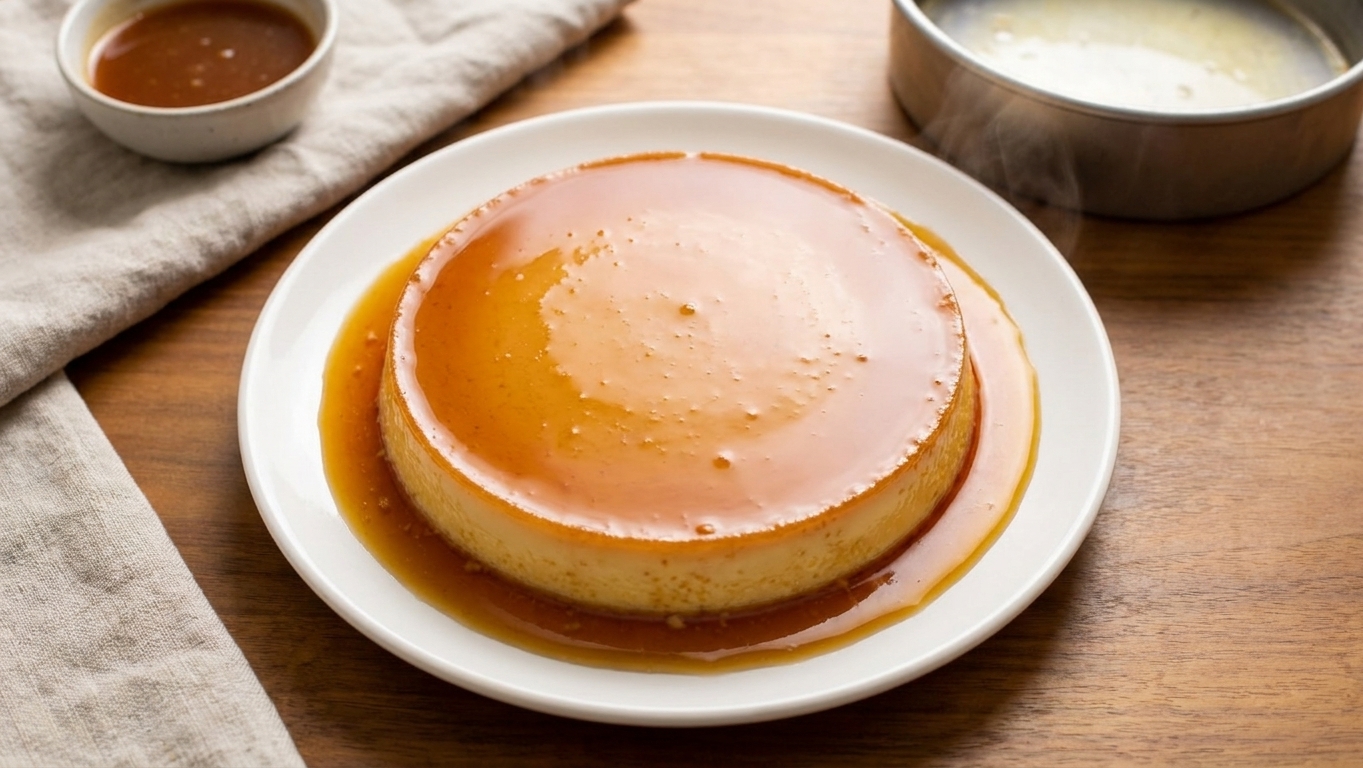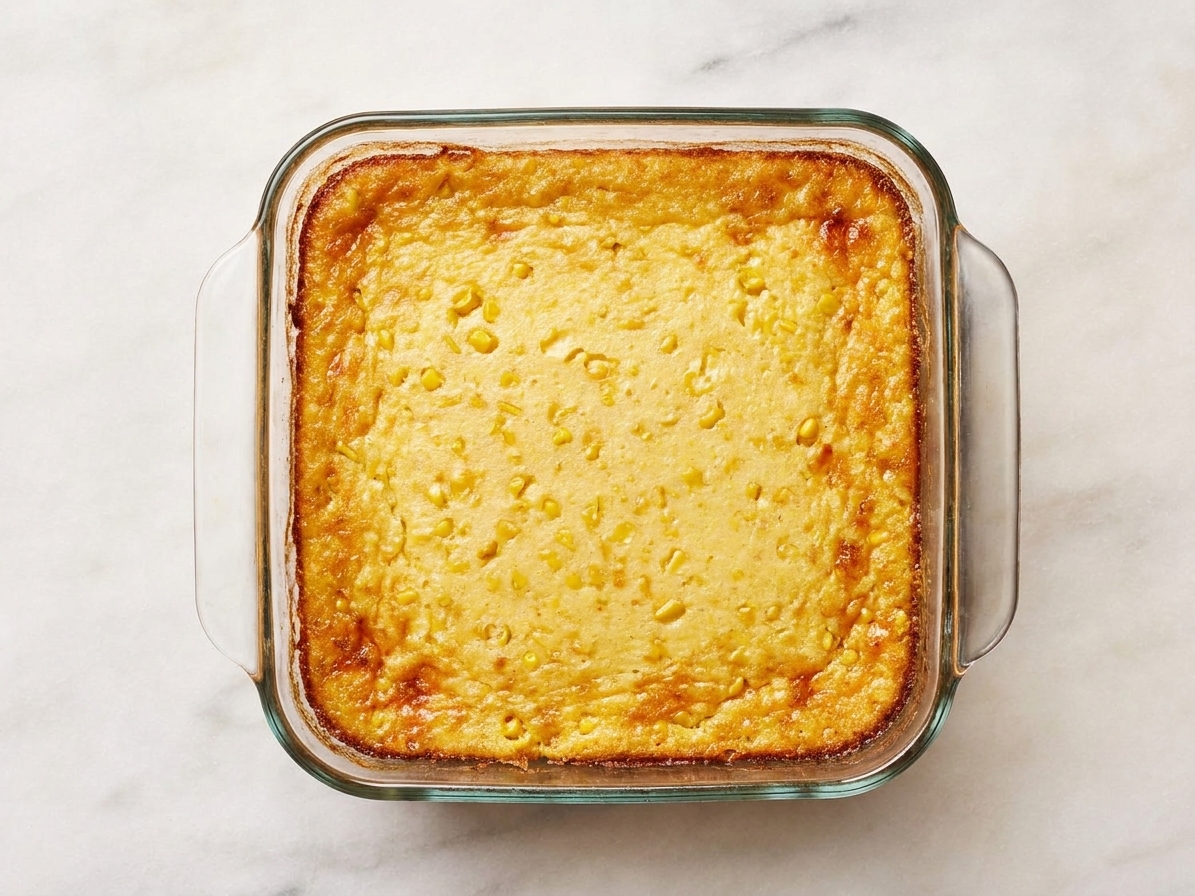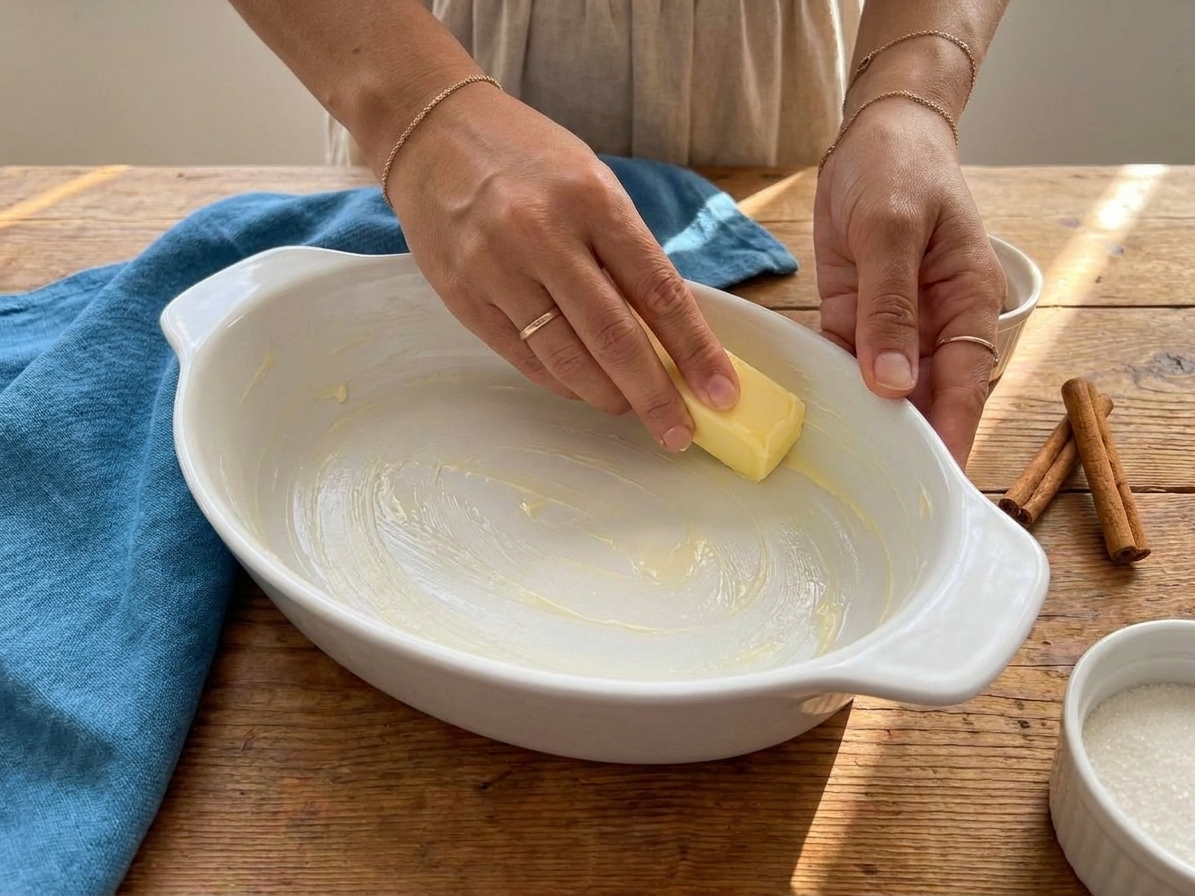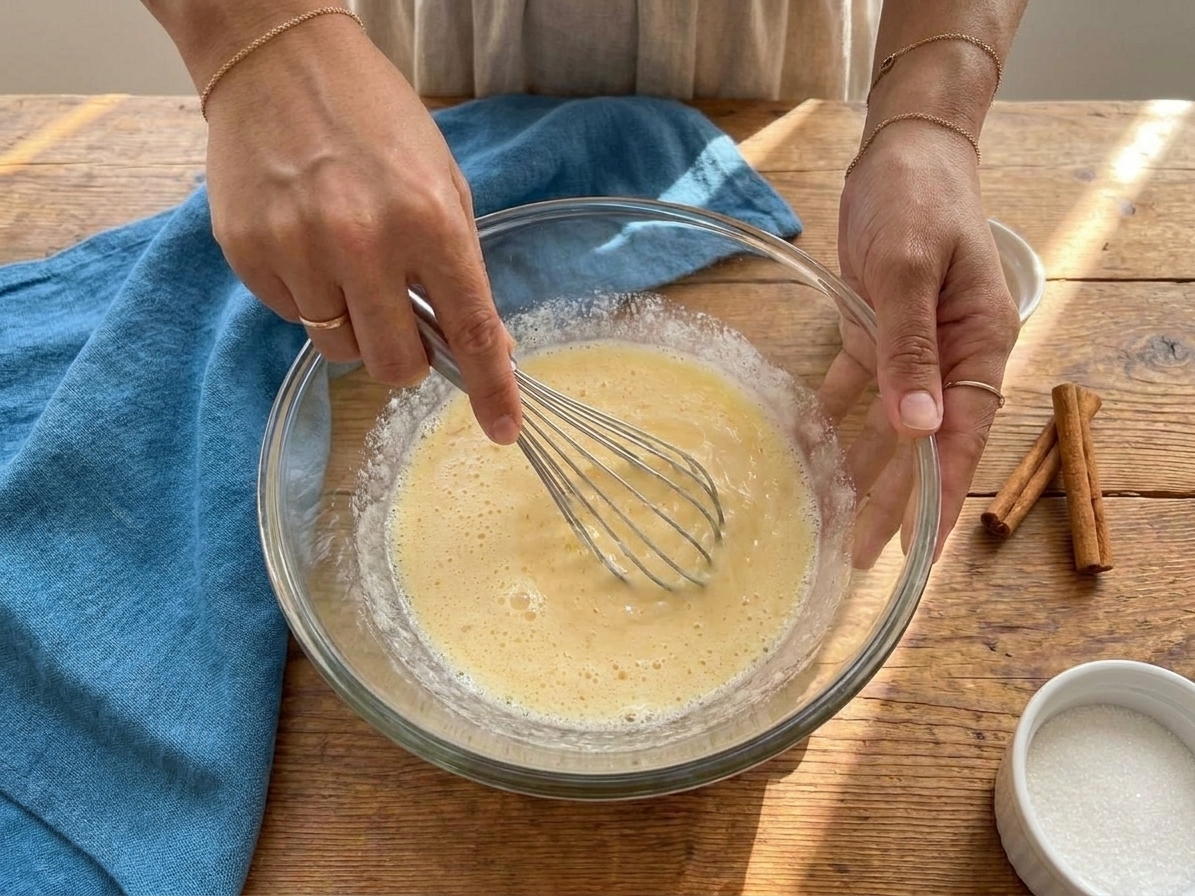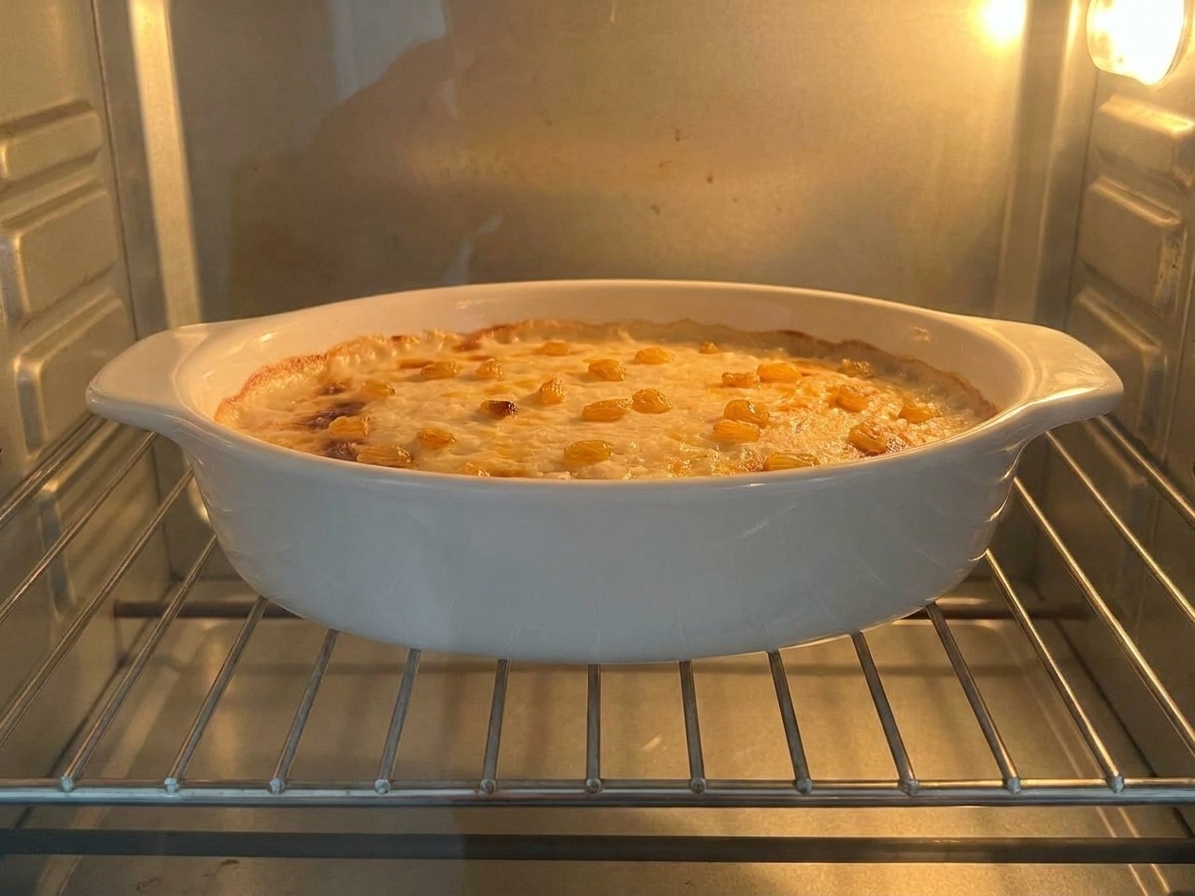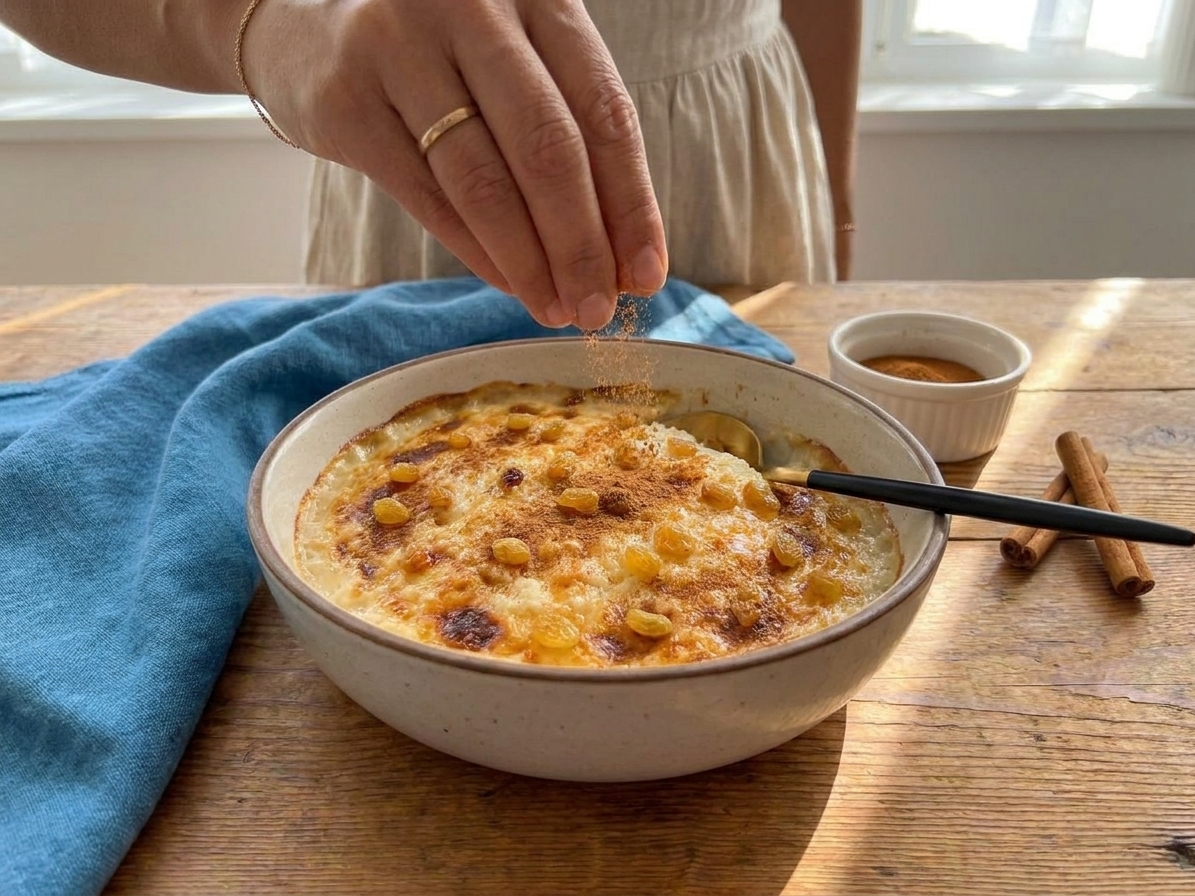
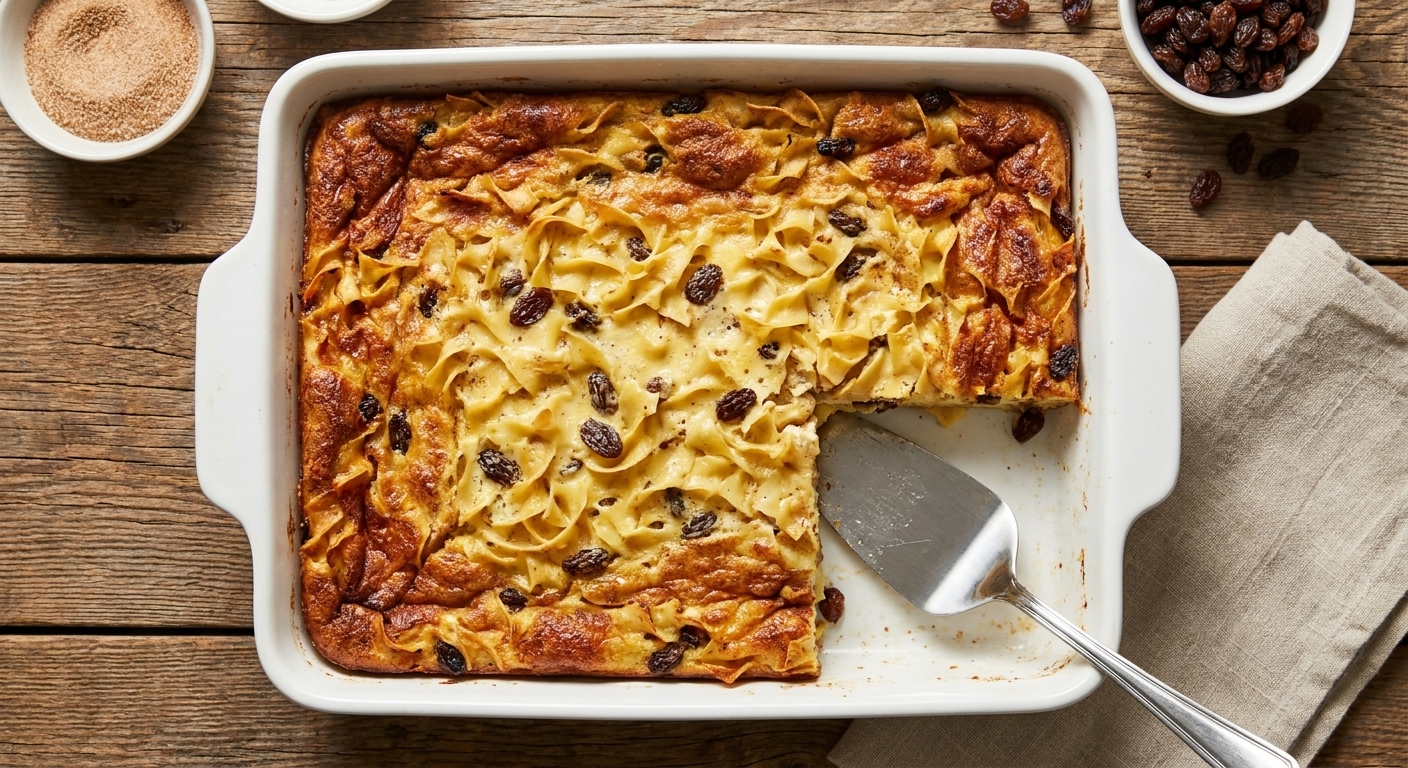
Creamy, custardy noodle kugel with crisp edges, cinnamon warmth, and optional raisins. Simple ingredients, clear steps, and make-ahead friendly.
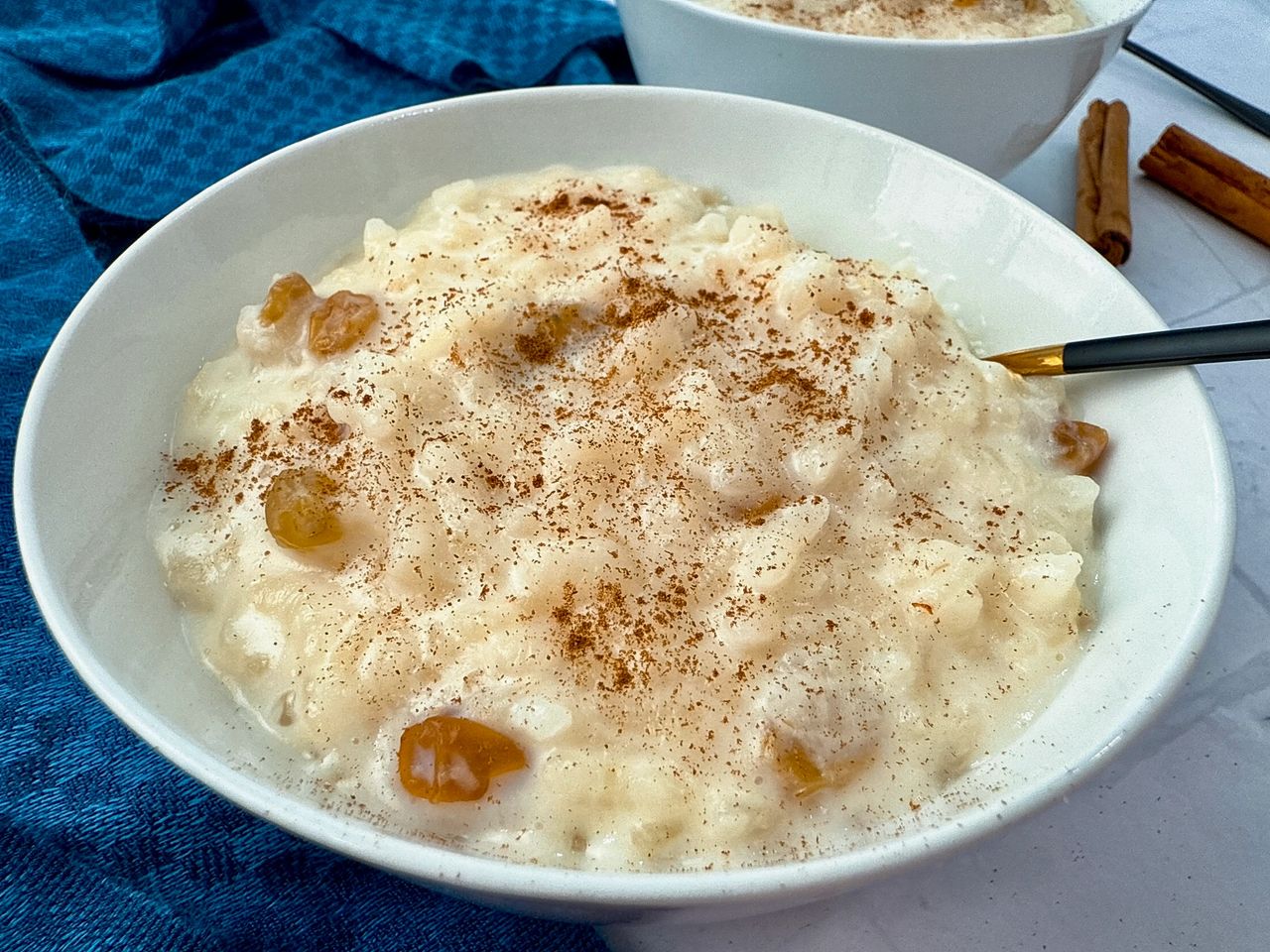
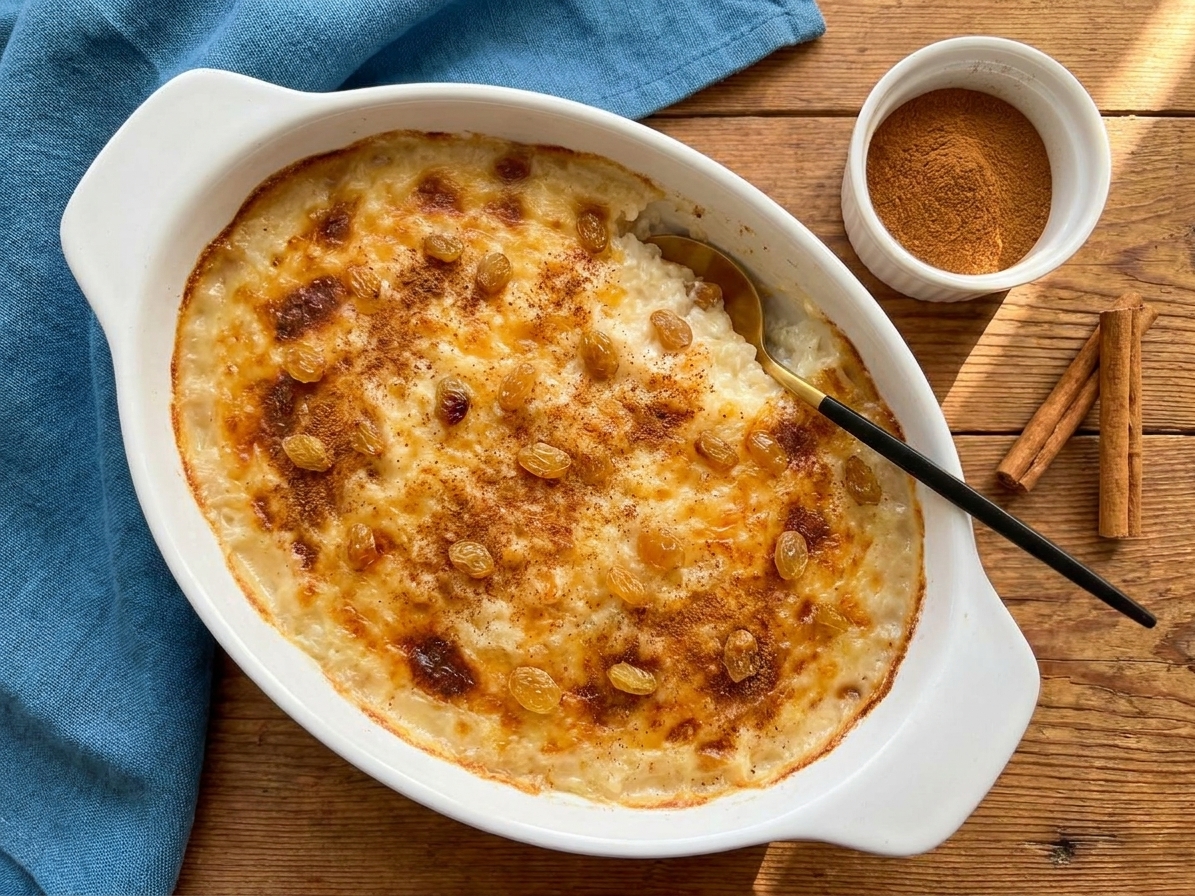
Baked rice pudding is one of those desserts that feels like it has your back. It is warm, calm, and extremely forgiving. You stir a few pantry staples together, slide the dish into the oven, and suddenly your kitchen smells like vanilla, cinnamon, and good decisions.
This version lands right in the sweet spot: creamy center, tender rice, and a softly set, lightly golden top that gives you that tiny bit of “crisp edge” energy without turning the whole thing into rice casserole. We are going for cozy, not chewy.
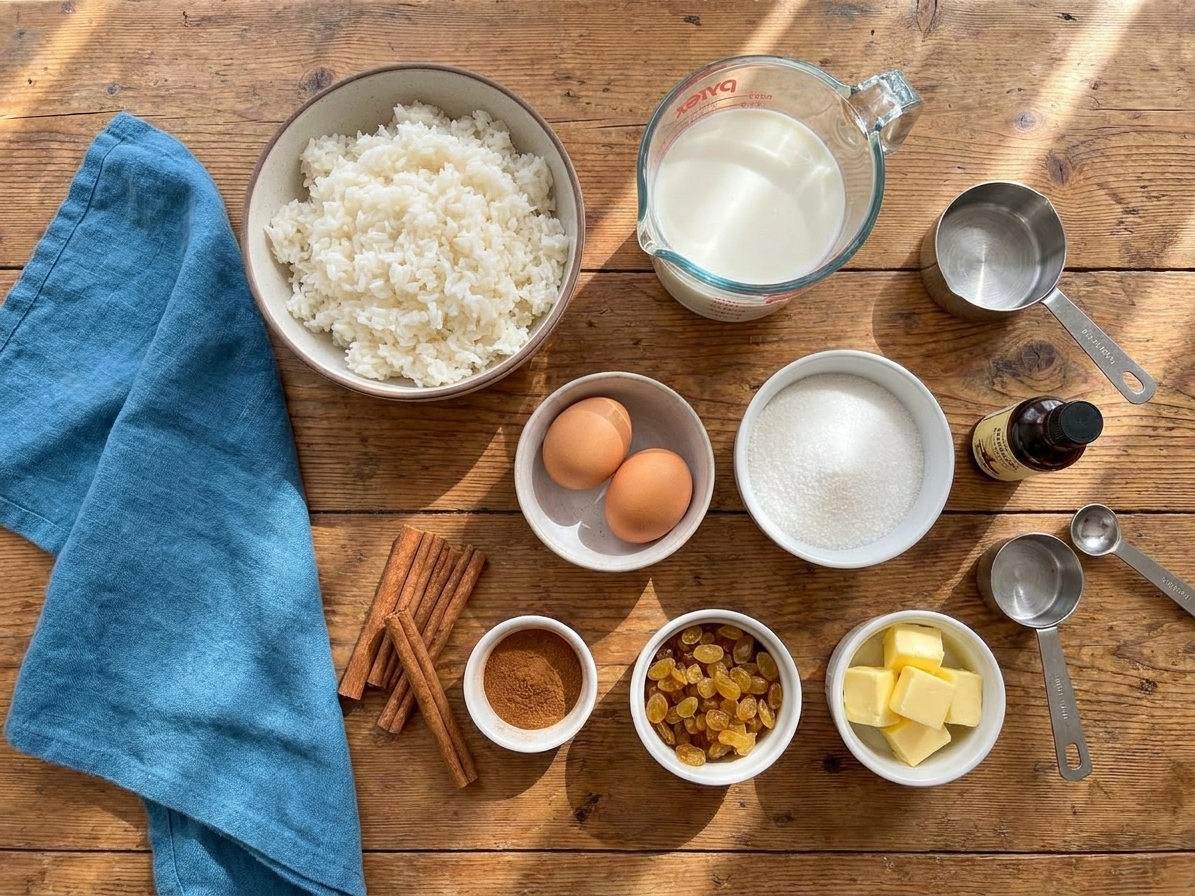
If you have leftover cooked rice, this is your moment. If you do not, I included a quick way to cook it so it turns out pudding-perfect.