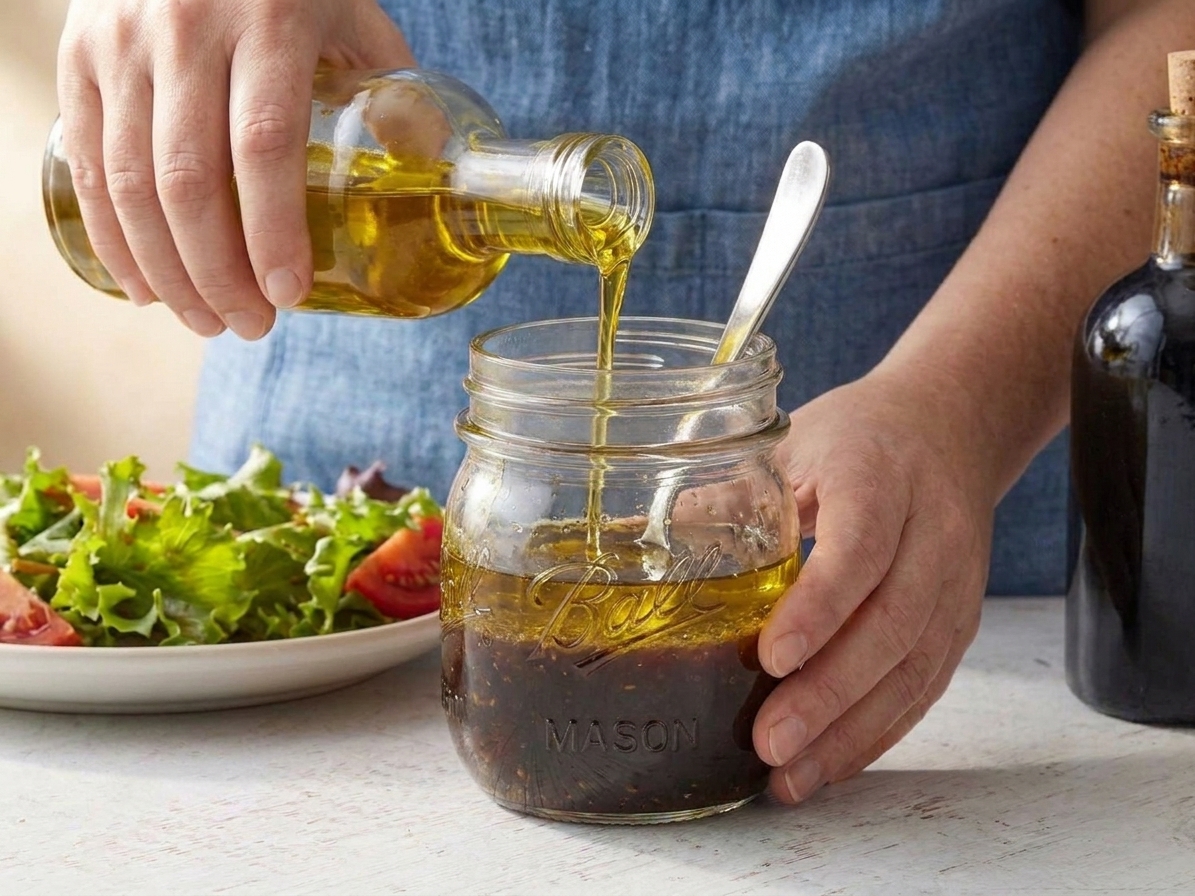
What is the best oil to use for balsamic dressing?
Extra virgin olive oil is the classic choice for flavor. If you want something more neutral, use avocado oil or a mild olive oil. Avoid strongly flavored oils unless you really want that taste to lead.
What is the classic vinaigrette ratio?
A good starting point is 1 part vinegar to 2 to 3 parts oil. This recipe lands right in that zone, but balsamic varies a lot, so treat it as a guideline, then taste and tune.
Why is my vinaigrette too sharp?
Either your balsamic is very acidic or the ratio needs more fat. Add 1 to 2 tablespoons more olive oil or 1 teaspoon more honey, shake, and taste again. A small pinch of salt also helps tame sharpness.
Why won’t it emulsify?
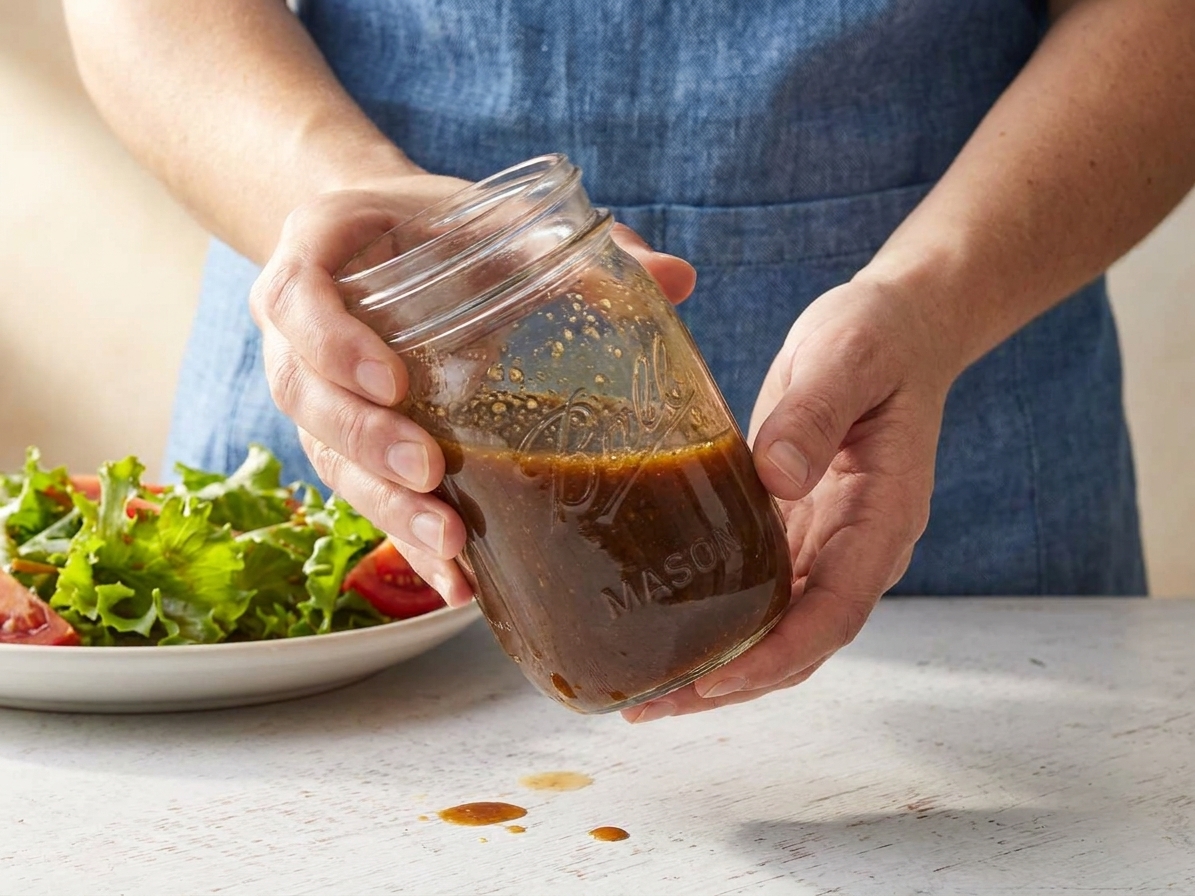
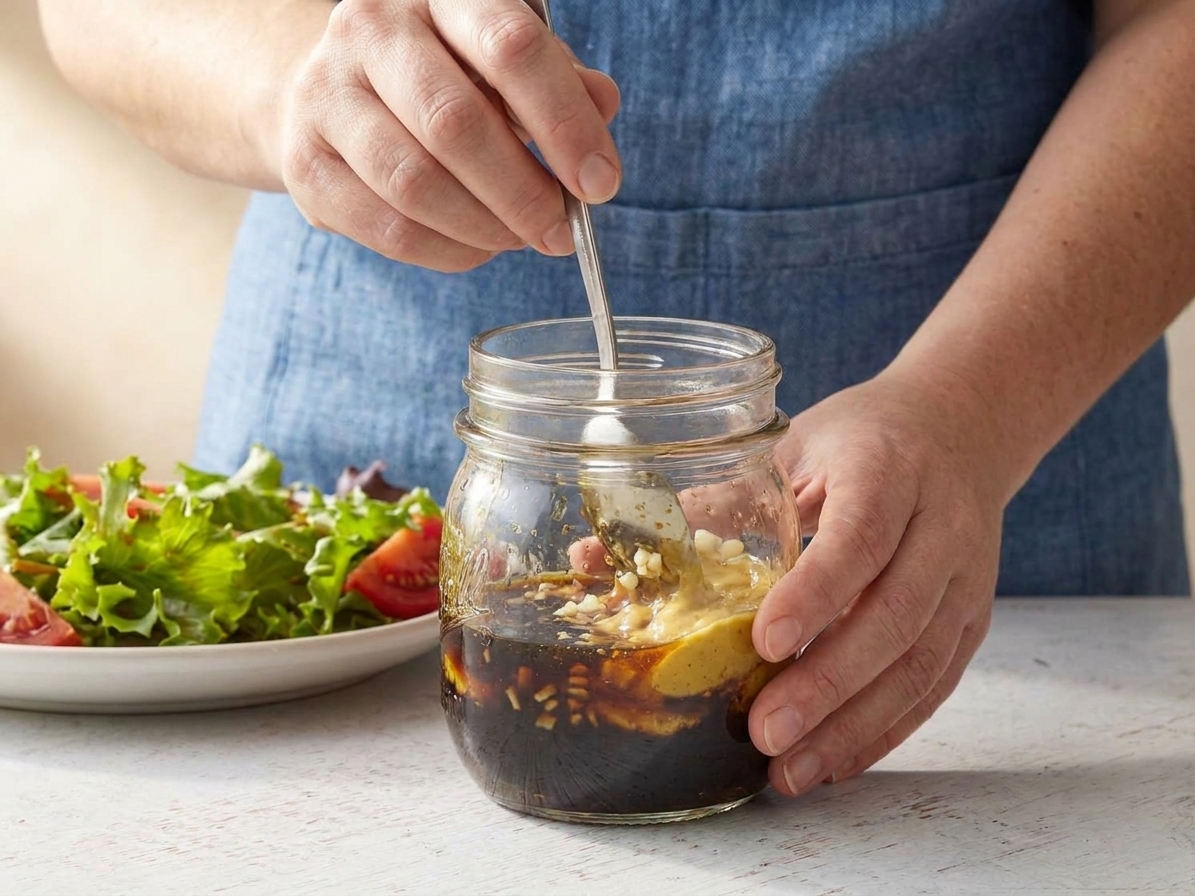
Make sure the Dijon is in there and fully mixed. Shake longer than you think, about 15 to 20 seconds. If it still breaks fast, add another 1 teaspoon Dijon or a tiny splash of mayo for extra insurance.
Can I make this without mustard?
Yes. It will taste great but separate faster, so plan to shake before each use. For a little extra body, swap in 1 to 2 teaspoons honey plus a small clove of finely grated garlic. If you want a more reliable option, add 1 teaspoon mayo (or a tiny pinch of xanthan gum, if you use it) and call it a day.
Is balsamic vinaigrette gluten free?
Usually, yes. Most balsamic vinegar and Dijon are gluten free, but labels vary, so check if you are cooking for someone with celiac or a strong sensitivity.
Can I double or triple this?
Absolutely. Scale it up and keep it in a larger jar. Shake for 20 to 30 seconds to re-emulsify, especially after it has been in the fridge.