Mom's Best Recipes
Recipe

Beet Juice

A bright, refreshing beet juice with lemon and ginger that you can make with a juicer or a blender, no drama.

Author By Matt Campbell
4.8
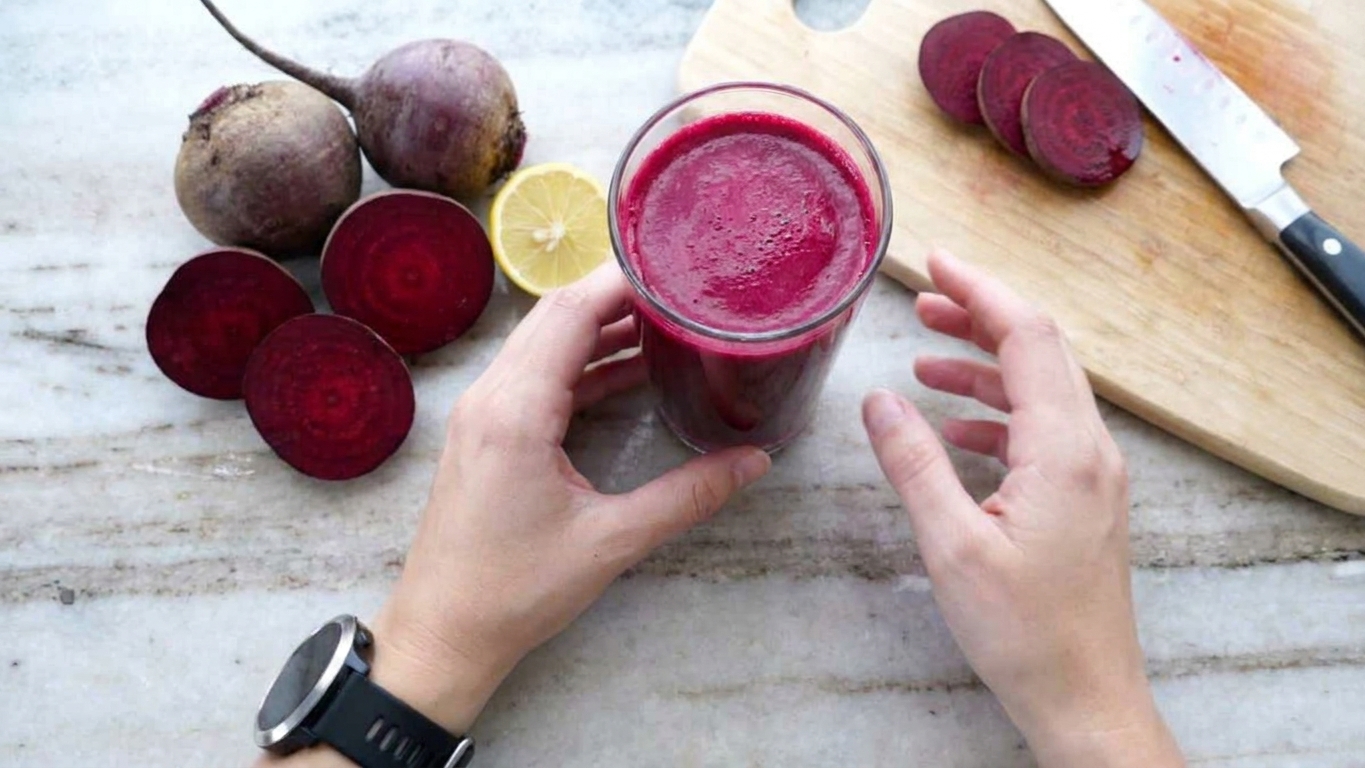
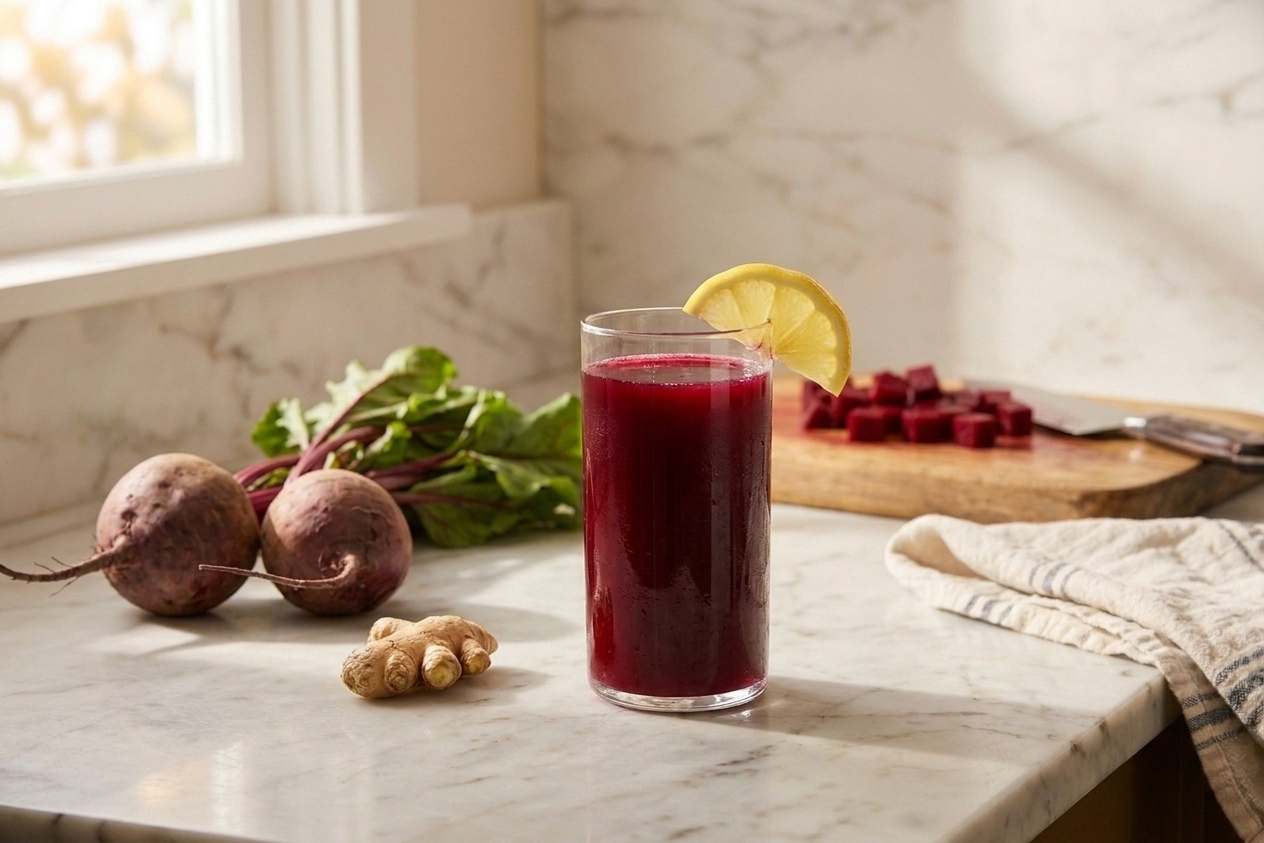
A tall glass of deep ruby beet juice with a lemon wedge on the rim on a light kitchen counter, with whole beets and a small piece of ginger nearby

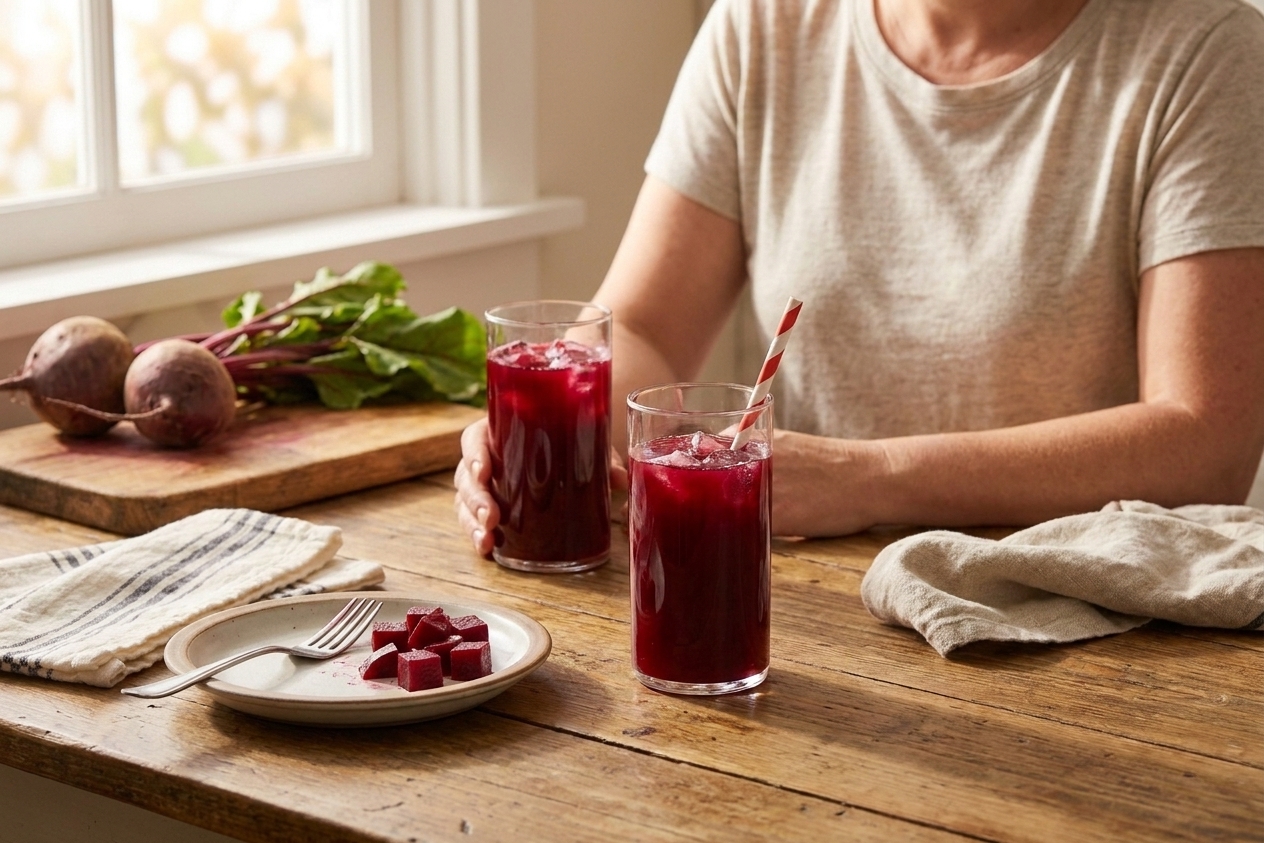
Beet juice is one of those things that looks like you worked way harder than you did. It is ruby-red, naturally sweet, and a little earthy in that cozy, root-vegetable way. My version keeps it friendly and balanced with lemon for brightness and ginger for a gentle kick that makes you take a second sip right away.

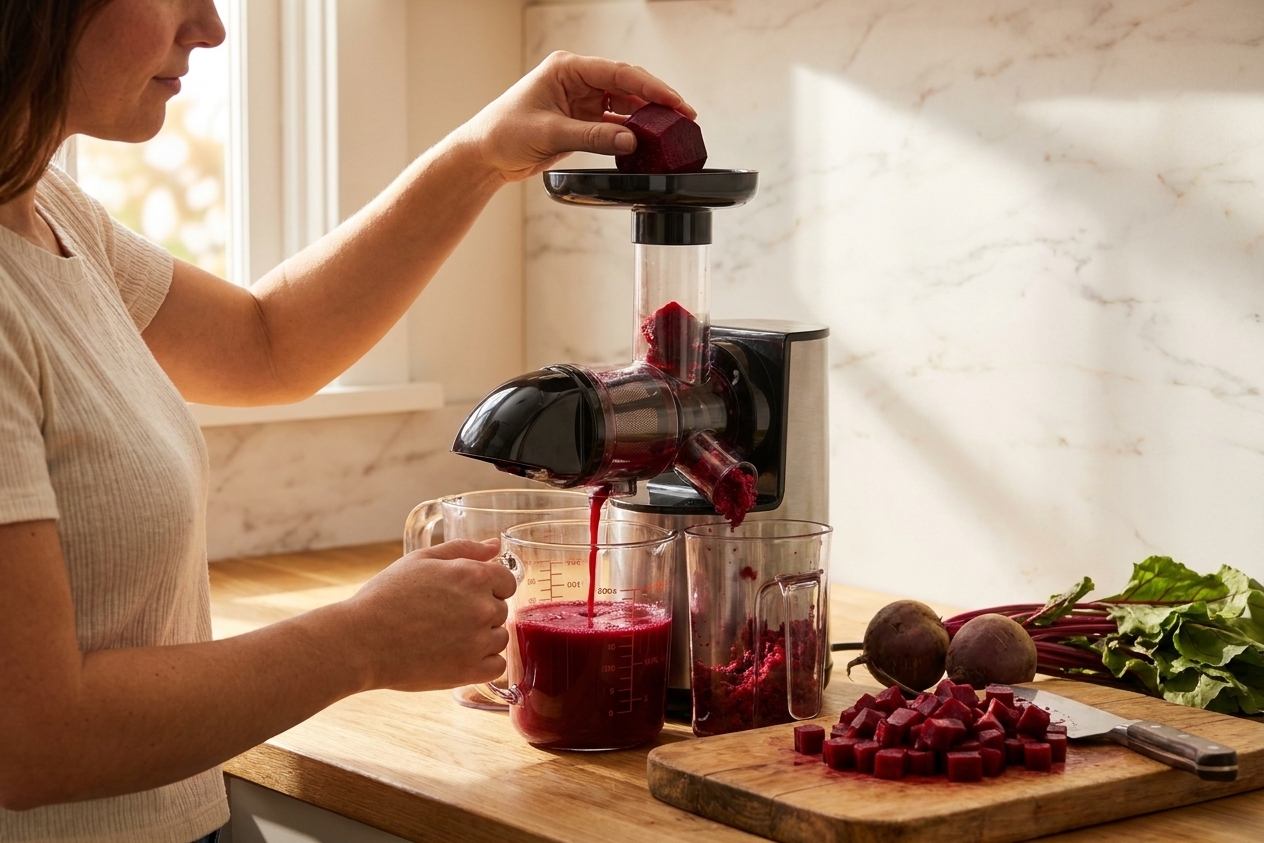
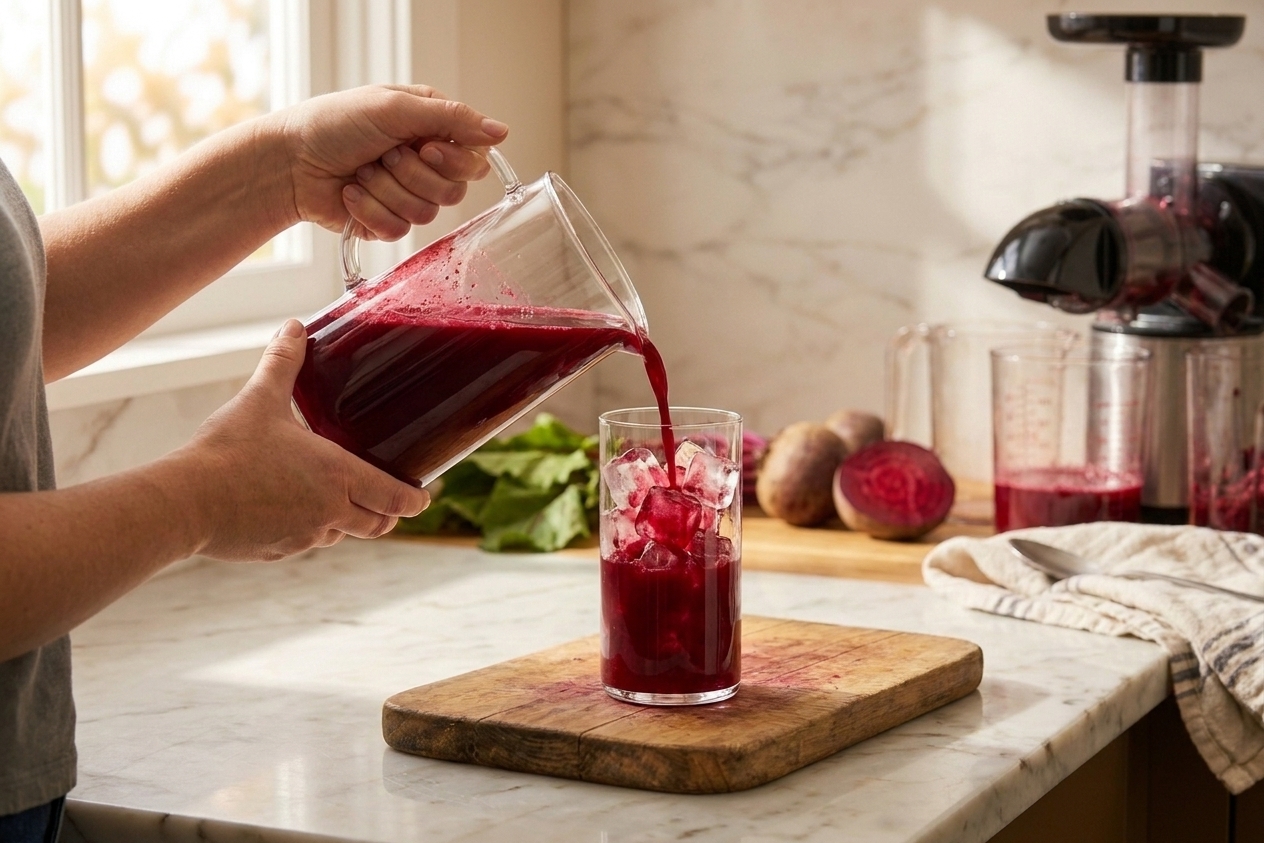
You can make this with a juicer, or do the blender-and-strain method if you are working with what you have. Either way, you are about 10 minutes away from a glass that feels like a reset button.

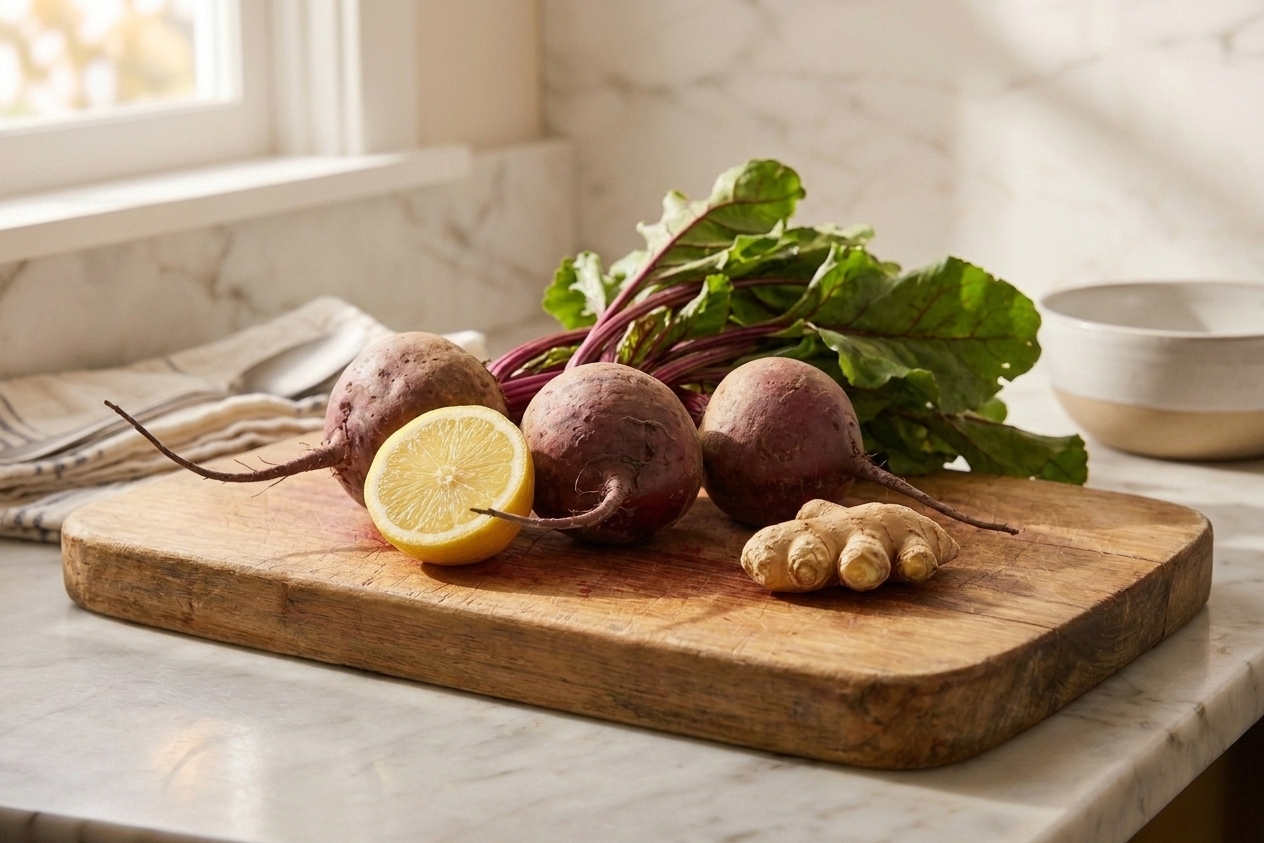
Whole raw beets, a lemon, and a knob of fresh ginger arranged on a wooden cutting board on a bright kitchen counter

Why It Works

  • Bright, balanced flavor: lemon cuts the earthiness and helps the natural sweetness pop.
  • Juicer or blender friendly: instructions for both so no special equipment is required.
  • Easy to customize: make it sweeter, spicier, or fruitier depending on who is drinking it.
  • Make-ahead capable: stores well for a couple days, and you can freeze it in portions.

Pairs Well With

Storage Tips

Refrigerator: Pour beet juice into a sealed glass jar or bottle and refrigerate for 2 to 3 days. Separation is normal, just shake or stir before serving. If it smells fizzy, fermented, or “off,” toss it.

Freezer: Freeze in ice cube trays or small containers for 1 to 2 months for best flavor. Thaw overnight in the fridge. (Bonus: beet juice cubes are great in smoothies.)

Freshness tip: Beet juice tastes brightest the day it is made. If it starts tasting a little flat, add a small squeeze of lemon to wake it up.

Common Questions

Do I have to peel the beets?

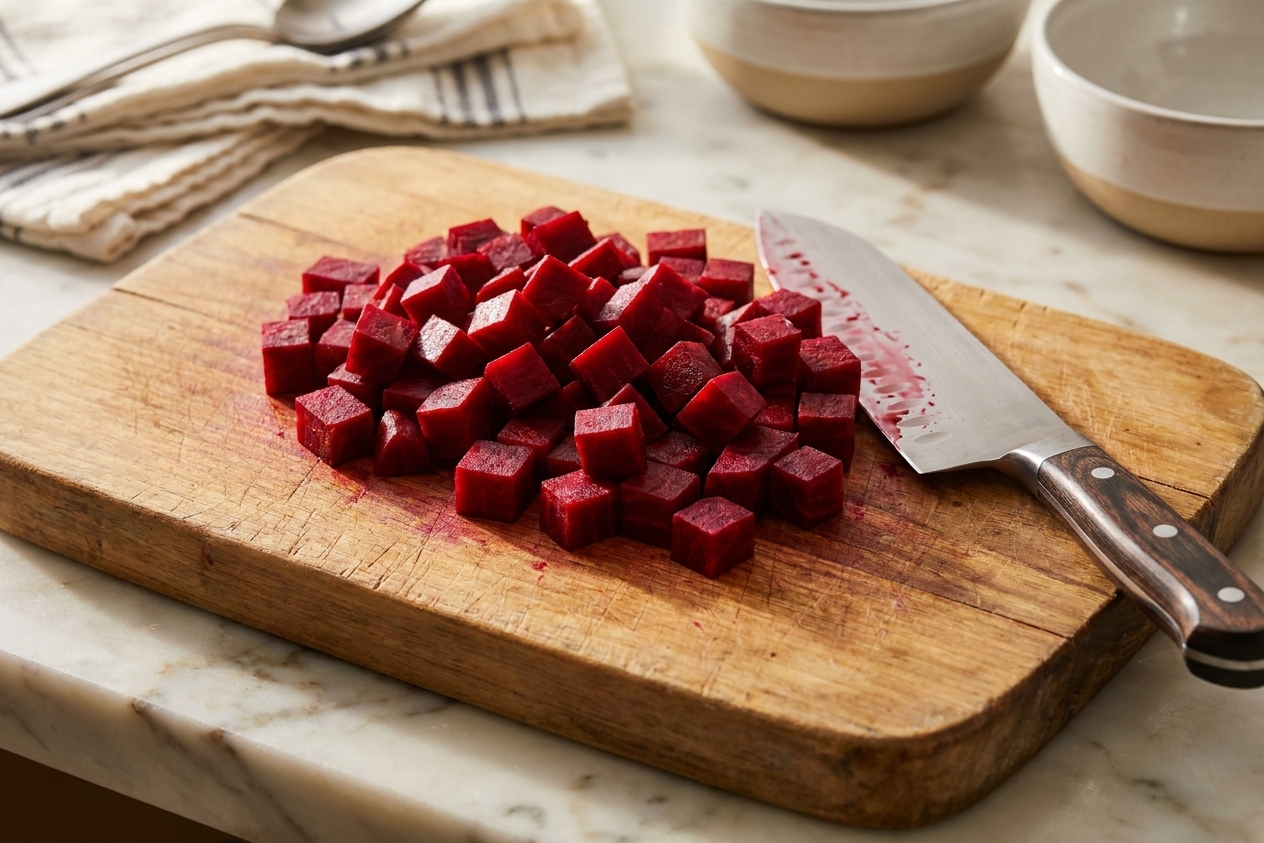
Nope. If you are using fresh, firm beets, a good scrub is usually enough. That said, beets can be gritty, and older beets can have tougher skins. If the skins look gnarly, or you want the cleanest, smoothest flavor, go ahead and peel.

Can I make beet juice without a juicer?

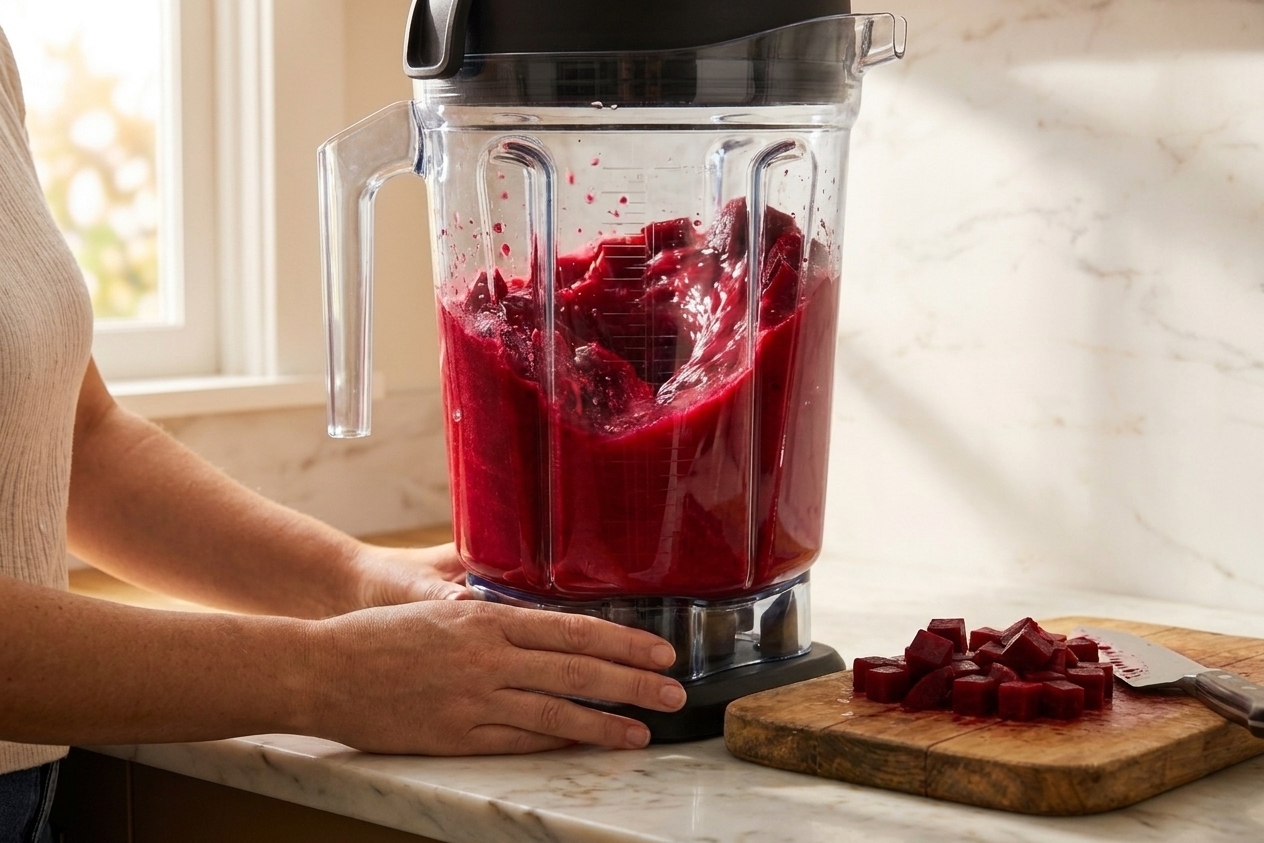
Yes. Blend chopped beets with water, then strain through a fine-mesh sieve or cheesecloth. You will get great flavor with a little more texture than juiced.

Why is my beet juice foamy or separated?

Totally normal, especially with a blender. Let it sit for 2 to 3 minutes, then stir, or skim foam if you want it extra smooth.

How do I make it less earthy?

Add more lemon, a small apple, or a carrot. A pinch of salt also helps round out the flavor in a sneaky, chef-y way.

Will it stain my cutting board, hands, or towels?

Yes, beet juice is committed. Use a non-porous board if you can, and consider gloves if you hate pink fingertips. For counters and boards, scrub with baking soda and a little lemon juice, then rinse. For fabric, rinse with cold water first and do not use heat until the stain lifts (heat sets it).

What is the difference between using a sieve and cheesecloth?

Fine-mesh sieve gives you juice with a little pulp (still very drinkable). Cheesecloth gives you a clearer, smoother juice with less grit.

Why did my pee turn pink?

Beets can cause harmless pink or red urine or stool for some people (it is called beeturia). It can look dramatic, but it is usually nothing to worry about.

When I first started playing with beet juice, I expected it to taste like straight-up dirt in a glass. Turns out, beets just need a little backup. Lemon brings the brightness, ginger adds that tiny spark, and suddenly the whole thing feels less like a health project and more like a drink you actually want. It is the kind of recipe that rewards curiosity and forgives imperfect measuring, which is basically my favorite kind of cooking.