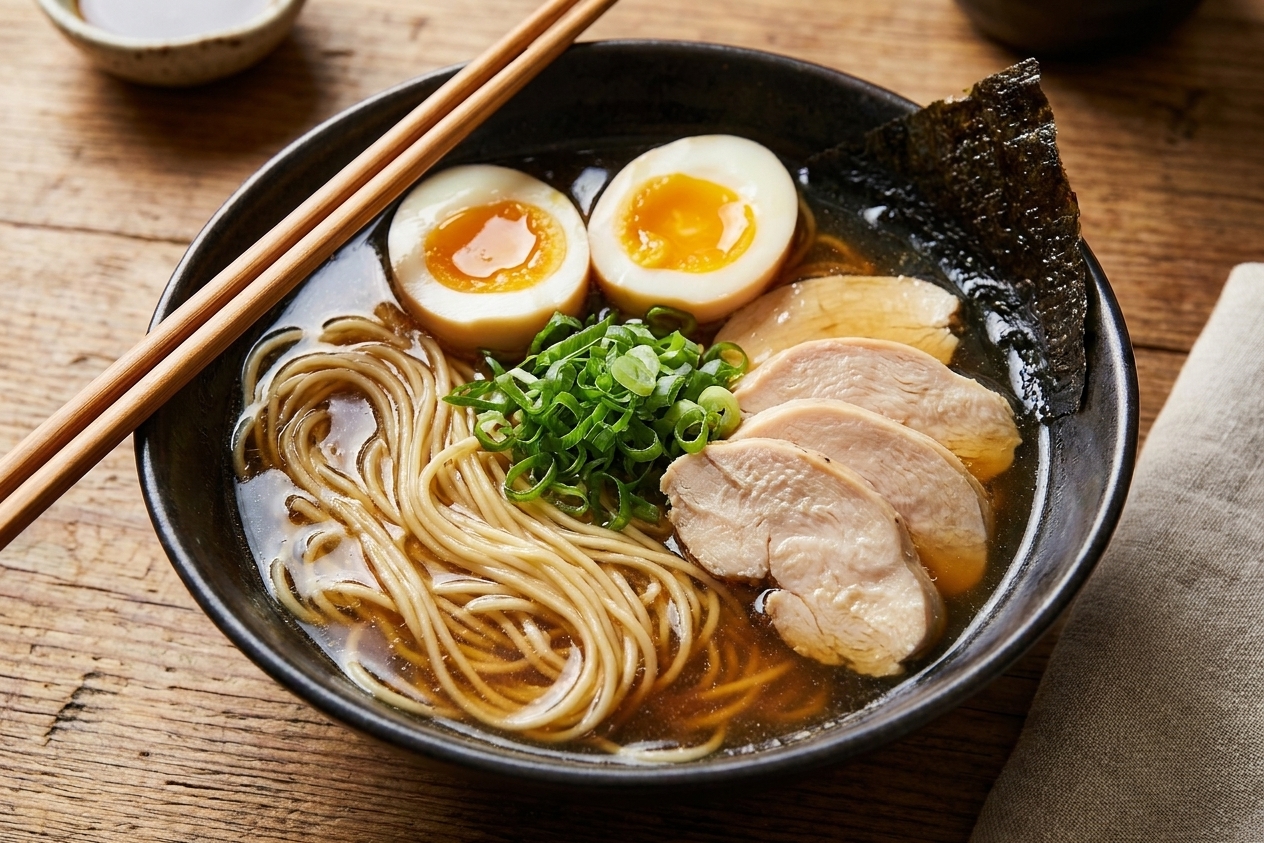
What makes ramen broth taste so good?
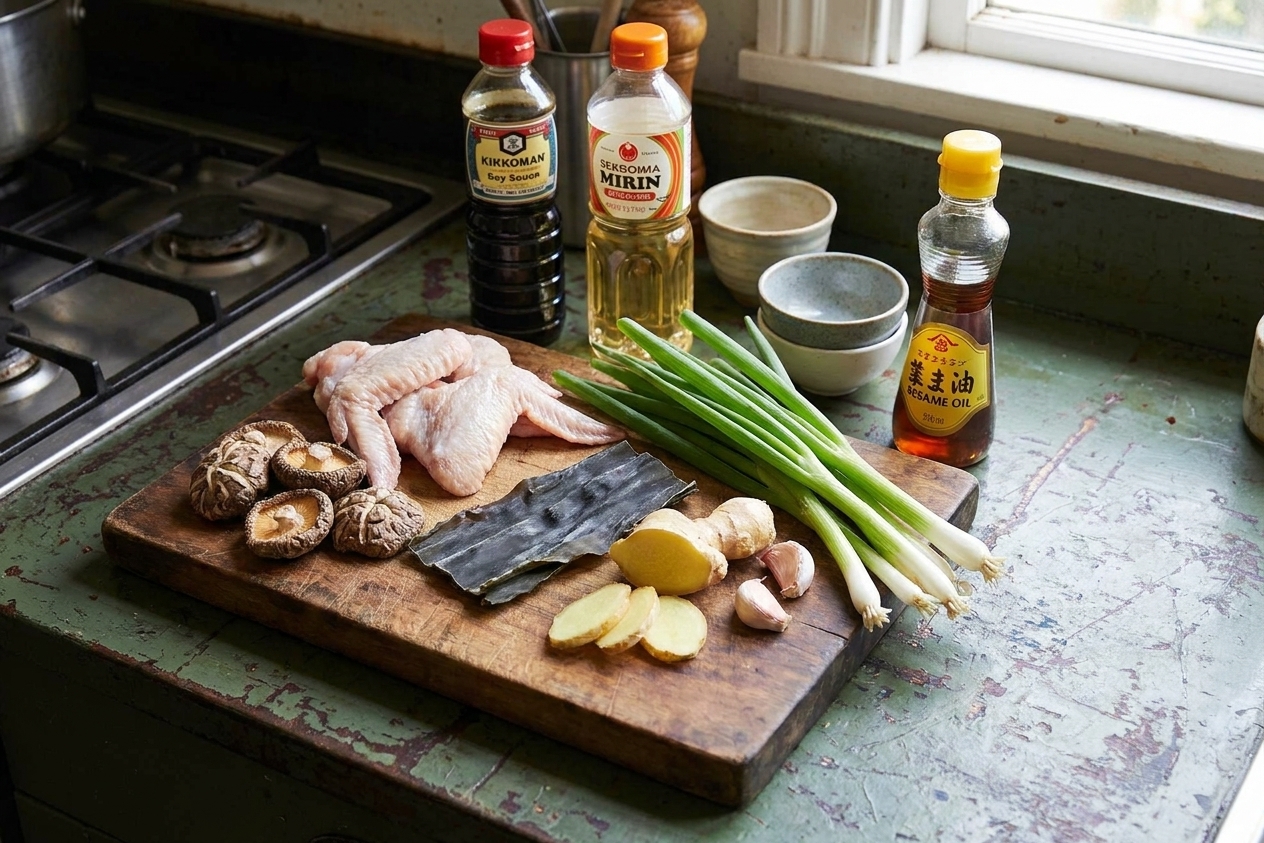
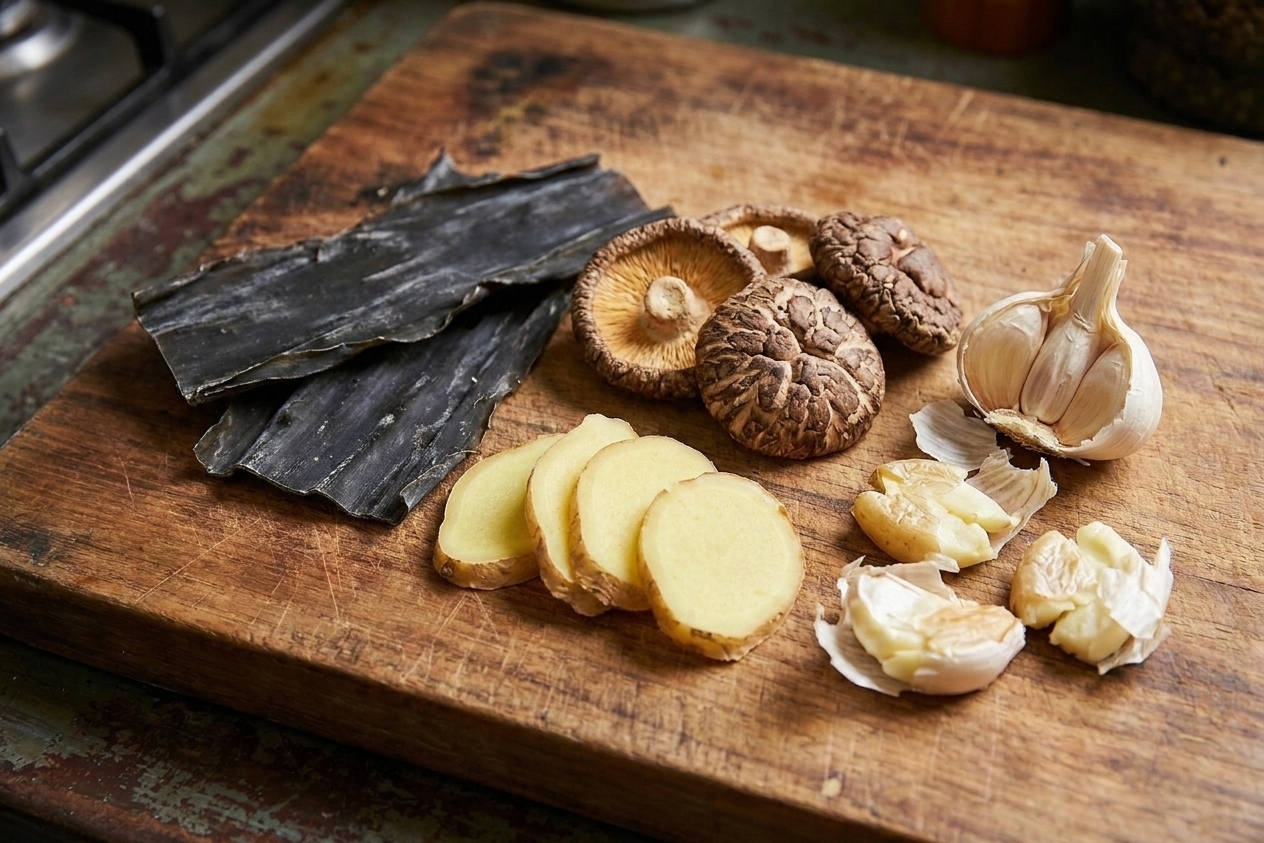
It’s a combo of umami (kombu, dried shiitake, chicken), aromatics (ginger, garlic, scallion), and proper seasoning (tare). The tare is the secret lever. Your broth can be perfect, but without a good tare it will taste like tasty chicken soup instead of ramen.
What is tare, and do I really need it?
Tare is a concentrated seasoning base, usually soy (shoyu), salt (shio), or miso. You technically can salt the pot, but tare gives you that layered “ramen shop” depth. It also lets everyone season their own bowl.
Do I have to remove the kombu?
For the cleanest flavor, yes. Kombu can turn bitter or a little slippery if it simmers too long. I like pulling it once the pot is steaming and you see tiny bubbles around the edge, usually around 15 to 20 minutes. The broth keeps its ocean hum without getting weird about it.
Can I make this without kombu or shiitake?
You can, but you will lose some of the “why does this taste expensive” factor. If you must skip them, add a little extra soy in the tare and consider a tiny splash of fish sauce or a pinch of MSG if you use it.
How do I keep the broth clear?
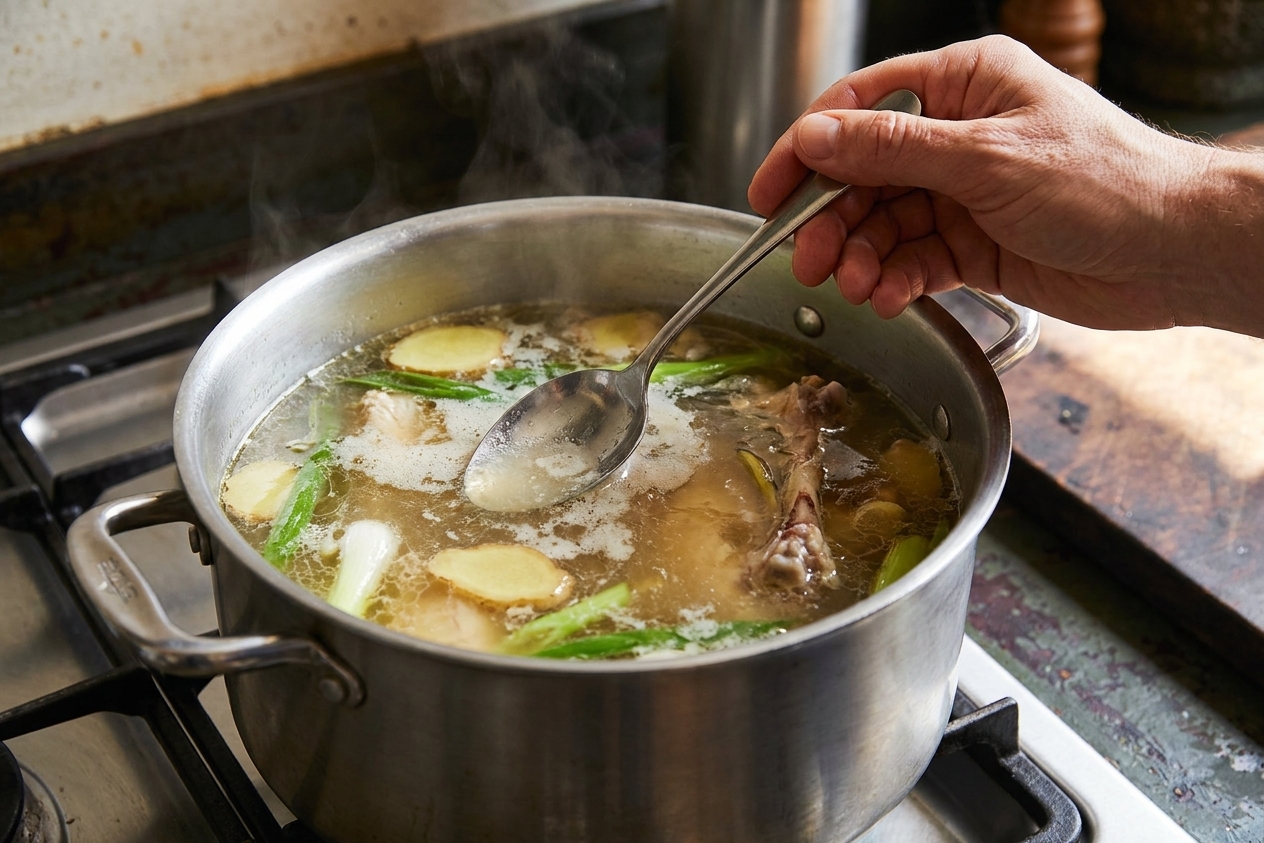
Start with cold water, skim early, and simmer gently. A hard boil emulsifies fat and proteins into the liquid and turns it cloudy. If you want extra clarity, do the quick blanch option in the instructions.
Can I use rotisserie chicken?
Yes. Use the carcass and any skin for the broth. The flavor will be a bit more “roasty,” which is not a problem in my book.
Is this gluten-free?
Use a gluten-free tamari (not all tamari is gluten-free, so check the label) instead of soy sauce in the tare and double-check your mirin label. Choose gluten-free noodles. Also note that some chili crisps include wheat via soy sauce.