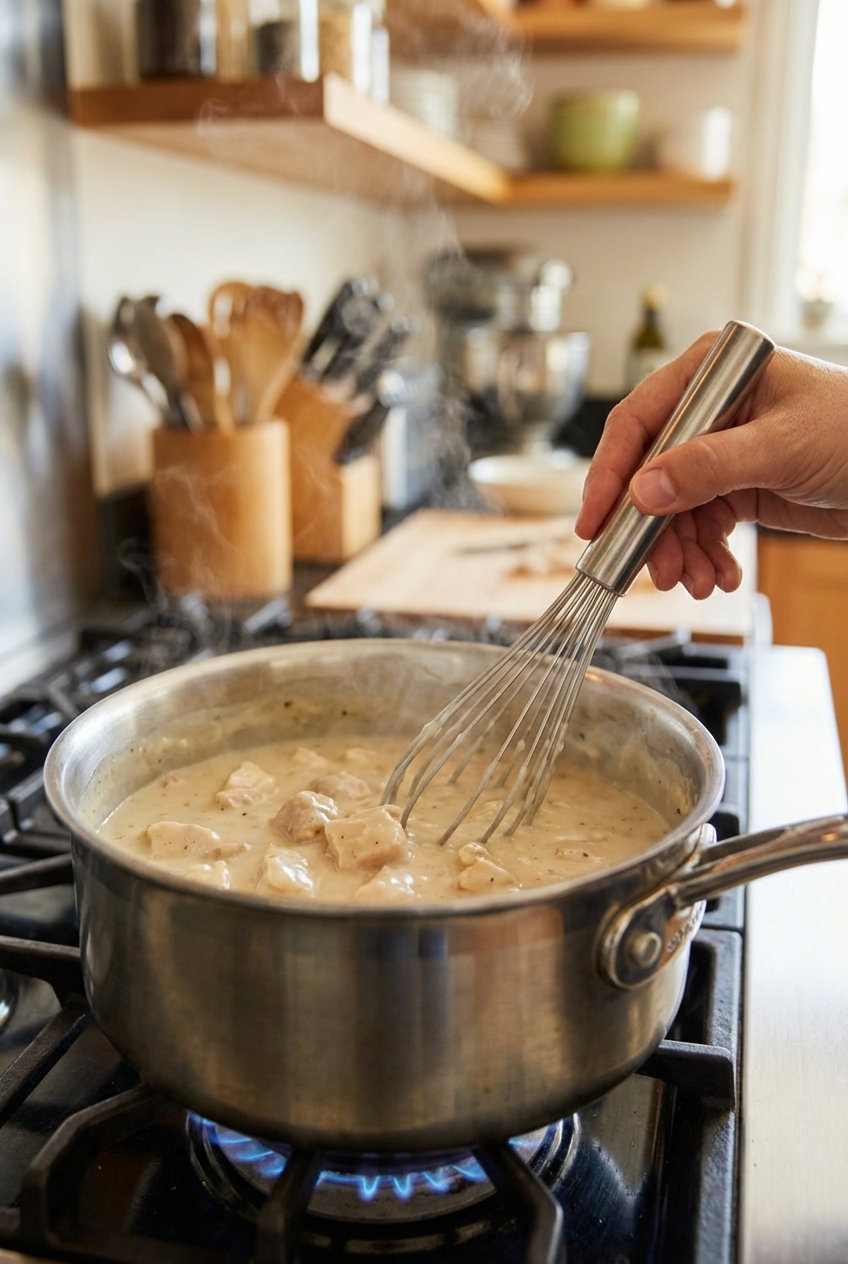
Can I make this gravy without flour?
Yes. Use a cornstarch slurry instead of a roux. Start with 1 1/2 tablespoons cornstarch mixed with 1 1/2 tablespoons cold water. Whisk it into gently simmering broth and simmer 1 to 2 minutes until thickened. If you want it thicker (closer to classic roux gravy), add more slurry a little at a time (up to about 2 tablespoons cornstarch total), simmering 30 to 60 seconds between additions. Lower the heat, then stir in cream. Add Dijon and lemon at the very end (low heat or off heat) to keep things smooth.
How do I avoid lumps?
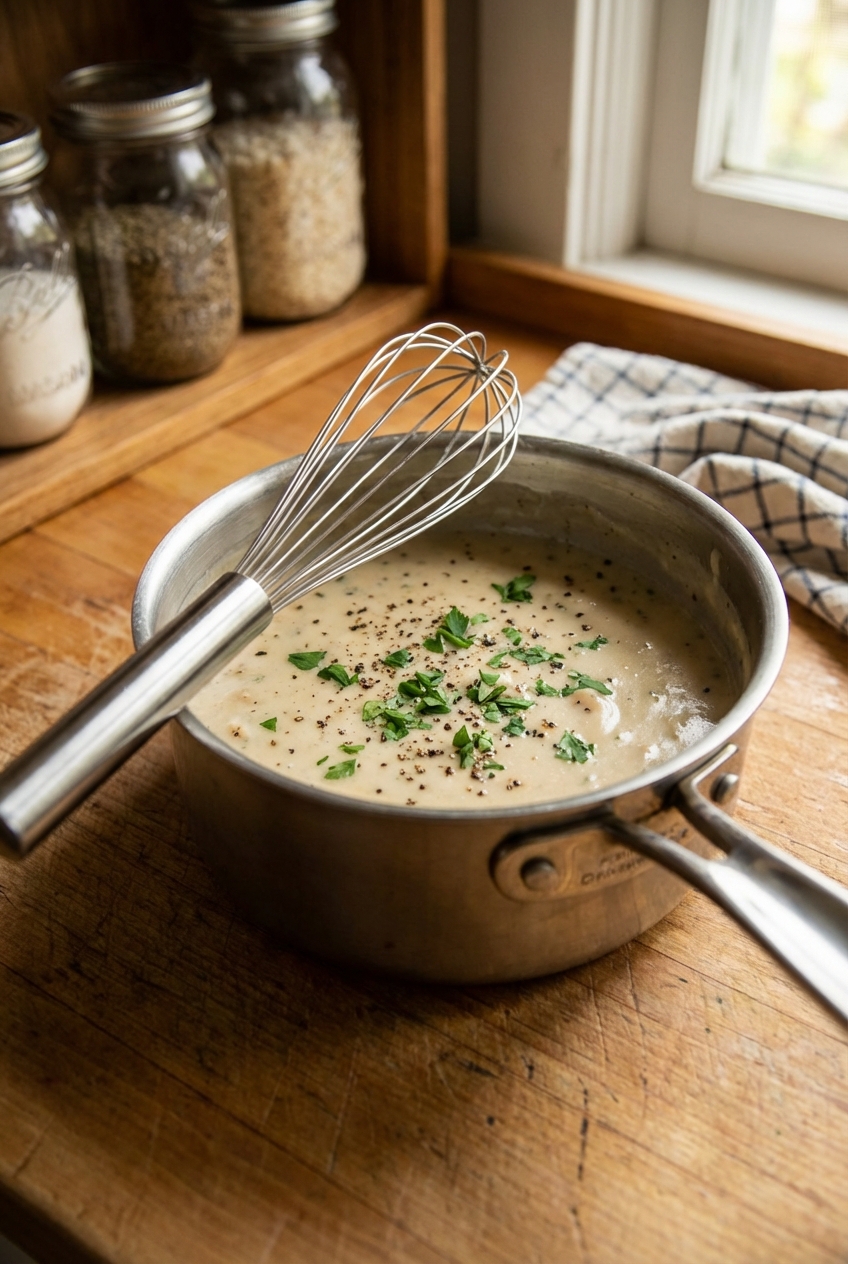
Whisk the flour into the melted butter until it looks like smooth wet sand, then add warm broth gradually while whisking. Think 2 to 3 additions at first to get it silky, then a slow stream. If lumps still happen, whisk aggressively for 30 seconds or strain the gravy through a fine-mesh sieve.
Is Dijon required?
It is the easiest way to get that tangy, grown-up depth. If you do not have Dijon, use 1 teaspoon yellow mustard plus 1 teaspoon apple cider vinegar, then taste and adjust.
Can I use bouillon or Better Than Bouillon?
Absolutely. Just keep it slightly under-salted at first, because concentrated bases can sneak up on you.
What if my gravy is too thick or too thin?
Too thick: whisk in more broth or water a splash at a time. Too thin: simmer 2 to 4 minutes to reduce, or whisk in a small slurry (1 teaspoon cornstarch + 1 teaspoon cold water) and simmer 30 to 60 seconds.
Help, my gravy looks grainy or broken
First, drop the heat. Hard boiling plus dairy and acid can make things look a little rough. Whisk in a splash of warm broth or warm cream to loosen it, then keep it at a gentle simmer (or take it off heat). If it still looks grainy, strain it through a fine-mesh sieve. For a full rescue mission, a quick blitz with an immersion blender can bring it back to glossy.