Common Questions
Should brioche be stale for French toast?
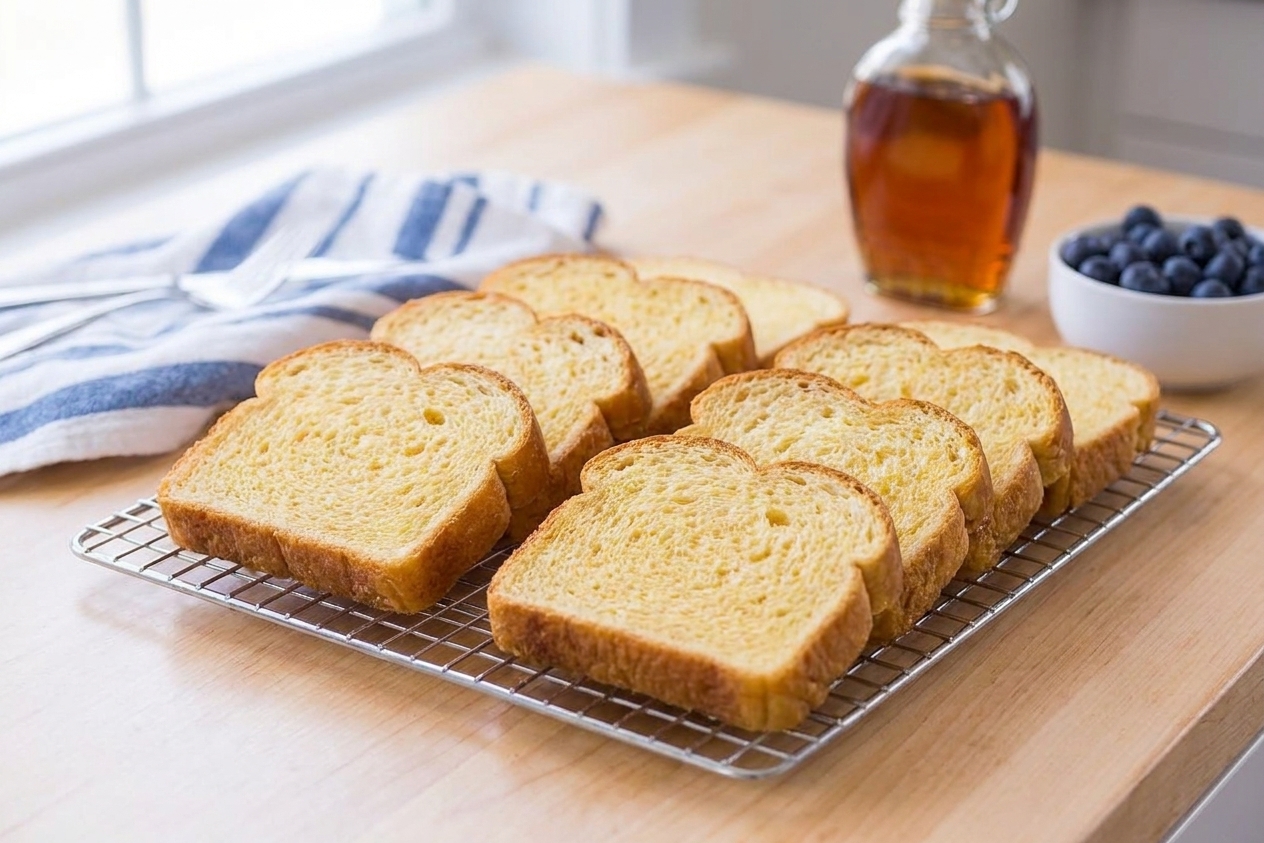
It helps. Slightly dry brioche absorbs custard better without getting soggy. If your brioche is super fresh, lay slices out for 15 to 30 minutes, or toast them lightly in a 300°F oven for 6 to 8 minutes.
How long do you soak brioche for French toast?
Quick dip, not a bath. Start with 5 to 10 seconds per side for 3/4-inch slices, then adjust based on the bread. You want it coated and just starting to drink in custard, but still holding its shape. If it starts slumping or tearing, you went too far.
Why is my French toast soggy in the middle?
Usually one of three things: the bread soaked too long, the pan was too hot (browned fast before the center set), or the slices were too thick without lowering the heat. Use medium to medium-low heat and give it time.
Can I make the custard ahead?
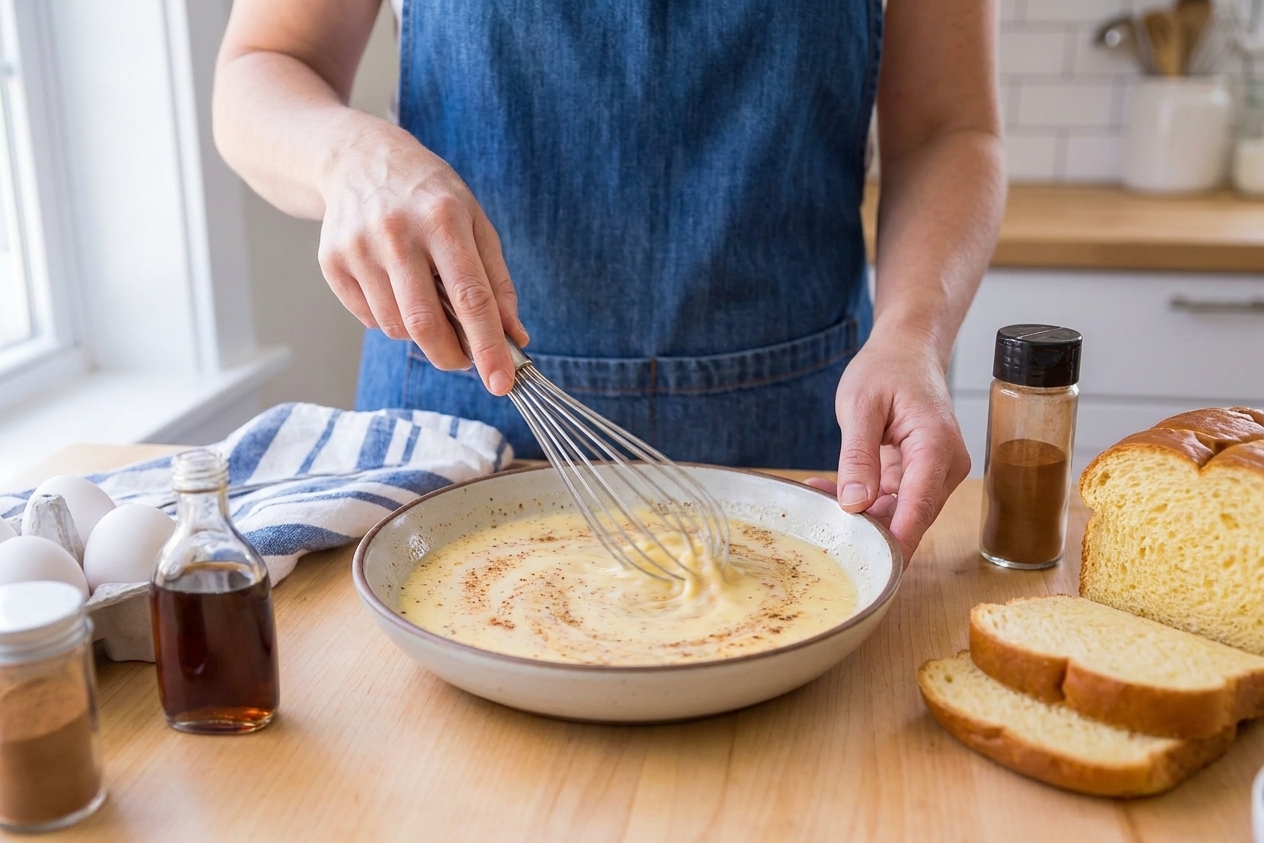
Yes. Whisk it, cover tightly, and refrigerate up to 24 hours (keep it at or below 40°F/4°C). Re-whisk before using because the spices love to settle. For best texture and food safety, use it within a day.
What is the best pan for French toast?
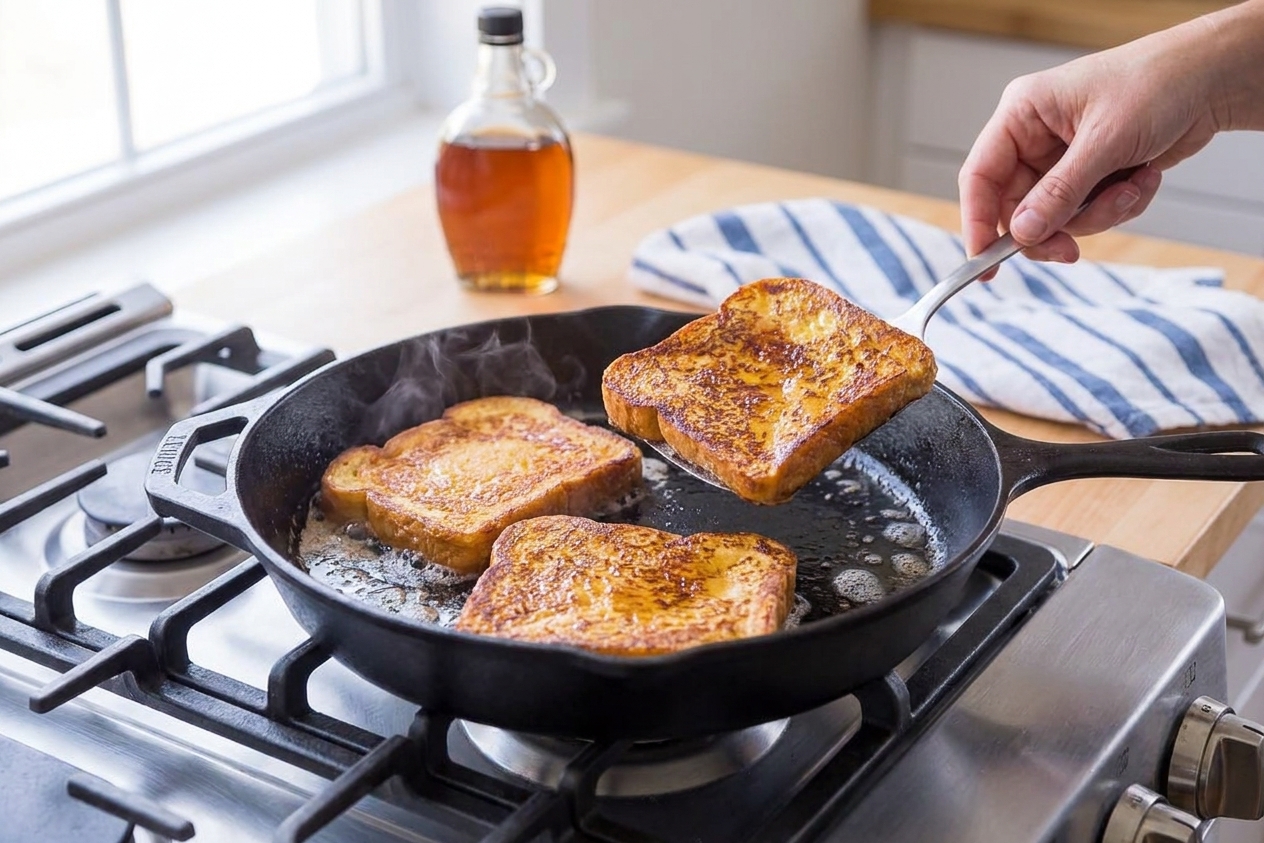
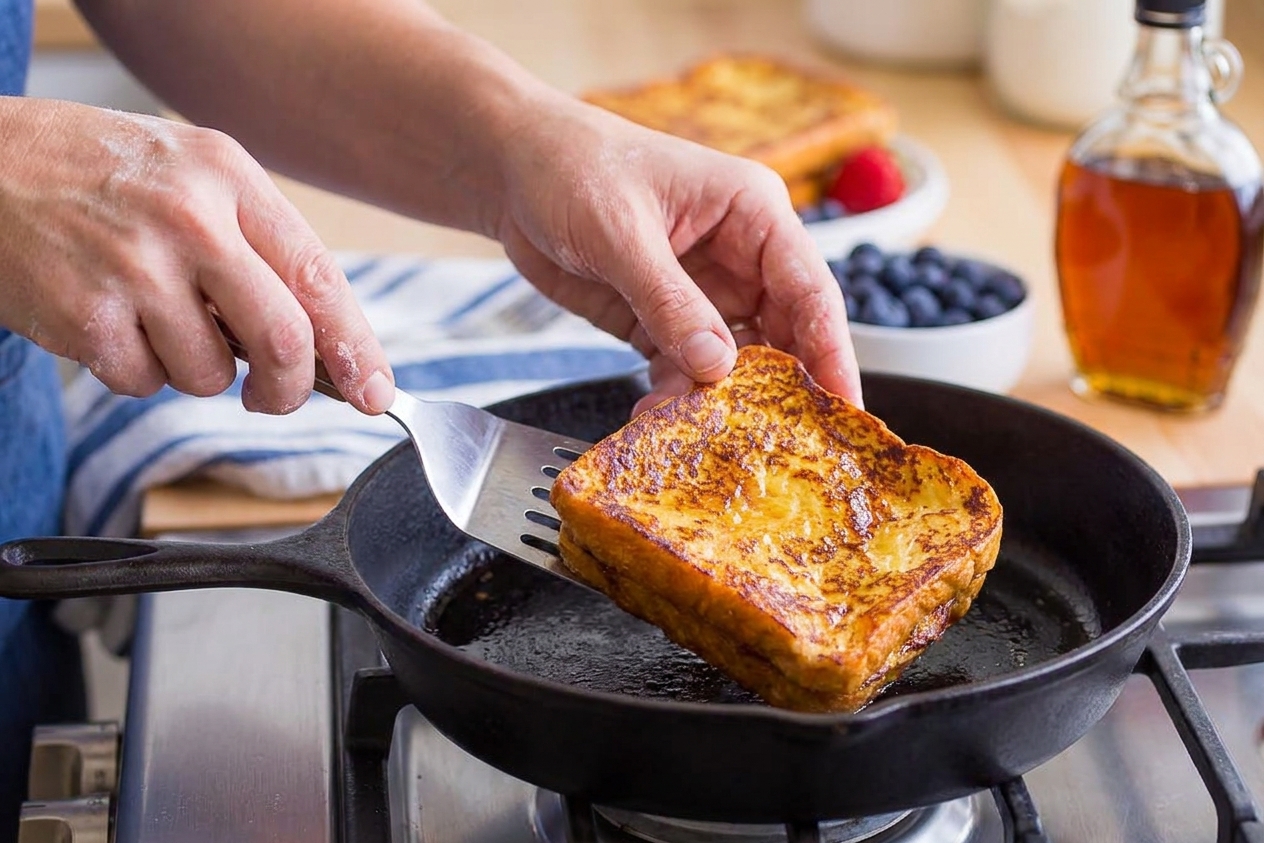
A nonstick skillet or well-seasoned cast iron works great. Cast iron gives you the crispest edges, but keep the heat steady so the butter does not burn.
Can I bake brioche French toast instead of pan-frying?
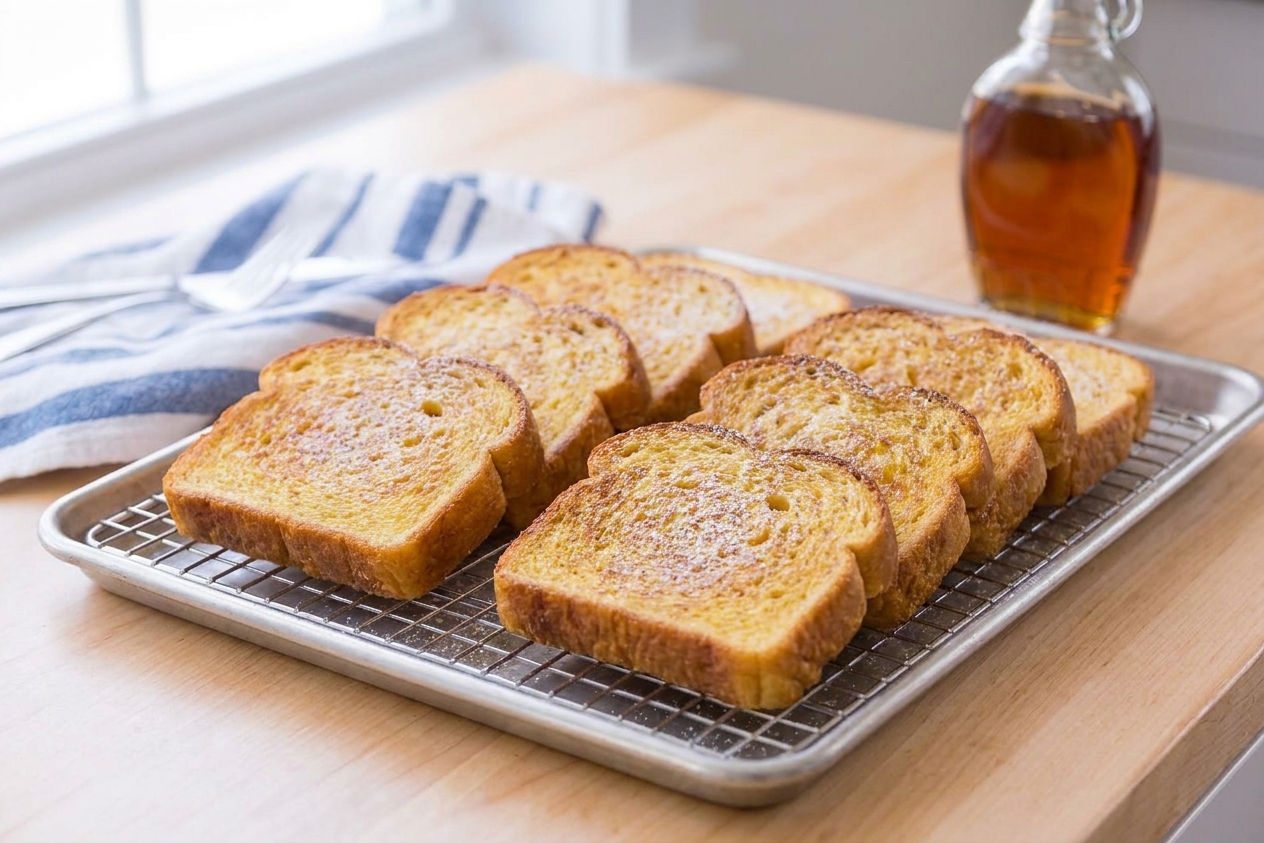
You can. Arrange dipped slices on a buttered sheet pan and bake at 400°F for 10 to 12 minutes, flip, then bake 8 to 10 minutes more. Bake until the centers feel set (no wet custard when pressed) and the internal temperature is about 160°F/71°C. It is not quite as buttery-crisp as skillet, but it is hands-off for a crowd.
Any easy flavor twists?
Yes. Keep the base, then add one of these: orange zest, a pinch of nutmeg, a tiny splash of bourbon, or swap vanilla for almond extract (start with 1/4 teaspoon, it is strong).