Buttermilk Questions, Answered
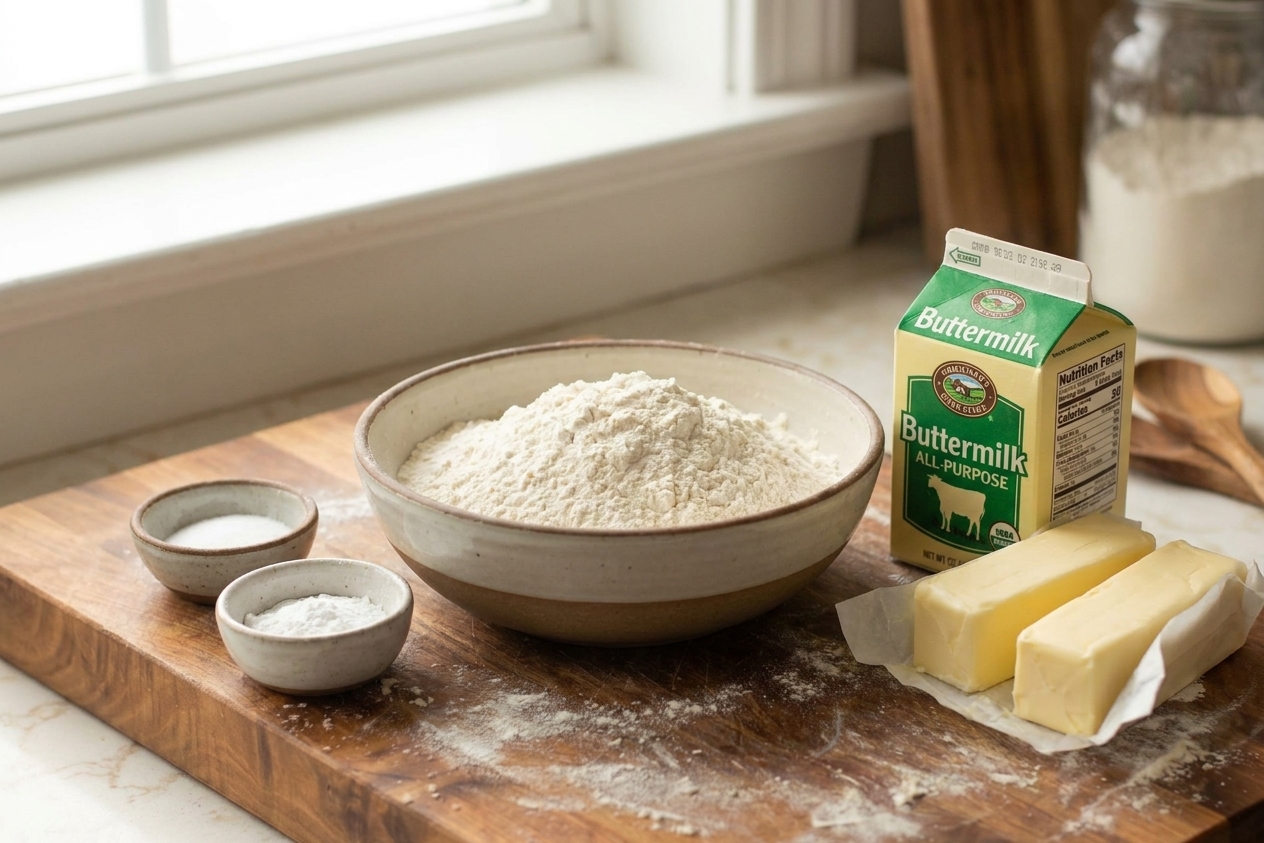
What does buttermilk actually do in biscuits?
Flavor-wise, it adds a gentle tang. Technically, its acidity helps keep biscuits tender, supports browning, and reacts with baking soda for a little extra lift. The big win is the combination of acid + fat + gentle mixing that makes a soft, layered crumb.
Can I use regular milk instead of buttermilk?
You can, but the biscuits will taste flatter and can bake up a little less tender. If you only have milk, make a quick substitute: add 2 teaspoons lemon juice or white vinegar to a measuring cup, then fill to the 3/4 cup line with milk. Stir and let sit 5 to 10 minutes.
If you prefer the classic method (1 tablespoon acid + milk to 1 cup), that works too. Just measure out 3/4 cup of the mixture for this recipe.
Is powdered buttermilk okay?
Yes, especially in baking. Follow the brand directions. Most blends have you add the powder to the dry ingredients and water to the wet. The flavor is slightly different, but the texture is still great.
Why did my biscuits turn out tough?
Usually overmixing, overworking the scraps, or twisting the cutter. Mix until the dough just comes together, handle it as little as possible, and press the cutter straight down, no twisting.
Why did my biscuits not rise?
Common culprits: old baking powder, warm butter, rolling too thin, or cutting with a twisting motion that seals the edges. Also make sure your oven is fully preheated.
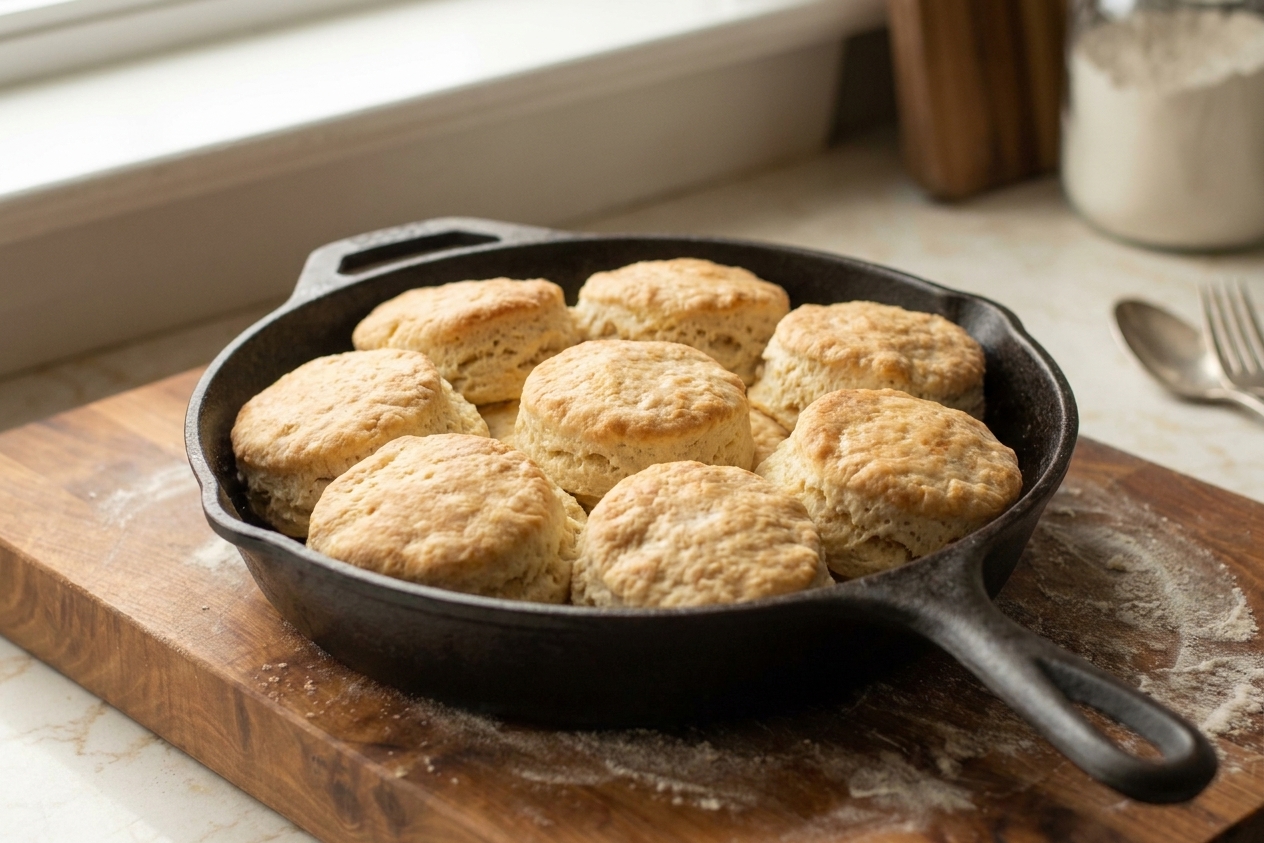
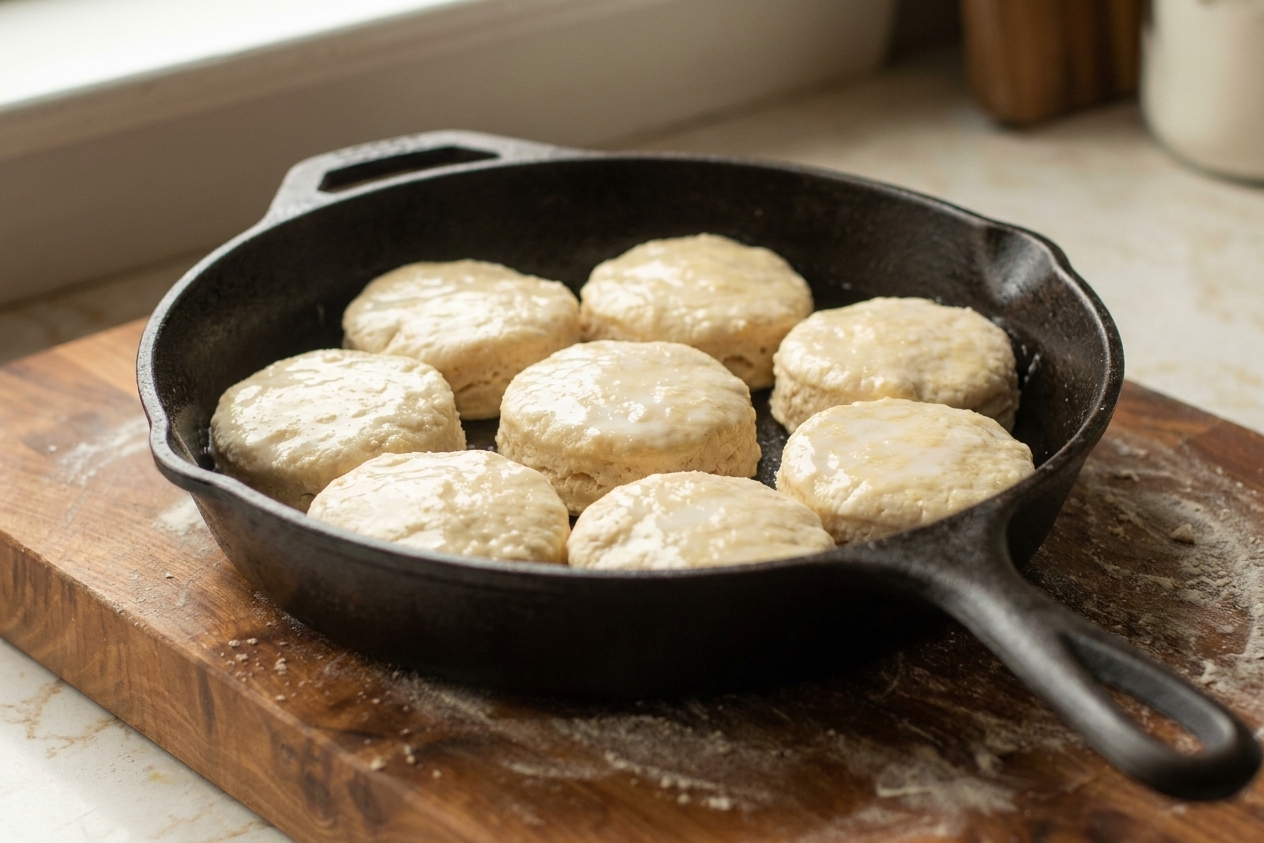
Can I bake these on a sheet pan instead of a skillet?
Absolutely. A cast iron skillet gives you extra browning and cozy edges, but a sheet pan works great. For taller biscuits, place them closer together so they support each other as they rise.