Mom's Best Recipes
Recipe

Capirotada

A cozy Mexican bread pudding layered with toasted bread, piloncillo-cinnamon syrup, raisins, nuts, and cheese, baked until golden and bubbly.

Author By Matt Campbell
4.8
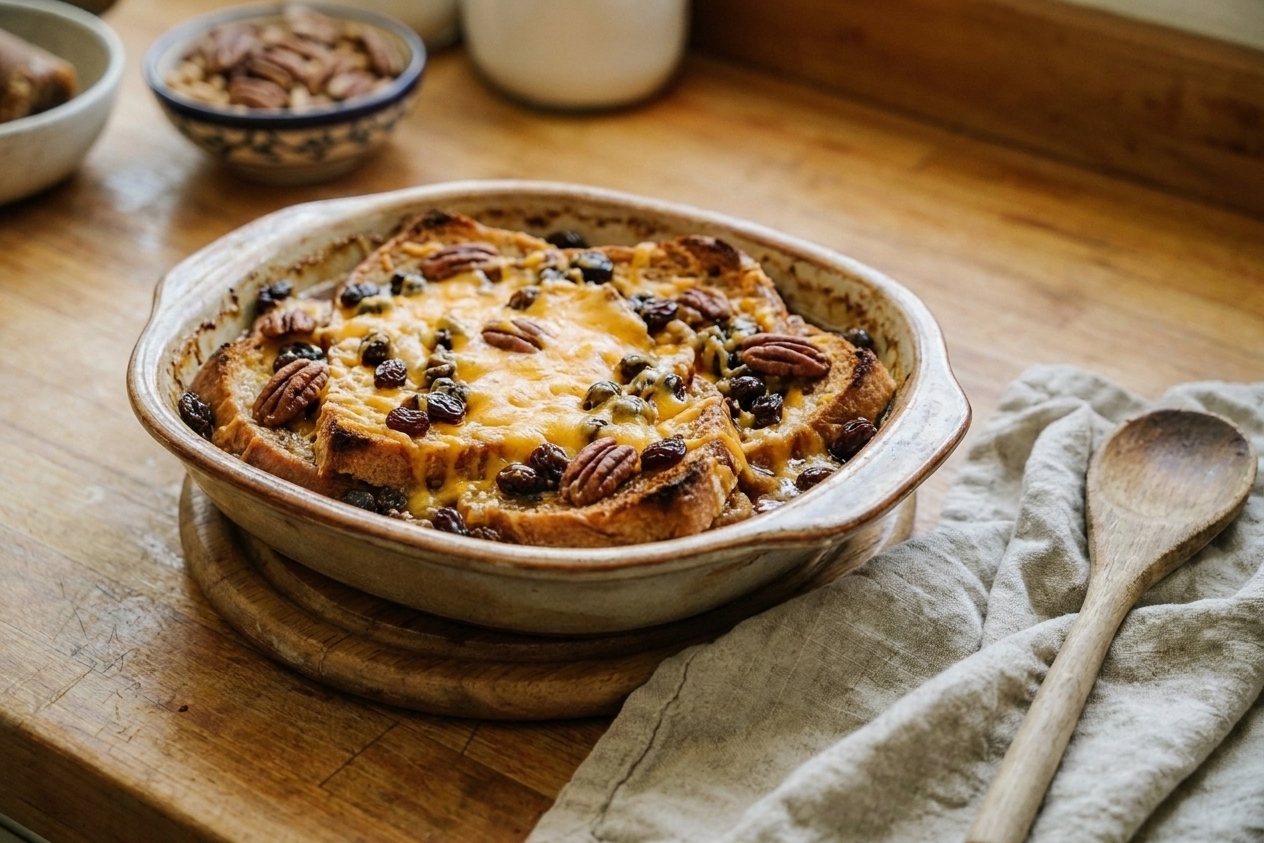
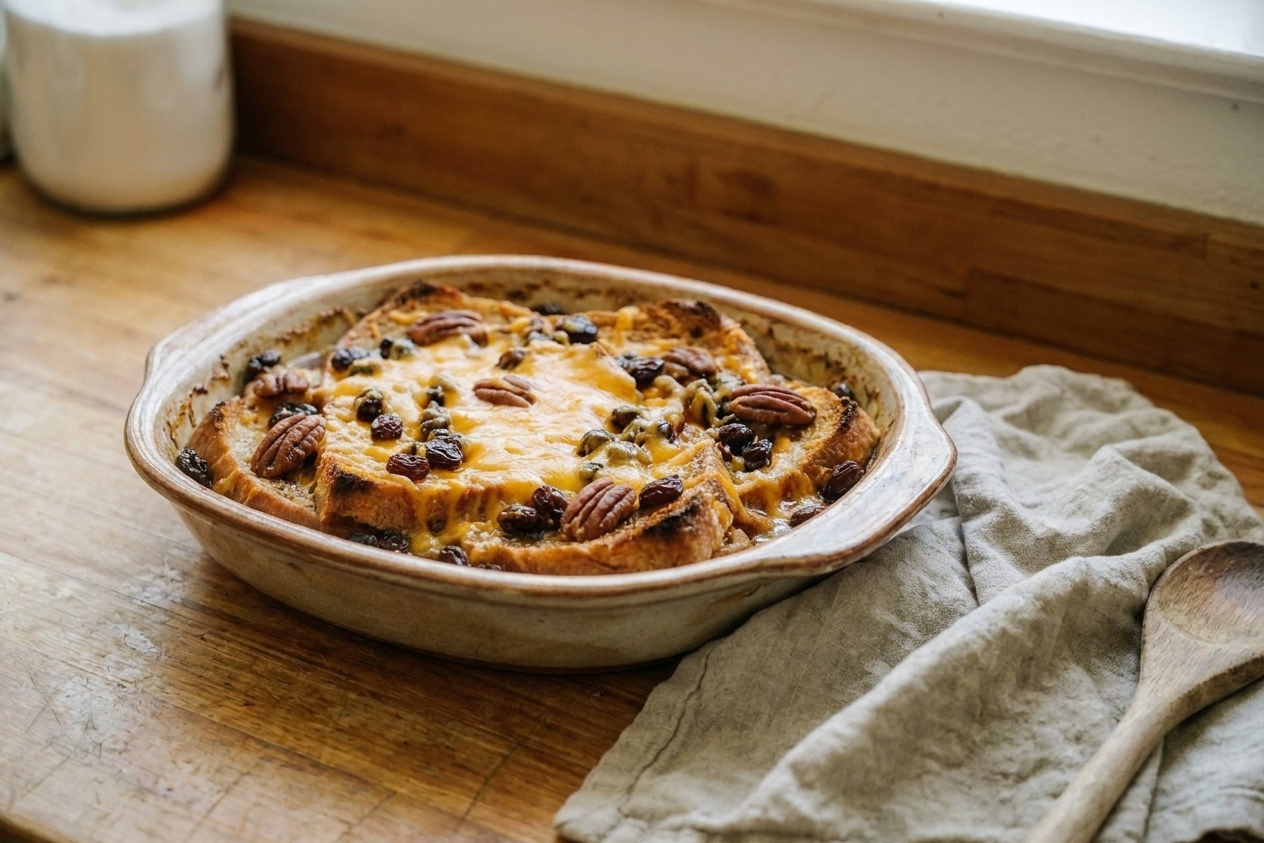
A golden-brown baked capirotada in a rustic ceramic baking dish with visible raisins, toasted nuts, and melted cheese on top, sitting on a warm-toned kitchen counter in natural light

Capirotada is the kind of dessert that feels like a hug and a history lesson at the same time. It is a Mexican bread pudding that layers toasted bread with a dark, caramel-y syrup (usually piloncillo and cinnamon), plus raisins, nuts, and cheese. Yes, cheese. Trust me. It sounds chaotic on paper, but in the oven it turns into this sweet-salty, spiced, melty situation that makes you sneak “just one more bite” straight from the pan.

This version keeps the ingredients easy to find, with smart swaps if you cannot get piloncillo. The goal is a capirotada that holds together in slices, has syrup in every layer, and gets crisp edges without going dry. You can serve it warm (my favorite) or room temperature, and it is even better the next day.
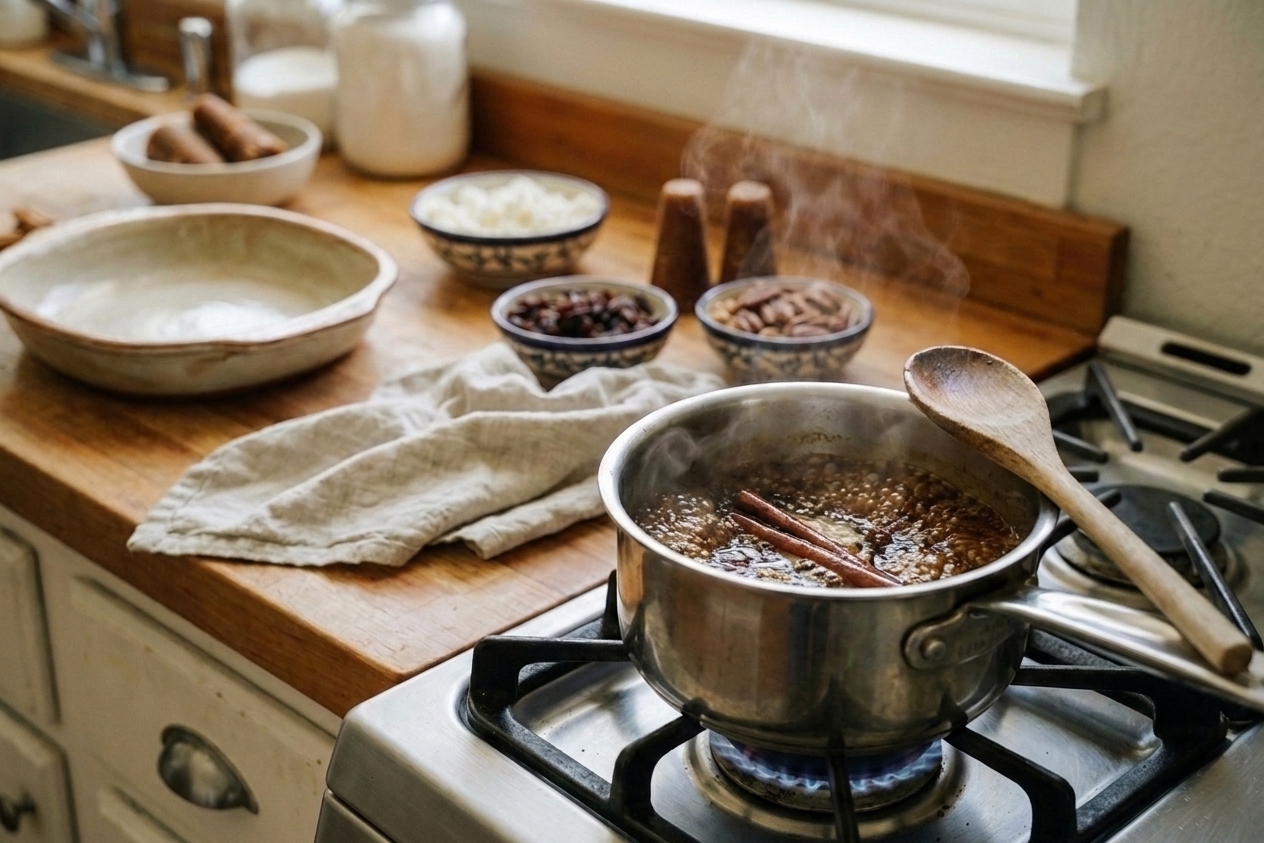
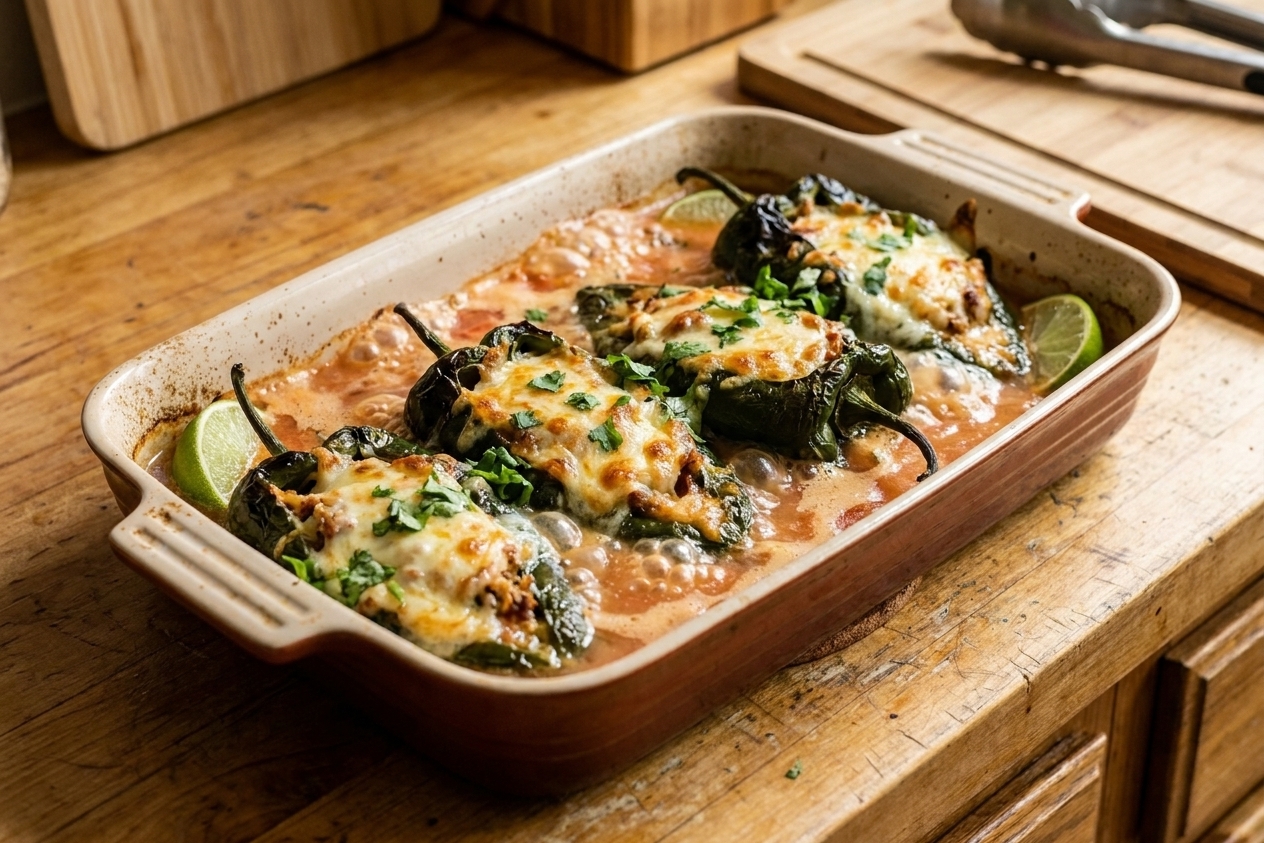
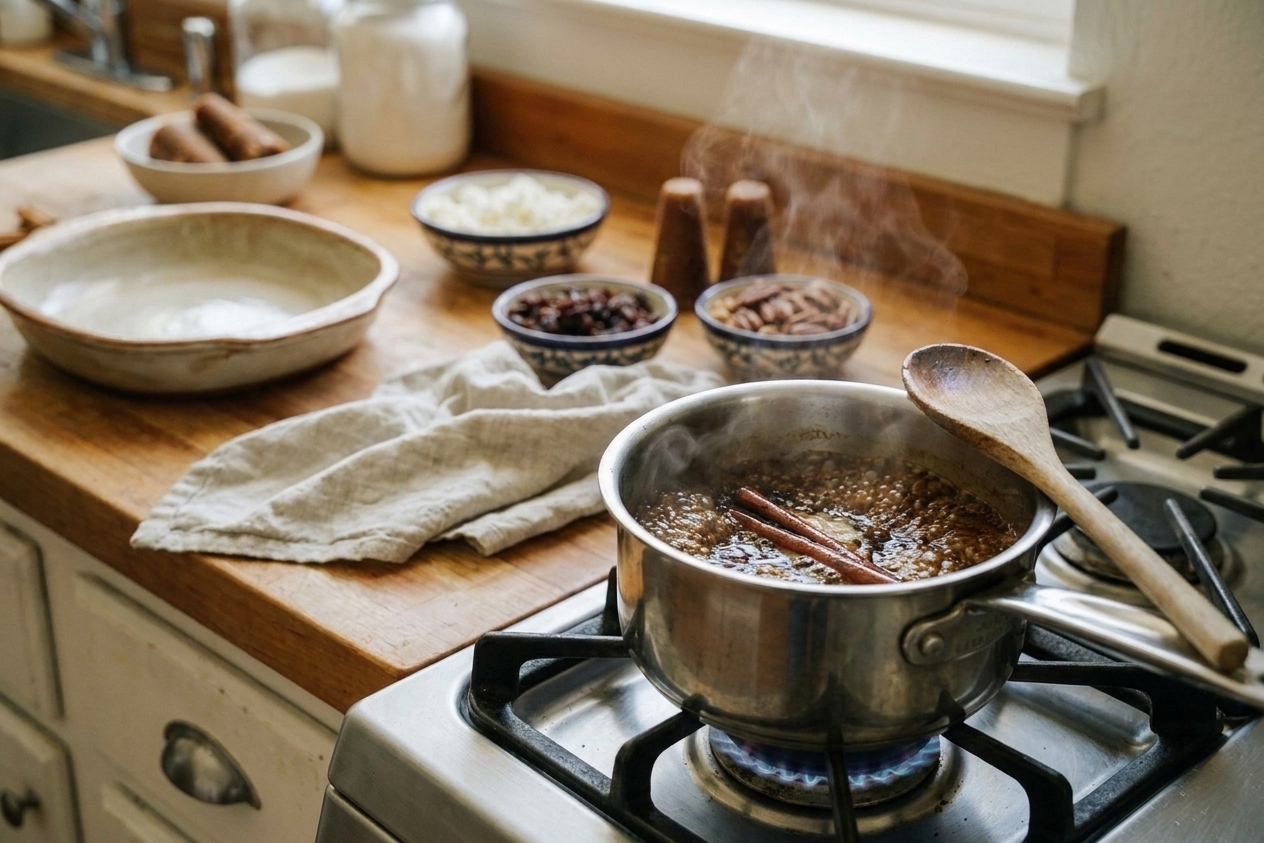
A small saucepan on a stovetop with a dark piloncillo syrup simmering with cinnamon sticks and cloves, steam rising in a cozy kitchen setting

Why It Works

  • Big flavor from a simple syrup: Piloncillo (or brown sugar) + cinnamon builds that deep, almost molasses-like sweetness without needing a complicated custard.
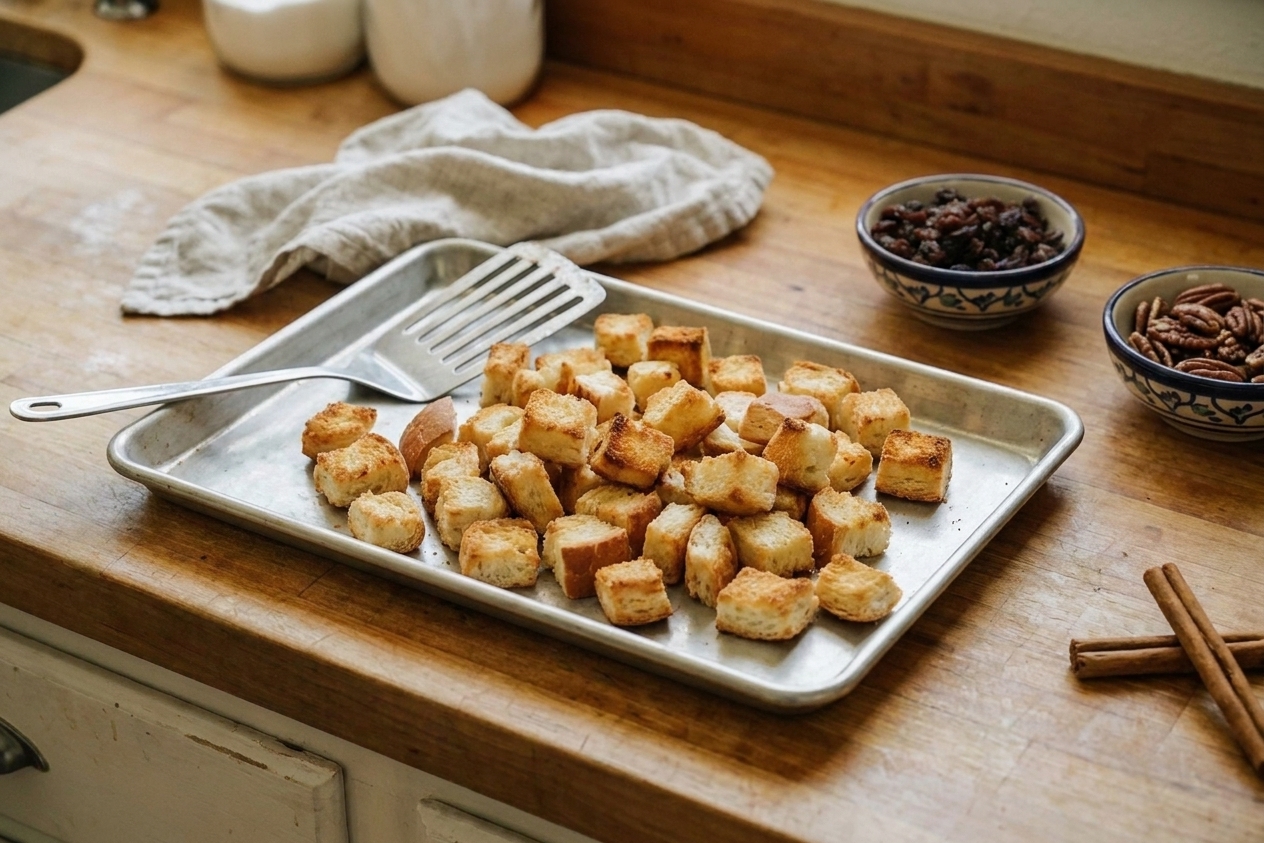
  • Toasting the bread first: This is the difference between “soft in a good way” and “sad and soggy.” Toasted bread drinks syrup and still keeps structure.
  • Sweet-salty balance: The cheese is not a gimmick. It melts into the layers and keeps the dessert from tasting one-note sweet.
  • Make-ahead friendly: Capirotada is one of those desserts that settles and tastes even better after a night in the fridge.

Pairs Well With

Storage Tips

Refrigerate: Cool completely, then cover the baking dish tightly or transfer to an airtight container. Refrigerate within 2 hours and store up to 4 days.

Reheat: Warm individual portions in the microwave for 30 to 60 seconds. For crispier edges, reheat in a 325°F oven until warmed through, about 12 to 18 minutes.

Freeze: Wrap portions well and freeze up to 2 months. Thaw overnight in the fridge, then reheat. The texture softens a bit after freezing, but the flavor is still excellent.

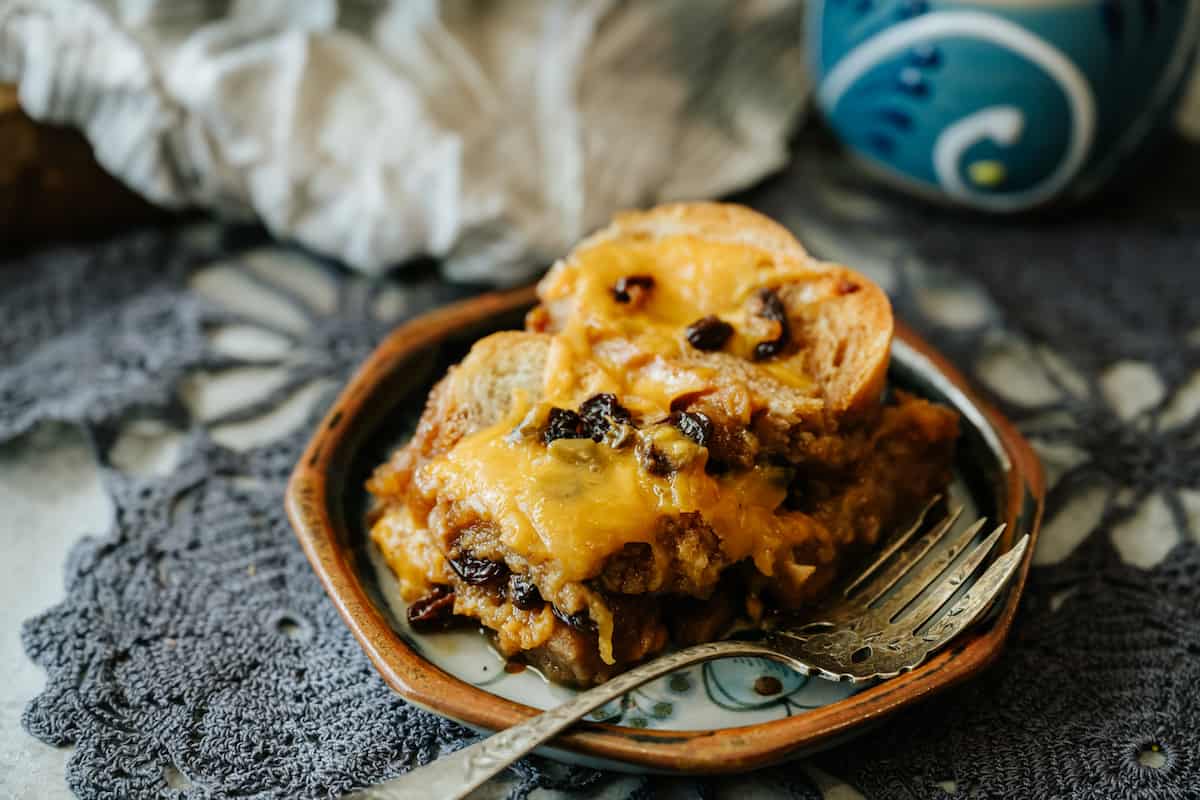
A single slice of capirotada on a small plate with a spoon beside it, showing layers of bread, raisins, nuts, and melted cheese in warm kitchen lighting

Common Questions

What is capirotada made of?

At its core: toasted bread, a spiced sweet syrup (traditionally piloncillo and cinnamon), and mix-ins like raisins, nuts, and cheese. Some families also add banana, coconut, or sprinkles.

Do you have to use piloncillo?

No. Piloncillo gives the most classic flavor, but you can substitute dark brown sugar. If you have a splash of molasses, adding 1 to 2 teaspoons helps mimic piloncillo’s depth.

What kind of cheese is best for capirotada?

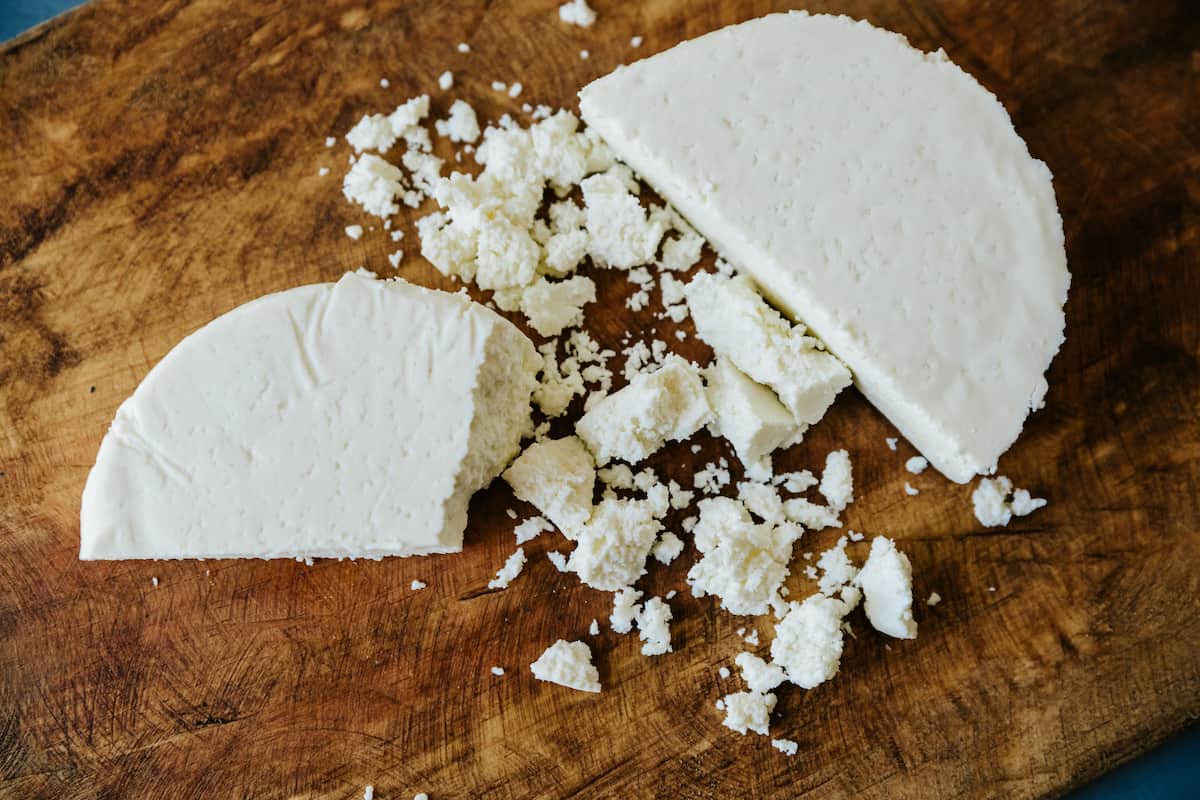
Traditionally you will often see queso fresco or queso añejo (and in plenty of homes, cotija too). For an easy grocery-store option, use shredded Monterey Jack or a mild cheddar. You want something that melts and tastes pleasantly salty, not super sharp or funky.

Can I make capirotada without cheese?

You can, and it will still be tasty, but it will read more like a straightforward sweet bread pudding. If you are skipping cheese, consider adding a pinch of salt to the syrup to keep the flavor balanced.

How do I keep it from getting soggy?

Toast the bread well, and do not dump all the syrup in one spot. The easiest method is to drizzle syrup over each layer as you build, then finish with whatever is left. Also let it rest after baking so the layers set.

Is capirotada supposed to be dry or wet?

Neither extreme. The center should be moist and sliceable, with syrupy pockets and crisp edges. If it seems dry, you can spoon extra warm syrup over servings.

I love recipes like capirotada because they have permission built in. Your bread does not have to be perfect. Your layers do not have to be neat. It is a “use what you have” dessert that still lands like something special. The first time I tried it, the cheese part made me pause, but one forkful later I got it. The syrup is warm and spiced, the raisins get jammy, the nuts toast in place, and then the cheese shows up like the friend who keeps everyone from getting too dramatic. Now it is one of my favorite ways to turn a couple of tired rolls into a dessert people actually talk about.