Common Questions
What is queso fresco, exactly?
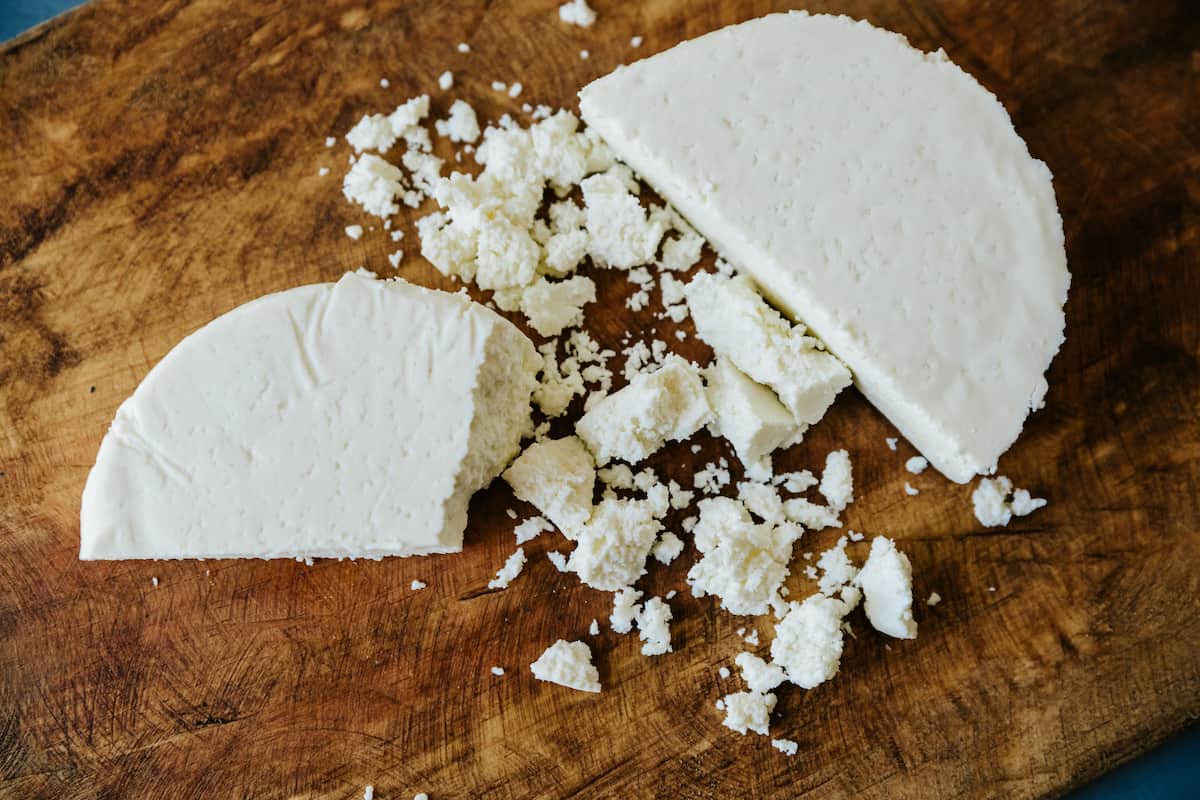
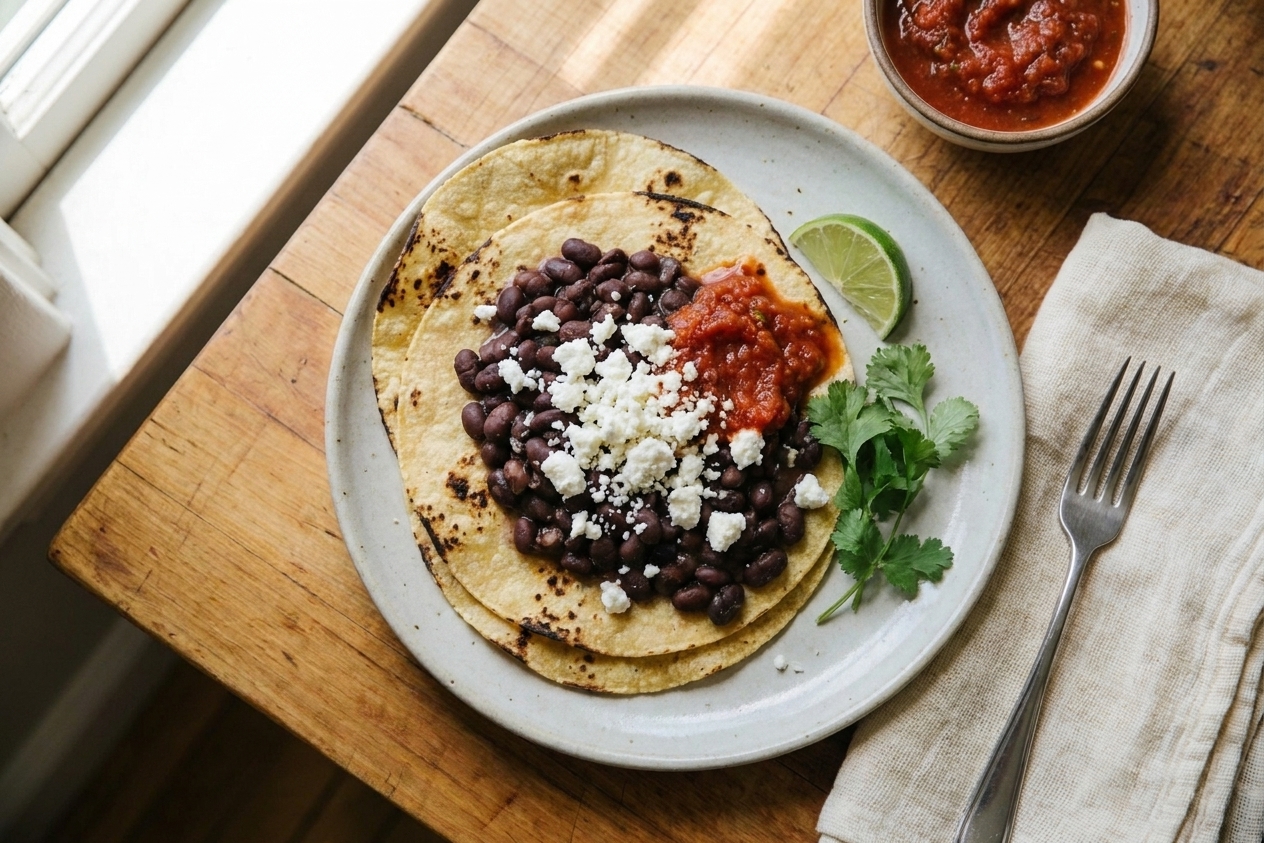
It is a fresh, mild Mexican cheese that is usually crumbly and slightly tangy. Unlike melty cheeses, it softens with heat but generally holds its shape.
Is this “real” queso fresco?
This is a quick, acid-set queso fresco-style cheese (similar to queso blanco). Many traditional and store-bought versions are made with cultures and sometimes rennet, which gives a slightly different texture. This method is the fast, weeknight-friendly one.
Is queso fresco the same as cotija?
No. Cotija is aged longer and is much saltier and drier, more like a grating cheese. Queso fresco is fresher, softer, and milder.
Can I use low-fat milk?
You can, but the yield and flavor will be less rich. For the best texture, use whole milk. Avoid ultra-pasteurized (UHT) milk if you can since it can set weaker curds.
Vinegar or lime juice, which is better?
Both work. Vinegar is consistent and neutral. Lime juice gives a brighter tang. If you use lime, start with less and add more as needed to fully curdle.
Why did my milk not curdle?
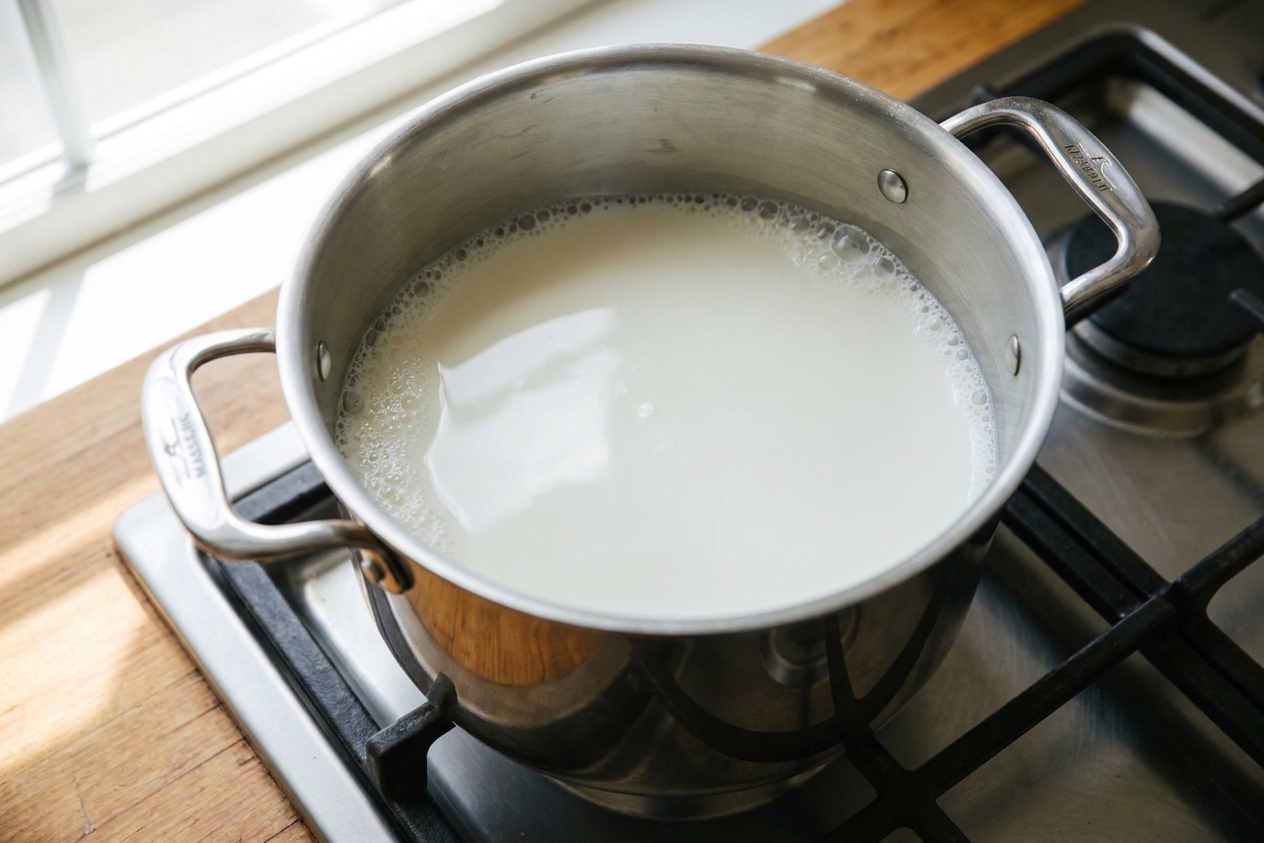
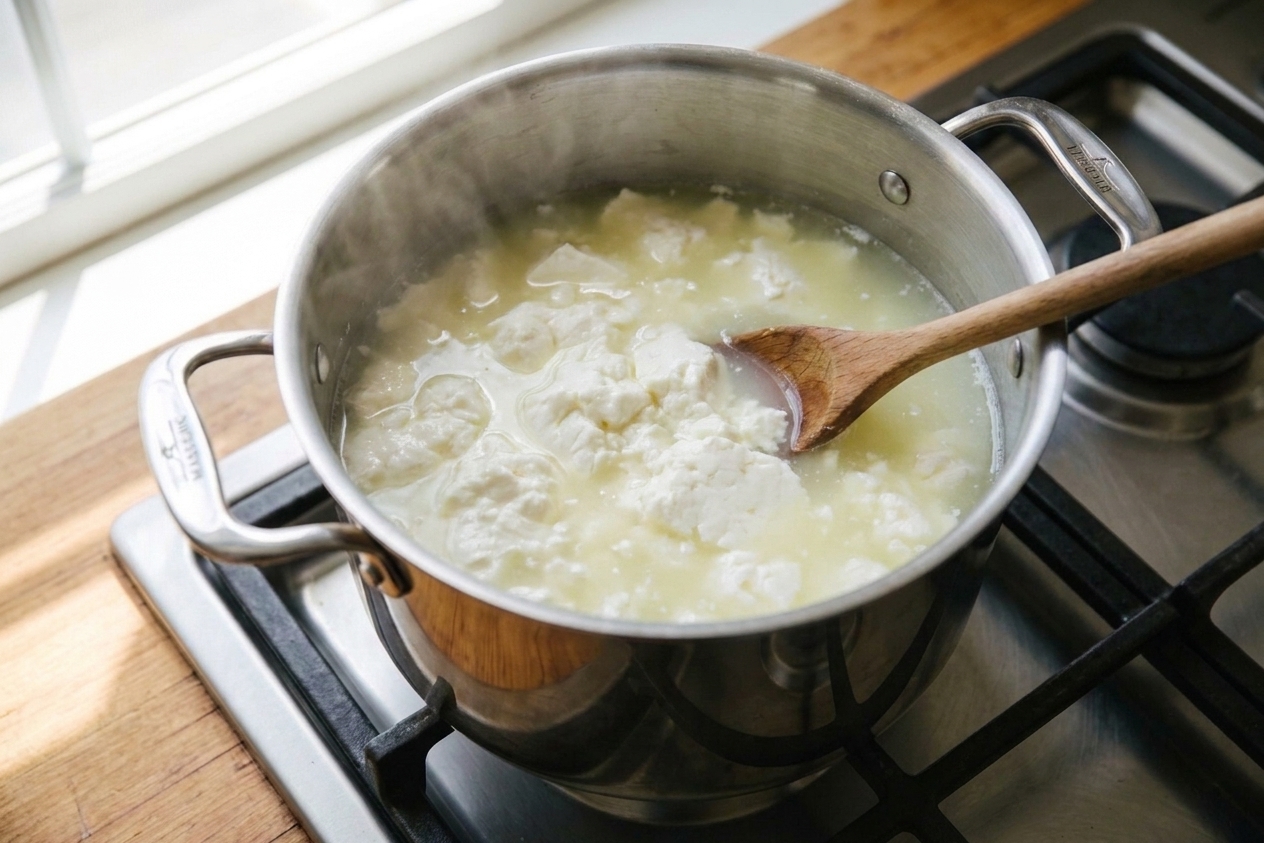
Most often the milk was not hot enough or it was ultra-pasteurized. Bring the milk to 185 to 190°F, then add the acid slowly and wait 2 to 3 minutes. Properly separated whey should look pale yellow and mostly clear. If the whey stays milky, add more acid 1 teaspoon at a time, wait a minute, and repeat until the curds fully separate.
How do I make it more crumbly?
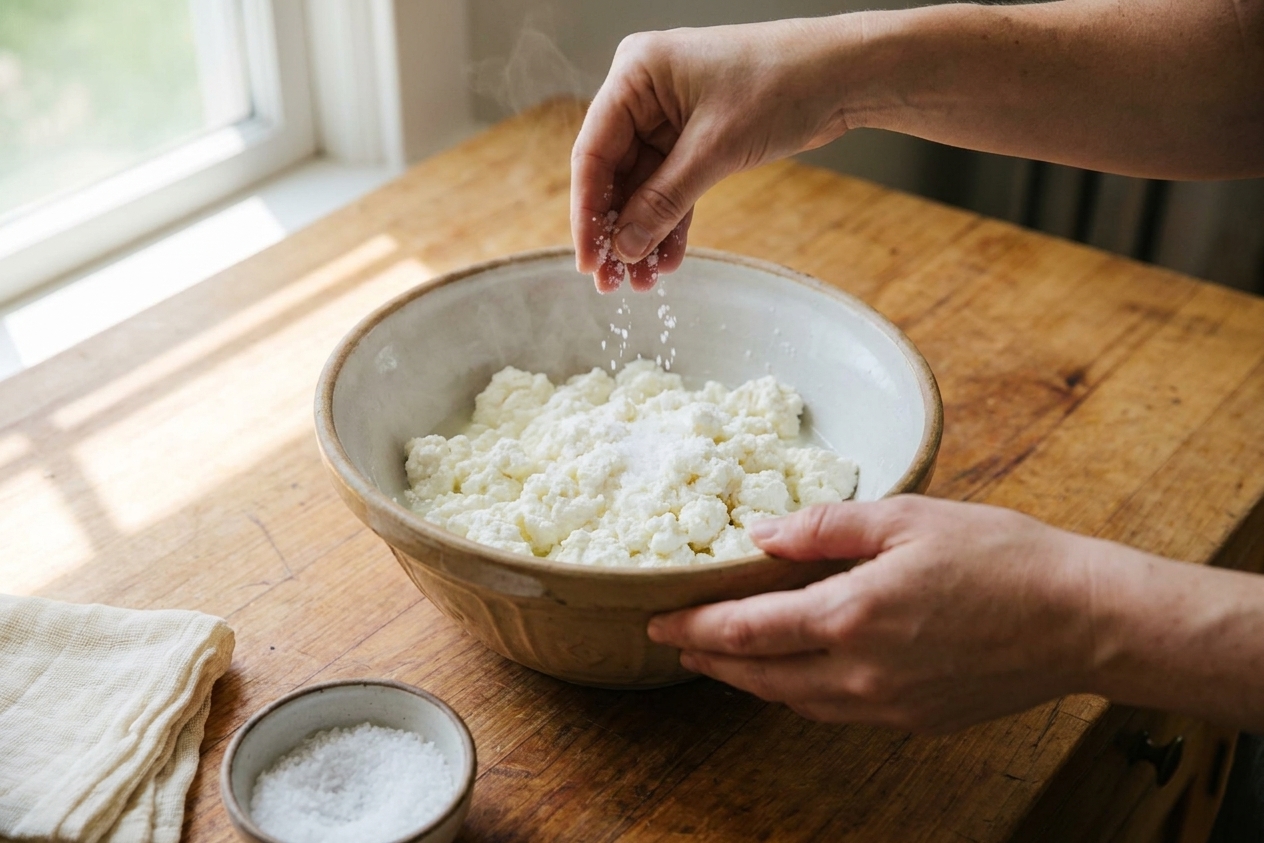
Drain longer and press a bit more firmly. Salt also helps it tighten up. Let it chill for an hour before crumbling for the cleanest texture.