Mom's Best Recipes
Recipe

Cast-Iron Ribeye Steak (Garlic Herb Butter)

A simple cast-iron ribeye with a deeply browned crust, buttery garlic basting, and a juicy, steakhouse-style finish.

Author By Matt Campbell
4.8
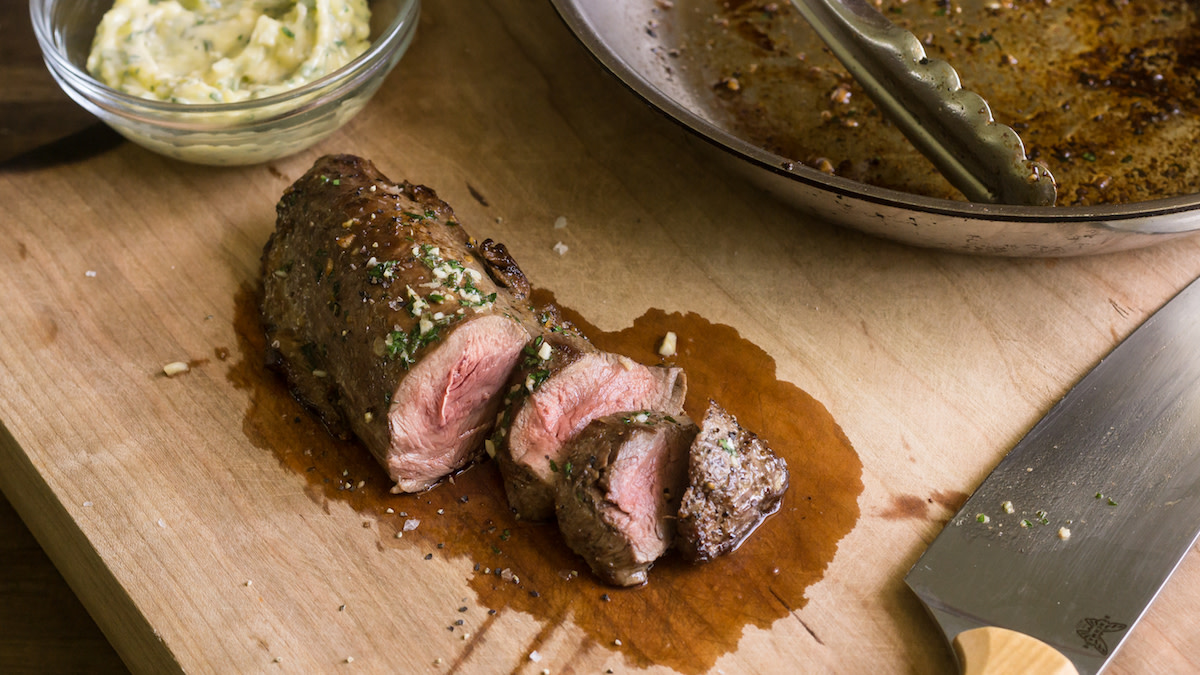
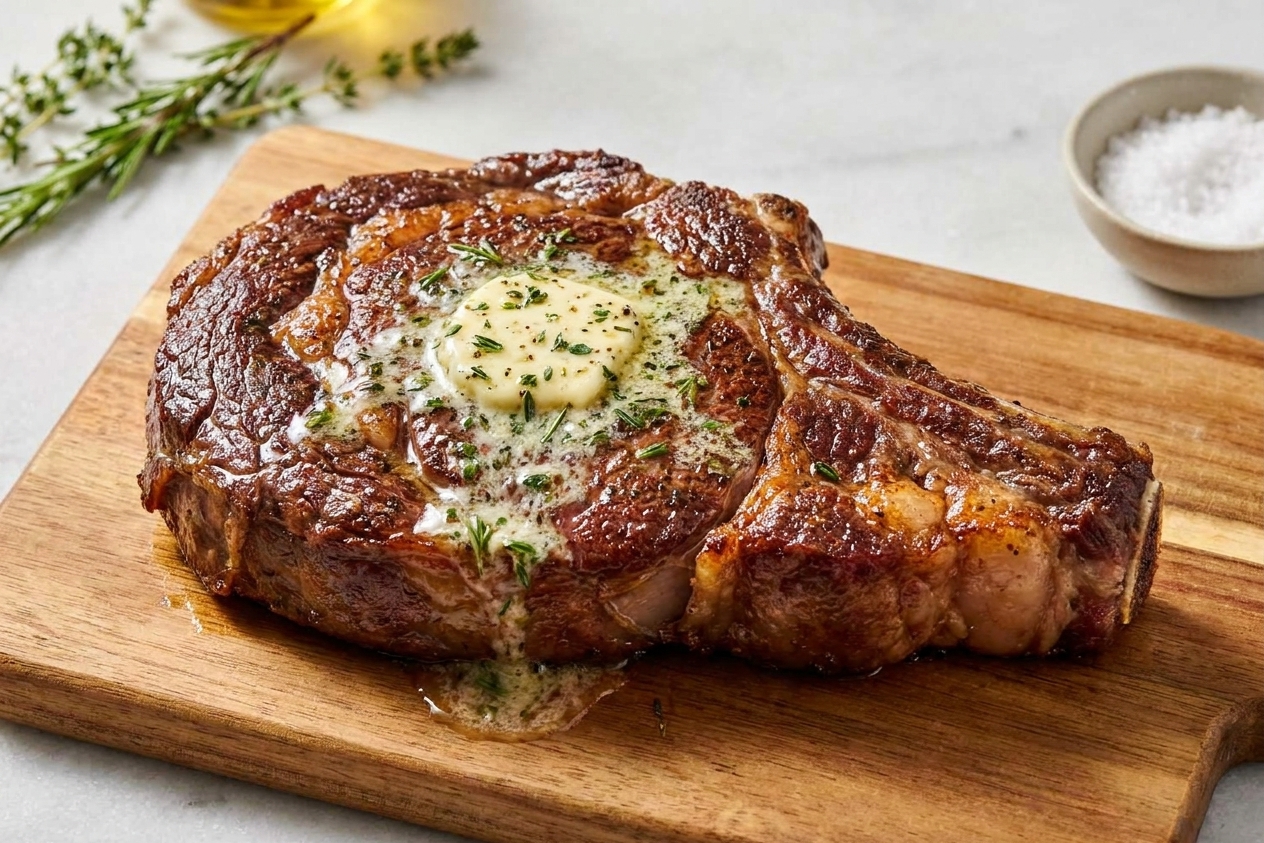
A thick ribeye steak with a deep brown crust resting on a cutting board with melted garlic herb butter pooling on top, warm kitchen lighting

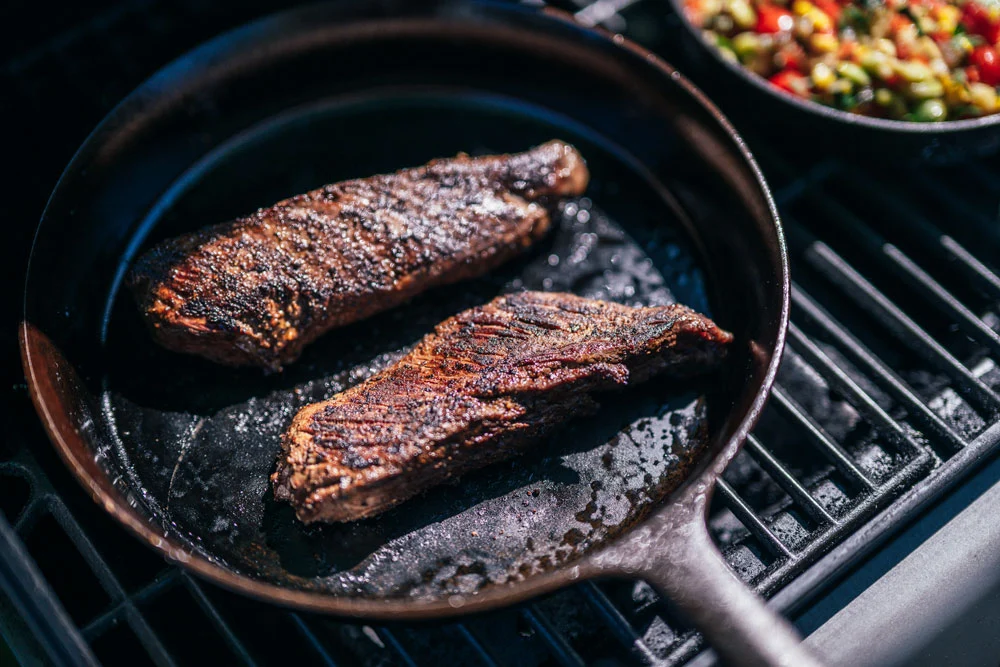
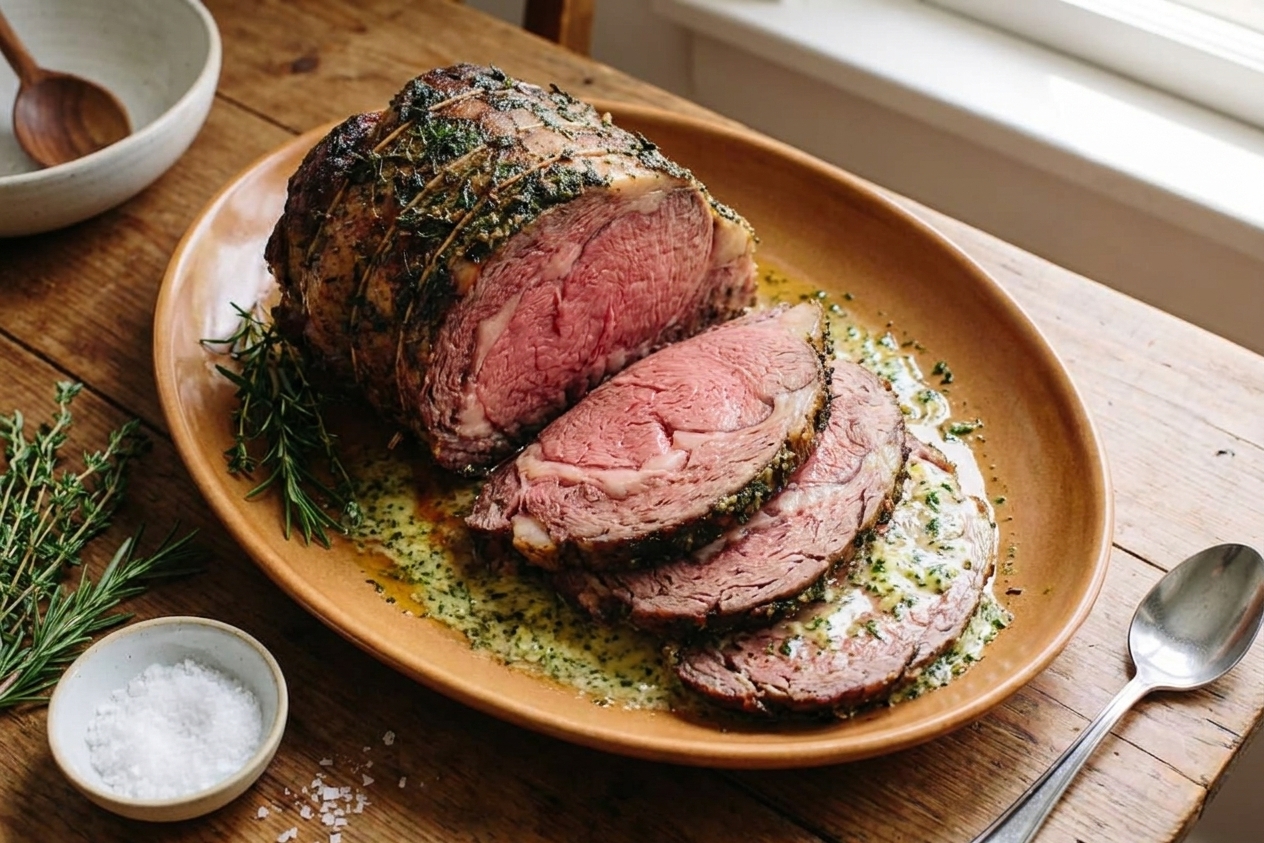
Ribeye is the steak I reach for when I want maximum payoff with minimum fuss. It has enough marbling to stay juicy, enough beefy flavor to hold its own with just salt and pepper, and it absolutely loves a ripping hot cast-iron skillet.

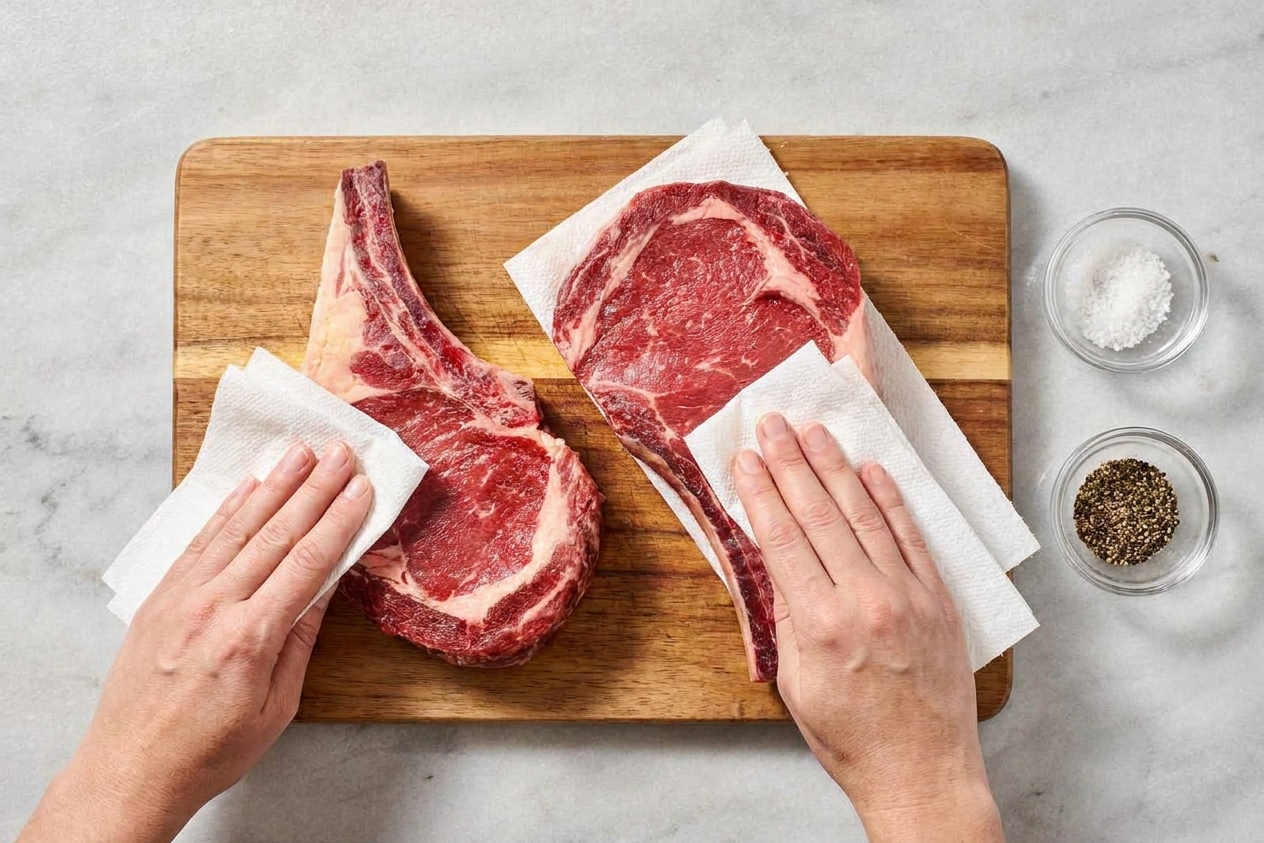
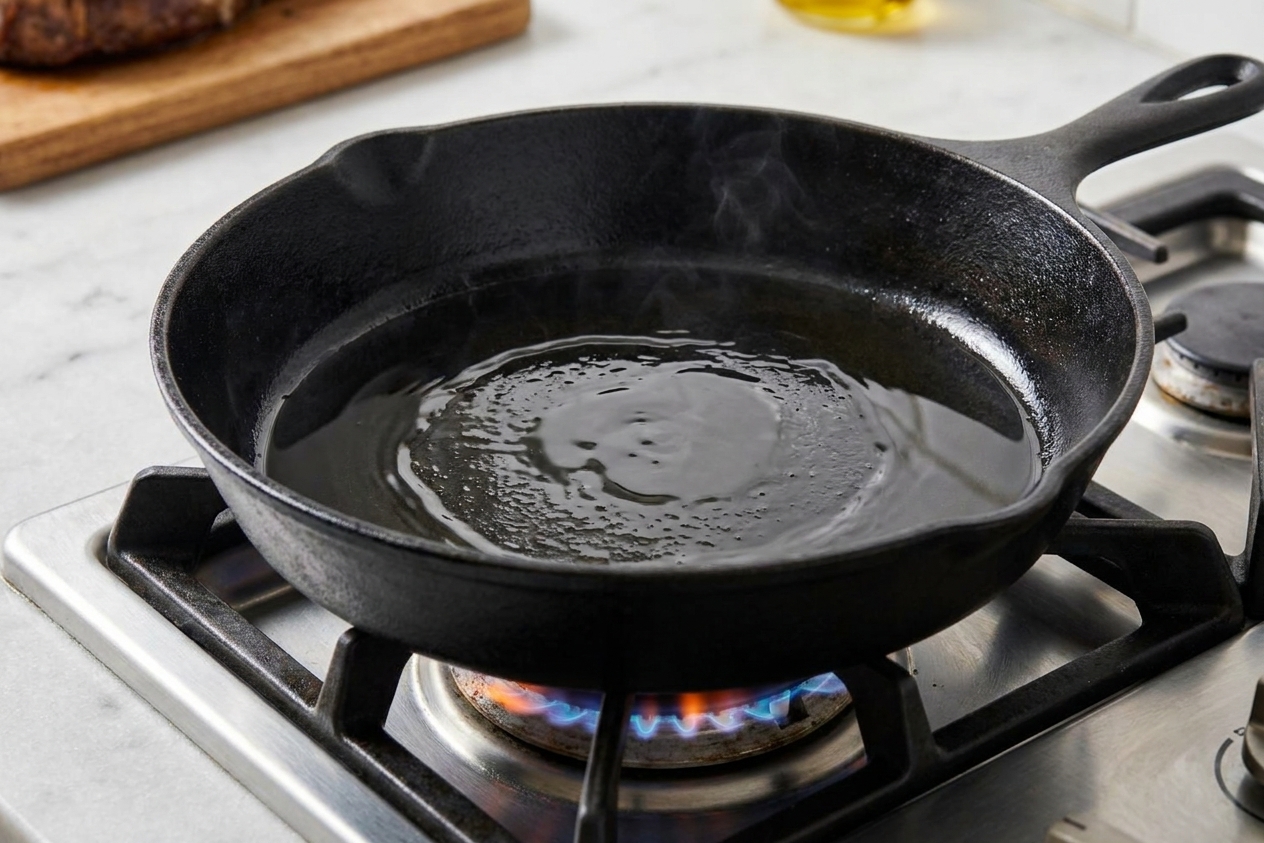
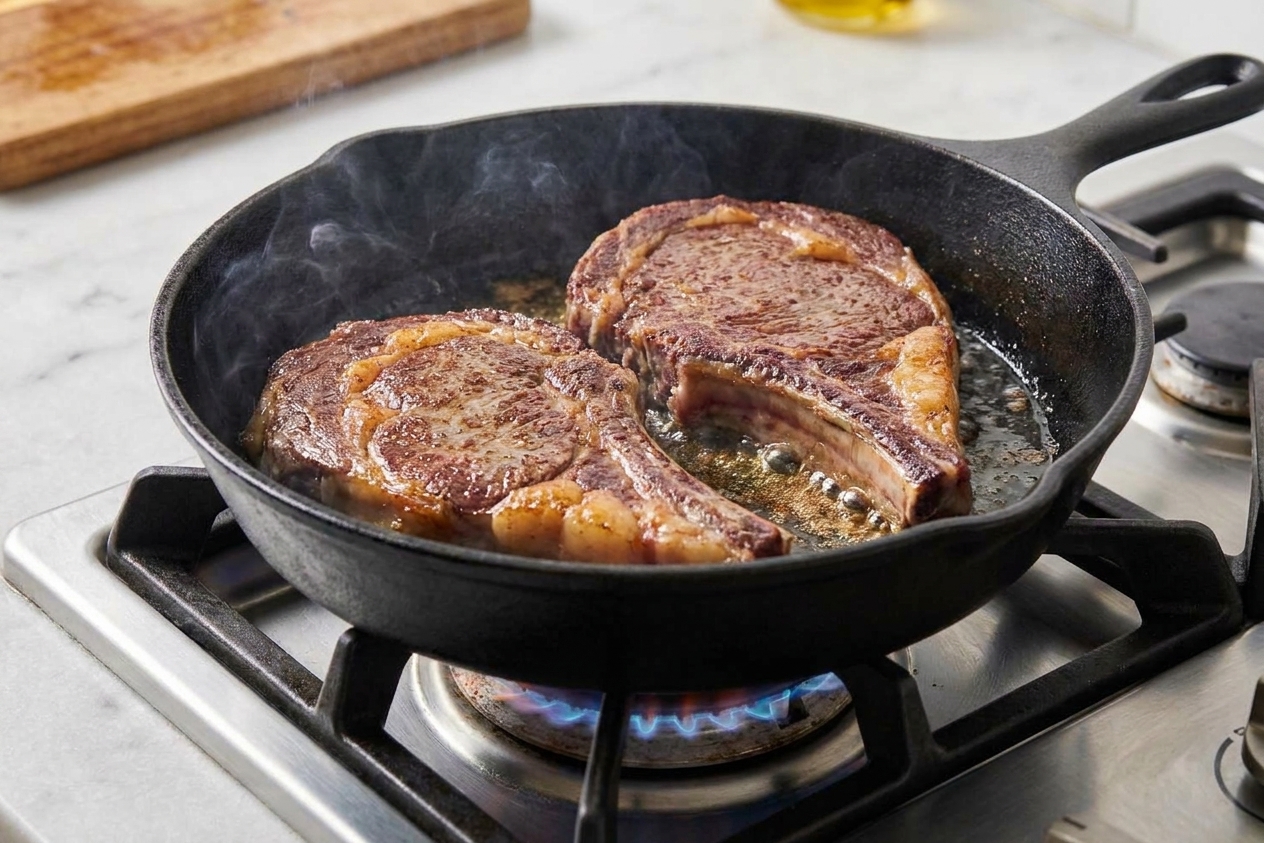
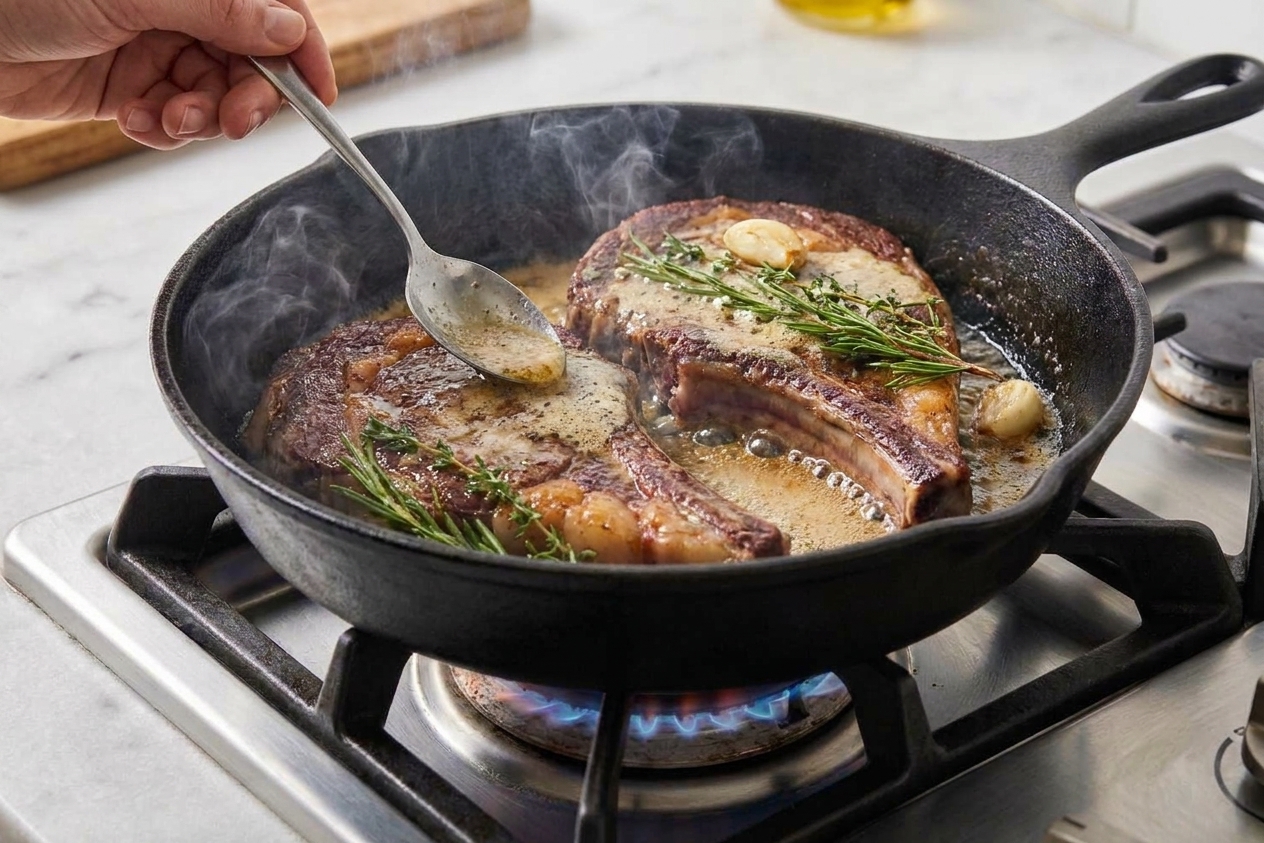
This is my go-to method for that steakhouse crust at home: dry the surface, sear hard, baste with garlic and herbs, then rest like your dinner depends on it, because it does. If you have ever sliced into a steak too early and watched all the juices sprint across the cutting board, welcome. We fix that here.

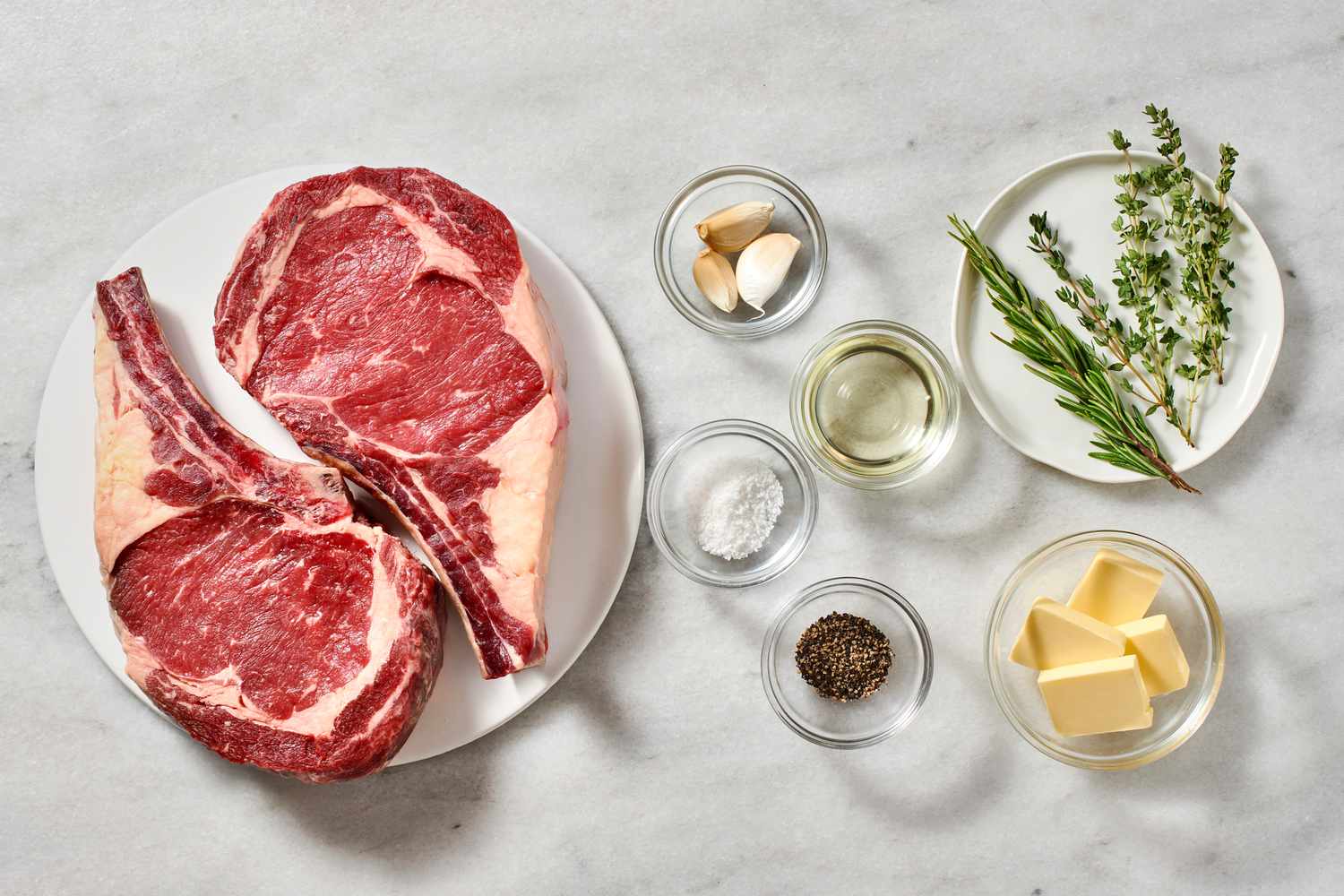
Raw ribeye steaks on a sheet pan next to kosher salt, black pepper, garlic cloves, fresh rosemary, fresh thyme, and a stick of butter on a kitchen counter

Why It Works

  • Big crust, not overcooked. Starting with a dry steak and a hot pan gets you crisp edges fast, so you do not have to overcook the center to get color.
  • Garlic herb butter basting. Butter plus thyme and rosemary turns the skillet into an aromatic basting bath. You get that classic steakhouse aroma in about 60 seconds.
  • Clear doneness targets. You will cook to temperature, not vibes, so your ribeye lands exactly where you want it.
  • Flexible finish. Serve as-is, or use the browned bits in the pan for a quick pan sauce with a splash of broth or wine.

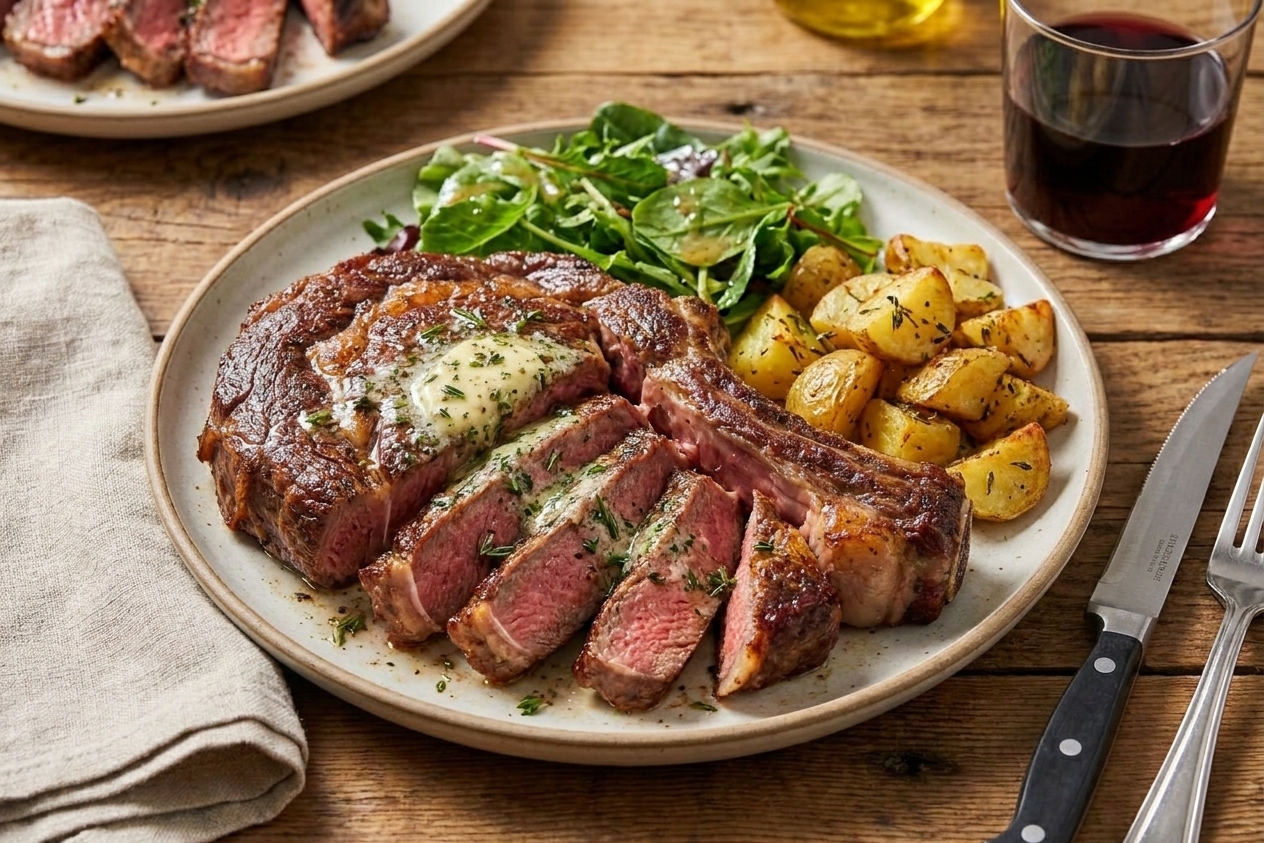
Pairs Well With

Storage Tips

Refrigerate: Cool leftover ribeye, then store in an airtight container for up to 3 to 4 days.

Freeze: Wrap slices tightly (plastic wrap or parchment, then a freezer bag) and freeze for up to 2 months. Thaw overnight in the fridge.

Reheat without turning it into shoe leather:

  • Best: Warm sliced steak in a skillet over medium-low heat with a small splash of beef broth or water, covered, 1 to 3 minutes.
  • Also good: 250°F oven until just warmed through, about 8 to 12 minutes depending on thickness.
  • Microwave tip: Use 50% power in short bursts with a damp paper towel over the steak.

Leftover hero move: Slice thin and tuck into a toasted roll with mayo, arugula, and a little horseradish. Steak sandwich energy with zero drama.

Common Questions

What is the best thickness for ribeye?

Aim for 1 to 1 1/2 inches thick. Thin steaks overcook before they develop a real crust. If your ribeye is closer to 2 inches, you will get more control by searing first, then finishing in the oven (see the oven-finish note in the instructions).

Do I need to bring the steak to room temperature?

You do not need a long counter sit for great results. What matters most is drying the surface and cooking to temperature. If you have time, salt the steak and refrigerate it uncovered for 1 to 24 hours for an even better crust.

Should I use butter or oil to sear?

Use a high smoke point oil to sear, then add butter later to baste. Butter alone can scorch before the steak gets properly browned.

When do I flip the steak?

Flip when the first side has a deep brown crust and releases easily, usually 2 to 4 minutes depending on heat and thickness. If it sticks, it is not ready.

What internal temperature should ribeye be?

These are pull temperatures (you pull it from the heat a little early, then it rises as it rests):

  • Rare: pull at 120°F, rest to about 125°F
  • Medium-rare: pull at 125°F, rest to about 130°F
  • Medium: pull at 135°F, rest to about 140°F
  • Medium-well: pull at 145°F, rest to about 150°F
  • Well-done: pull at 155°F, rest to about 160°F

Safety note: USDA recommends whole cuts of beef reach 145°F with a 3-minute rest. Choose what you are comfortable with and use a thermometer.

Can I cook ribeye without cast iron?

Yes. Use the heaviest skillet you have, preferably stainless steel. Nonstick works in a pinch but will not build the same crust.

I used to overcomplicate steak because I thought “restaurant good” meant “chef tricks I do not know yet.” Then I learned the most important steak skills are honestly pretty basic: dry surface, hot pan, salt that actually tastes like something, and the patience to let the steak rest. Ribeye became my favorite because it forgives a lot, but it also rewards you the second you get that first crisp, browned edge. I still cook it like a friend is hanging out at the counter, asking questions, stealing a taste of the butter, and pretending we are not both watching the thermometer like it is a suspense movie.