Common Questions
What is a ribeye roast?
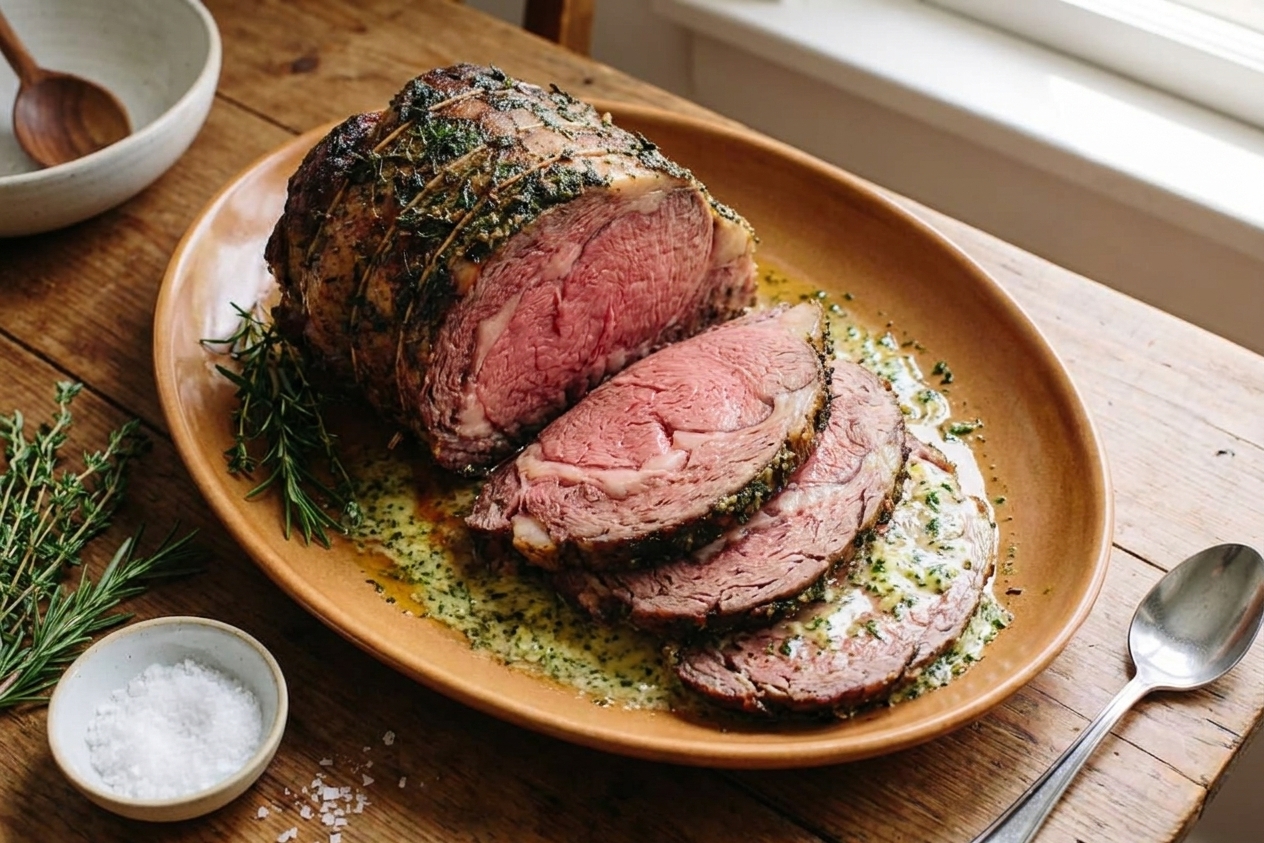
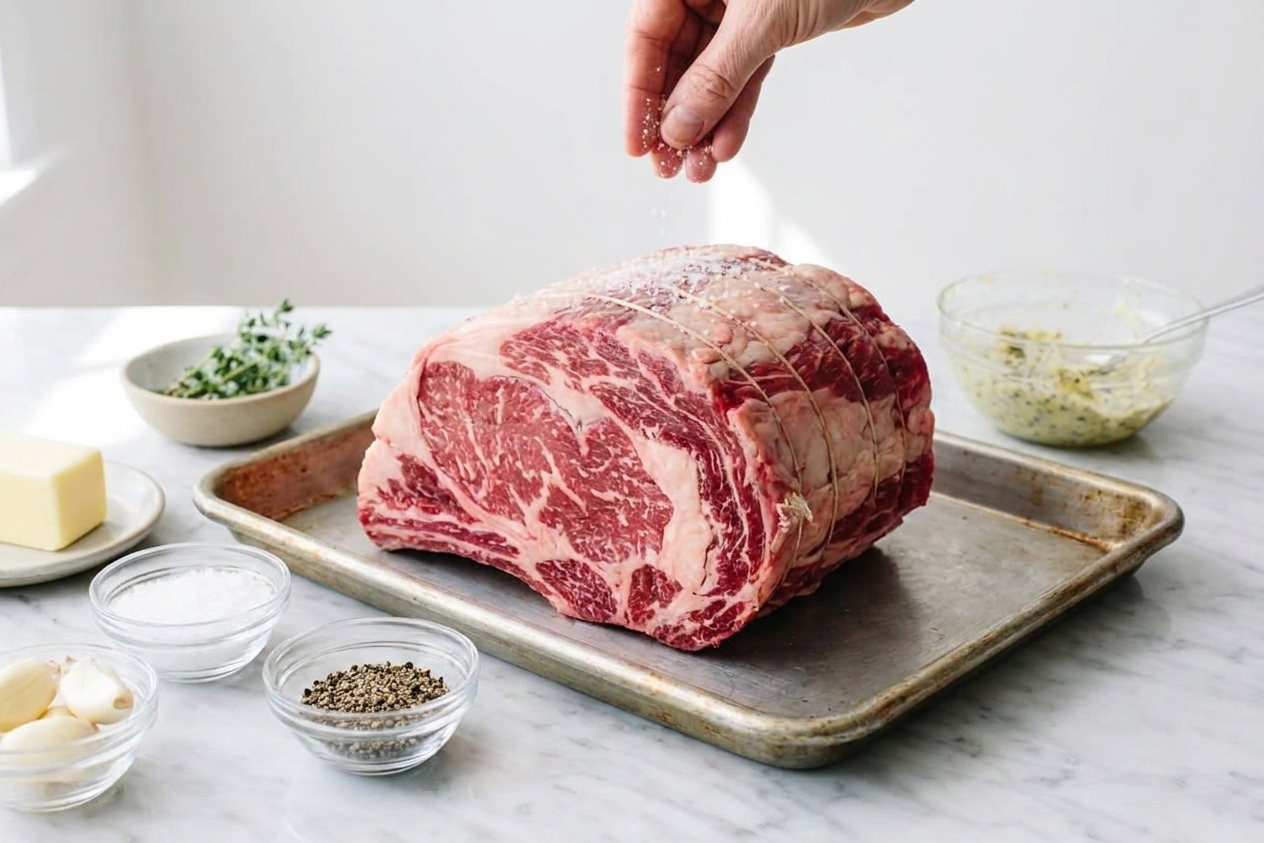
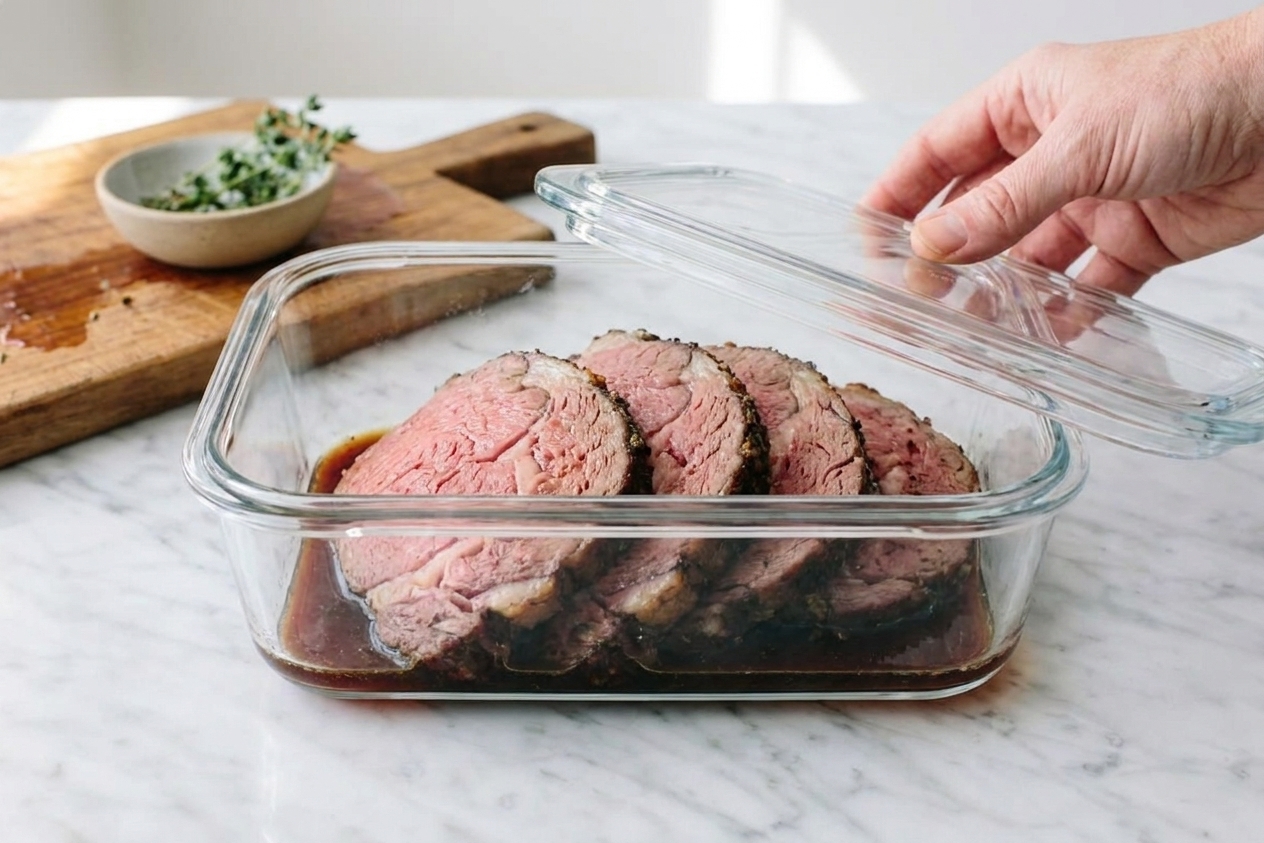
It’s a large roast cut from the same area as ribeye steaks, so you get generous marbling and big beefy flavor. You may also see it labeled as boneless rib roast. Prime rib is commonly used to describe a rib roast (often bone-in), and “prime” can refer to the grade (like USDA Prime), not the cut itself.
How much ribeye roast per person?
Plan on 1/2 pound per person for boneless (more if you want big leftovers). If your roast is bone-in, aim closer to 3/4 pound per person since the bones add weight.
Do I need to bring the roast to room temperature first?
Not for food safety, and it won’t truly come to room temp anyway. I like taking it out for 30 to 60 minutes while the oven heats and you prep. It helps it cook a bit more evenly, but the thermometer is what really matters.
What internal temperature should I cook ribeye roast to?
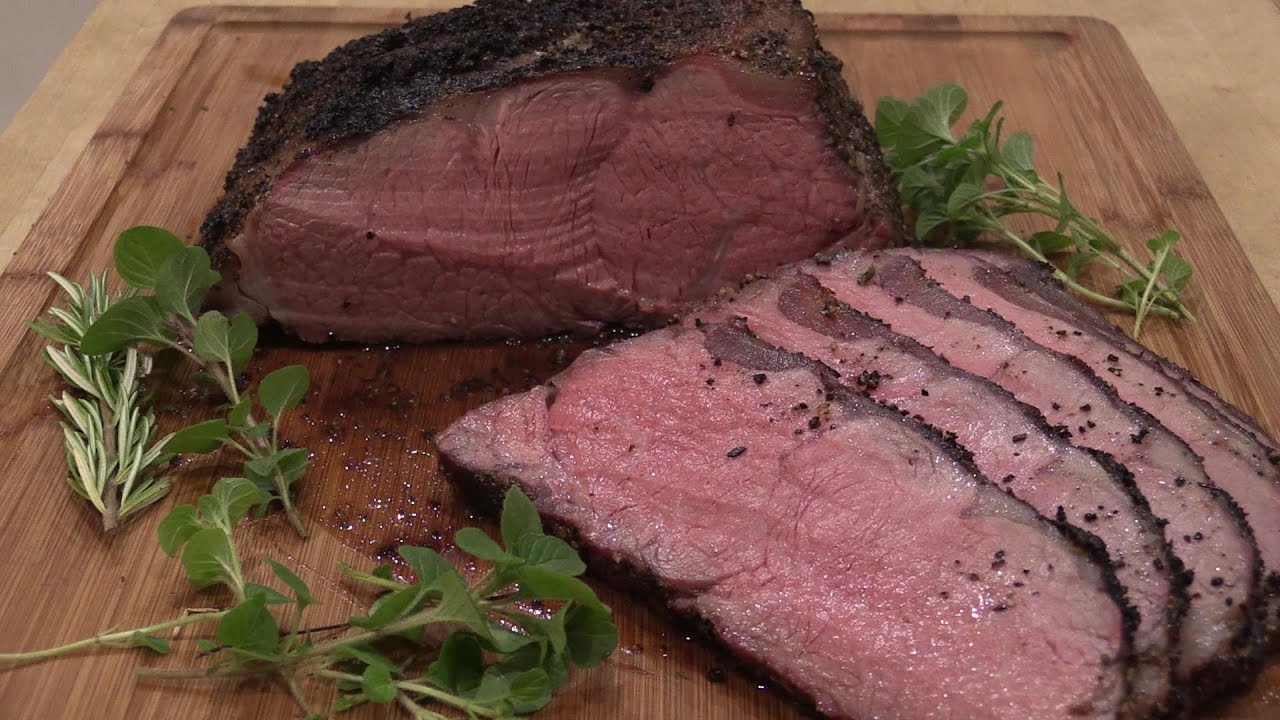
- Rare: pull at 120°F, rest to about 125 to 130°F
- Medium-rare: pull at 125°F, rest to about 130 to 135°F
- Medium: pull at 135°F, rest to about 140 to 145°F
- Well-done: pull at 150 to 155°F, rest to about 155 to 165°F
Carryover cooking during the rest is real, especially with larger roasts. Expect roughly 5 to 10°F of rise depending on your oven temp, roast size, and how tightly you tent it.
Why rest the roast?
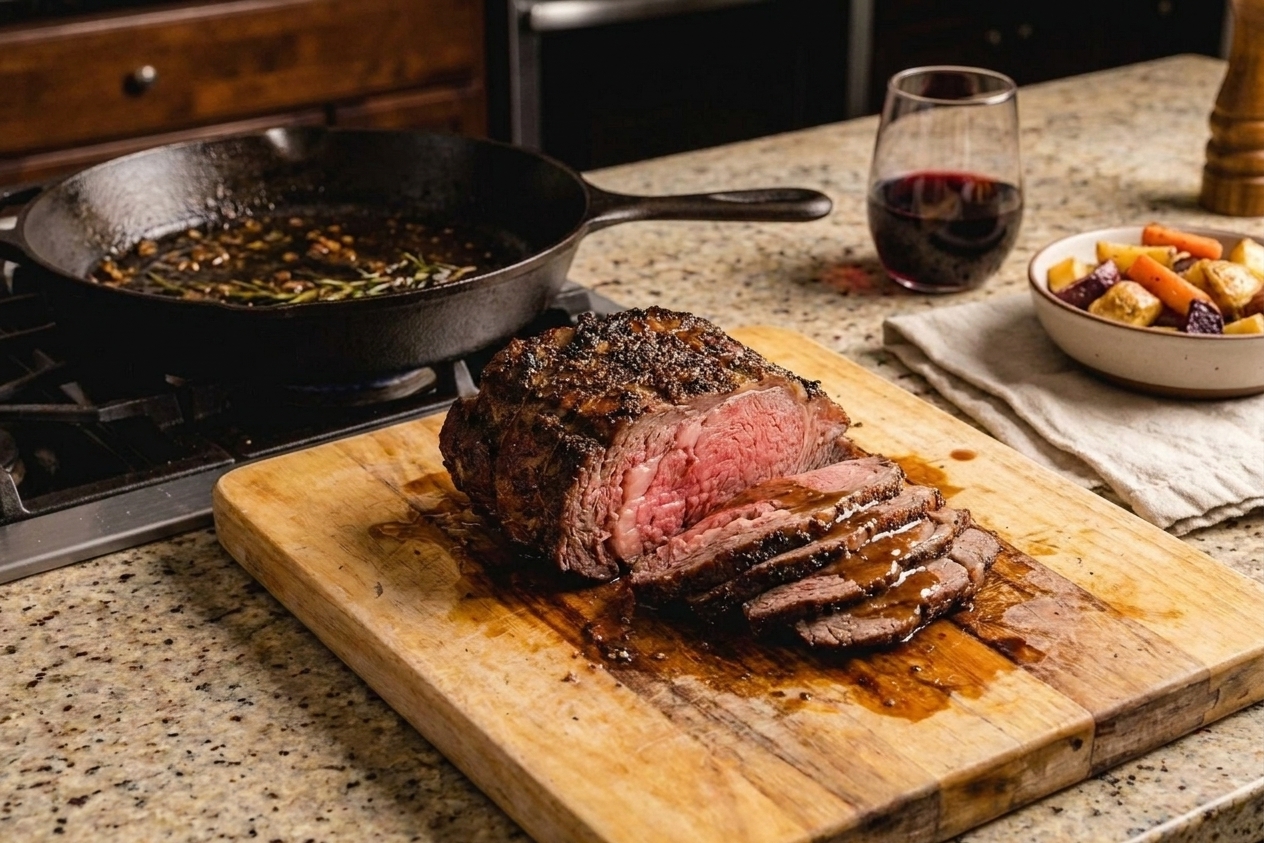
Resting (at least 20 minutes) lets juices redistribute so they stay in the meat instead of flooding your cutting board. Also, it finishes the cook gently.
Can I make this without fresh herbs?
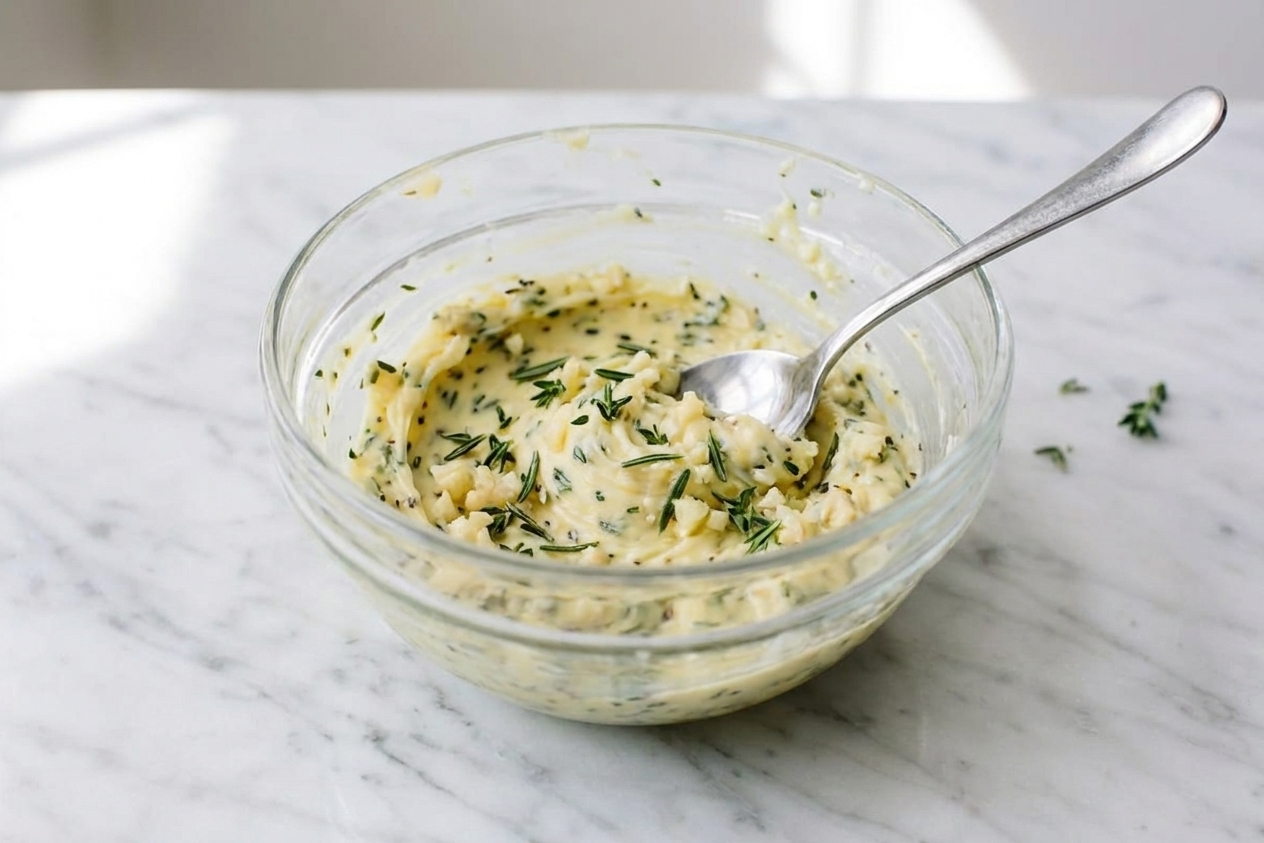
Yep. Use dried herbs at about 1/3 the amount. For example, swap 1 tablespoon fresh rosemary for 1 teaspoon dried.
What if I didn’t have time to dry brine overnight?
It’s still going to be good. If you’ve got 45 to 60 minutes, salt it now and let it sit while the oven heats. You’ll get less deep seasoning than an overnight brine, but you’ll still get a great roast.