Common Questions
What cut is best for cast iron steak?
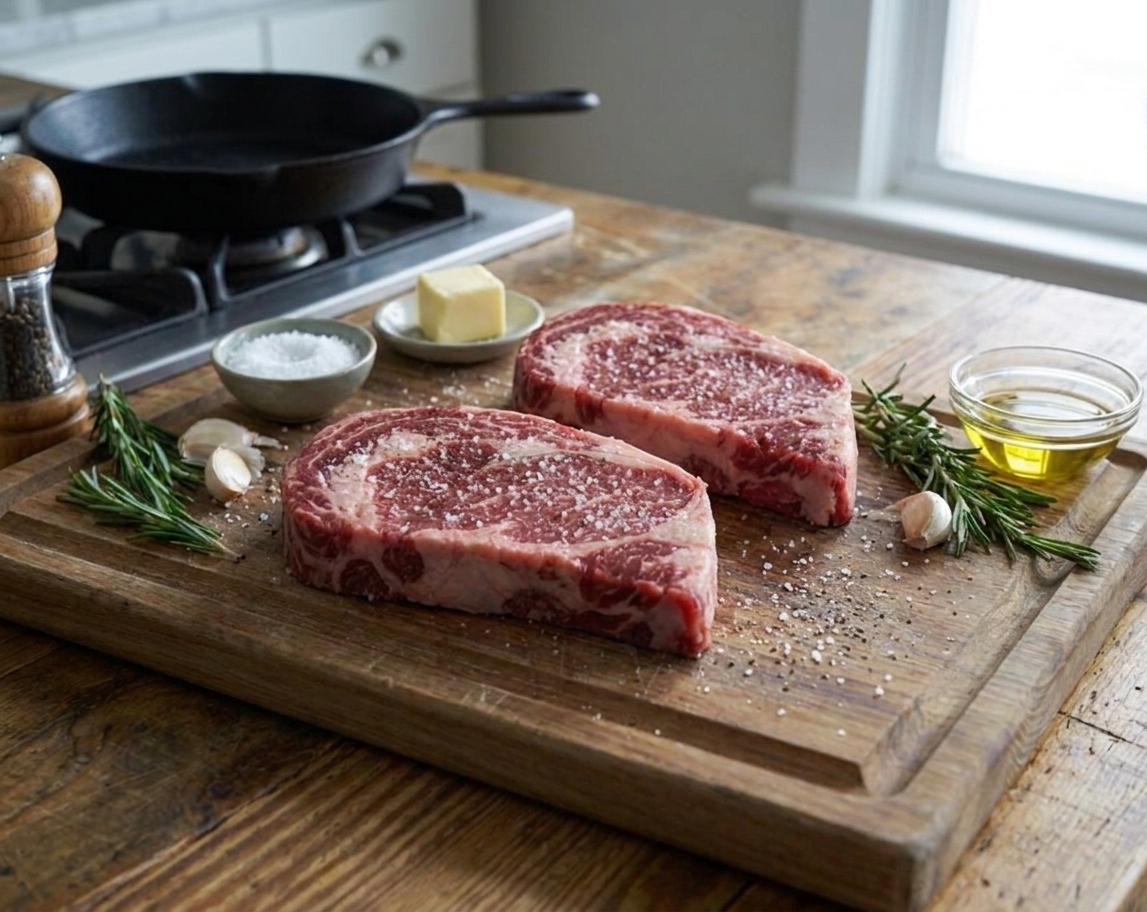
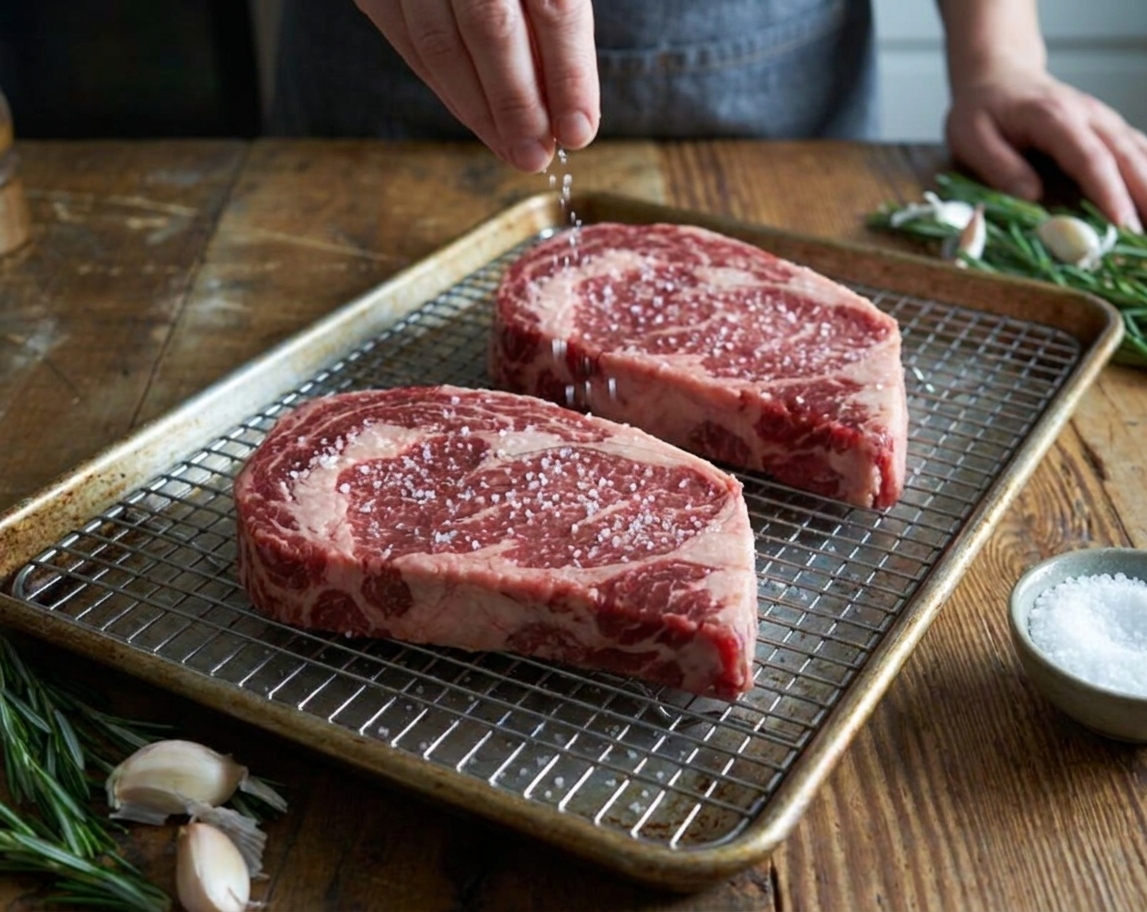
Look for well-marbled cuts that are at least 1 to 1 1/2 inches thick: ribeye, New York strip, sirloin, or filet mignon. Thin steaks can work, but they go from “perfect” to “oops” fast.
Do I need to bring steak to room temperature?
Not really. If your steak sits out for 20 to 30 minutes while you prep, great. But the bigger win is dry surface + hot pan. If it is fridge-cold, you might just need a little extra time in the oven to finish.
For safety, avoid leaving raw steak out longer than about 1 hour (less if your kitchen is warm).
Why is my steak not getting a good crust?
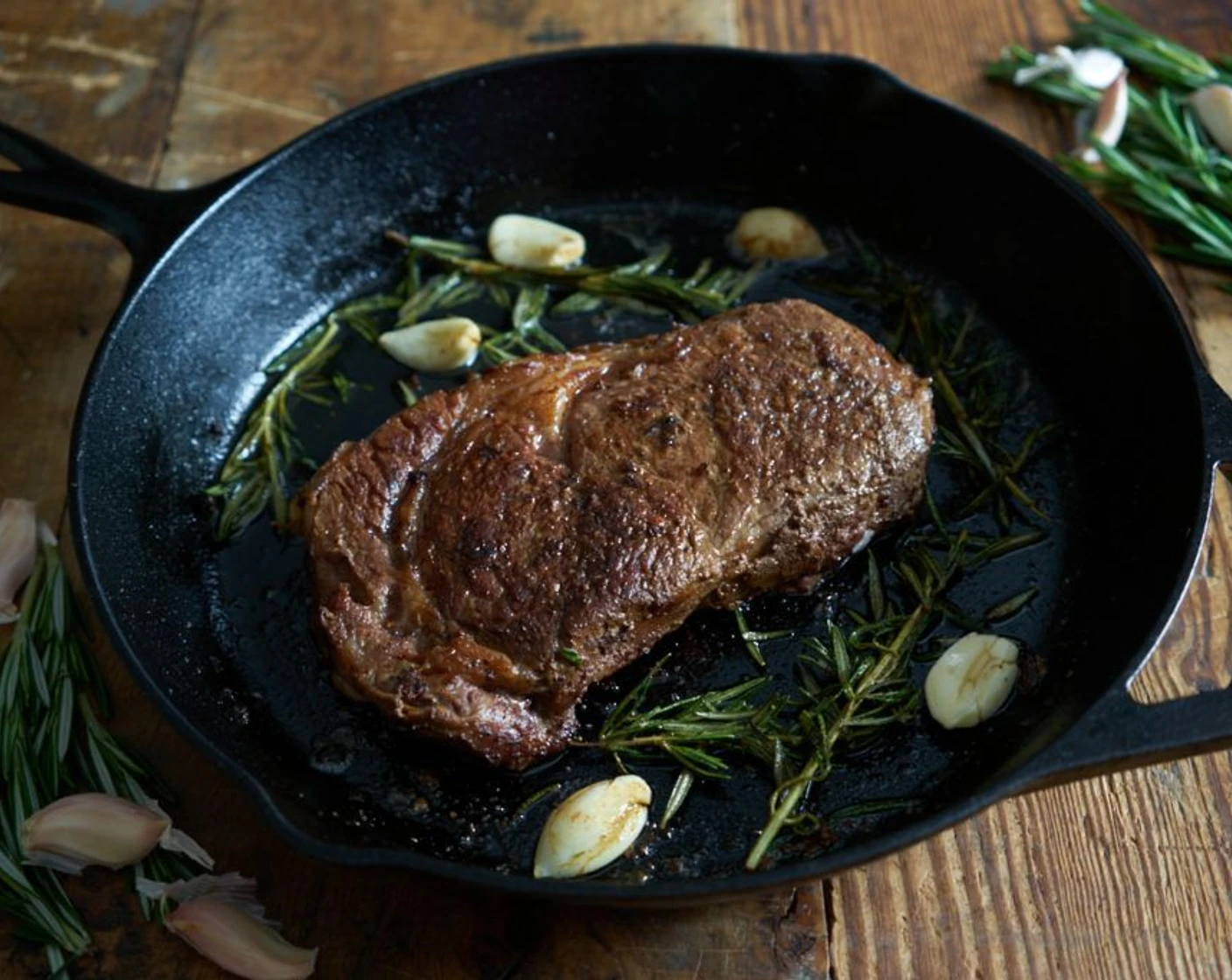
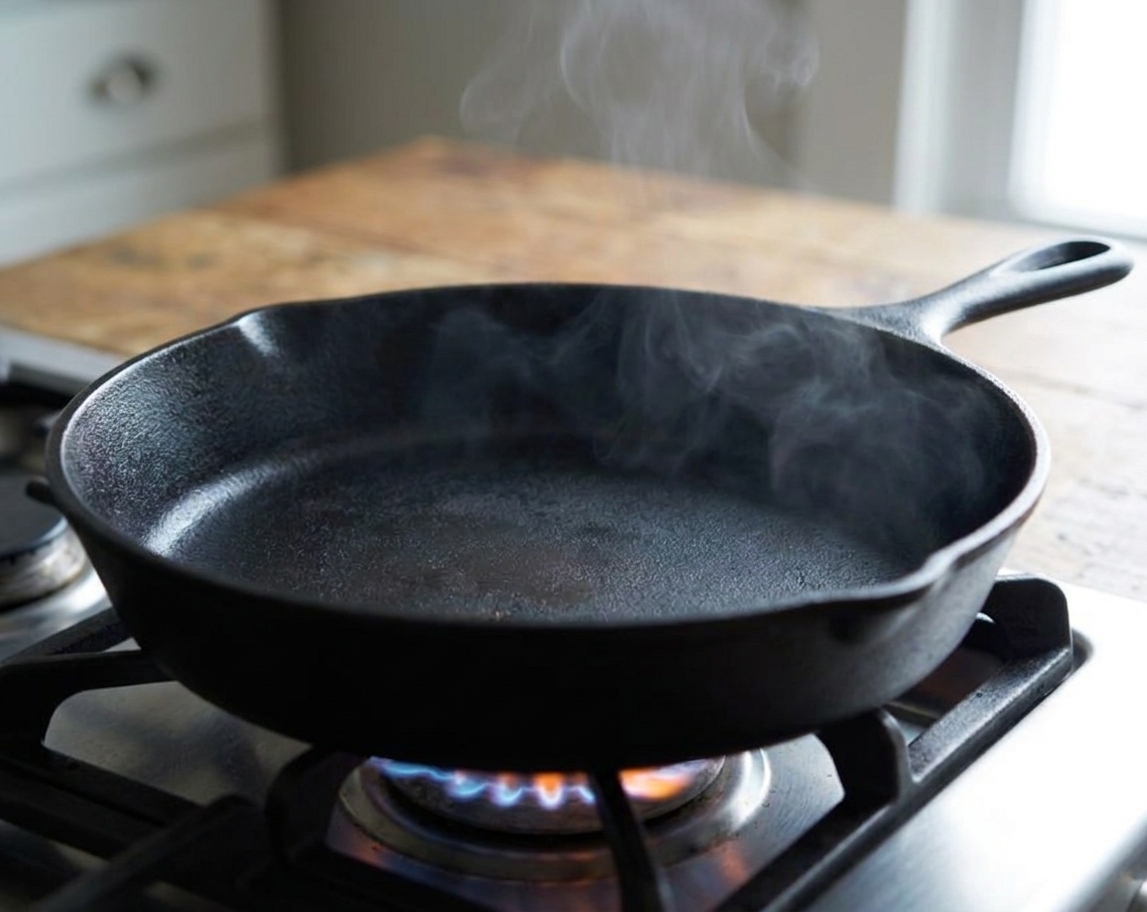
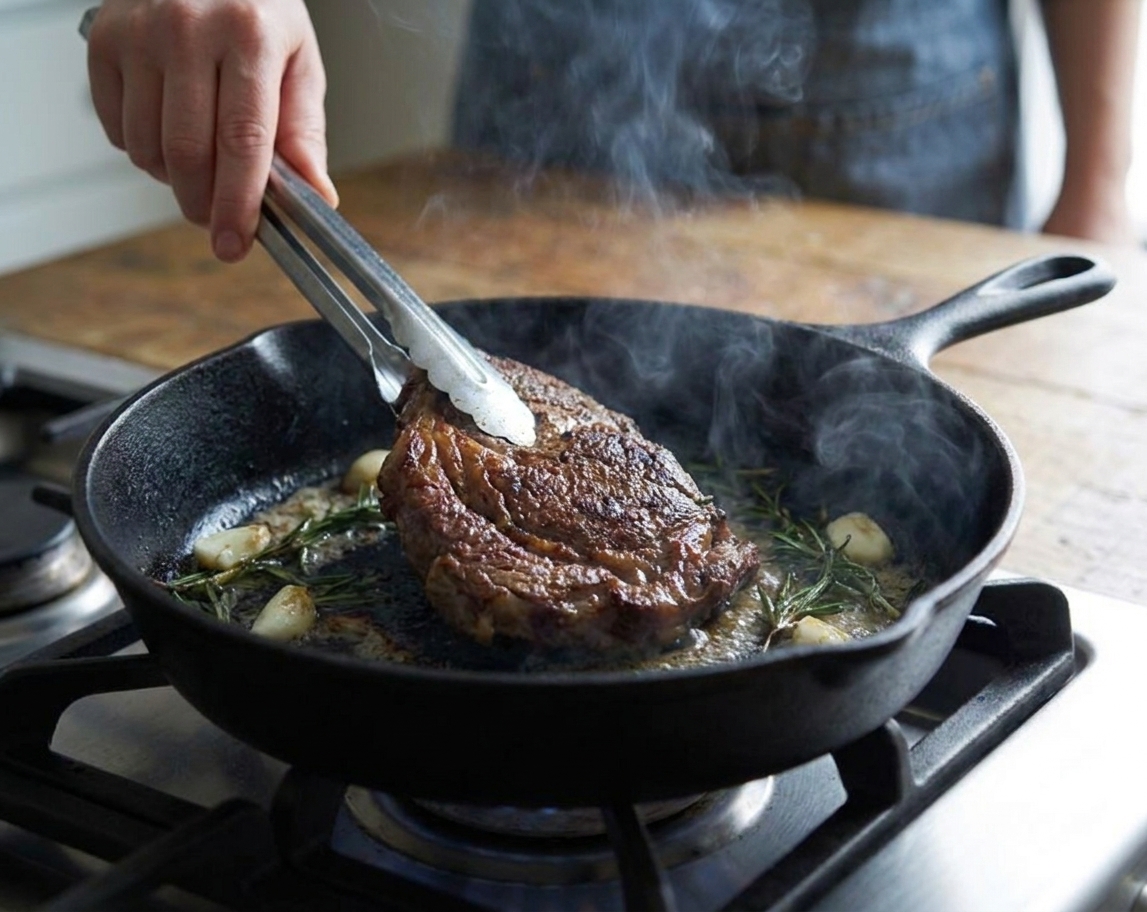
Three usual culprits: (1) the surface is wet, (2) the pan is not hot enough, or (3) the pan is crowded. Pat the steak very dry, preheat longer than you think, and cook one or two steaks max depending on skillet size.
Should I use butter or oil to sear?
Use oil first because it can handle higher heat. Add butter near the end for flavor. Butter alone can burn before your crust is ready. If your kitchen gets smoky fast, choose a higher smoke point oil like avocado or grapeseed and keep the vent running.
How do I know when it is done?
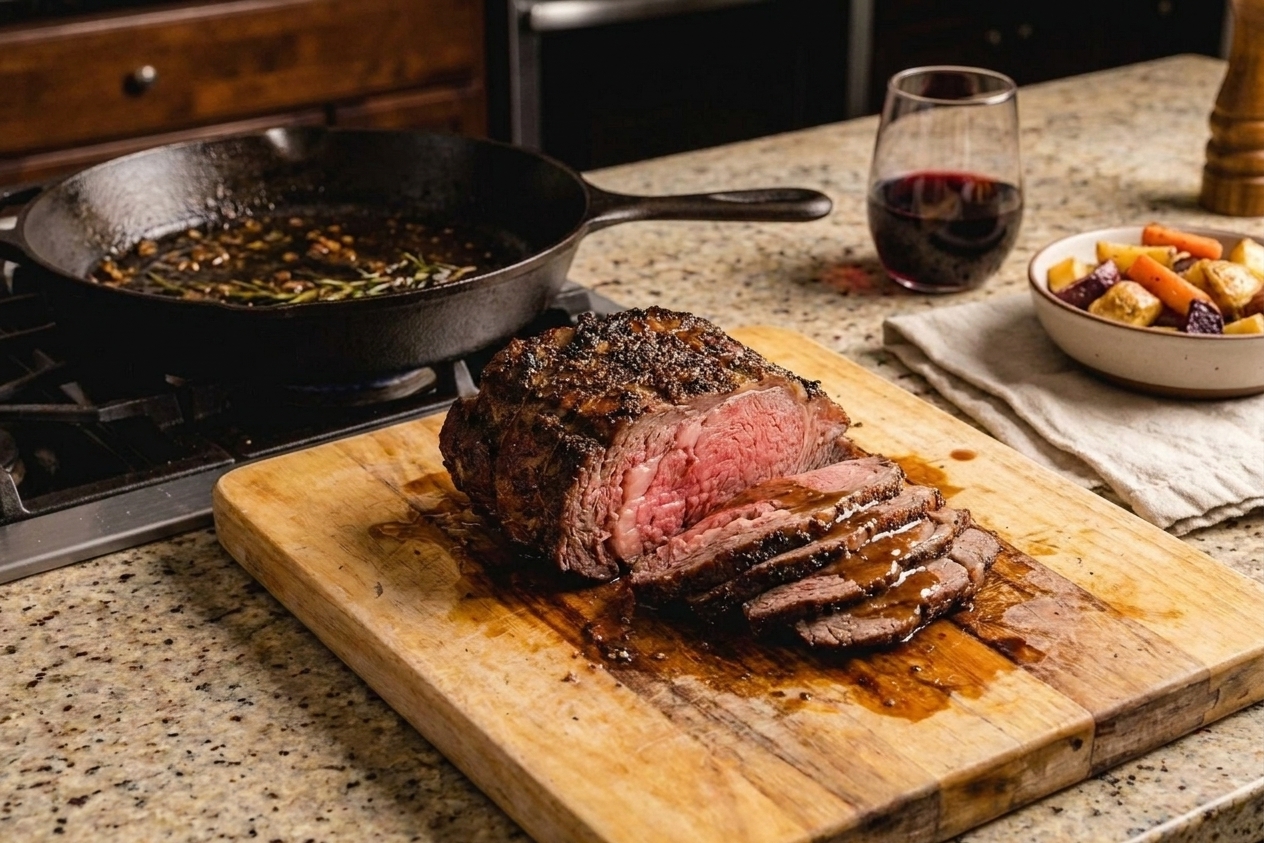
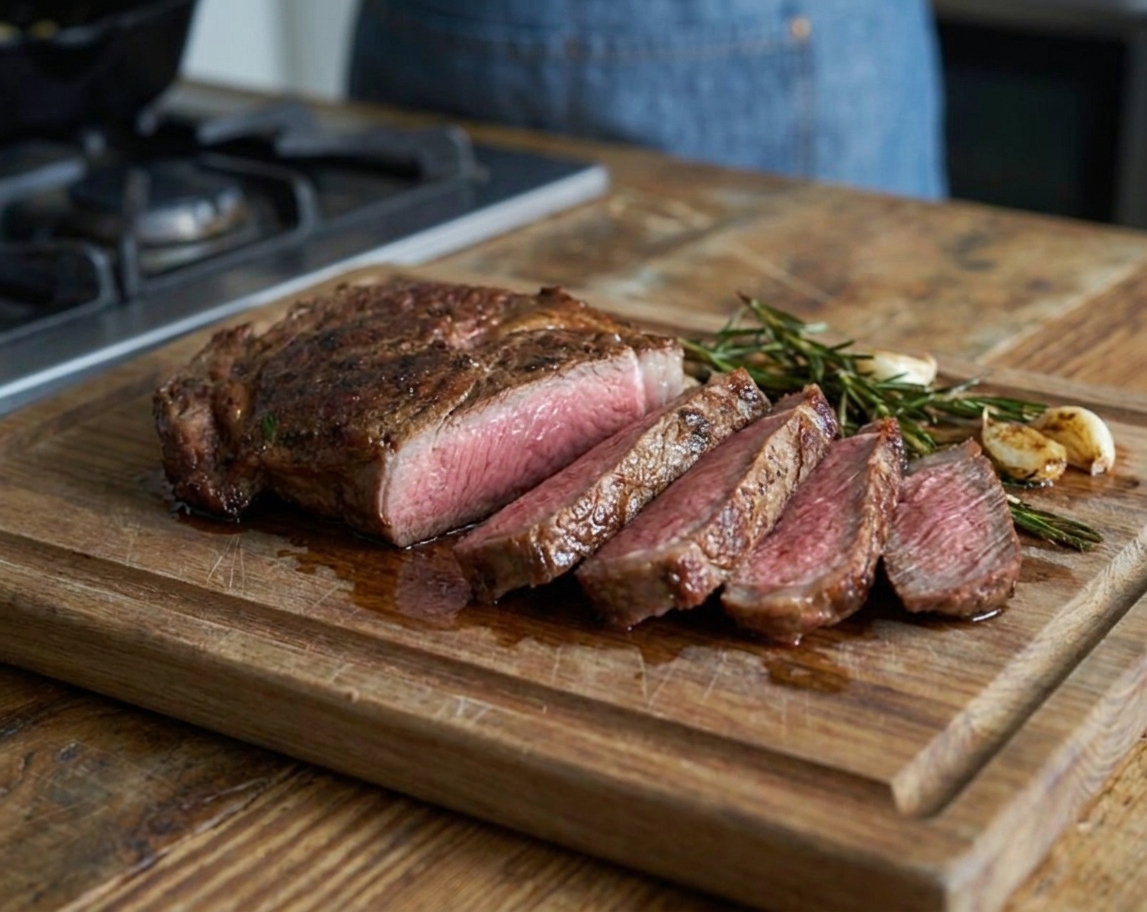
A thermometer is the easiest path to consistency. Pull the steak a few degrees early, because it keeps cooking as it rests.
Pull temps (then rest 5 to 10 minutes):
- Rare: 120°F to 125°F
- Medium-rare: 125°F to 130°F
- Medium: 135°F to 140°F
- Medium-well: 145°F to 150°F
- Well-done: 155°F+
Final temps after rest (approx):
- Rare: 125°F to 130°F
- Medium-rare: 130°F to 135°F
- Medium: 140°F to 145°F
- Medium-well: 150°F to 155°F
- Well-done: 160°F+
Can I cook cast iron steak without an oven?
Yes. Choose a steak closer to 1 inch thick and lower the heat after searing so the interior can finish without scorching the crust. If the steak is thick, the quick oven finish is simply easier.