Mom's Best Recipes
Recipe

Cedar Plank Salmon

Smoky, juicy salmon cooked gently on a cedar plank with simple glazes, grill and oven options, and doneness temps you can trust.

Author By Matt Campbell
4.8
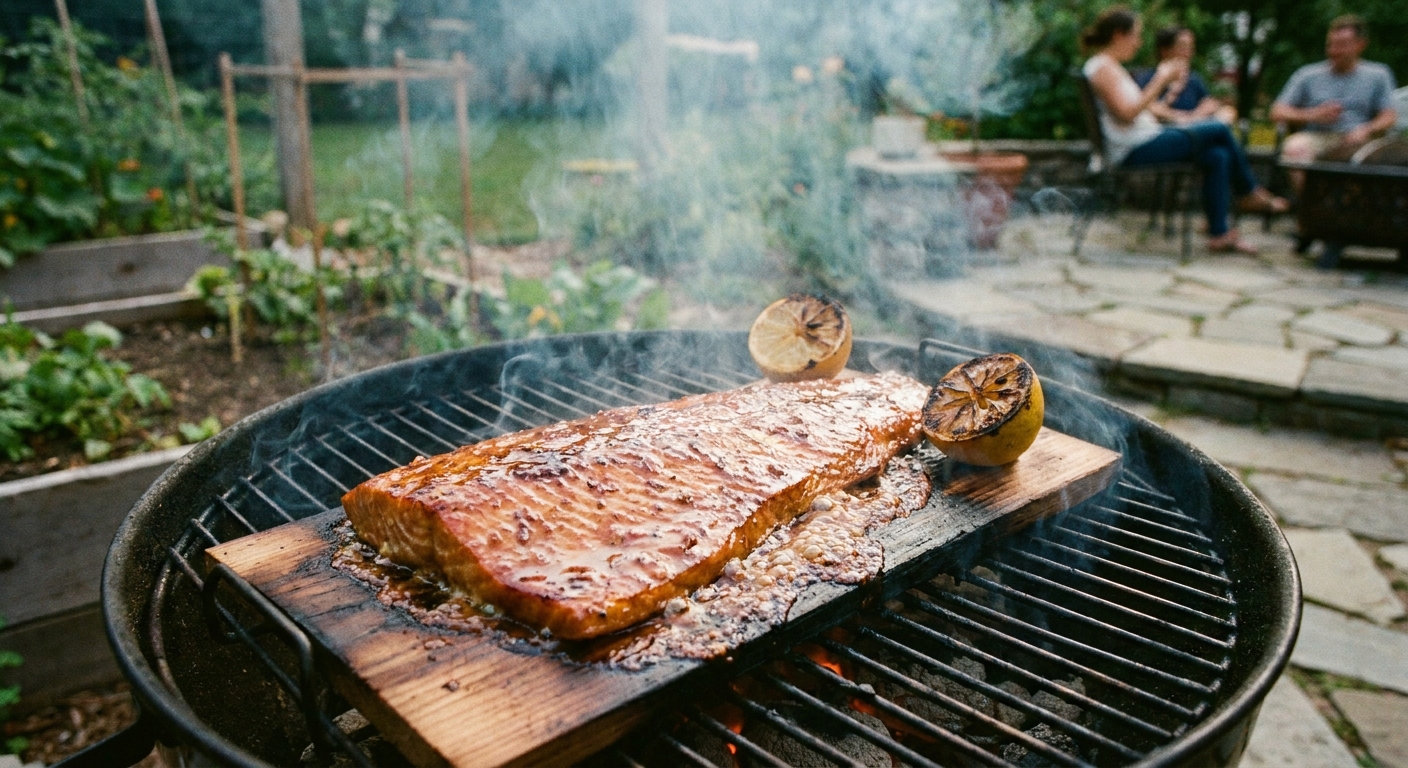
A real photograph of a glazed salmon fillet cooking on a cedar plank over a backyard grill, with light smoke rising and charred lemon halves nearby

Cedar plank salmon is my favorite kind of flex because it looks like you planned ahead, but it is secretly very low drama. The plank does two big things: it protects the fish from direct heat (so you get that gentle, almost roast-like cook) and it perfumes everything with a soft, woodsy smoke that tastes like summer.

In this recipe, I will show you how to do it on a grill or in the oven, plus a couple quick glaze options so you can keep it simple or get a little chaotic. We are also doing the unglamorous but important stuff: plank soaking times (helpful, not mystical), safe internal temperature targets, and how to know the salmon is done without turning it into fish jerky.

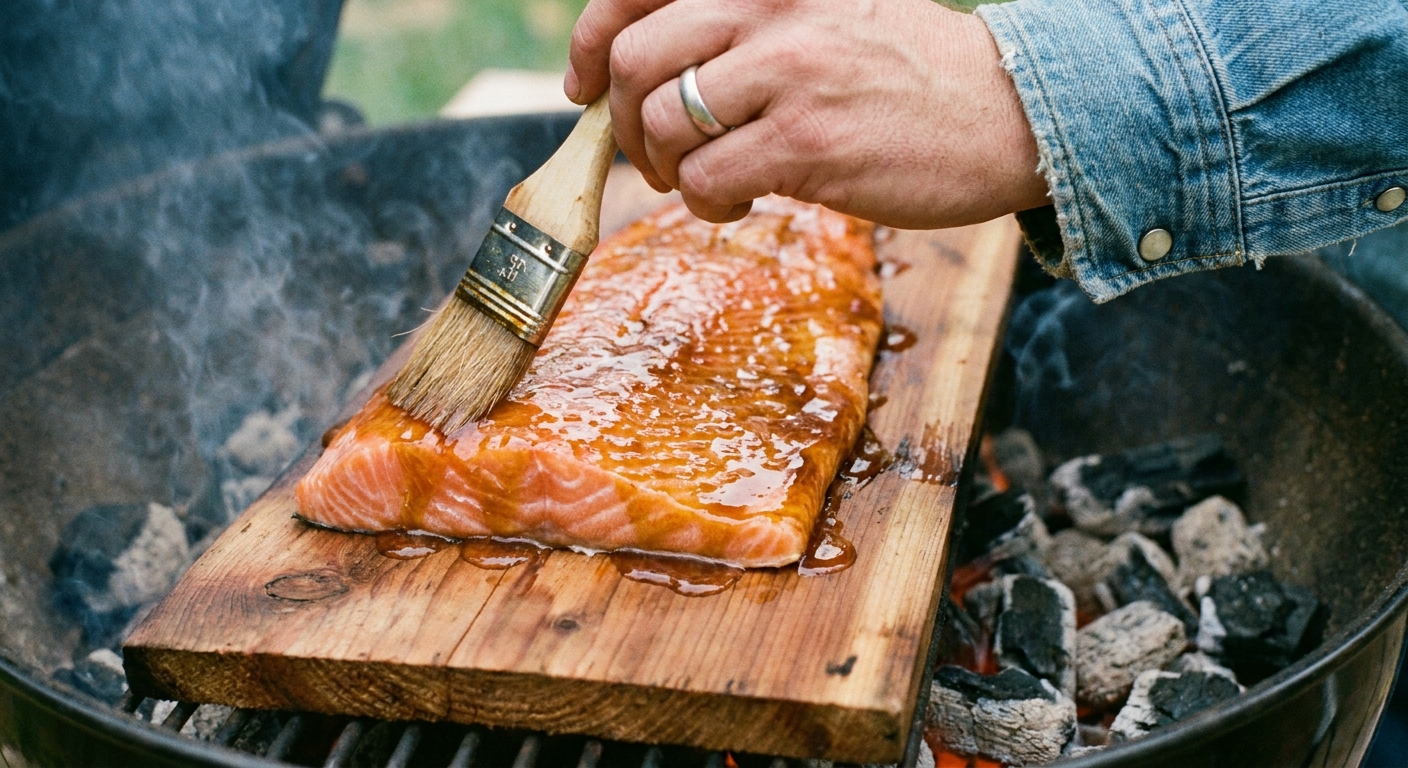
A real photograph of a hand brushing a glossy glaze onto a salmon fillet on a cedar plank before grilling

Why It Works

  • Gentle, even cooking: The plank acts like a heat buffer, which helps prevent dry edges and overcooked bottoms.
  • Clean smoky flavor: Cedar smoke is aromatic and subtle, not aggressive. Think campfire vibes, not ashtray.
  • Easy release: Salmon is less likely to stick compared to cooking directly on grill grates.
  • Flexible flavor: You can go sweet (maple Dijon), savory (garlic soy), or fresh (lemon herb) without changing the method.

Pairs Well With

Storage Tips

How to Store Leftovers

  • Cool fast: Get leftover salmon into the fridge within 2 hours (1 hour if it is very hot outside).
  • Refrigerate: Store in an airtight container for up to 3 days.
  • Freeze: Wrap tightly and freeze up to 2 months. Thaw overnight in the fridge.
  • Reheat gently: Warm in a 275°F oven until just heated through, or flake it cold into salads, rice bowls, or tacos. Microwave works, but use low power in short bursts.

Leftover move: Flake salmon into mayo or Greek yogurt with lemon juice, a pinch of salt, and chopped dill for an instant sandwich spread.

Common Questions

Common Questions

How long should I soak a cedar plank?

Many cooks soak for at least 1 hour, and up to 4 hours. It can help a bit (especially with thinner planks) by slowing down scorching and encouraging smoldering. If you are short on time, 30 minutes is better than nothing, but expect more charring.

Should I soak the plank in water, salt water, or something else?

Plain water is perfect. Some people use wine, beer, or citrus water, but the smoke flavor mostly comes from the cedar itself. If you want to play, add a few lemon slices to the soaking water for vibes, not magic.

What internal temperature should salmon be?

For food safety, the FDA guideline is 145°F at the thickest part. For a juicier, slightly translucent center, many home cooks pull earlier and let carryover finish the job. A handy map: 125°F is usually medium-rare, 130°F medium, 135°F medium-well (depending on thickness and rest). If you are cooking for kids, pregnancy, elderly, or anyone immunocompromised, stick with 145°F.

How do I know it is done without a thermometer?

Look for salmon that turns opaque on the outside and separates into clean flakes when you press it with a fork, while still looking moist (not chalky). A thermometer is still the easiest way to stay relaxed.

Can I do cedar plank salmon in the oven?

Yes. You will get less smoke than a grill, but the plank still cushions the heat and adds aroma. Use a hot oven, place the plank on a sturdy rimmed baking sheet, and make sure you have good ventilation. Also check your plank packaging for any oven-specific guidance.

Is it safe if the plank catches fire?

A little flame at the edges can happen, especially on a hot grill. Keep a spray bottle of water nearby and move the plank to a cooler, more indirect zone if needed. You want smoldering, not a bonfire.

Do I have to discard the plank after cooking?

Best practice is to treat it as a one-time use item. If you do reuse, only do it if it is not heavily charred, still structurally sound, and you can scrub it well (no soap) and dry it completely. When in doubt, toss it.

The first time I made cedar plank salmon, I was convinced it was going to be one of those “internet tricks” that mostly makes smoke and anxiety. Instead, it turned into my go-to when I want dinner to feel like a backyard hang, even if it is just me flipping burgers for the neighbors and pretending I am not checking the fish every three minutes. The plank does a lot of the work, the glaze handles the rest, and suddenly you look like the person who has their life together. Which is hilarious, because you are literally cooking dinner on a piece of wet wood.