Mom's Best Recipes
Recipe

How to Roast Vegetables

A foolproof sheet-pan method for mixed roasted vegetables with the right pan size, oil and seasoning ratios, spacing for browning, and doneness cues.

Author By Matt Campbell
4.9
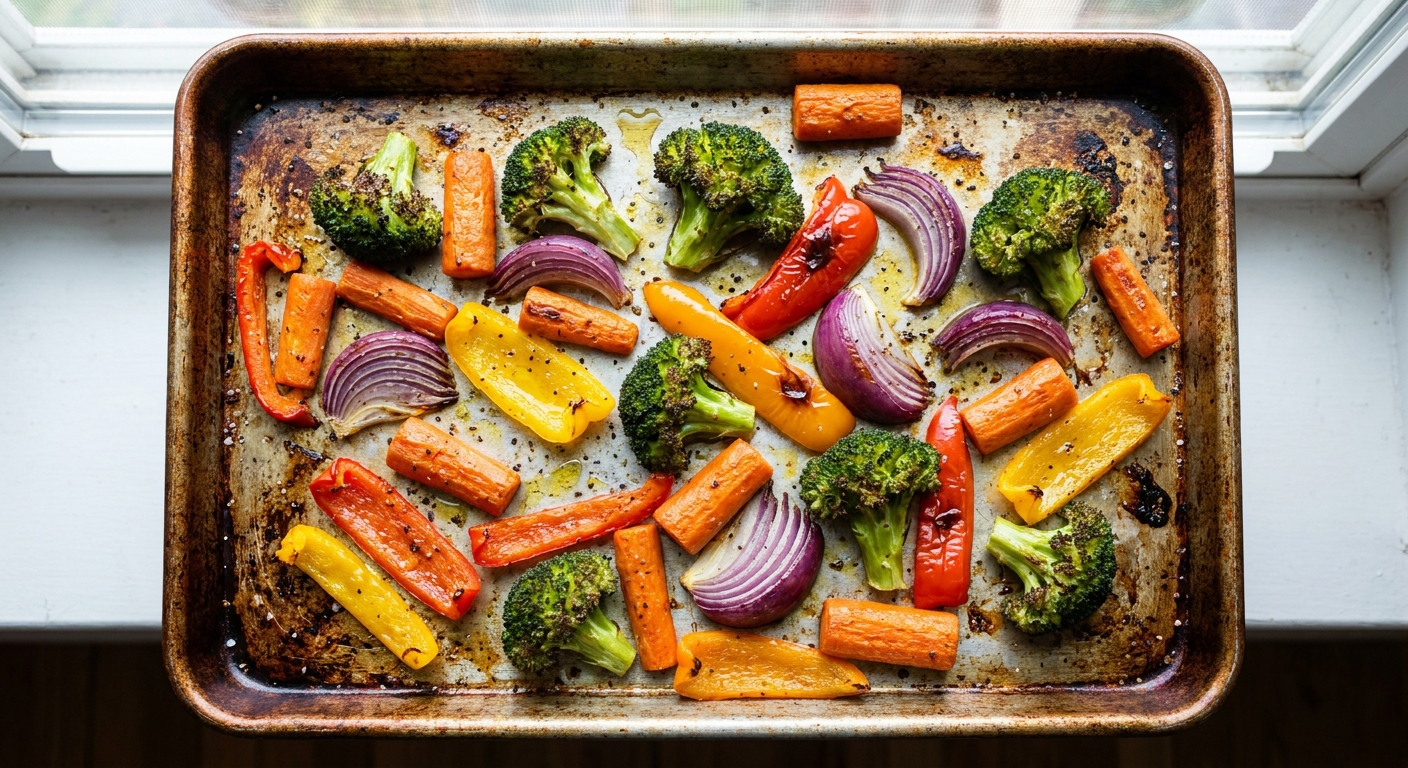
Roasted broccoli, carrots, red onion, and bell peppers on a rimmed sheet pan with browned edges and a light sheen of olive oil

Roasted vegetables are my favorite kind of kitchen magic: you toss a bunch of humble produce with oil and salt, crank the heat, and suddenly you have crisp edges, sweet caramelized bits, and that cozy “I actually cooked” feeling.

This guide is built for real life. It covers pan size, how much oil you actually need, how to season without overthinking it, and the #1 thing that ruins roasting (crowding). I’ll also give you timing notes for common veggies, easy sheet-pan combos that cook at the same pace, and make-ahead storage tips so future you gets a win. Many vegetables cook in under 30 minutes, and the longer ones (looking at you, potatoes) are still worth the hands-off time.

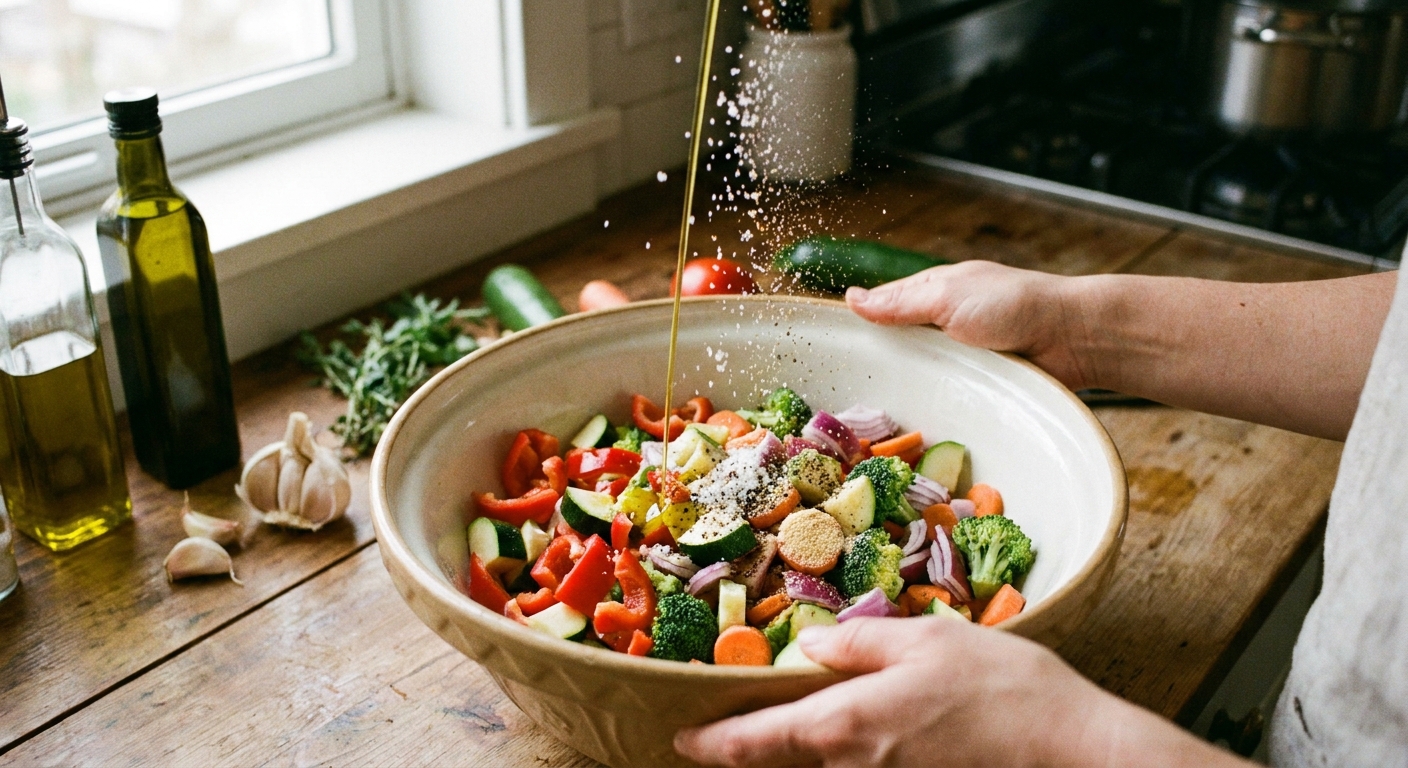
Chopped vegetables in a large mixing bowl being tossed with olive oil, salt, pepper, and garlic powder

Why It Works

  • High heat plus space equals browning. If the pan is crowded, vegetables steam and go soft instead of getting crisp.
  • The right oil ratio coats vegetables evenly so seasoning sticks and surfaces caramelize without turning greasy.
  • Cut size controls timing. Small, even pieces finish together, so you get tender centers with browned edges.
  • Doneness cues beat the clock. You roast until the vegetables look and feel right, not until a timer says so.

Pairs Well With

Storage Tips

Make Ahead and Storage

How to store

  • Fridge: Cool quickly, then store in an airtight container for 3 to 5 days. For best food safety, refrigerate within 2 hours of cooking.
  • Freezer: You can freeze roasted vegetables for 2 to 3 months for best quality, but the texture softens. Best for soups, frittatas, casseroles, and blended sauces.

How to reheat without turning them sad

  • Best: Reheat on a sheet pan at 425°F for 6 to 10 minutes until hot and re-crisped.
  • Fast: Air fryer at 375°F for 4 to 7 minutes.
  • Microwave: Works for convenience, but it softens edges. If you microwave, finish in a hot skillet for 2 to 3 minutes to bring back some crisp.

Meal prep tip

Roast a big pan on Sunday, then use leftovers like building blocks: toss into salads, fold into scrambled eggs, stuff into wraps, or warm and top with a fried egg and hot sauce.

Common Questions

Common Roasting Questions

What temperature is best for roasting vegetables?

425°F is the sweet spot for most vegetables. It’s hot enough to brown quickly without burning before the inside turns tender. For extra crisp edges, you can go to 450°F, especially for broccoli, Brussels sprouts, and potatoes, just watch closely. Delicate or high-sugar vegetables can brown faster at higher heat, so start checking early.

What if I use convection (fan) bake?

Convection browns faster. Either reduce the oven to about 400°F (25°F lower) or keep 425°F and start checking 3 to 5 minutes early.

Why are my roasted vegetables soggy?

Almost always one of these: overcrowding (they steam), too much moisture (not dried after washing), or not enough heat. Use a large rimmed sheet pan, dry the vegetables well, and roast at 425°F.

How much oil do I need?

A reliable range is 1 to 2 tablespoons oil per 1 pound of vegetables. Porous vegetables like broccoli and cauliflower often like the higher end. For very starchy vegetables (potatoes, sweet potatoes), you might like 1 1/2 tablespoons per pound for better browning. The goal is a light, even coat, not pooling.

When do I add garlic or fresh herbs?

Garlic powder can go on from the start. Fresh garlic tends to burn at 425°F, so add it in the last 5 to 8 minutes or mix it into a finishing sauce. Fresh herbs (parsley, dill, basil) are best after roasting.

Should I use parchment paper or foil?

Parchment makes cleanup easier and reduces sticking. For the deepest browning, roast directly on a bare metal pan or use parchment and just give the vegetables a little extra time. Avoid silicone mats for roasting because they can reduce browning.

How do I roast frozen vegetables?

Frozen vegetables can roast well, but they release more moisture. Roast at 425°F (or 450°F if your oven runs cool), use extra space, and expect a little less crispness than fresh. Do not thaw first. Toss with oil and seasoning, spread out, and roast until hot and browned, usually 5 to 10 minutes longer than fresh depending on the vegetable.

How do I know when vegetables are done?

  • Color: deep golden edges, not pale
  • Texture: fork-tender inside, crisp or caramelized outside
  • Pan: minimal liquid; any released moisture should be mostly evaporated by the end

I went to school planning on culinary arts, but real talk, my best teacher has been a crowded apartment kitchen and a deadline of “people are hungry now.” Roasting vegetables became my go-to because it’s forgiving and it makes anything feel like a meal. A pan of broccoli with crispy edges can rescue a plain chicken breast. Sweet potatoes can turn leftover rice into something I actually want to eat. And when I’m cooking with friends, sheet-pan veg is the low-drama side dish that lets me hang out, snack, and pretend I’m not checking the oven every five minutes.