Mom's Best Recipes
Recipe

Chinese Garlic Green Beans

Blistered green beans with crisp edges, lots of garlic, and a glossy soy-ginger sauce you will want to spoon over rice.

Author By Matt Campbell
4.8
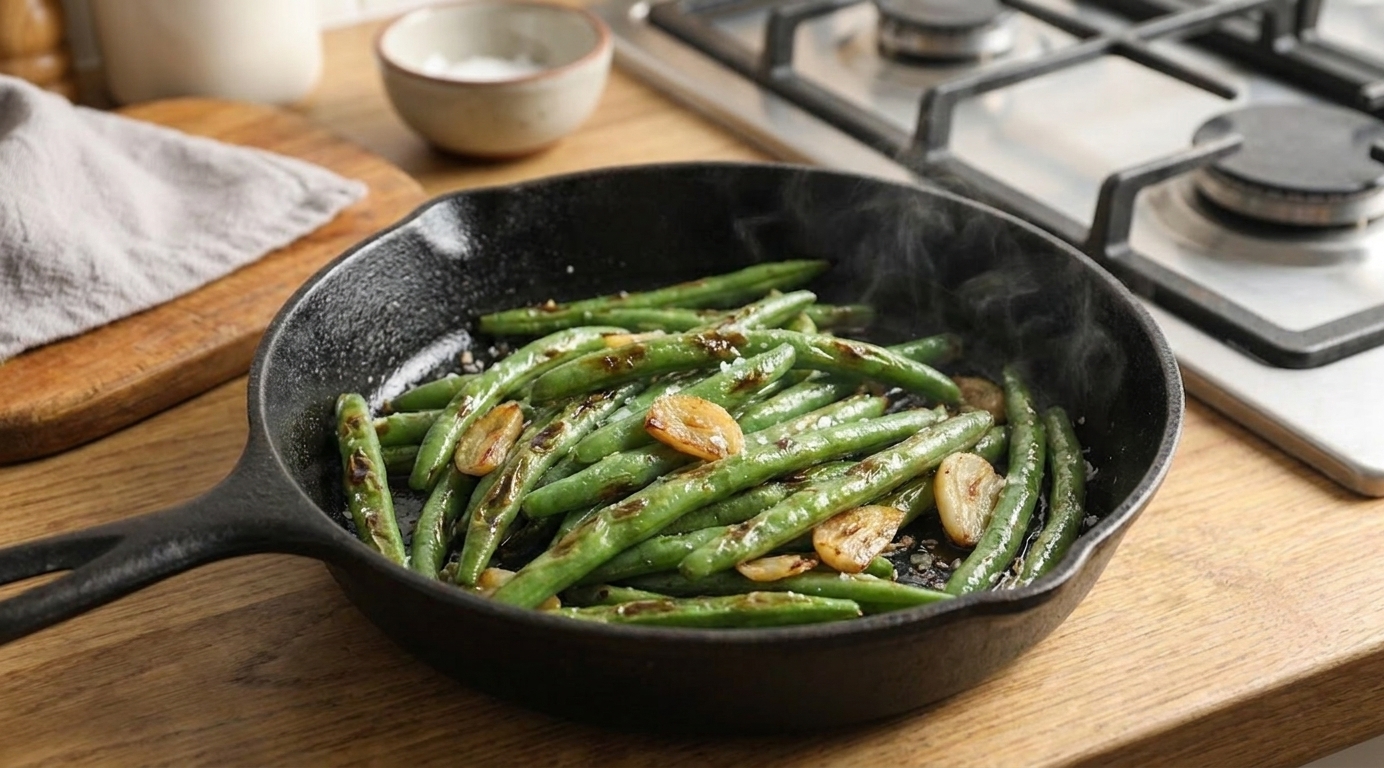
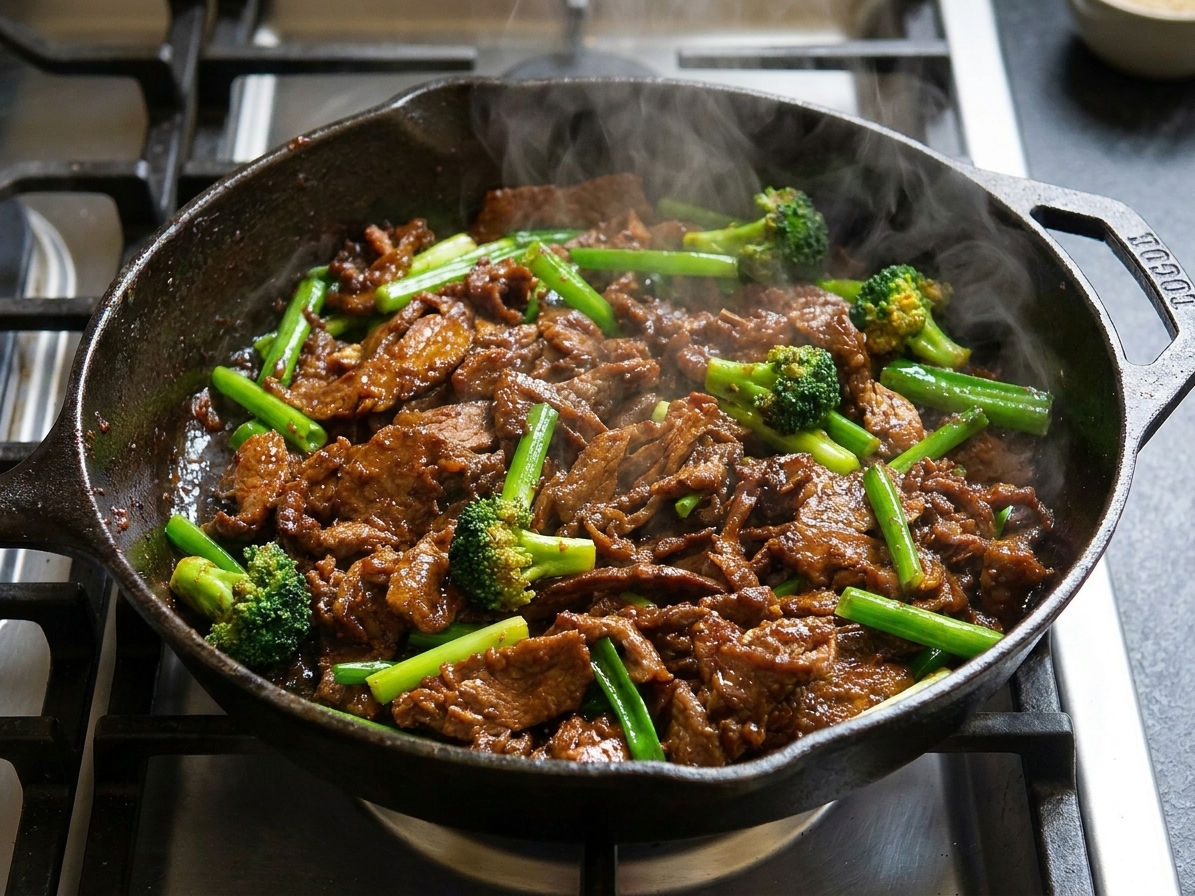
A cast iron skillet filled with blistered Chinese-style garlic green beans coated in a glossy soy-garlic sauce, set on a warm kitchen counter with chopsticks nearby

If you have ever ordered green beans at a Chinese restaurant and wondered why they taste so much better than the ones you make at home, it is not magic. It is heat, timing, and a sauce that shows up right when the beans are at their crispiest.

This is my go-to Chinese-style green bean recipe for nights when I want something bright and snappy next to rice, noodles, dumplings, or honestly just a fork and no shame. We are going for blistered skins, tender-crisp centers, and a savory garlic punch that makes you pause mid-bite.

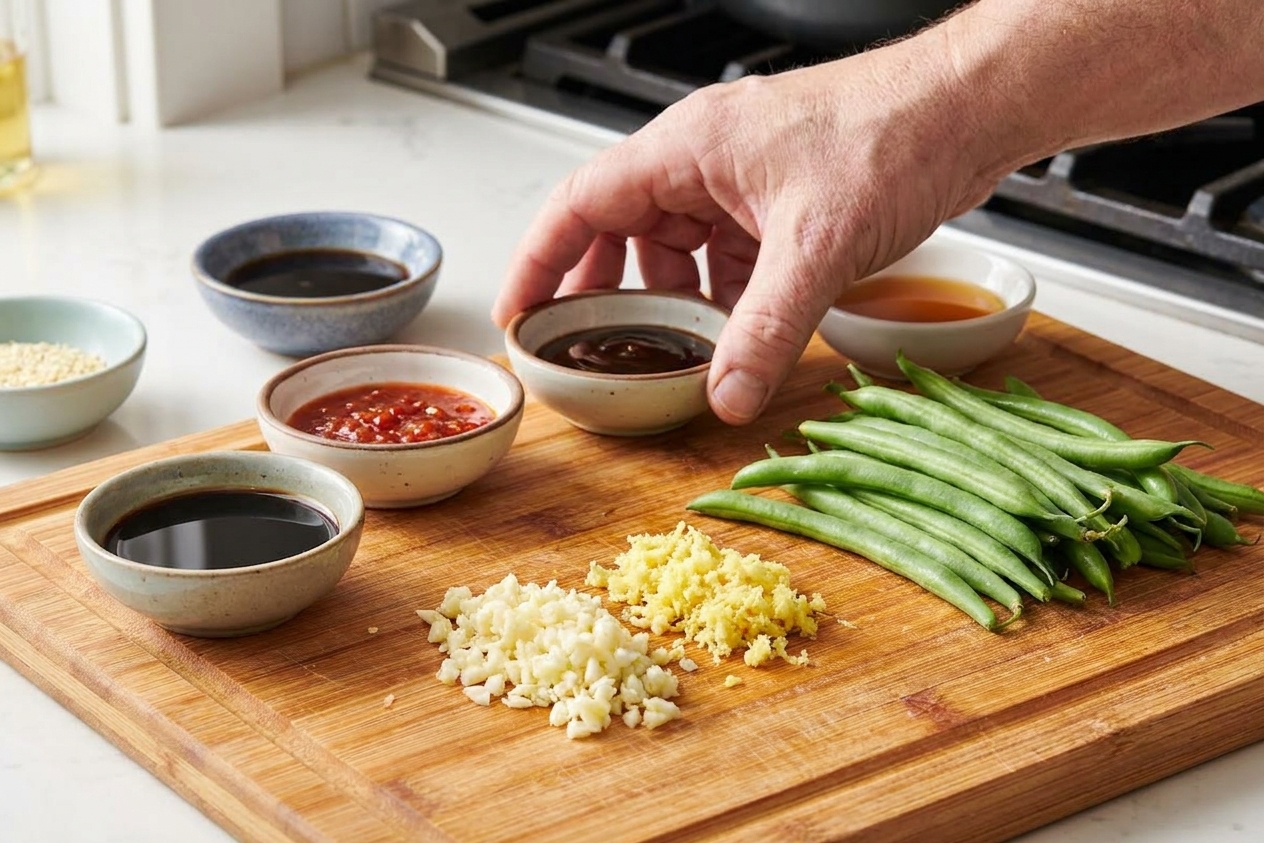
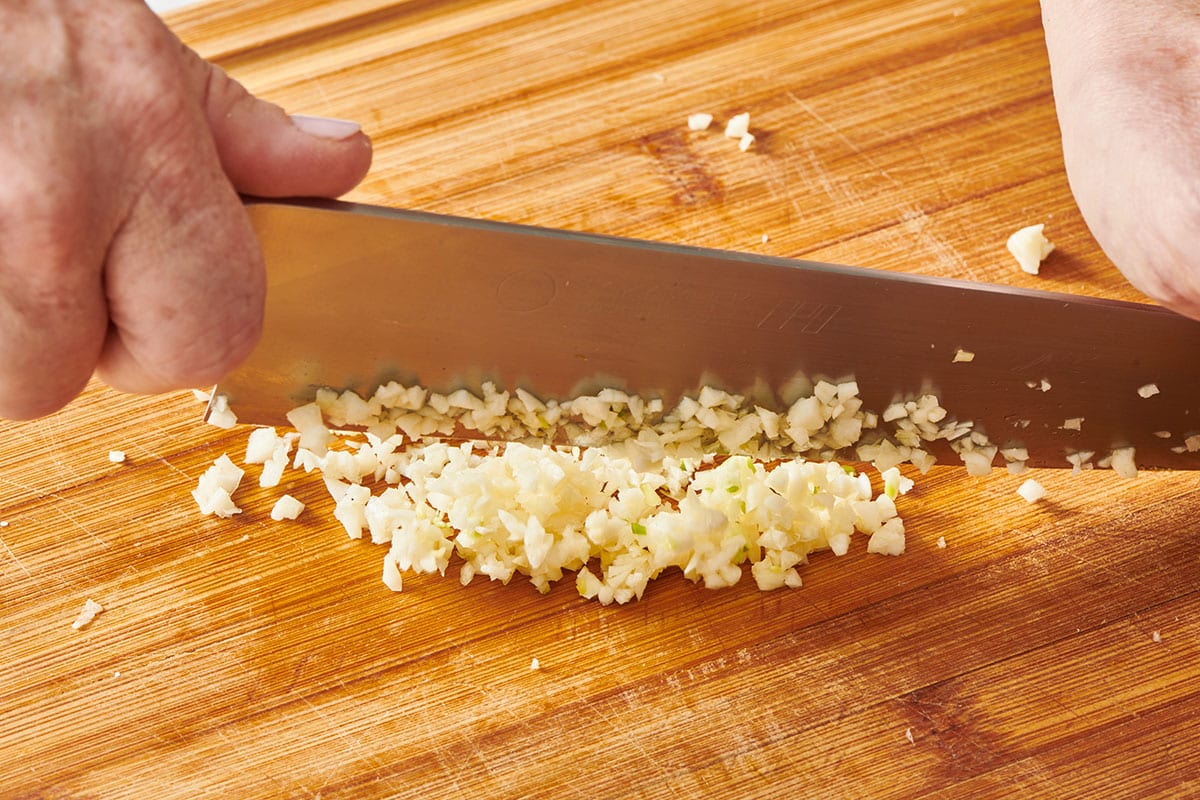
Fresh green beans, minced garlic, grated ginger, soy sauce, and small bowls of pantry sauces arranged on a neutral kitchen counter under soft natural light

Why It Works

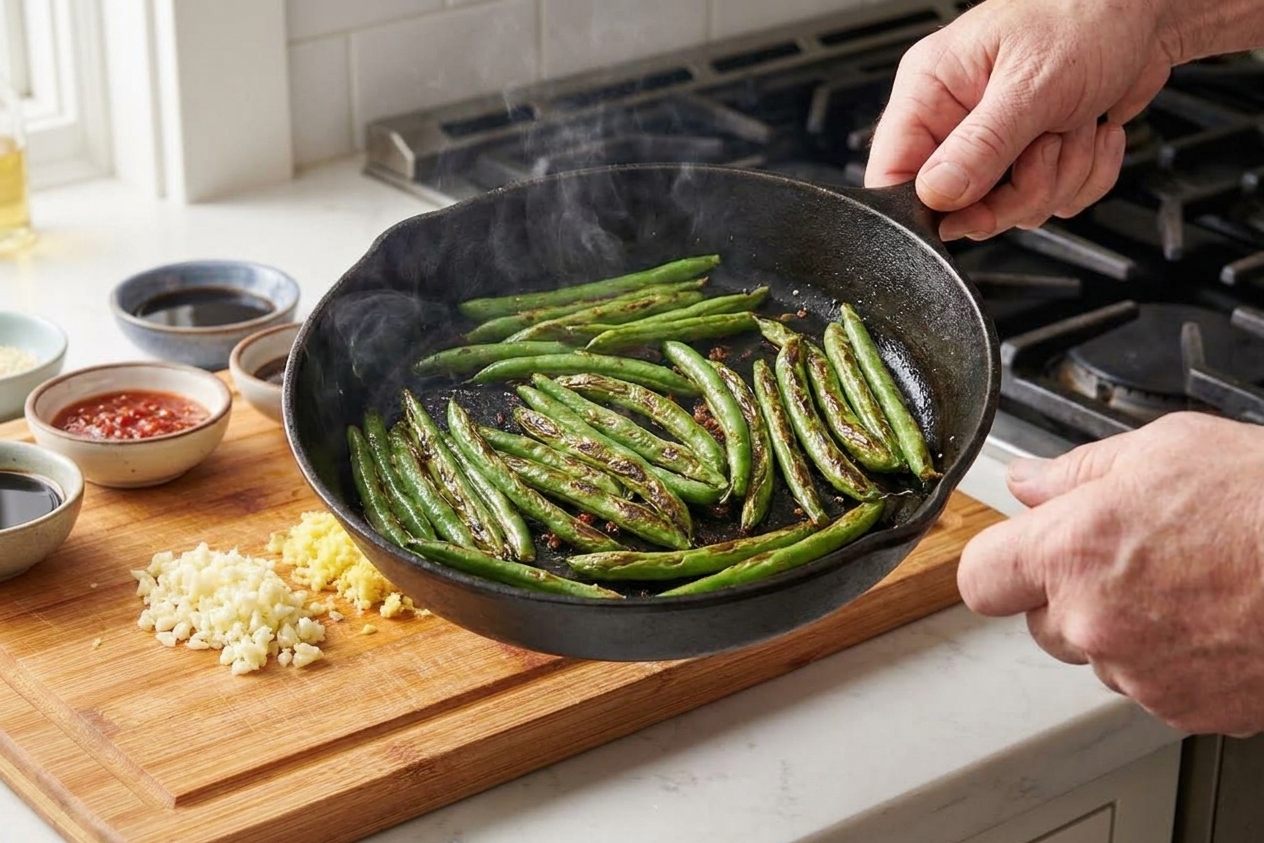
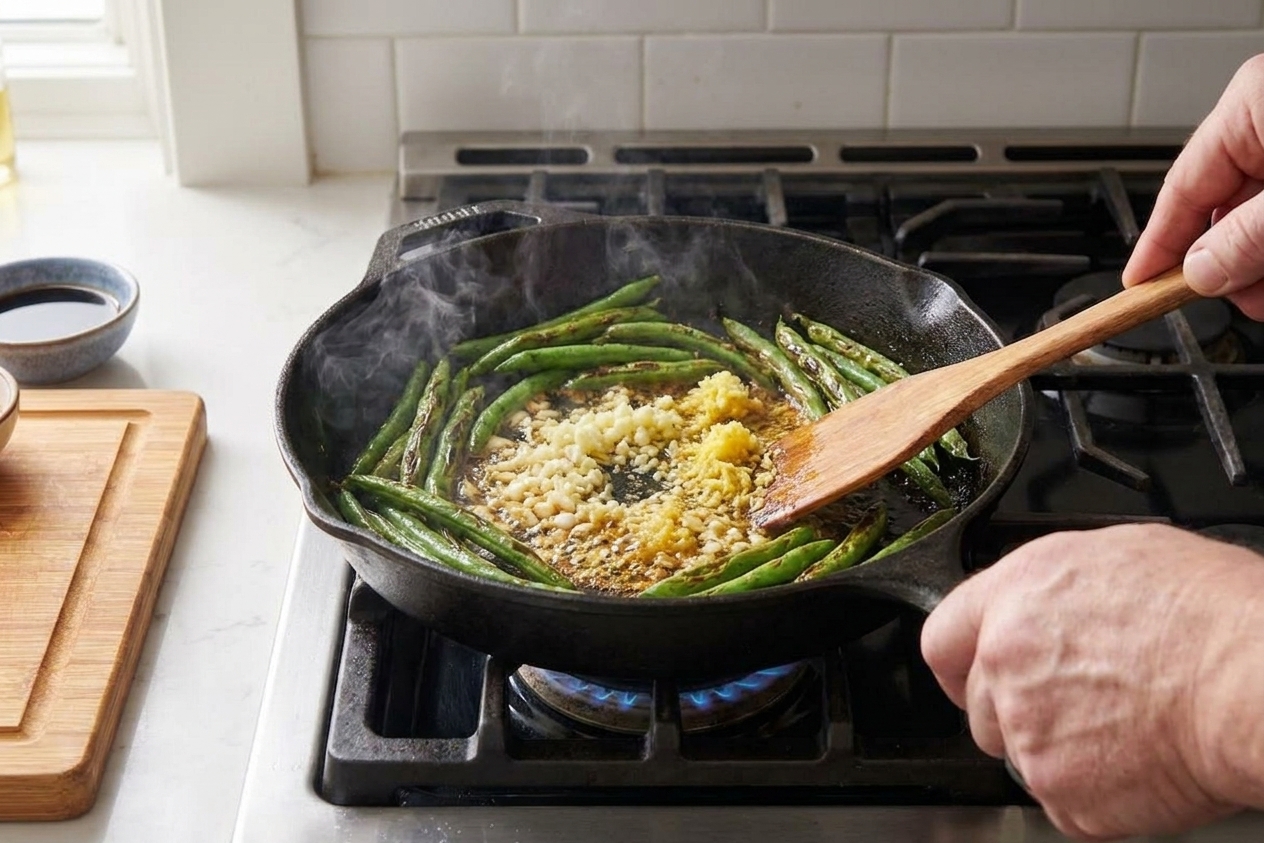
  • Hot pan, fast blister: Cooking the beans in a single layer over high heat gets you those restaurant-style wrinkly, crisped edges.
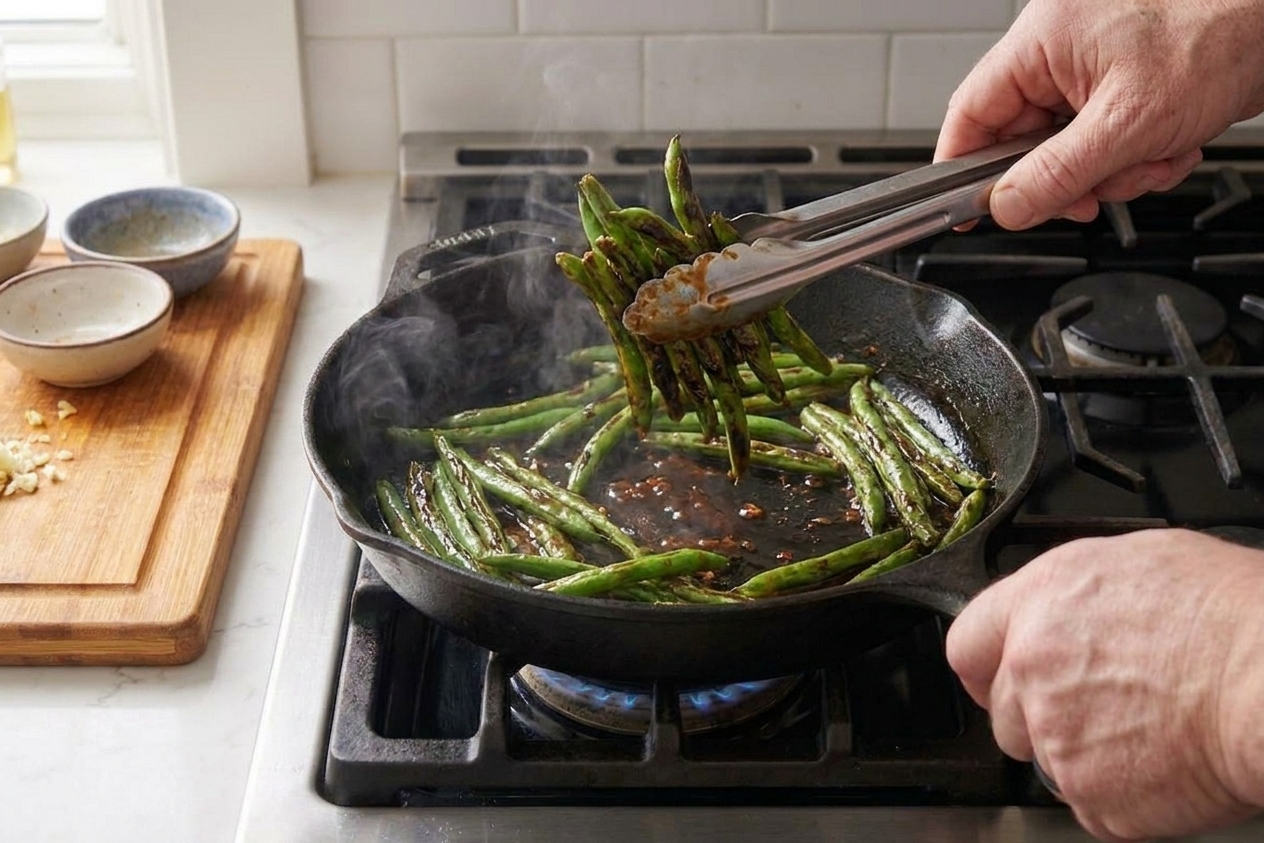
  • Sauce added at the end: We toss the sauce in once the beans are already blistered so it clings and glosses instead of steaming the beans into softness.
  • Big garlic flavor without burning: Garlic goes in after the beans have a head start, so it gets fragrant and toasty, not bitter.
  • Accessible ingredients: No deep fryer, no specialty wok required. A large skillet and pantry sauces do the heavy lifting.

Pairs Well With

Storage Tips

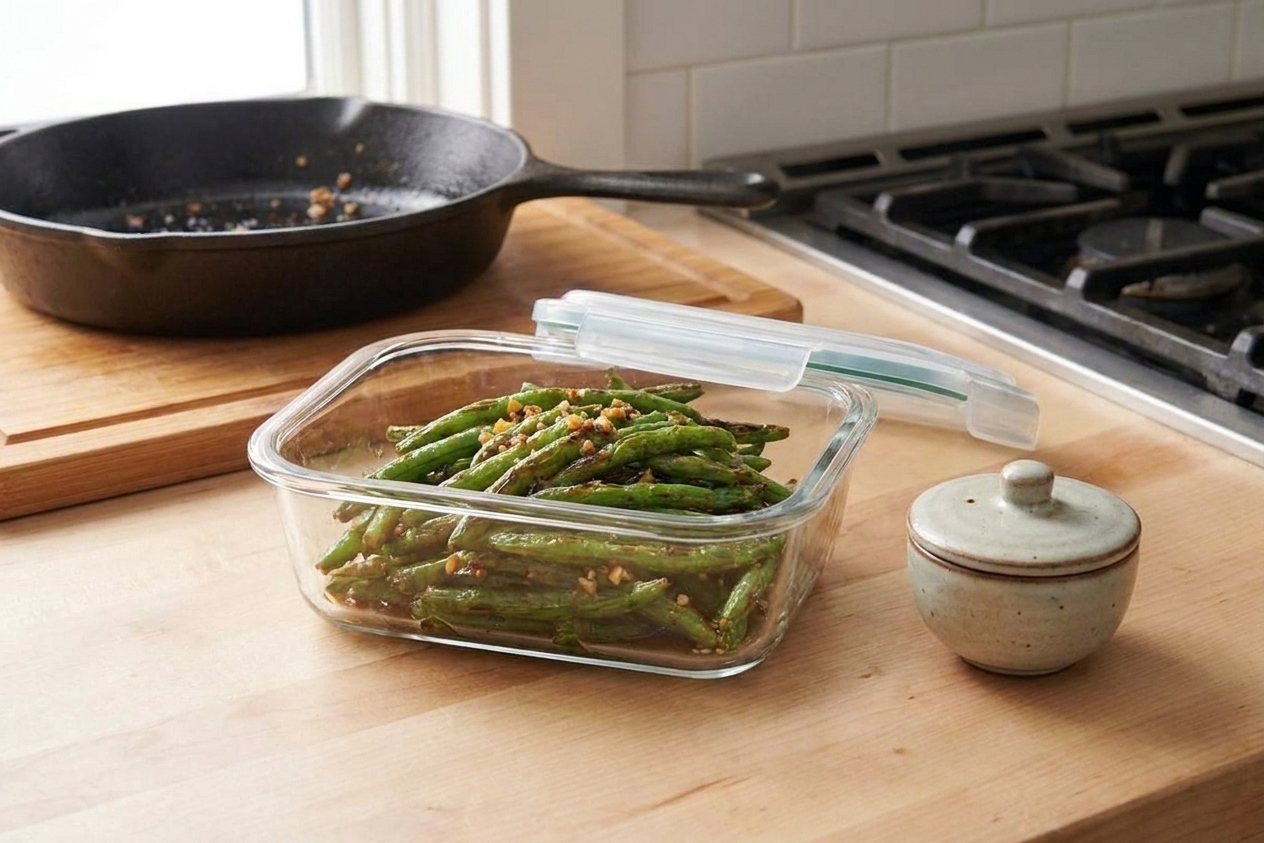
Refrigerate: Store leftover green beans in an airtight container for up to 3 days.

Reheat (best method): Warm in a hot skillet over medium-high heat with a tiny splash of water, 2 to 4 minutes, tossing until glossy and hot. This brings back some edge crispness.

Microwave (fast method): Microwave in 30-second bursts until heated through. The beans will be softer, but still tasty.

Freezing: I do not recommend freezing. The texture turns a little sad and watery after thawing.

An airtight glass container filled with leftover Chinese-style garlic green beans on a kitchen counter next to a lidded sauce cup

Common Questions

Do I need a wok?

Nope. A wok is great, but a large skillet works beautifully. The real key is surface area so the beans can blister instead of steam. If your skillet is small, cook the beans in two batches.

Why are my green beans soggy?

Usually it is one of three things: the pan was not hot enough, the pan was crowded, or you added sauce too early. Heat the skillet until it is properly hot, keep the beans in a single layer, and add the sauce only after you see blistering.

Can I use frozen green beans?

You can, but fresh is better for blistering. Two options: (1) Thaw completely and pat very dry (what I do when I want the most control). (2) Or cook straight from frozen in a ripping-hot skillet, letting the moisture cook off before you add any sauce. Either way, expect less blister and a softer bite than fresh.

What makes these “Chinese style”?

This is a home-friendly, Chinese restaurant-inspired version of the dry-fried green bean vibe: high heat, garlicky aromatics, and a savory finish. Classic Sichuan dry-fried green beans often include dried chiles, preserved mustard greens (ya cai), and sometimes pork, and they are not always glossy. This one is built for weeknights and pantry sauces, with a quick glaze at the end.

Can I make them spicy?

Yes. Add chili crisp, a pinch of red pepper flakes, or a sliced fresh chili with the garlic.

Are Chinese green beans the same as yardlong beans?

Not exactly. Yardlong beans are a different variety (longer and slightly different texture). This recipe uses standard fresh green beans, but you can use yardlong beans if you find them. Just cut into bite-size lengths.

Any allergy notes?

This recipe contains soy (soy sauce), sesame (sesame oil), and typically shellfish (oyster sauce). Check labels and swap as needed.

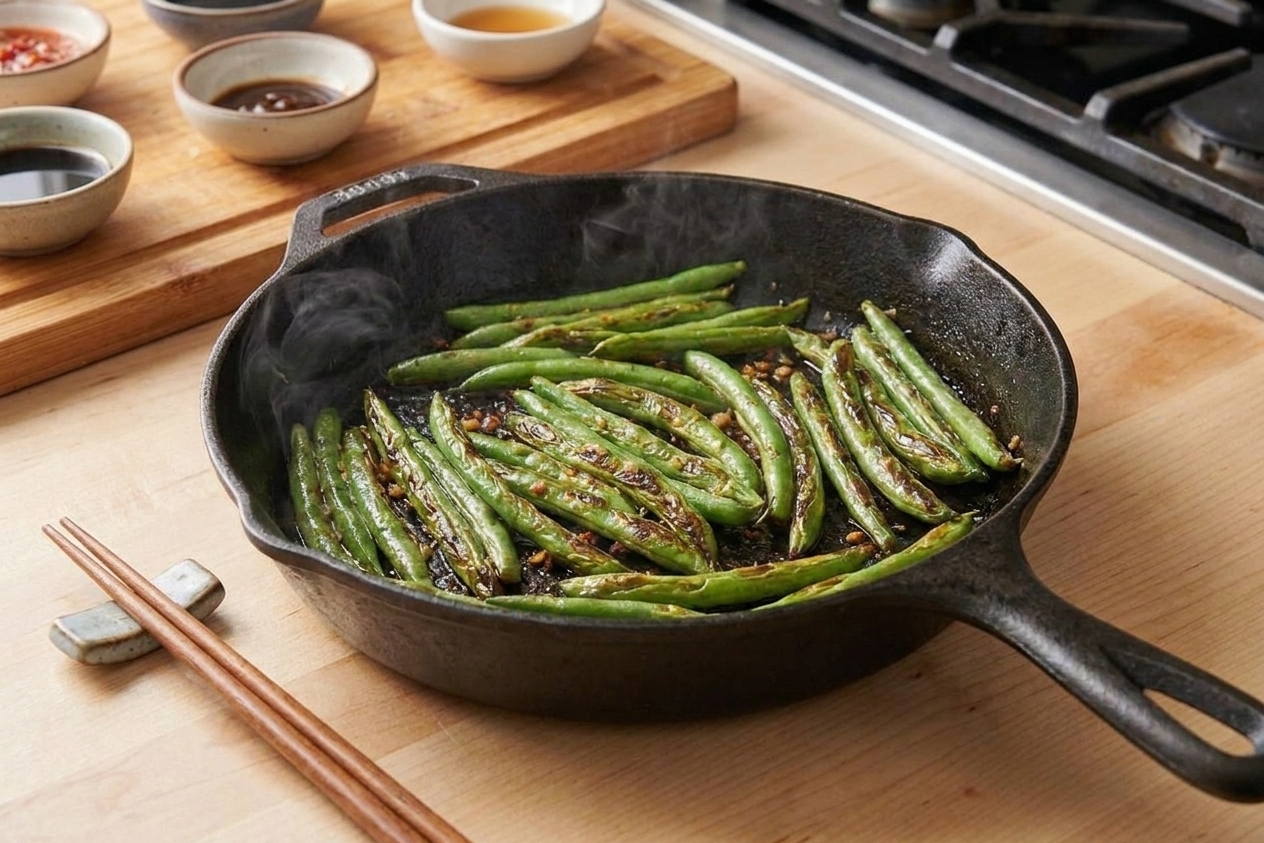
I learned pretty quickly that my favorite “vegetable side” at Chinese restaurants was never about being virtuous. It was about texture. Those green beans show up with blistered skins and a sauce that tastes like it has been working overtime in the back of the kitchen.

At home, I started chasing that exact bite with a skillet and a little impatience. High heat, a bit of oil, then garlic and sauce right at the end. The first time I nailed it, I ate half the pan standing at the stove. Which, honestly, feels like the most accurate way to test a recipe.