Mom's Best Recipes
Recipe

Classic Asado Chimichurri

A bright, garlicky herb sauce that belongs next to grilled meats, crispy potatoes, and anything that needs a little attitude.

Author By Matt Campbell
4.8
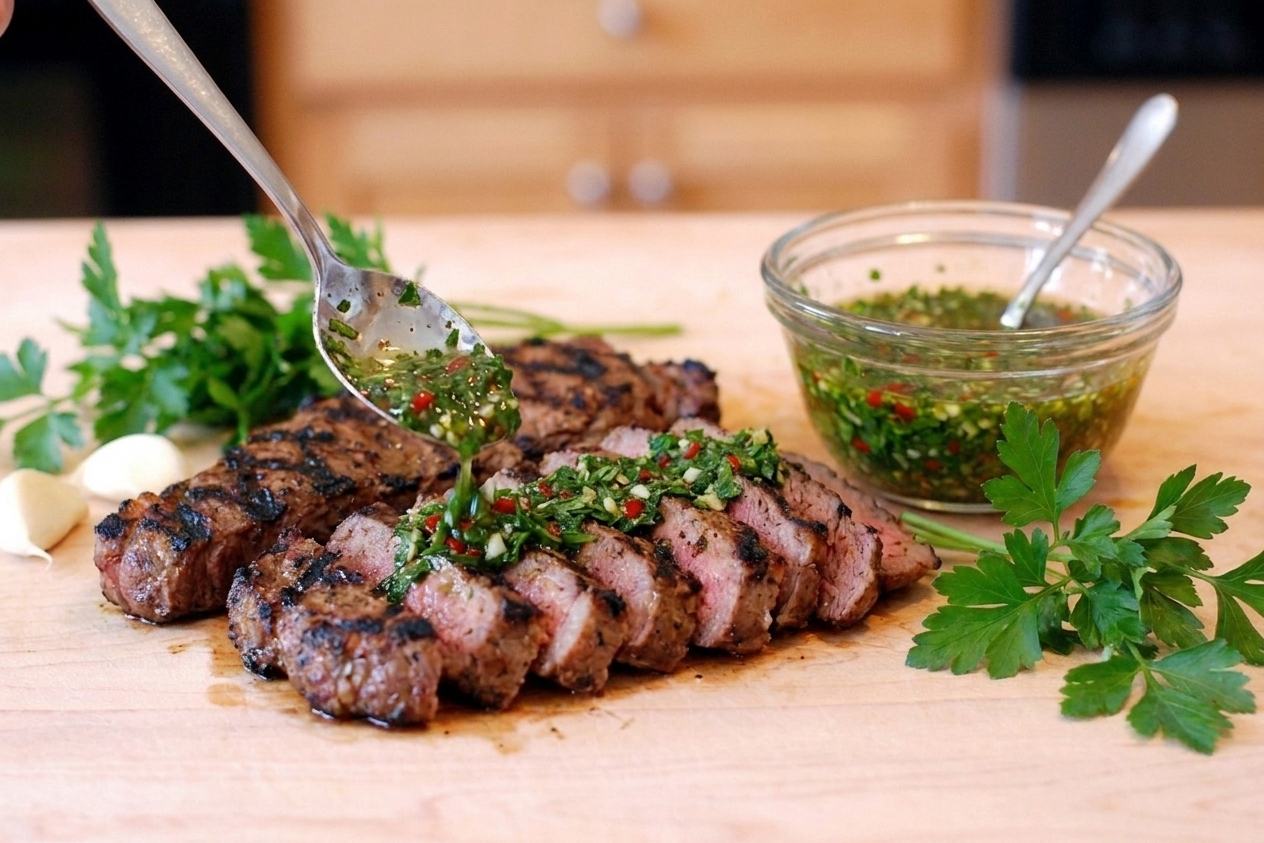
A spoonful of bright green chimichurri sauce drizzled over sliced grilled steak on a wooden cutting board with a small bowl of extra sauce nearby

If you have ever tasted asado, the famous Argentine style of grilling, you already know the secret is not just the fire and the meat. It is the sauce sitting on the table, ready for everyone to swipe, spoon, and argue about. That sauce is chimichurri, and around my kitchen it is basically the ultimate asado condiment, the thing that belongs with asado the way ketchup belongs with fries.

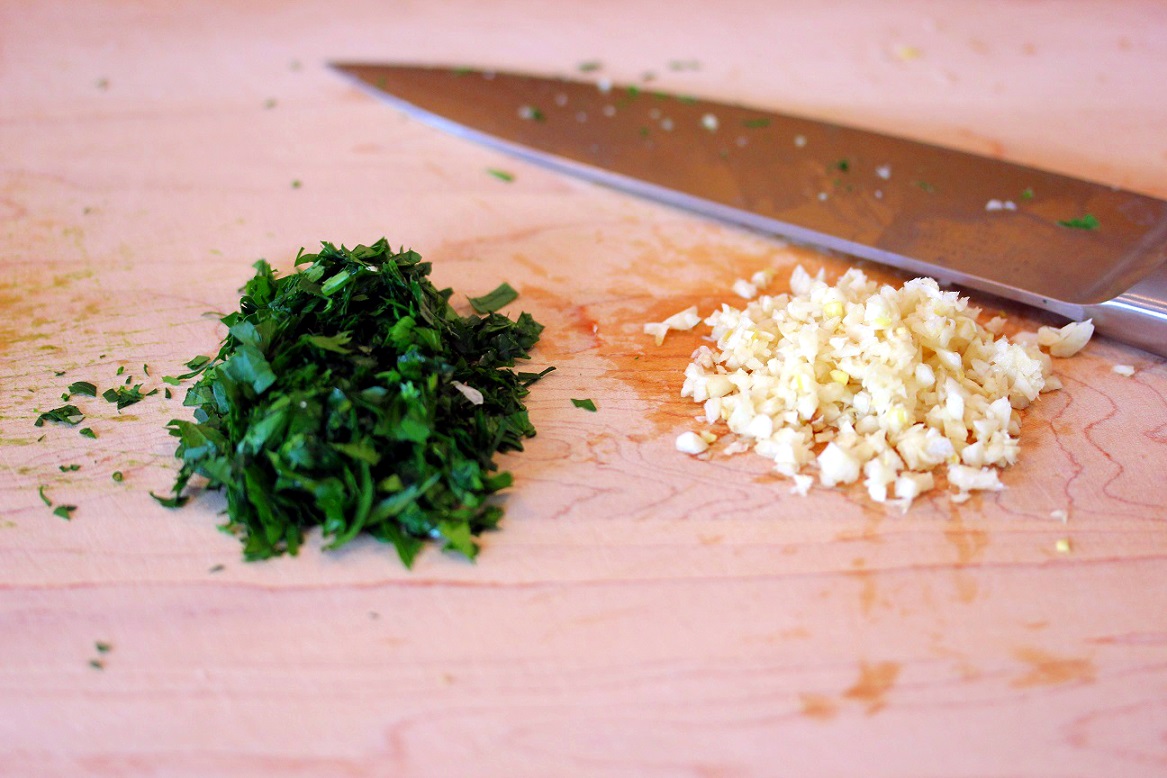
This version is punchy, herb-forward, and balanced: grassy parsley, a little oregano, sharp vinegar, plenty of garlic, and enough olive oil to make it silky. No blender needed. Just a knife, a bowl, and five minutes of confidence.
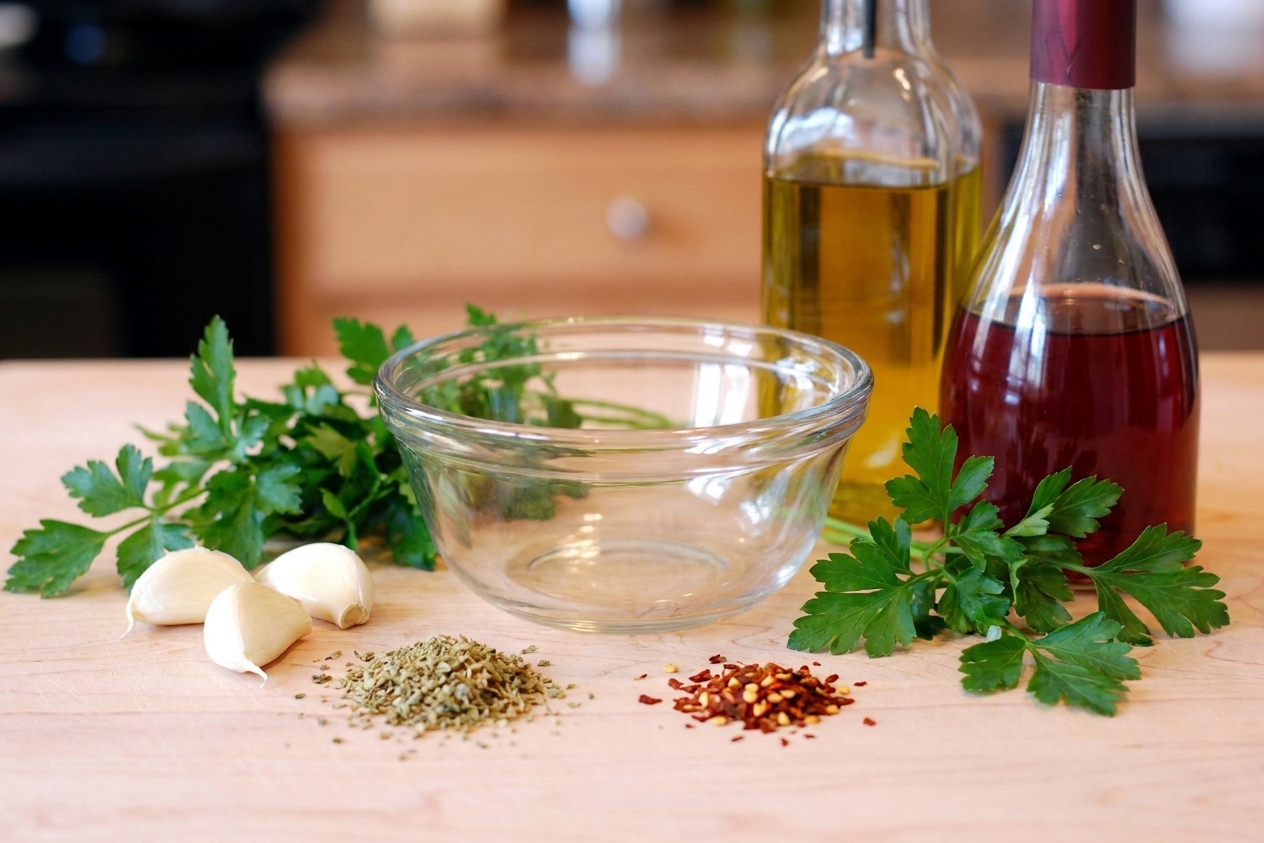
Fresh parsley, garlic cloves, dried oregano, red pepper flakes, olive oil, and red wine vinegar arranged on a light kitchen counter with a small mixing bowl

Why It Works

  • Big flavor with simple ingredients: herbs, garlic, vinegar, oil, salt. That is the whole magic trick.
  • Built for grilling: the acidity cuts rich meats and smoky edges like it was born for it, because it was.
  • Better after a rest: give it 15 to 30 minutes and the garlic and herbs mellow into something more rounded.
  • Flexible heat and texture: keep it chunky and rustic, or chop finer for a smoother spoon.

Pairs Well With

Storage Tips

Refrigerator: Store chimichurri in a jar or airtight container for up to 5 days. The olive oil may thicken in the fridge. Let it sit at room temp for 15 minutes, then stir.

Freezer: Freeze in an ice cube tray, then pop the cubes into a freezer bag for up to 2 months. Thaw a cube or two for quick weeknight steak, chicken, or roasted veggies.

Food safety note: Because this is a raw garlic and herb sauce, always use a clean spoon and keep it chilled when not serving.

Common Questions

What is “asado”?

Asado is both a method and a meal: an Argentine (and Uruguayan) tradition of cooking meats over wood or coals, often over embers at a range of heats. It usually comes with a social, family-style vibe. Chimichurri is one of the most common table sauces for it, especially in Argentina and Uruguay.

Is chimichurri supposed to be spicy?

It can be, but it does not have to be. Red pepper flakes add a gentle warmth here. If you want it mild, cut the flakes in half. If you want it louder, add more or a pinch of cayenne.

Can I use cilantro instead of parsley?

You can, but it becomes a different sauce. If cilantro is your thing, try a 50-50 mix of parsley and cilantro so it still tastes like classic chimichurri.

Do I need fresh oregano?

Fresh oregano is great if you have it, but dried oregano is totally traditional and convenient. Use less if it is very fragrant.

Why does my chimichurri taste too sharp?

Usually it just needs time. Let it sit 20 minutes, then taste again. If it is still too sharp, add a bit more olive oil and a pinch more salt to round it out.

Why does chimichurri turn darker over time?

Oxidation. The herbs can dull and darken in the fridge, even if it still tastes great. To slow it down, press plastic wrap directly onto the surface before sealing the container, and keep it chilled.

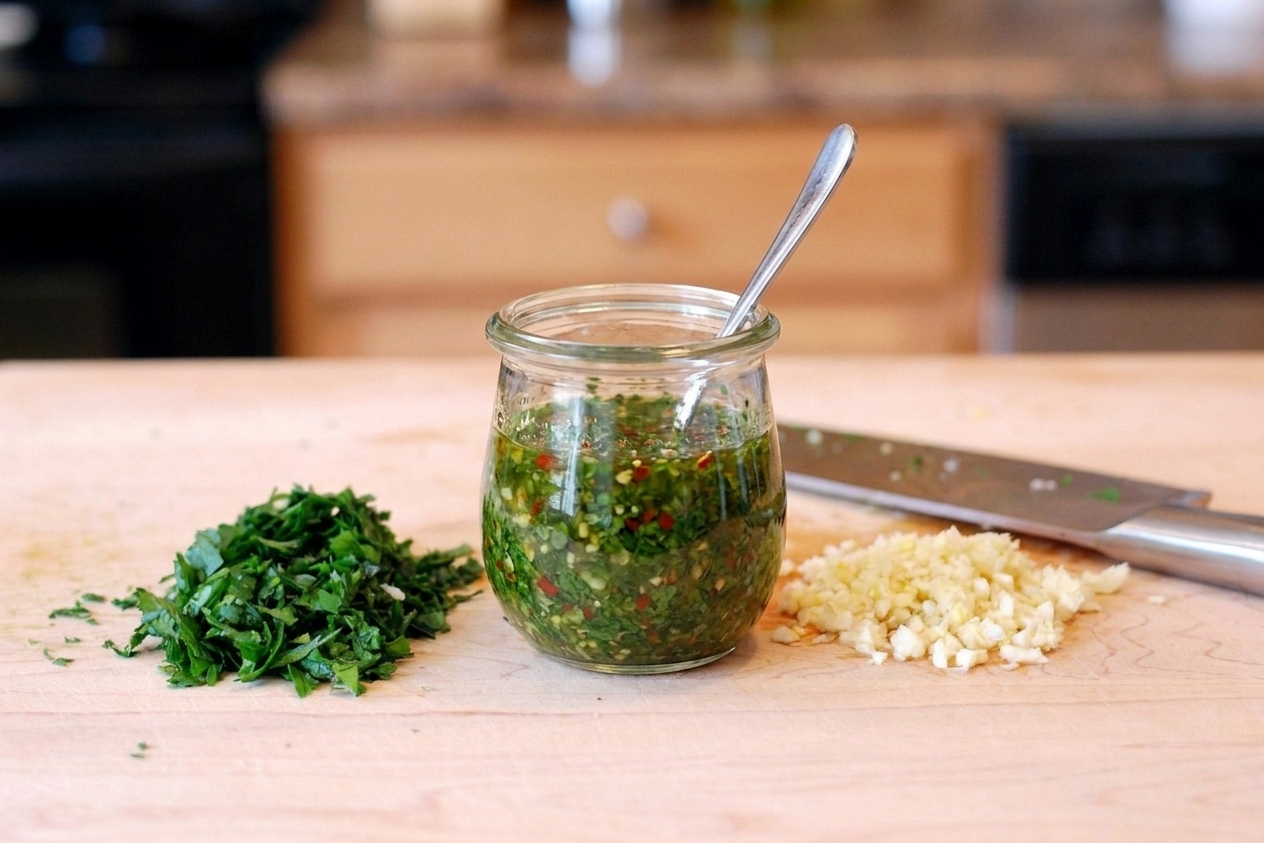
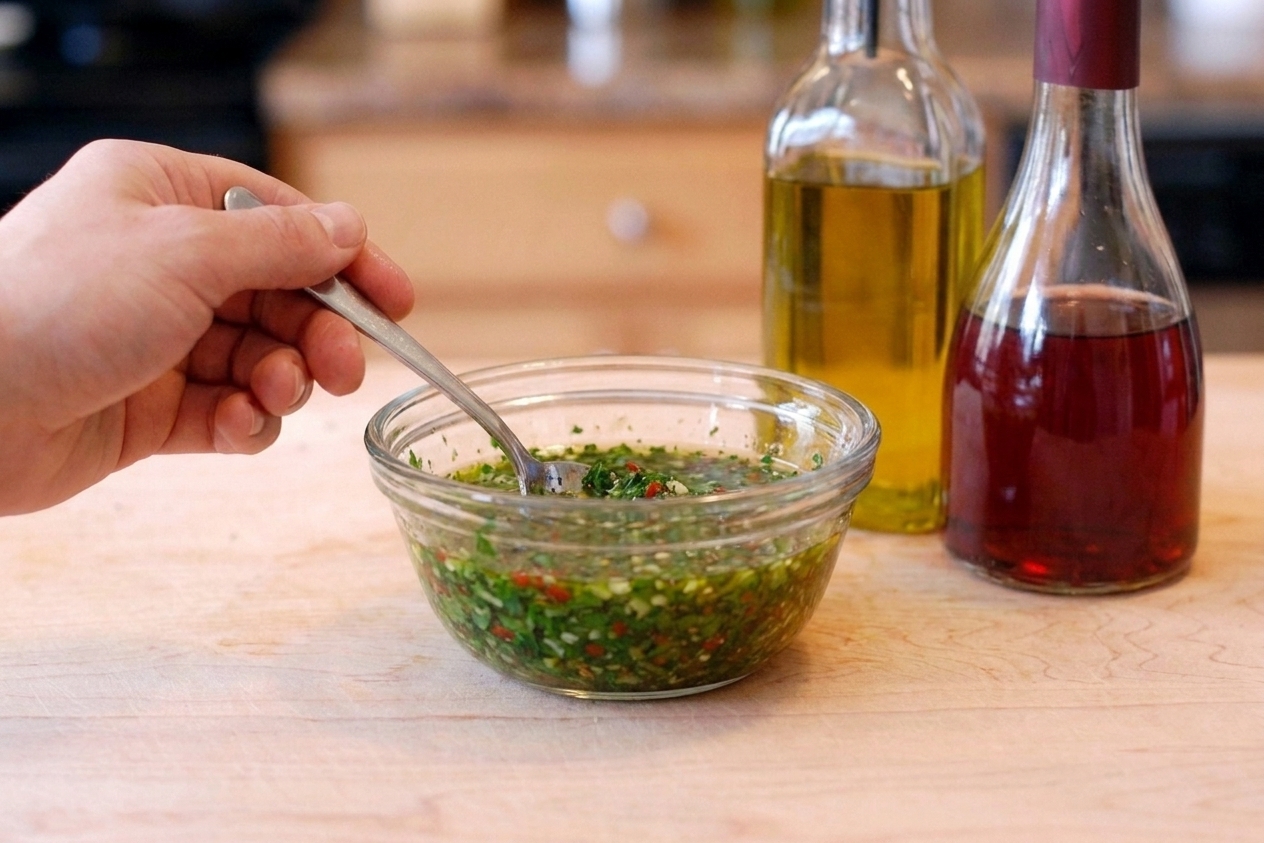
A small glass jar of chimichurri with a spoon resting inside, set on a kitchen counter with a cutting board and chopped herbs nearby

I love recipes that make the table feel alive, and chimichurri does that. It is not precious. It is not fussy. Someone always adds “just a little more garlic,” someone else insists on more vinegar, and somehow it still tastes great. The first time I made it for a backyard grill night, it disappeared faster than the steak. That is when I realized chimichurri is not a garnish. It is a strategy.