Mom's Best Recipes
Recipe

Classic Béarnaise Sauce

Silky, tangy, tarragon-forward béarnaise made the classic way with a quick vinegar reduction and a gentle double boiler.

Author By Matt Campbell
4.8
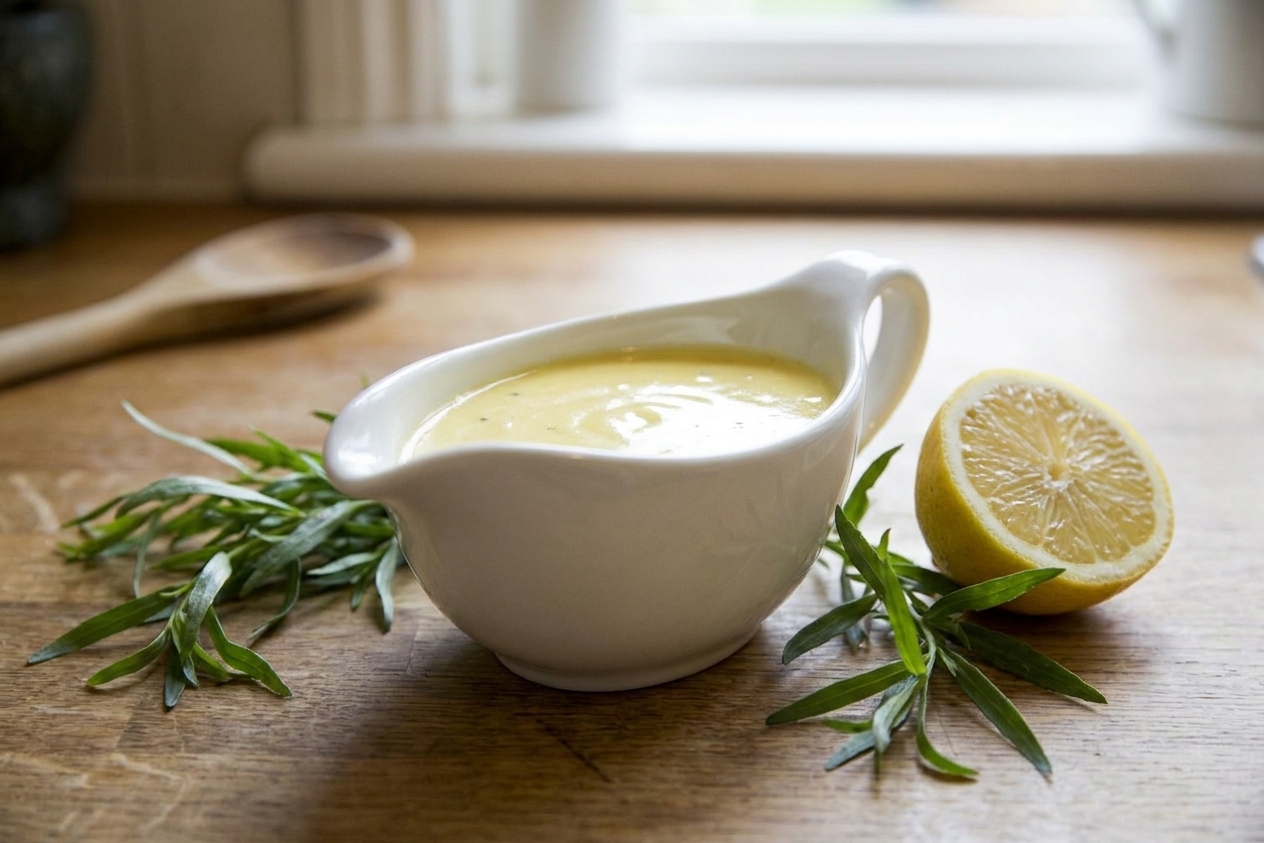
A glossy pale-yellow béarnaise sauce in a small ceramic sauce boat on a wooden table, with fresh tarragon sprigs and a lemon half nearby in soft natural kitchen light

Béarnaise is hollandaise’s louder, greener cousin. Same rich, silky butter vibe, but with a sharp little haircut from vinegar and the kind of tarragon hit that makes steak feel like it just put on a tux.

If you have ever avoided béarnaise because it feels like a restaurant-only sauce, I get it. It has a reputation for being dramatic. The trick is not “fancy skills,” it is gentle heat, steady whisking, and knowing what to do before the sauce panics on you.

This version sticks to accessible ingredients and clear steps, with built-in escape hatches for the two classic problems: eggs scrambling and sauce splitting. You are allowed to taste as you go. Strongly encouraged, actually.
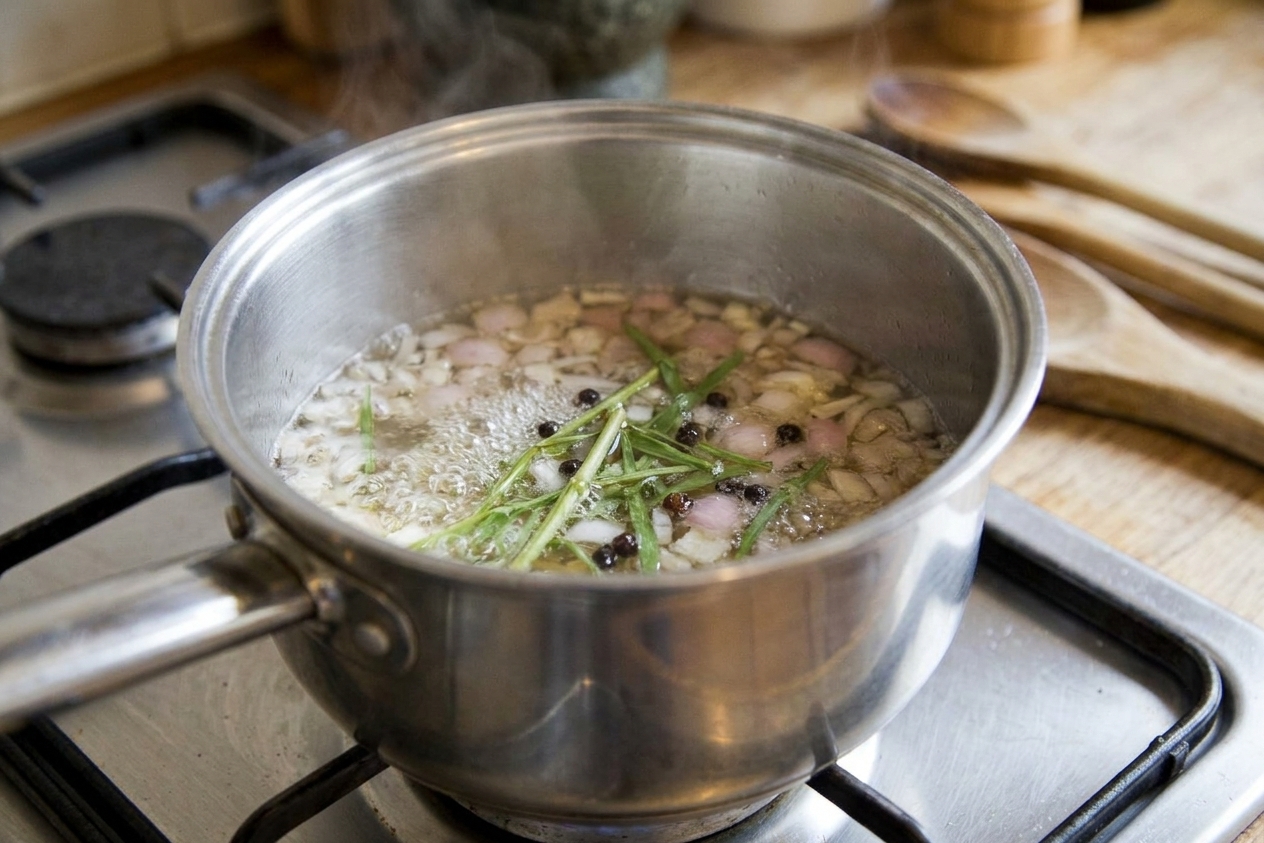
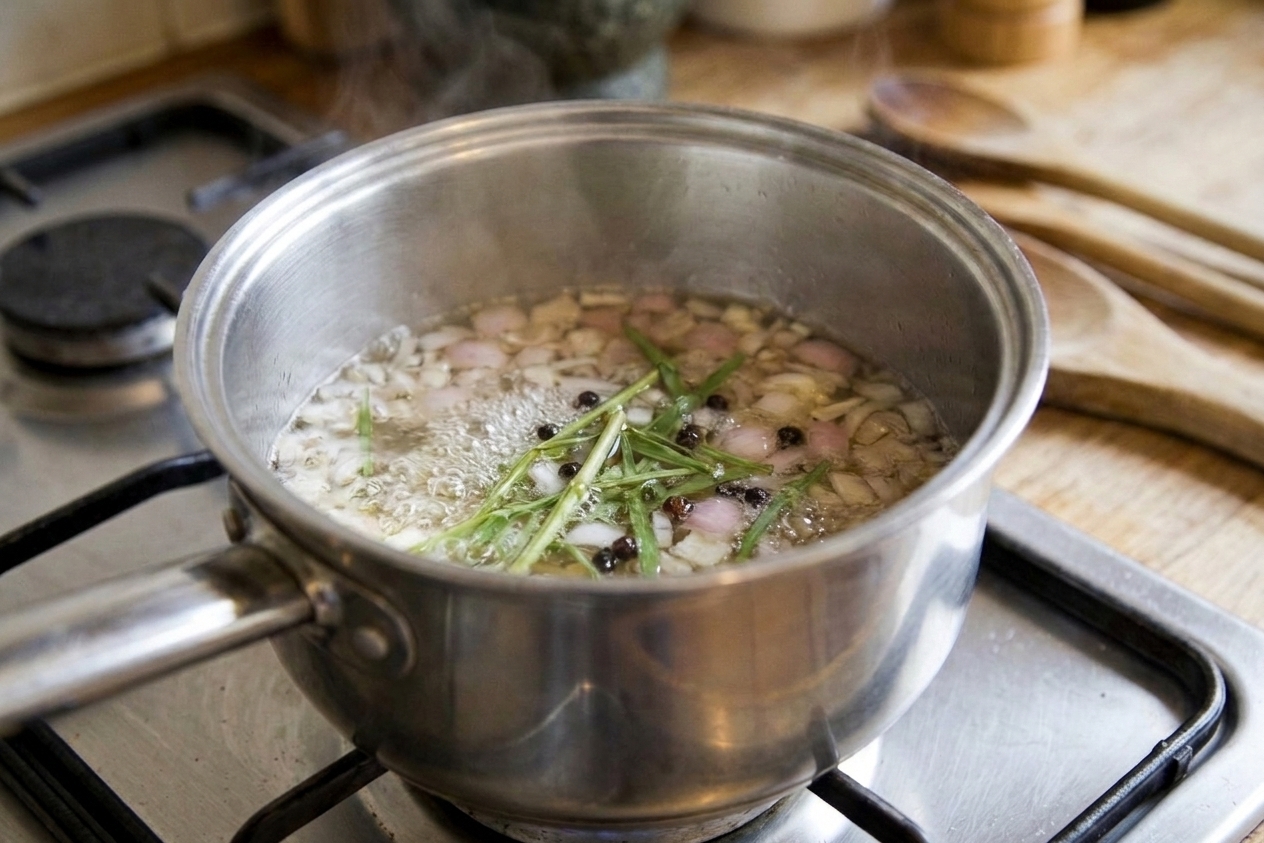
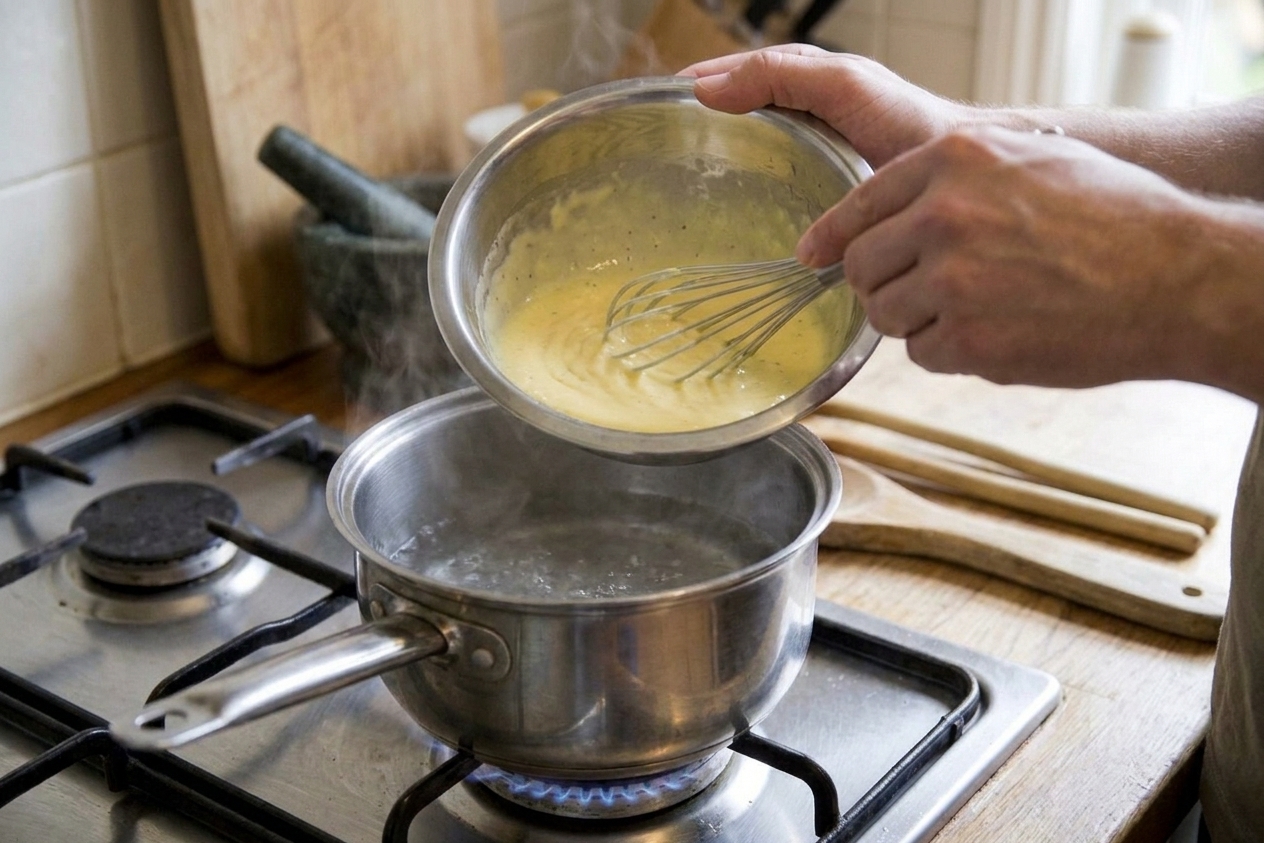
A small saucepan on a stovetop holding chopped shallots, tarragon stems, and peppercorns as vinegar bubbles gently

Why It Works

  • Big flavor, low clutter: A quick shallot and vinegar reduction builds that signature béarnaise tang without needing specialty stuff.
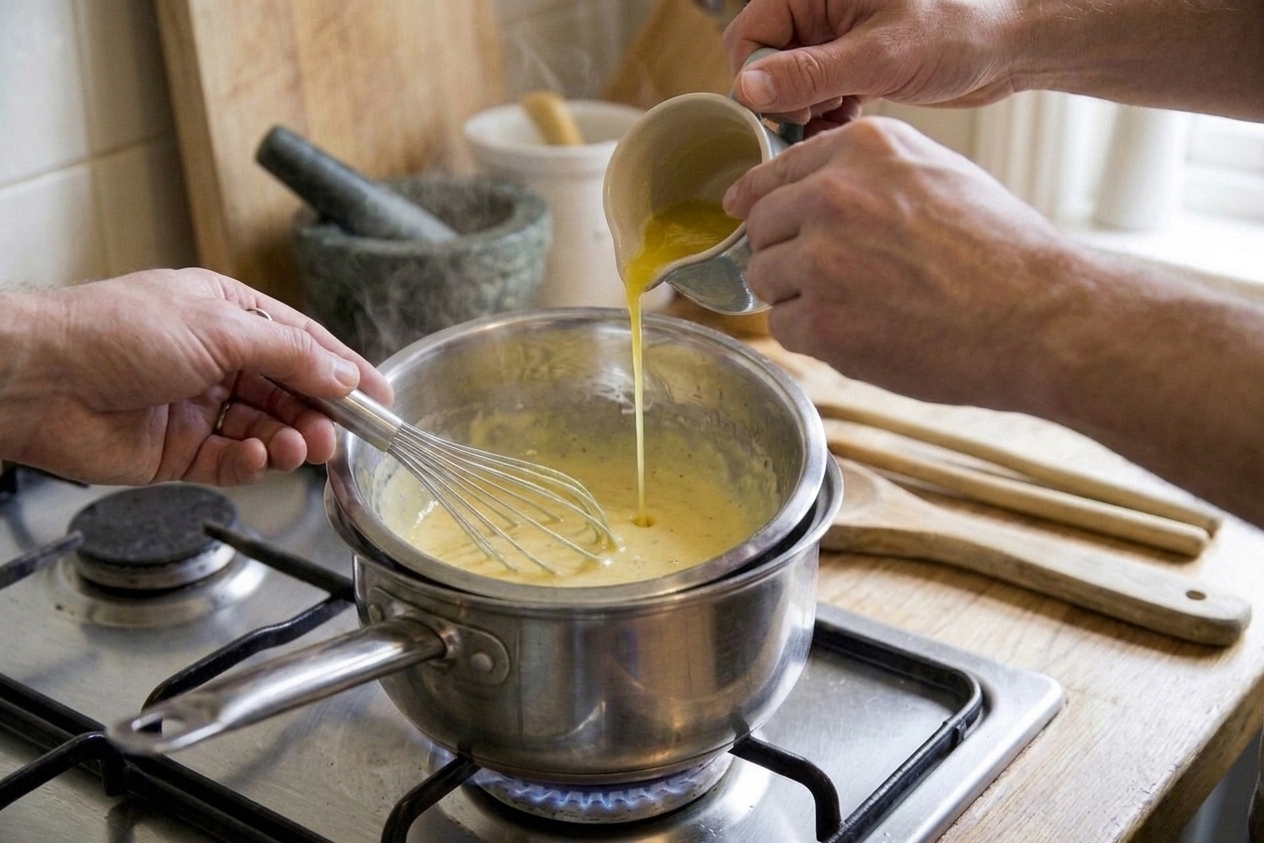
  • Silky texture that holds: Using a gentle double boiler and adding butter slowly gives you a stable, spoon-coating sauce.
  • Fixable if it gets weird: You will get simple rescues for split sauce, too-thick sauce, and overheating, because béarnaise should not ruin your night.

Pairs Well With

Storage Tips

Béarnaise is best the day you make it, but leftovers are not a lost cause.

Short hold

Keep it warm for up to 1 hour: pour into a small heatproof bowl, cover loosely, and set it over warm (not hot) water. Stir occasionally.

Refrigerating

Cool, then refrigerate in an airtight container for up to 2 days. It will firm up as the butter sets. That is normal.

Reheating without breaking

  • Warm a spoonful of water in a small saucepan over low heat.
  • Add cold béarnaise a tablespoon at a time, whisking constantly until it loosens and turns silky again.
  • If it looks oily, take it off the heat and whisk in a teaspoon of warm water to bring it back together.

Microwaves are risky because the heat is uneven and it can split fast. If you must, use very low power in short bursts and whisk like you mean it between each one.

Freezing

I do not recommend freezing béarnaise. Emulsions like this usually separate badly when thawed.

Common Questions

What is béarnaise sauce made of?

Béarnaise is an emulsion of egg yolks and butter, flavored with a vinegar and shallot reduction and finished with plenty of tarragon (often with chervil too). Think hollandaise, but herby and more tangy.

Why did my béarnaise sauce split?

Usually one of three things: the sauce got too hot (butter separates), the butter went in too fast, or the yolks were overcooked. Sometimes a tablespoon of warm water and a confident whisk brings it right back. If it is really broken, you may need to cool it slightly or start a fresh yolk base and whisk the broken sauce into it.

How do I fix broken béarnaise?

Two easy methods:

  • Warm-water rescue: In a clean bowl, whisk 1 tablespoon warm water. Slowly whisk in the broken sauce a little at a time until it emulsifies.
  • New-yolk rescue: Whisk 1 new egg yolk with 1 teaspoon warm water, then slowly whisk in the broken sauce.

Can I make béarnaise without a double boiler?

Yes. Use a heatproof bowl set over a saucepan with 1 inch of simmering water. The bowl should not touch the water. Keep it at a gentle simmer.

What can I substitute for tarragon?

It will not be classic béarnaise without tarragon, but you can make a tasty “béarnaise-ish” sauce with a mix of chives and parsley. The flavor will be fresher and less anise-like.

Is béarnaise sauce safe to eat?

This sauce uses gently cooked yolks over a water bath. For extra peace of mind, you can cook the yolk mixture until it thickens and is hot to the touch (often around 160°F/71°C), but do not let it overheat or it can scramble. If you are serving someone pregnant, elderly, immunocompromised, or very young, consider using pasteurized egg yolks.

The first time I made béarnaise at home, I treated it like it was going to judge me. I hovered, I over-whisked, I stared at the steam like it was a threat. Then it split, because of course it did.

What surprised me was how quickly it came back with a little warm water and a deep breath. Béarnaise is not fragile, it is just picky about heat. Now it is one of my favorite “weekend flex” sauces: steak night feels like a celebration, roasted asparagus gets fancy, and leftover fries suddenly have a purpose.