Mom's Best Recipes
Recipe

Classic Steak Wellington

Crispy puff pastry, prosciutto, and deeply savory mushroom duxelles wrapped around a tender beef tenderloin with a rosy center.

Author By Matt Campbell
4.8
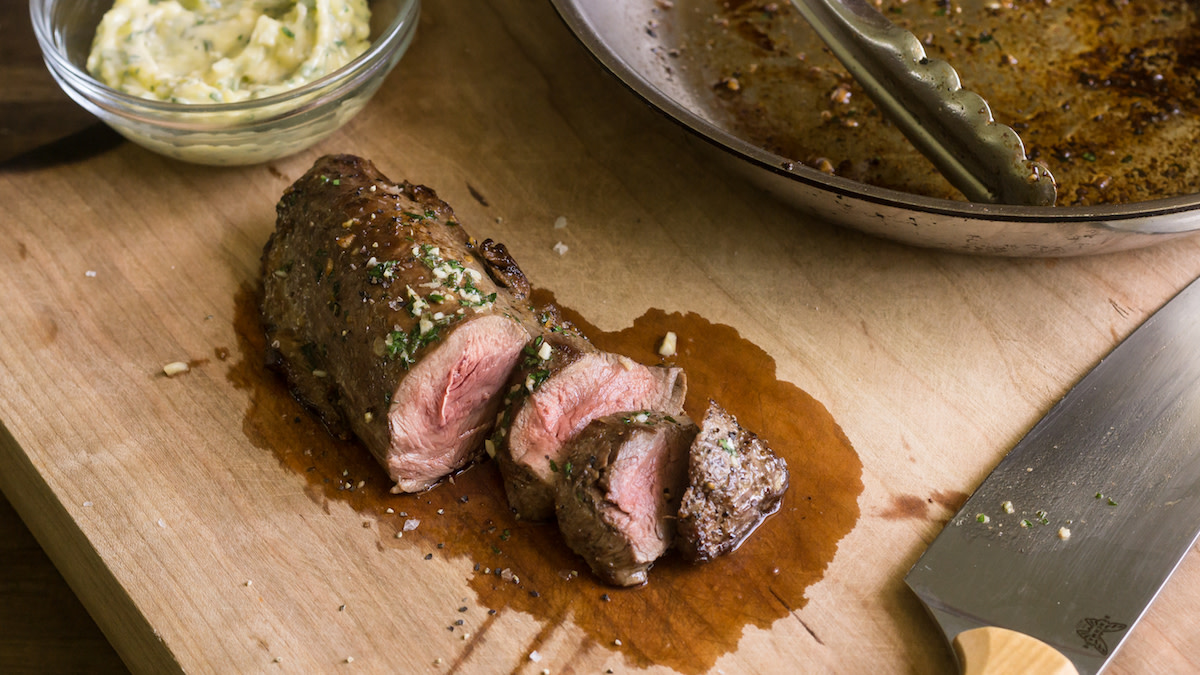
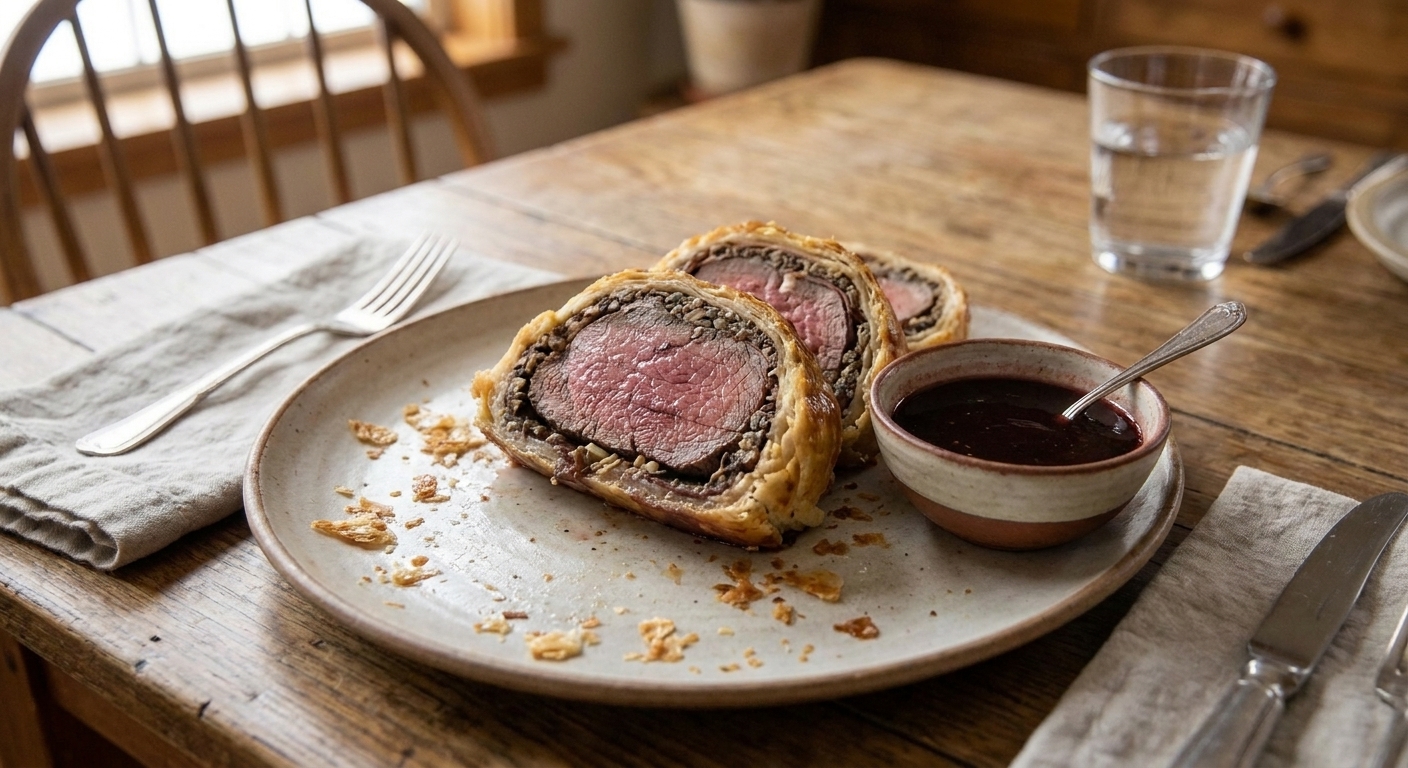
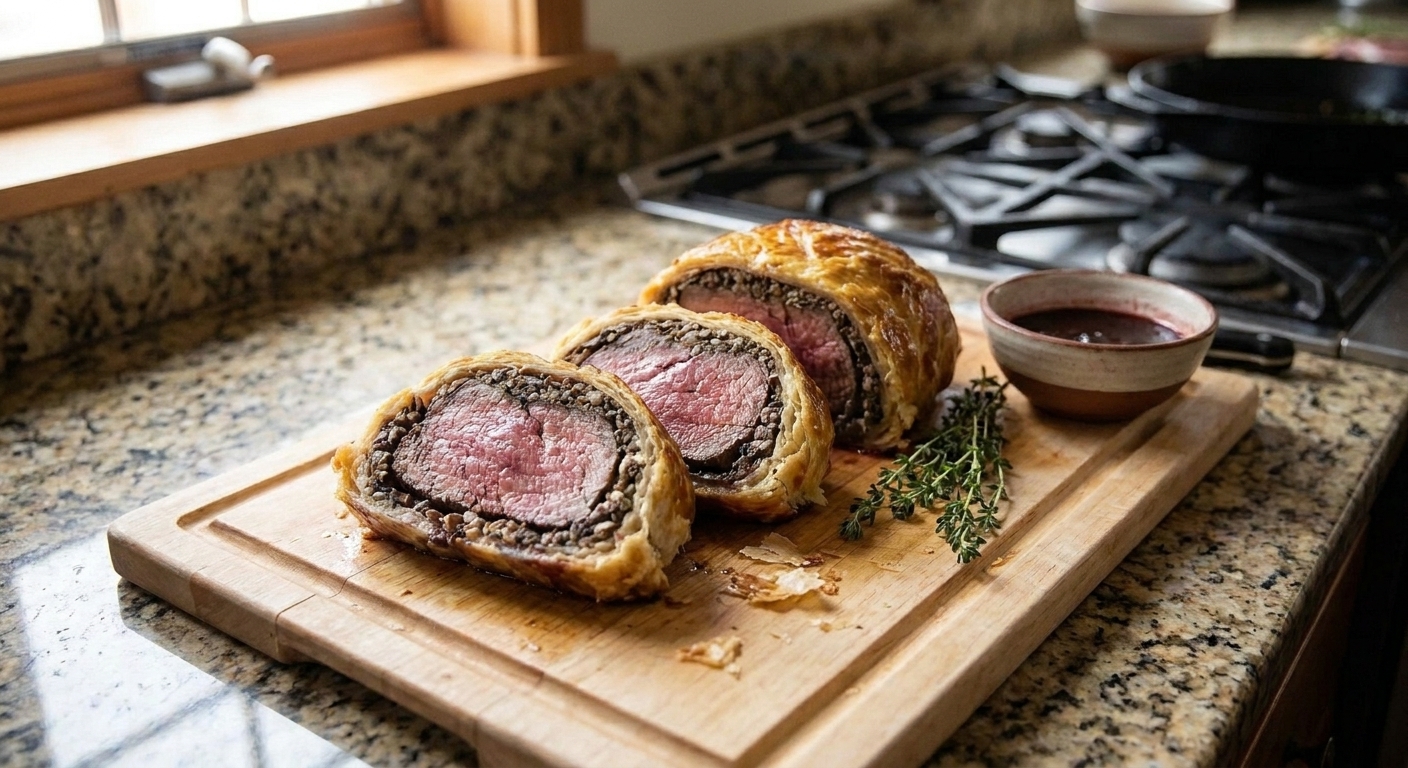
A sliced steak Wellington on a wooden cutting board, showing a rosy medium-rare center, mushroom duxelles layer, and crisp golden puff pastry in a warm home kitchen

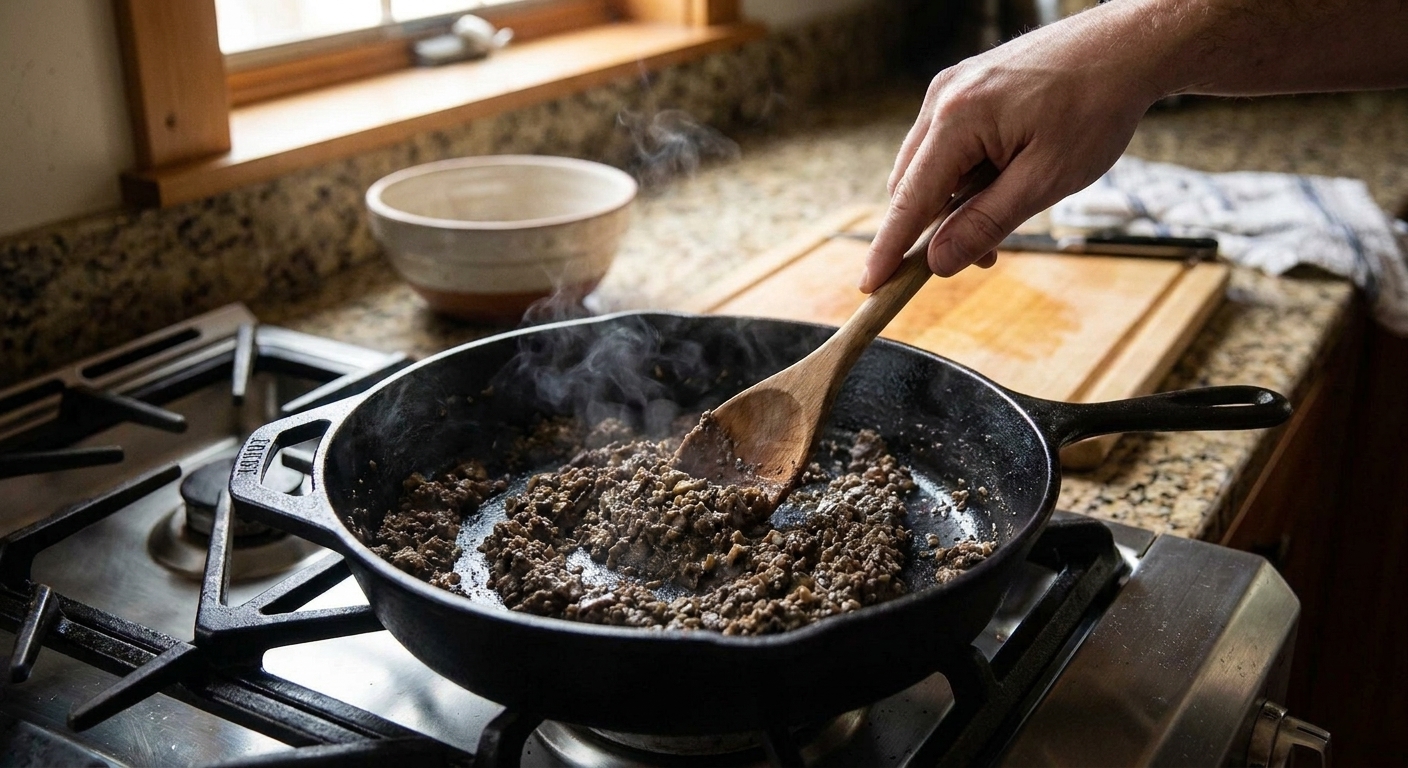
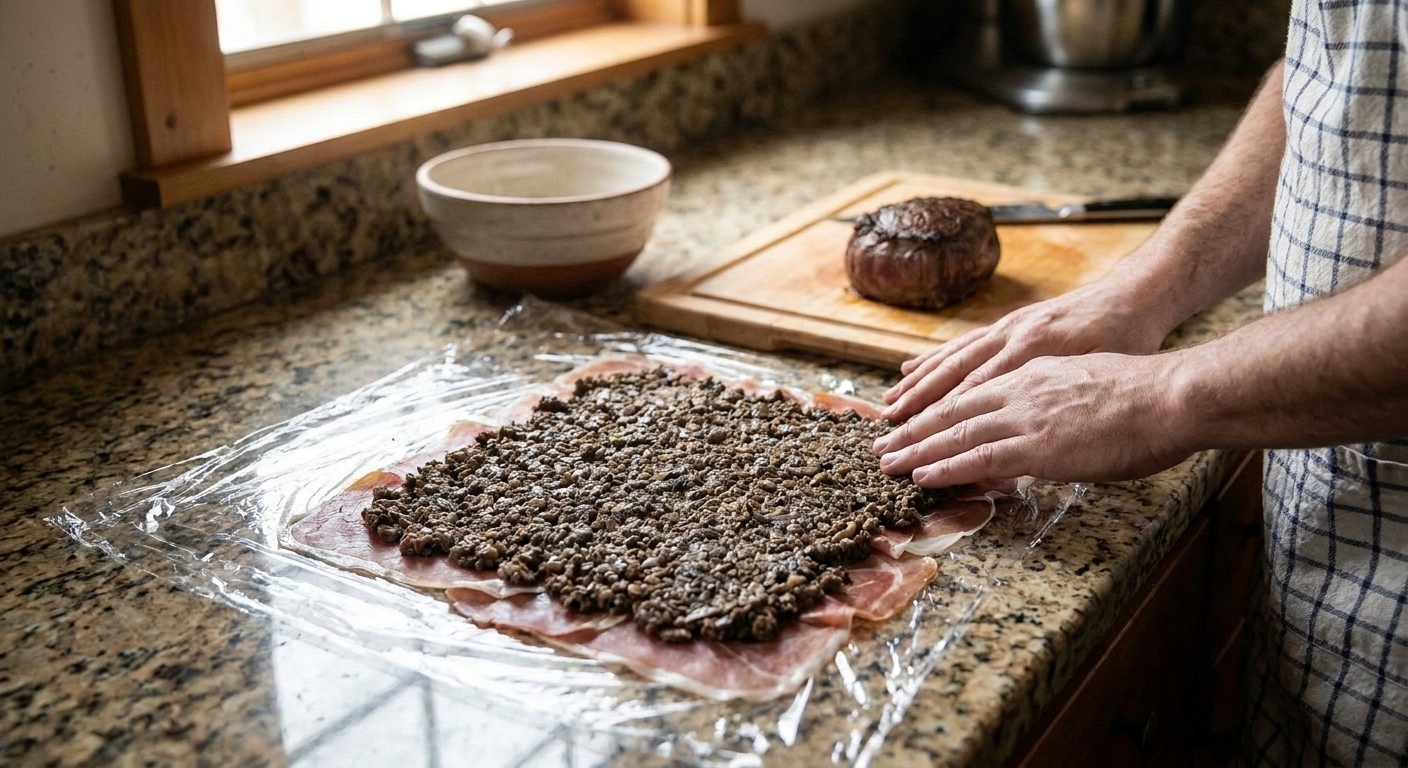
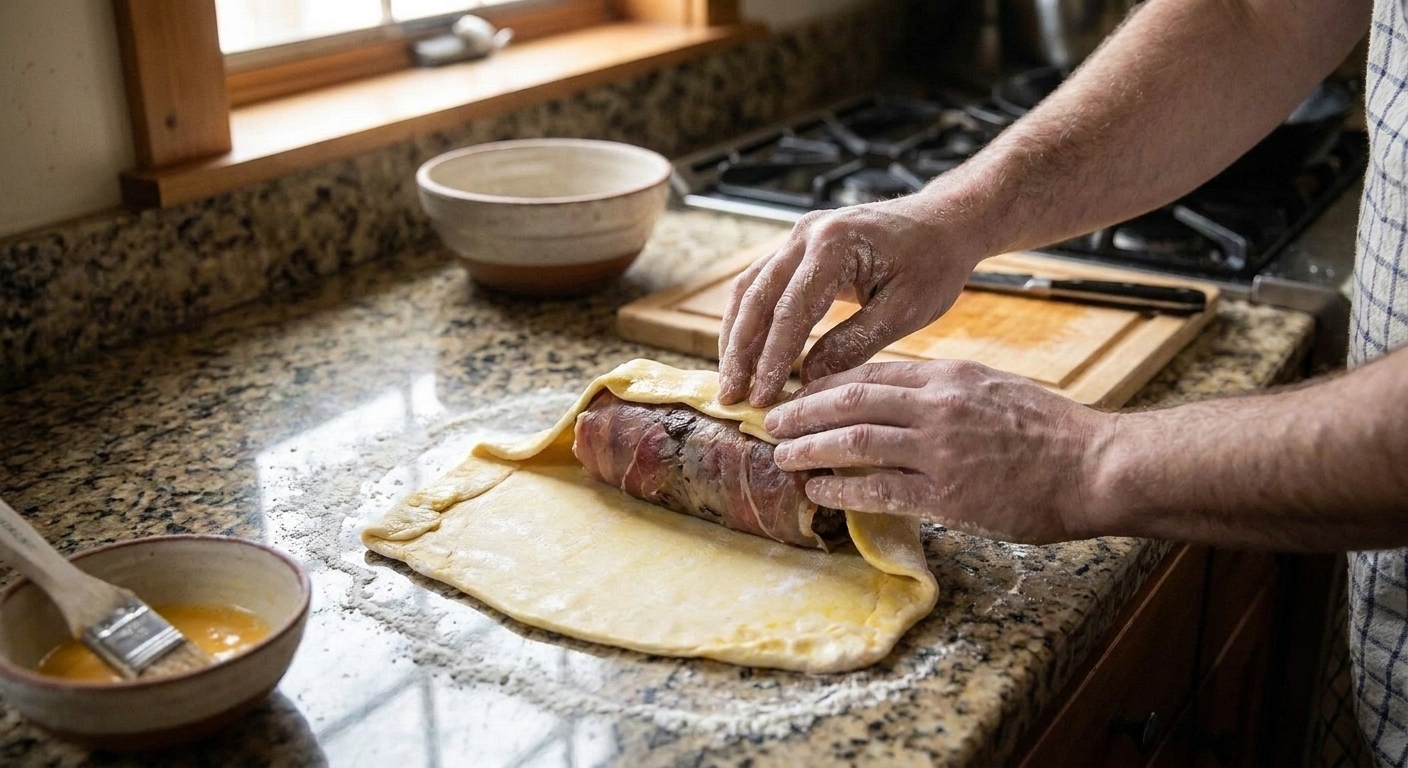
Steak Wellington is one of those dishes that looks like it requires a tiny marching band of chefs and a subscription to stress. In reality, it is just a few smart layers stacked in the right order. Sear the beef for flavor, cook the mushrooms until they are dry and concentrated, then wrap the whole thing up like a very fancy sleeping bag made of prosciutto and puff pastry.

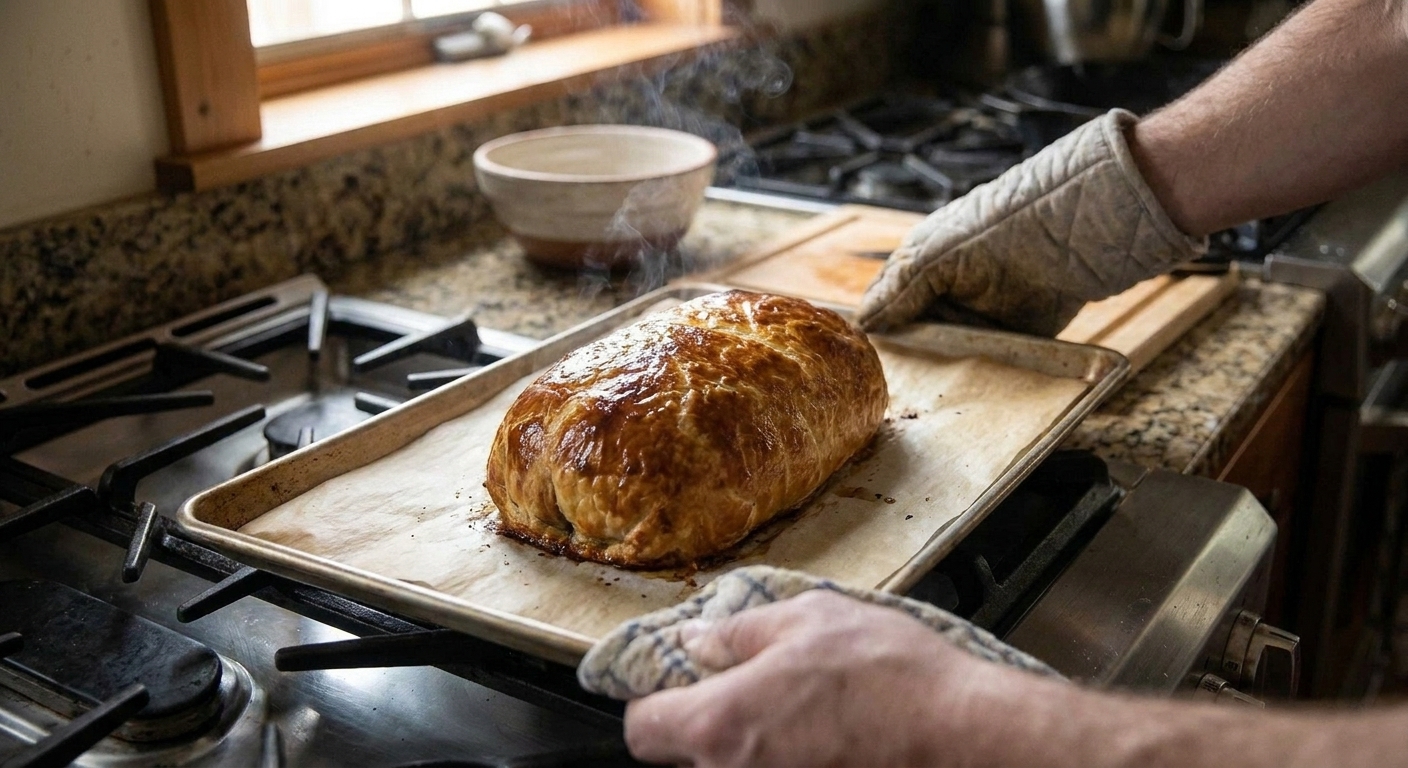
My version keeps ingredients accessible and the instructions low-drama. The big goal is simple: crisp pastry, not soggy, and a tender, rosy center. If you can use a thermometer and you promise to let it rest, you have this.

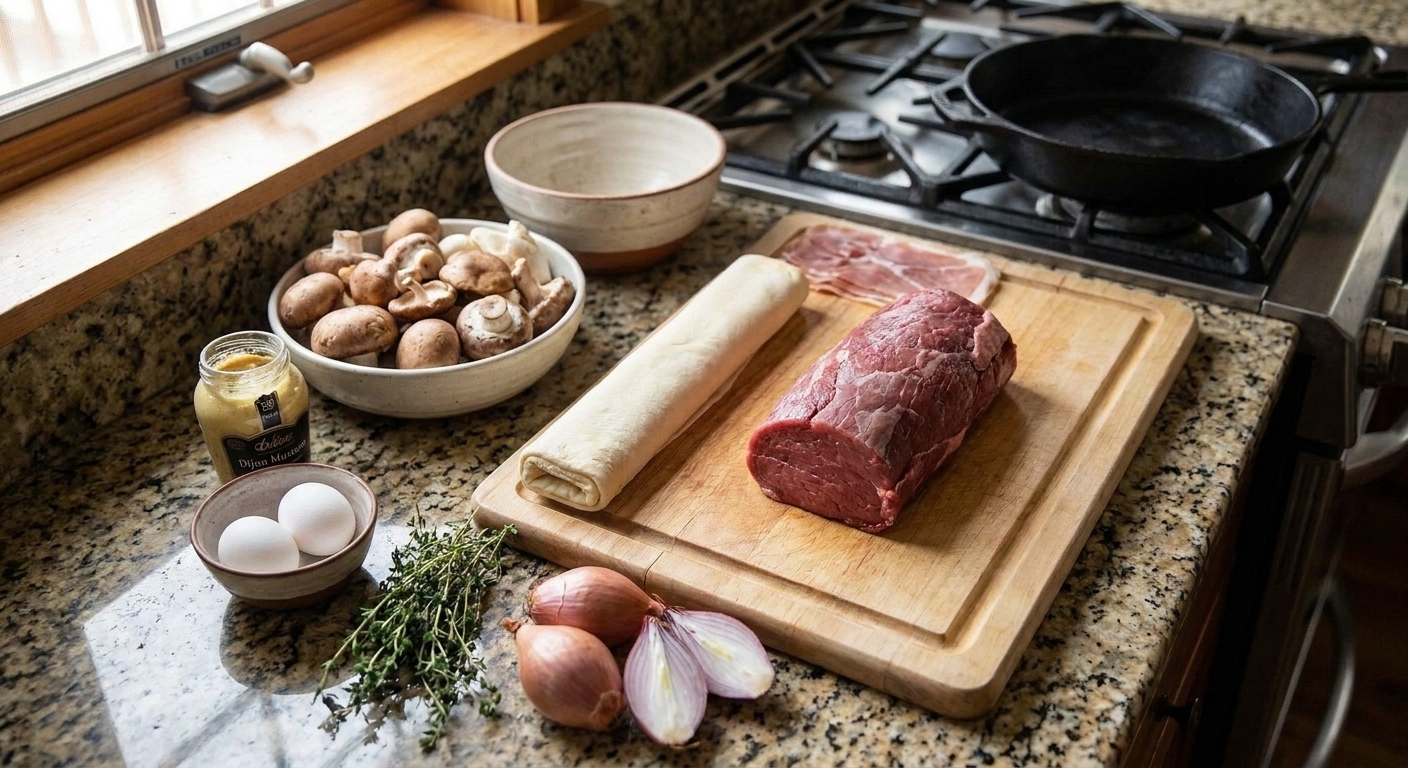
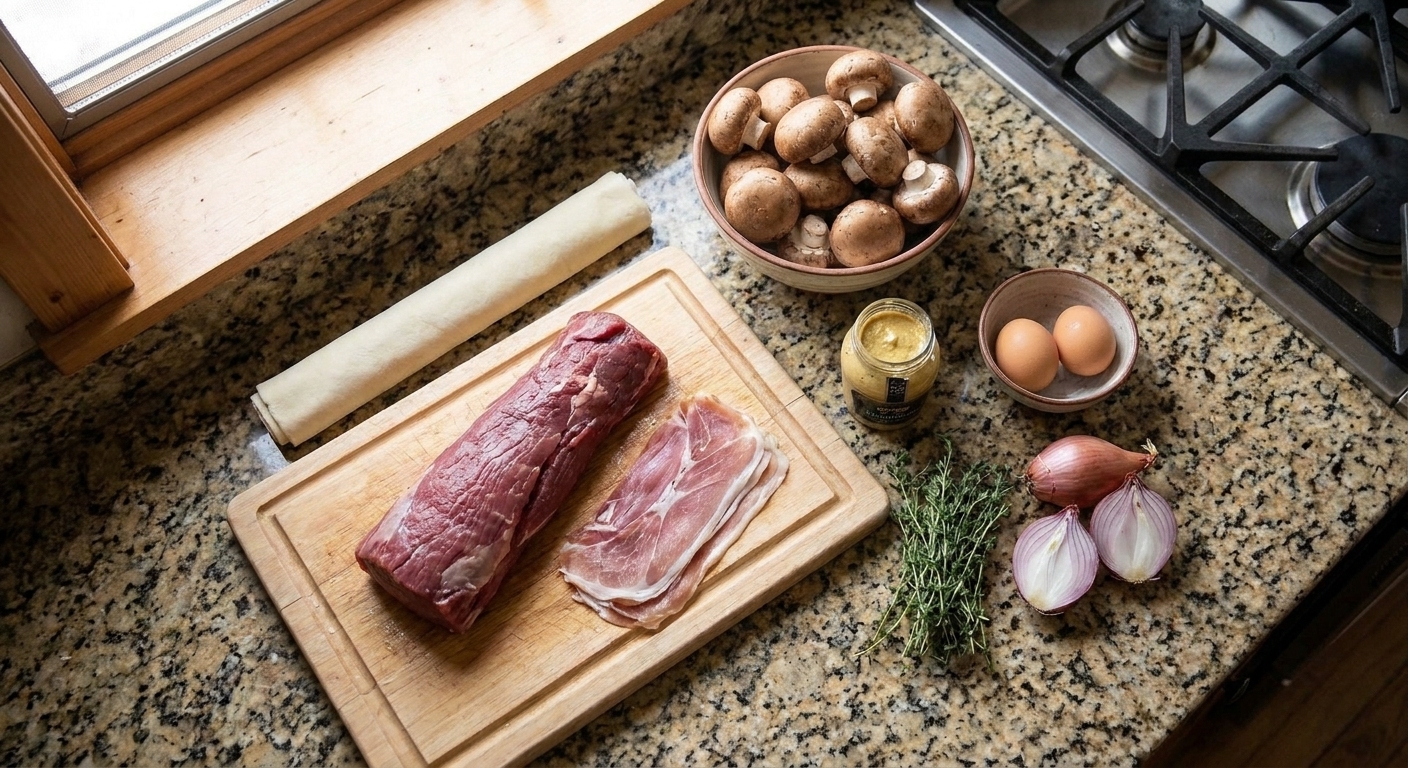
Steak Wellington ingredients arranged on a kitchen counter: beef tenderloin, puff pastry, mushrooms, prosciutto, Dijon mustard, eggs, thyme, and shallots

Why It Works

  • Duxelles that actually works: Cooking the mushrooms until dry concentrates flavor and prevents the dreaded pastry sog.
  • Prosciutto as a moisture barrier: It adds salty savor and protects the pastry from the beef juices.
  • A hard sear + Dijon: The sear builds flavor fast, and the mustard adds brightness that cuts through the richness.
  • Chill before baking: A quick rest in the fridge helps the Wellington hold its shape and bake up cleaner.
  • Temperature-first doneness: Pulling by internal temp keeps the center tender and helps prevent overcooking, even when carryover varies.

Pairs Well With

Storage Tips

Steak Wellington is best the day it is made, but leftovers can still be great if you reheat with a little strategy.

Fridge

  • Cool leftovers completely, then wrap slices in foil or store in an airtight container.
  • Refrigerate up to 2 days for best pastry texture. From a food safety standpoint, cooked beef is often fine a bit longer, but the pastry is the first thing to lose its sparkle.

Reheat (best method)

  • Reheat slices straight from the fridge in a 350°F oven for 10 to 15 minutes, until warmed through.
  • If the pastry needs extra crisping, unwrap foil for the last 3 to 5 minutes.
  • The microwave will warm it, but it will also soften the pastry. Sometimes you do what you must, but the oven is kinder.

Freezing

  • I do not love freezing baked Wellington because pastry texture suffers.
  • If you want a make-ahead option, freeze the unbaked, fully wrapped Wellington instead (see FAQ), then bake from frozen with extra time.
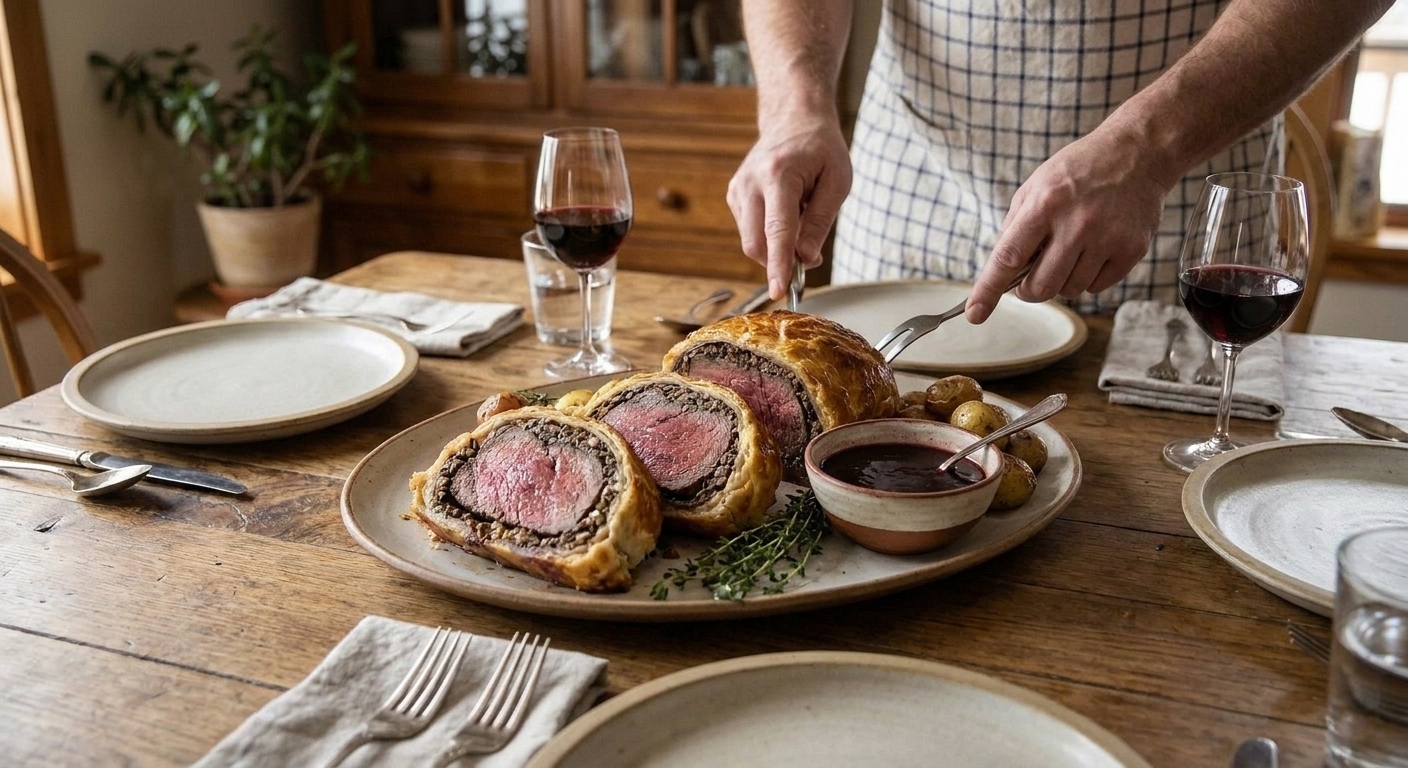
Leftover steak Wellington slices on a plate with flaky pastry crumbs and a small bowl of sauce on a dining table

Common Questions

What cut of beef is best for Steak Wellington?

Center-cut beef tenderloin is the classic because it is tender, evenly shaped, and cooks predictably. Look for a piece that is roughly cylindrical so it wraps cleanly. If your tenderloin has a thin tail, tuck it under and tie it with kitchen twine so the thickness is more even.

Do I need to trim anything?

If it is not already trimmed, remove any silverskin (that shiny, tough membrane). It does not melt as it cooks, and it can make slicing chewy.

How do I keep the bottom from getting soggy?

  • Cook the duxelles until it is very dry and paste-like.
  • Cool the duxelles completely before wrapping. Warm mushrooms = steam later.
  • Use prosciutto as a barrier (or a thin crêpe layer if you do not eat pork).
  • Chill the wrapped Wellington before baking.
  • Bake on a preheated sheet pan or use a wire rack set on a sheet pan for better airflow.

What internal temperature should I aim for?

For a classic medium-rare center, start checking early and pull the Wellington when the thermometer reads 115°F to 122°F in the center of the thickest part. Carryover cooking can be anywhere from 5°F to 12°F depending on size, how cold the center was after chilling, and how hot your oven runs. If the beef is very cold from the fridge, carryover may be on the smaller side. For medium, pull at 123°F to 128°F.

Can I make Steak Wellington ahead?

Yes. You can make the duxelles up to 2 days ahead, and you can sear the beef and chill it up to 1 day ahead. You can also assemble the entire Wellington and refrigerate it, wrapped, for up to 24 hours before baking.

Can I bake it from frozen?

You can, but plan for a longer bake and keep an eye on the pastry color. Freeze the fully assembled, unbaked Wellington until solid, then wrap well. Bake at 400°F until deeply golden and the center hits your target temp, usually 20 to 40 minutes longer depending on thickness and how frozen it is. If the pastry browns before the center is ready, tent loosely with foil. If it is browning fast, you can also lower the oven to 375°F after the pastry has good color to give the center time to catch up.

Do I need pâté or foie gras?

No. Traditional versions often include it, but a well-seasoned mushroom duxelles plus prosciutto gives you plenty of richness and that classic Wellington vibe.

The first time I made Steak Wellington, I treated it like a final exam. I reread every step, hovered over the oven light like it owed me money, and still managed to panic about the pastry. Now I make it like I cook with friends. A little messy, lots of tasting, and focused on the parts that actually matter: a good sear, mushrooms cooked down until they are basically mushroom jam, and a thermometer doing the emotional labor.

It is still a showstopper, but it does not have to be a meltdown. Put on some music, clear a little counter space, and let the pastry do its flaky magic.