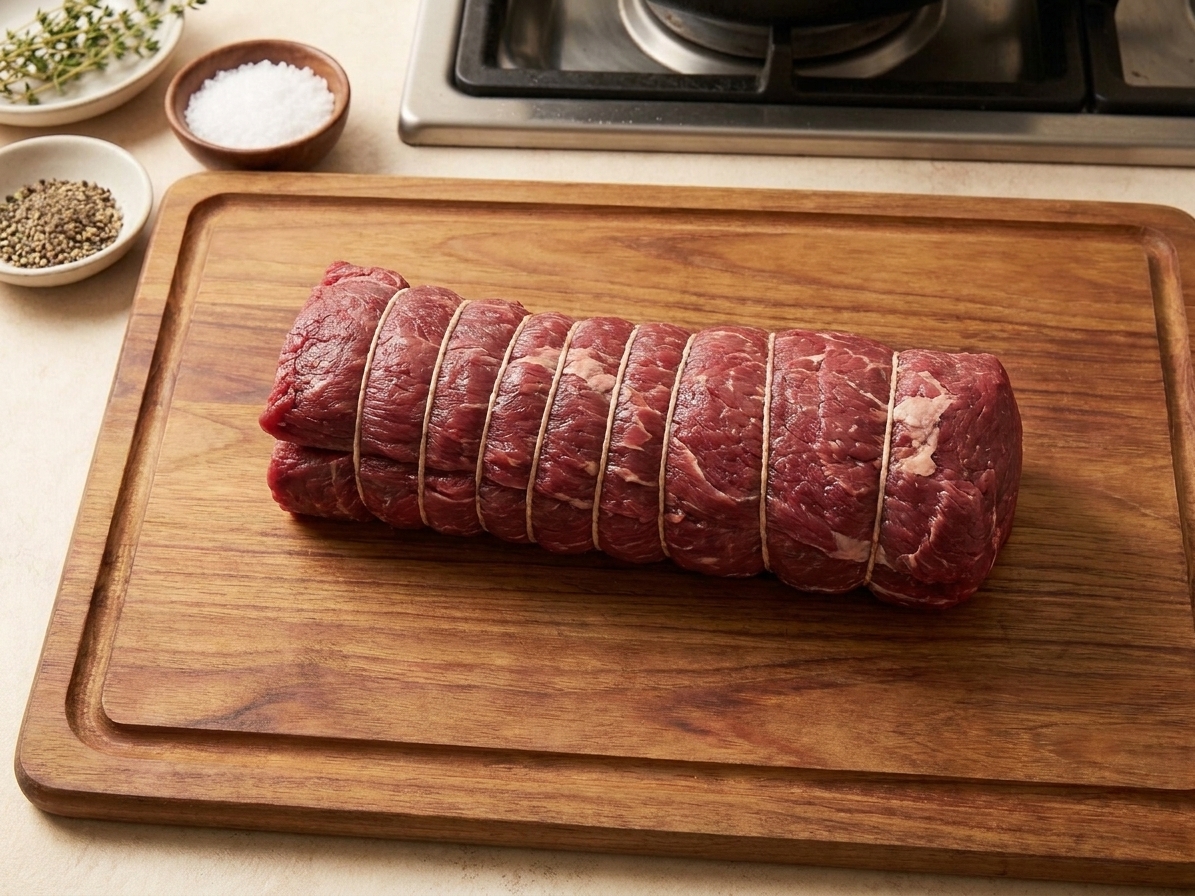
1) Temper and season
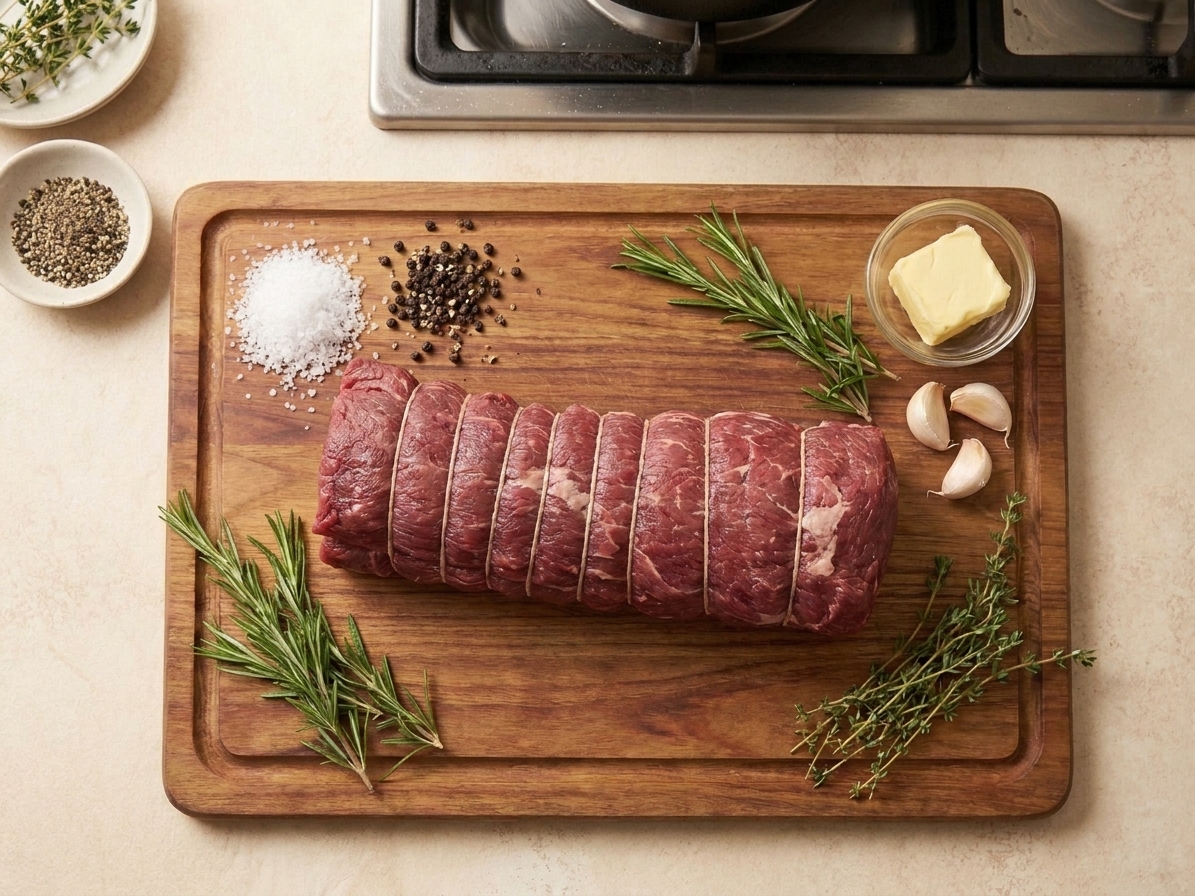
Pat the tenderloin dry. If you have time, let it sit out at room temp for 30 to 45 minutes while you prep (no longer than about 1 hour). Tie it with kitchen twine every 1 1/2 inches to create an even cylinder.
Season all over with kosher salt and black pepper.
2) Preheat the oven
Heat oven to 425°F.
3) Sear for a deep crust
Heat an oven-safe skillet over medium-high heat until very hot. Add the oil. Sear the tenderloin for 2 to 3 minutes per side on all 4 long sides, then give the ends a quick kiss in the pan too. You are going for a deep brown crust, not a timid tan.
4) Baste with butter and aromatics
Reduce heat to medium. Add the 2 tablespoons butter, smashed garlic, thyme, and rosemary. Tilt the pan and spoon the foaming butter over the beef for 30 to 60 seconds.
If the butter is browning too fast or the garlic looks like it is about to scorch, lower the heat. You want fragrant, not bitter.
5) Roast to temperature
Transfer the skillet to the oven. Roast until the center reaches your target temperature:
- Medium-rare: pull at 125°F
- Medium: pull at 135°F
Timing depends on thickness and starting temp, but for a typical 1 1/2 to 2-pound center-cut roast, expect roughly 15 to 25 minutes after searing. Start checking early. Tenderloin goes from perfect to oops fast.
Place the thermometer in the thickest part. Remember it will rise a few degrees as it rests.
6) Rest
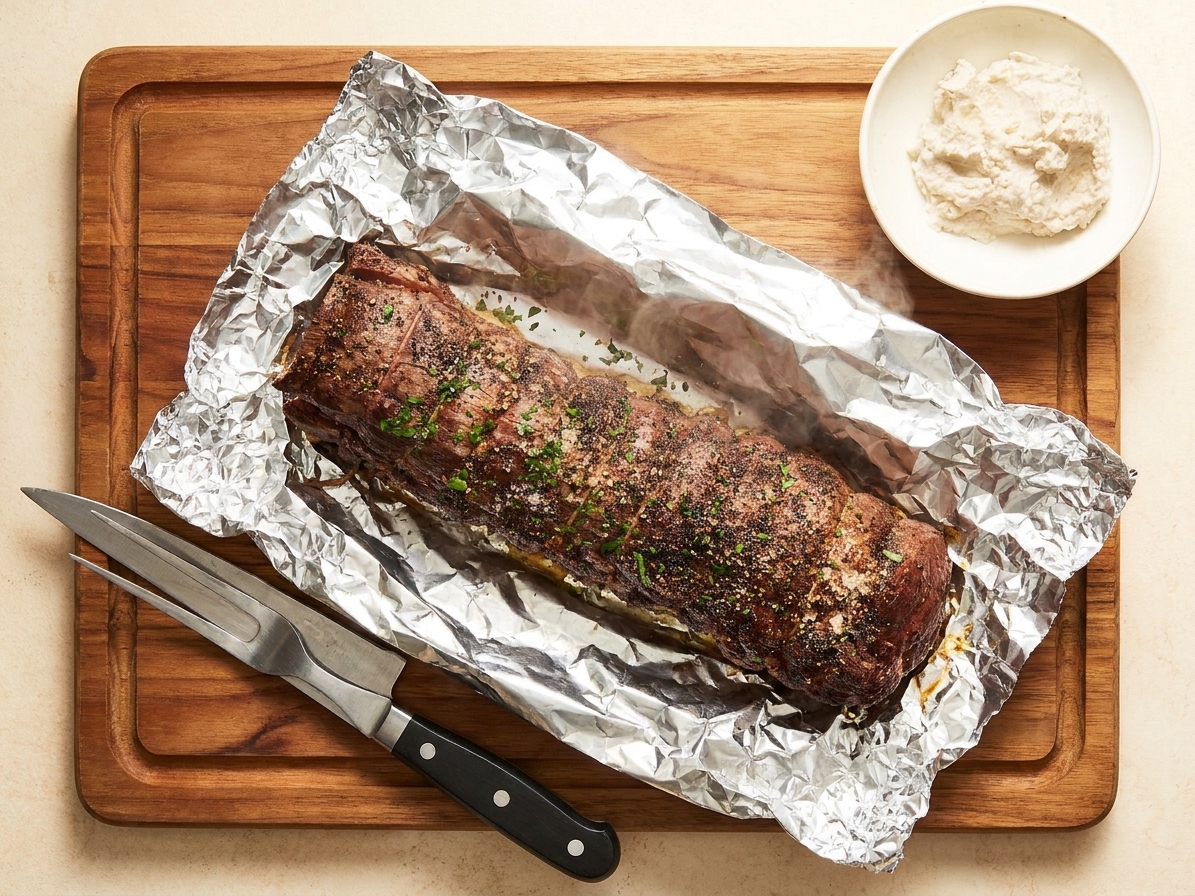
Move the beef to a cutting board and tent loosely with foil. Rest for 10 to 15 minutes. This is non-negotiable if you want juicy slices.
7) Make the pan sauce
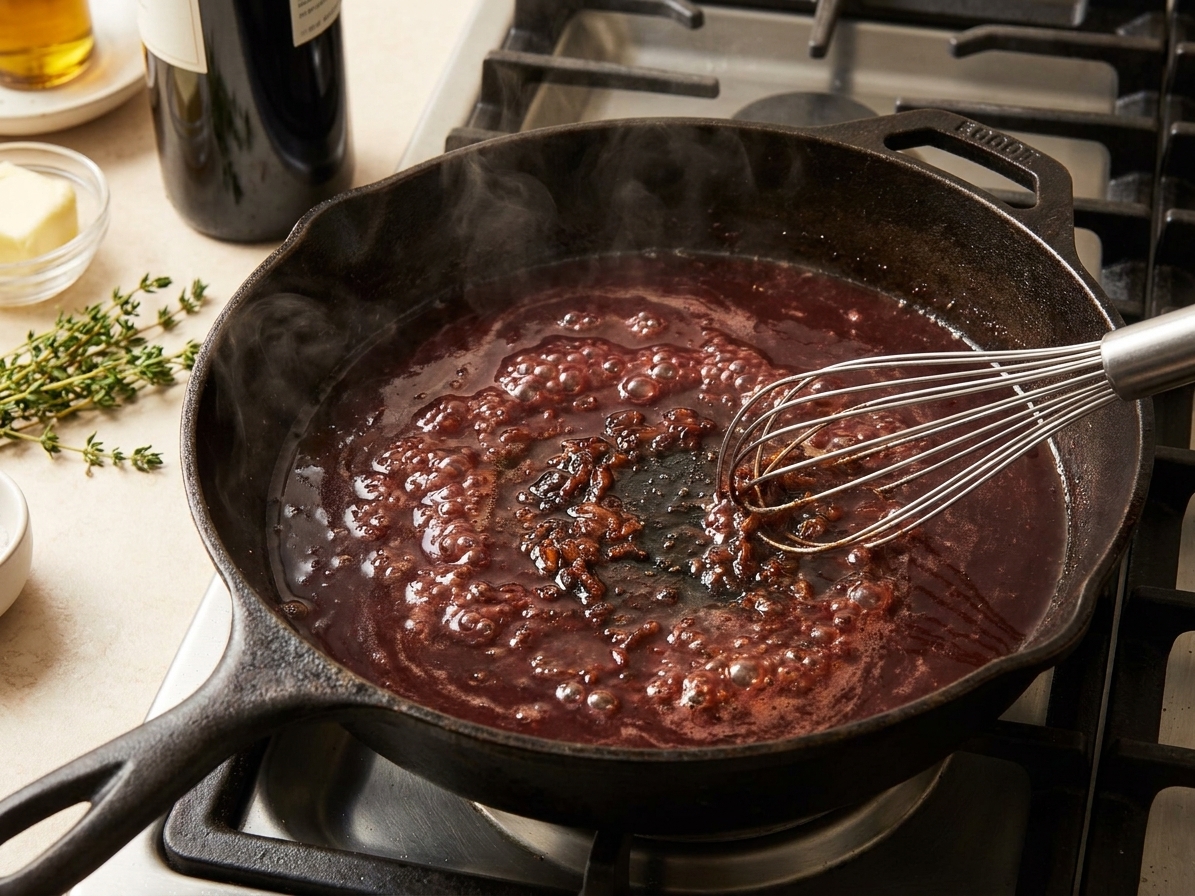
Carefully pour off excess fat from the skillet, leaving the browned bits and about 1 tablespoon of fat behind. If the pan looks dry, add a small splash of oil or a tiny bit of butter.
Set skillet over medium heat. Add minced shallot and cook 1 minute until softened.
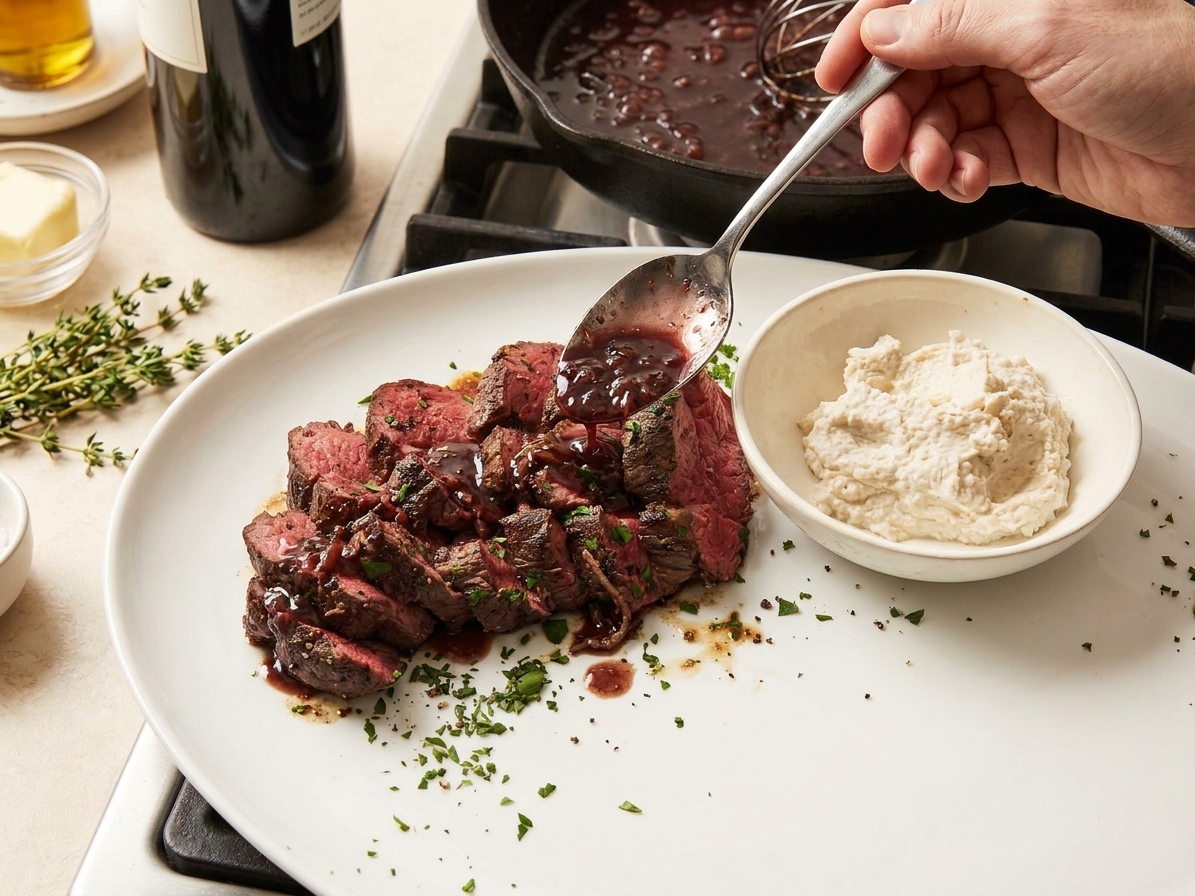
Add red wine and scrape up the browned bits. Simmer until reduced by about half, 3 to 5 minutes. Add beef broth, Dijon, and Worcestershire. Simmer until it coats a spoon (lightly thickened), 5 to 10 minutes. If you want it glossier and more intense, keep reducing another minute or two.
Turn off heat. Whisk in 1 tablespoon cold butter. Taste, then brighten with balsamic or lemon juice, 1 teaspoon at a time. Salt and pepper as needed.
8) Slice and serve
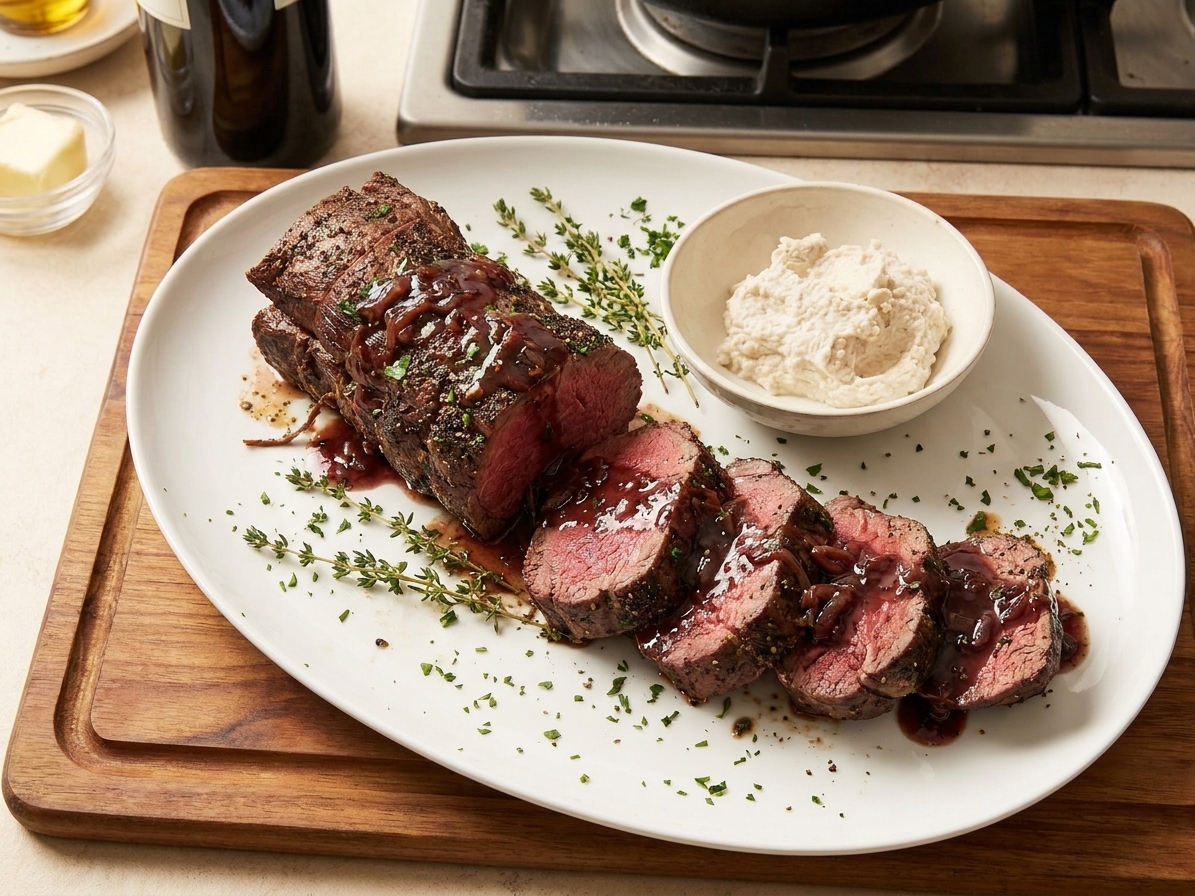
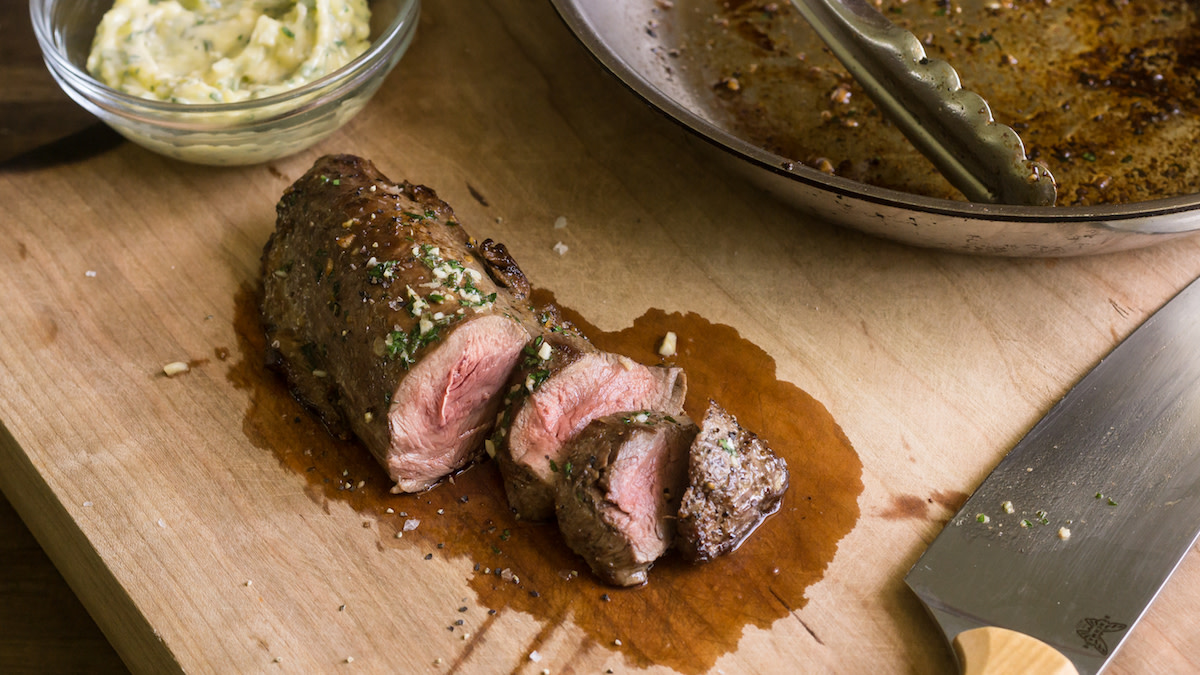
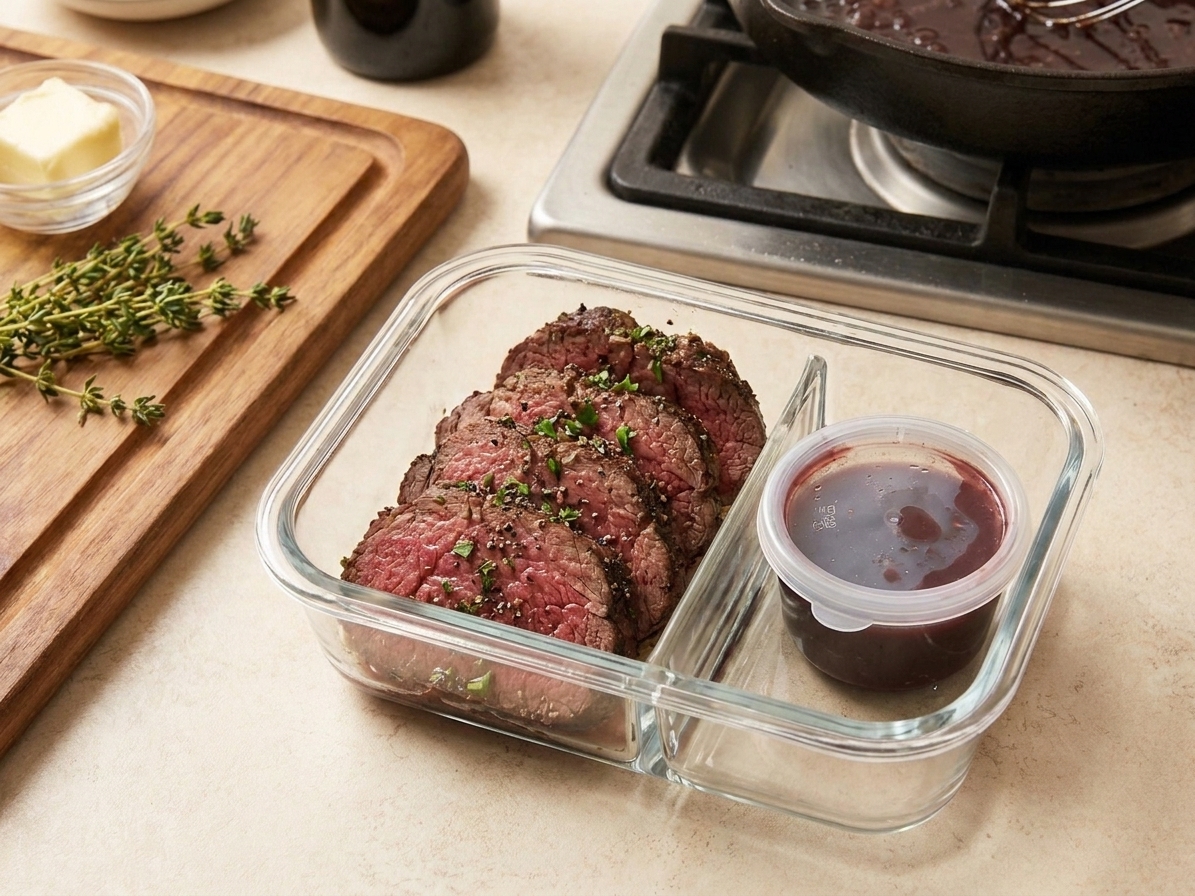
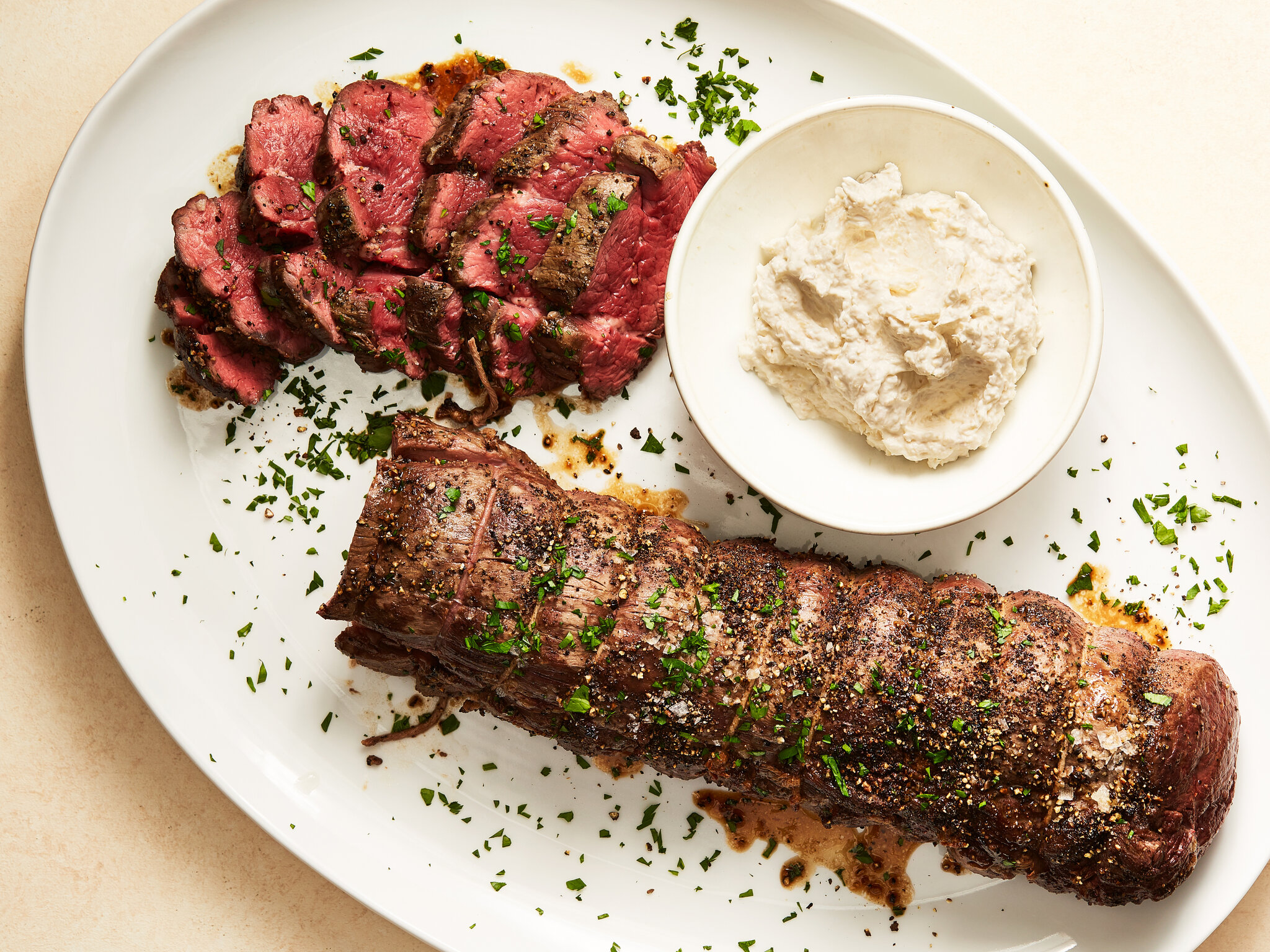
Remove twine. Slice into 1/2 to 3/4-inch slices. Spoon sauce over, or serve sauce on the side for dipping.
Easy family-style sides: mashed potatoes, green beans, roasted carrots, or a simple salad. If kids are at the table, extra sauce on the side makes everyone happy.