Mom's Best Recipes
Recipe

Classic English Scones

Buttery, tender English scones with a crisp top and soft crumb, made with simple ingredients and a no-drama method that actually rises.

Author By Matt Campbell
4.8
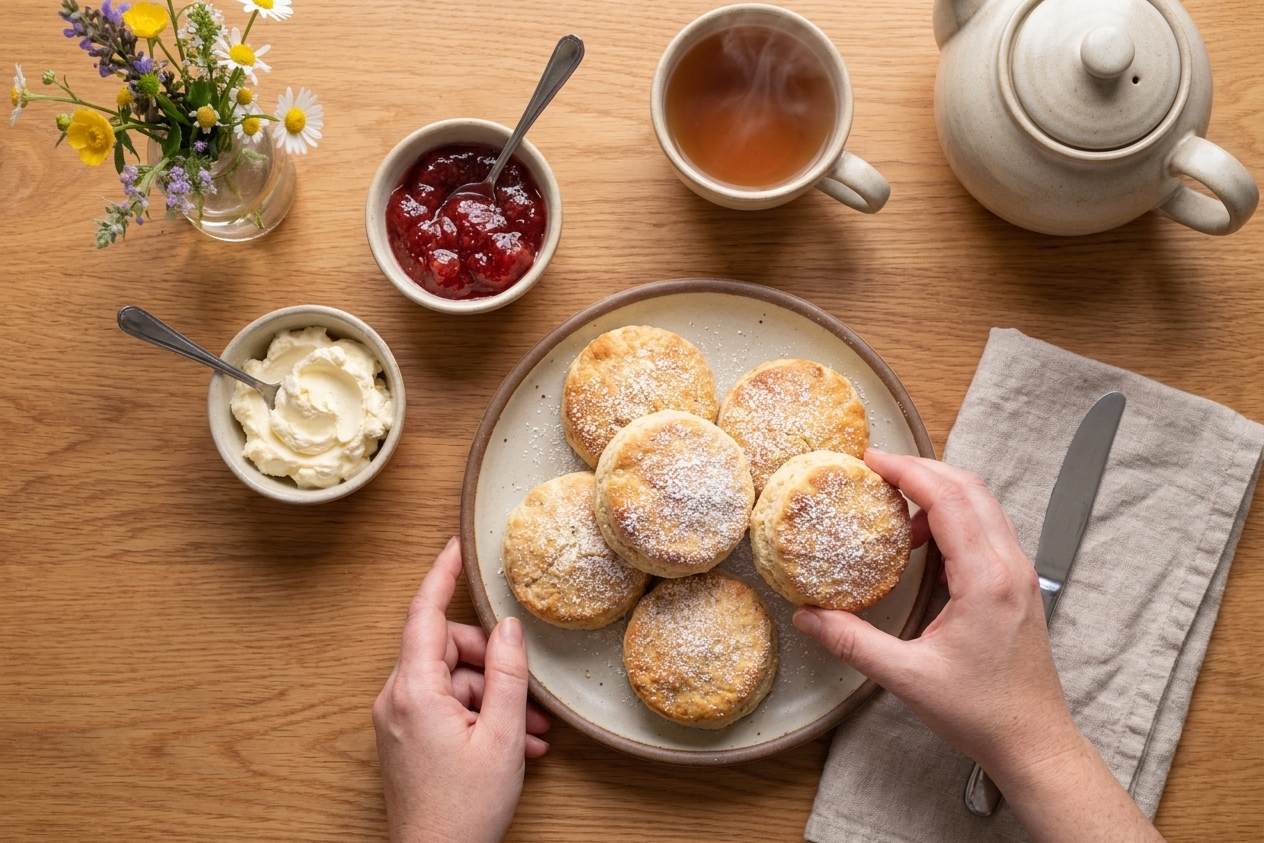
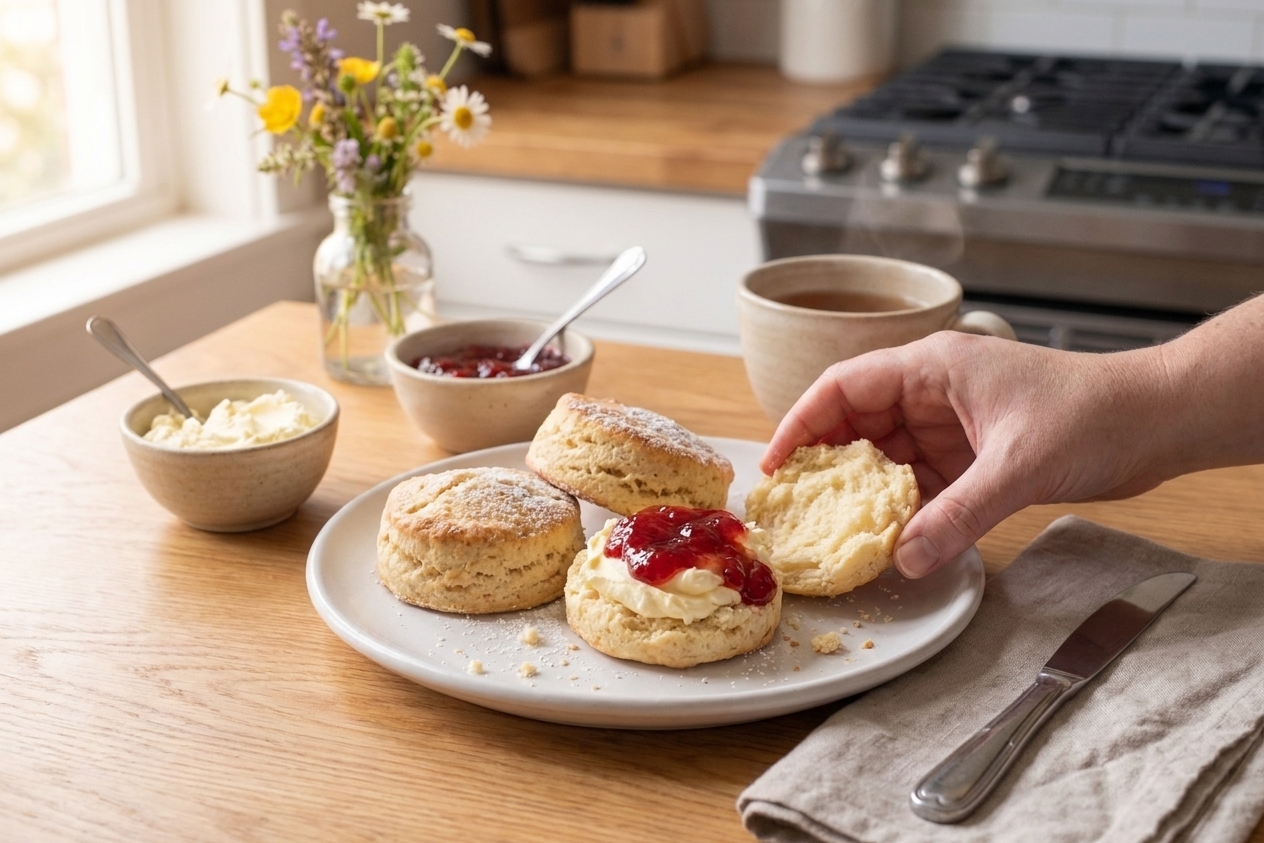
A plate of golden English scones split open and served with clotted cream and strawberry jam on a rustic kitchen table with morning light

English scones are one of those deceptively simple bakes that feel like magic when you nail them. You know the moment: you crack one open, steam escapes, the inside is tender and a little layered, and suddenly you are very interested in finding the jam immediately.

This is my go-to “classic” version. It is buttery, gently sweet, and built for toppings. I keep the ingredients accessible and the steps clear, because scones should feel like a cozy win, not a baking exam. The big idea is simple: cold butter, light handling, and a hot oven. That is how you get height and those crisp edges that make you pause mid-bite and go, “Okay, wow.”
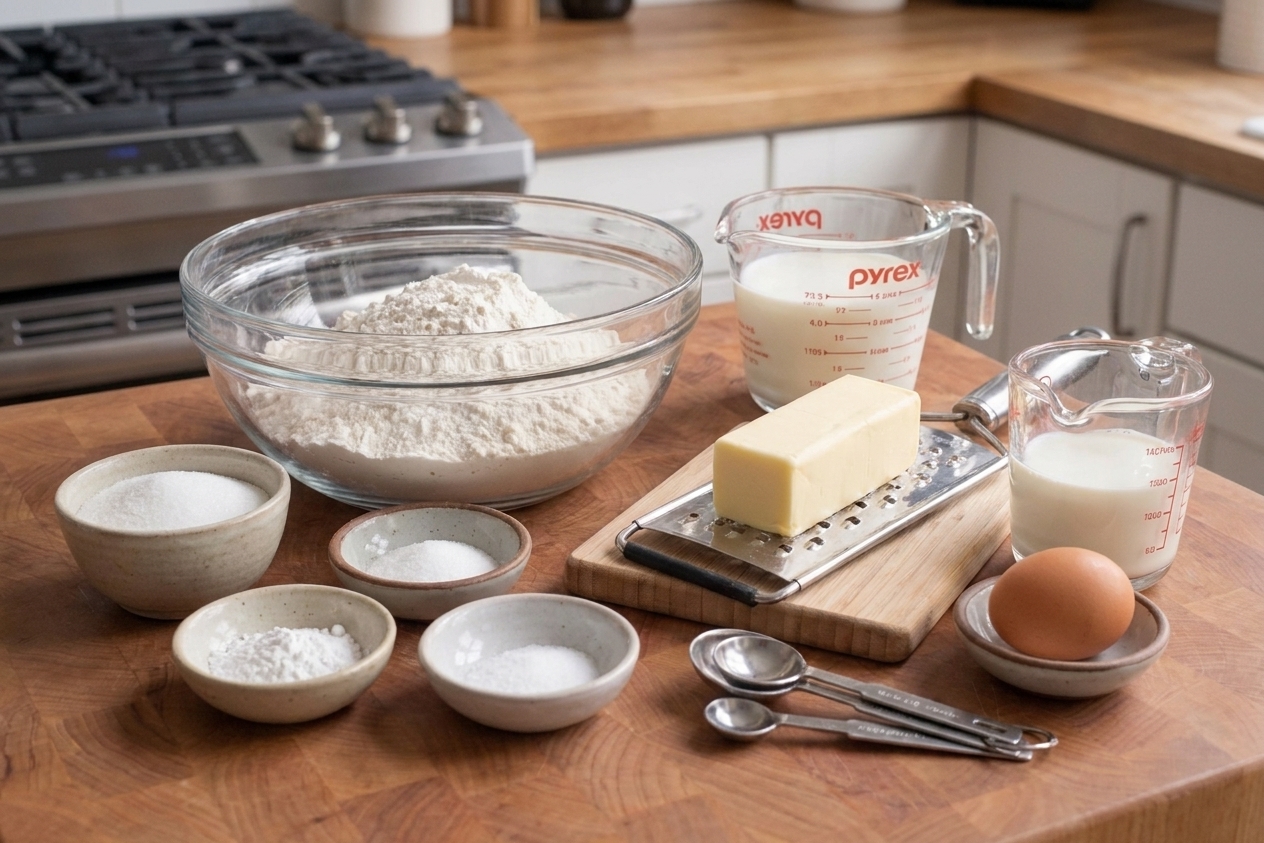
Flour, sugar, baking powder, salt, cold butter, milk, and an egg arranged on a clean kitchen counter with a mixing bowl and measuring spoons

Why It Works

  • Tall, tender scones: Cold butter plus a gentle mix keeps the crumb soft instead of tough.
  • Crisp edges, soft center: A hot oven sets the exterior fast while the inside stays plush.
  • Consistent rise: Baking powder plus a quick chill helps the scones hold their shape and lift.
  • Not overly sweet: Perfect for clotted cream and jam, or for going savory with butter and cheddar.

Pairs Well With

Storage Tips

Room temperature: Store cooled scones in an airtight container for up to 2 days. For the very best texture, they shine the most on day-of and the next day.

Reheat (best move): Warm in a 300°F oven for 8 to 10 minutes to revive the edges and soften the middle. A toaster oven is perfect here.

Freeze: Freeze baked, fully cooled scones in a freezer bag for up to 3 months. Reheat from frozen at 325°F for 12 to 15 minutes.

Make-ahead dough: Cut the scones, freeze them solid on a sheet pan, then bag them. Bake from frozen, adding 2 to 4 minutes to the bake time.

Common Questions

What makes an English scone different from an American scone?

English scones are usually less sweet and more tender, meant to be split and topped with butter, clotted cream, and jam. American-style scones are often larger, sweeter, and can be more crumbly, like a biscuit-cookie hybrid.

Why didn’t my scones rise?

The usual culprits are warm butter, overmixing, or old baking powder. Keep everything cold, stir just until the dough comes together, and if your baking powder has been open a while, consider replacing it. Also, press your cutter straight down with no twisting, and avoid brushing egg wash down the sides, which can seal the edges.

Can I use all-purpose flour instead of self-rising?

Yes. This recipe is written for all-purpose flour with baking powder and salt added, which gives you consistent results without needing specialty flour.

Can I make these without a biscuit cutter?

Absolutely. Pat the dough into a circle and cut into wedges, or use the rim of a glass. If you use a glass, press straight down and lift straight up. Twisting can seal the edges and reduce rise.

Do I have to chill the dough?

You can bake right away, but a 15-minute chill is my “small effort, big payoff” step. It firms the butter so the scones bake taller and cleaner.

The first time I tried making English scones, I treated the dough like it was pizza. I kneaded it. I manhandled it. I basically dared it to be tender. It was not. Now I treat scone dough like a shy cat: gentle, quick, and with minimal eye contact. Cold butter, light hands, hot oven. When they come out tall and golden, it feels like the kitchen is giving you a little high five.