Mom's Best Recipes
Recipe

Classic French Crème Brûlée

Silky vanilla custard with a glassy caramel top you can crack with a spoon.

Author By Matt Campbell
4.8
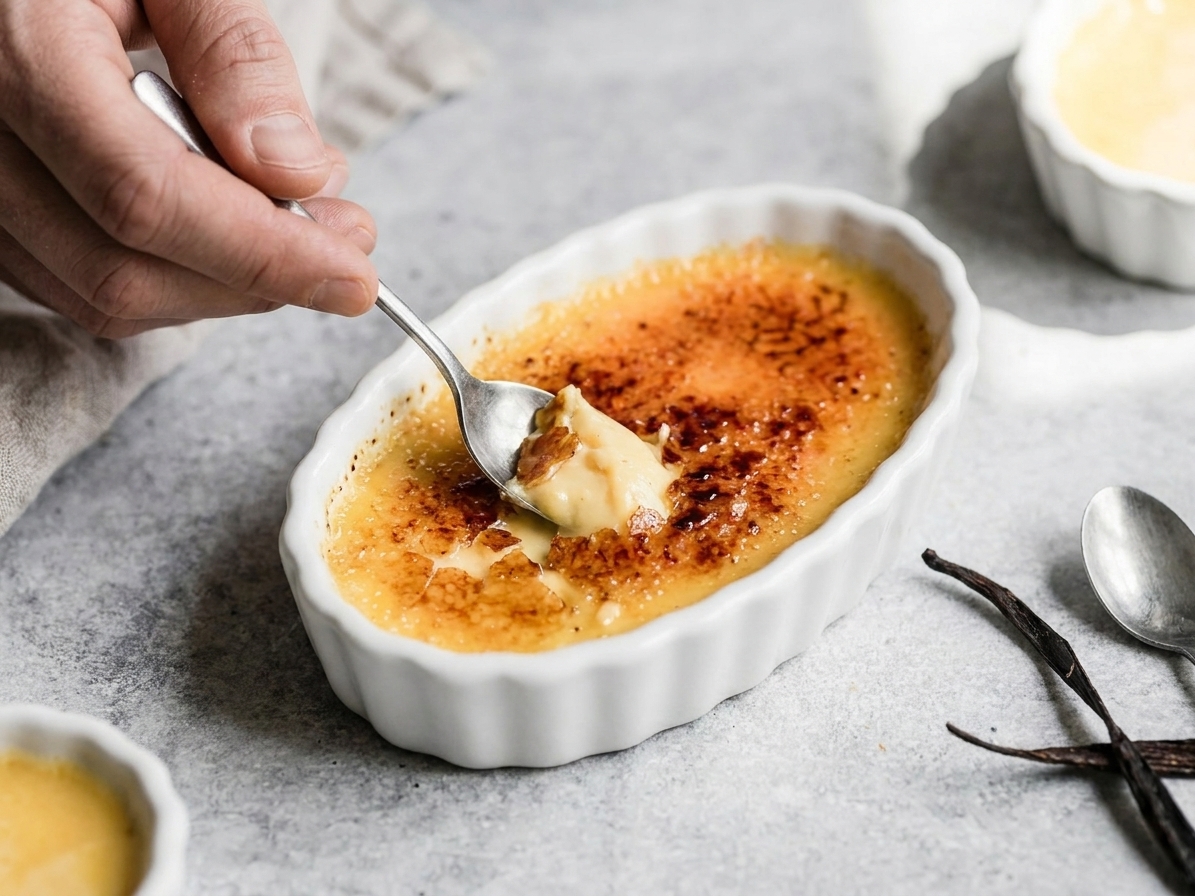
Classic crème brûlée in white ramekins on a rustic kitchen table, with a glossy caramelized sugar crust and a small spoon nearby

Crème brûlée is the kind of French dessert that feels fancy even when you make it in sweatpants. It is just baked vanilla custard plus a sugar top you torch into a thin, shattery crust. That first spoon tap is basically a kitchen sound effect for we did it.

This is the classic France-style version: egg yolks, cream, sugar, vanilla, gentle heat, and patience. No weird thickeners. No drama. Just a calm custard and a loud, crunchy finish.
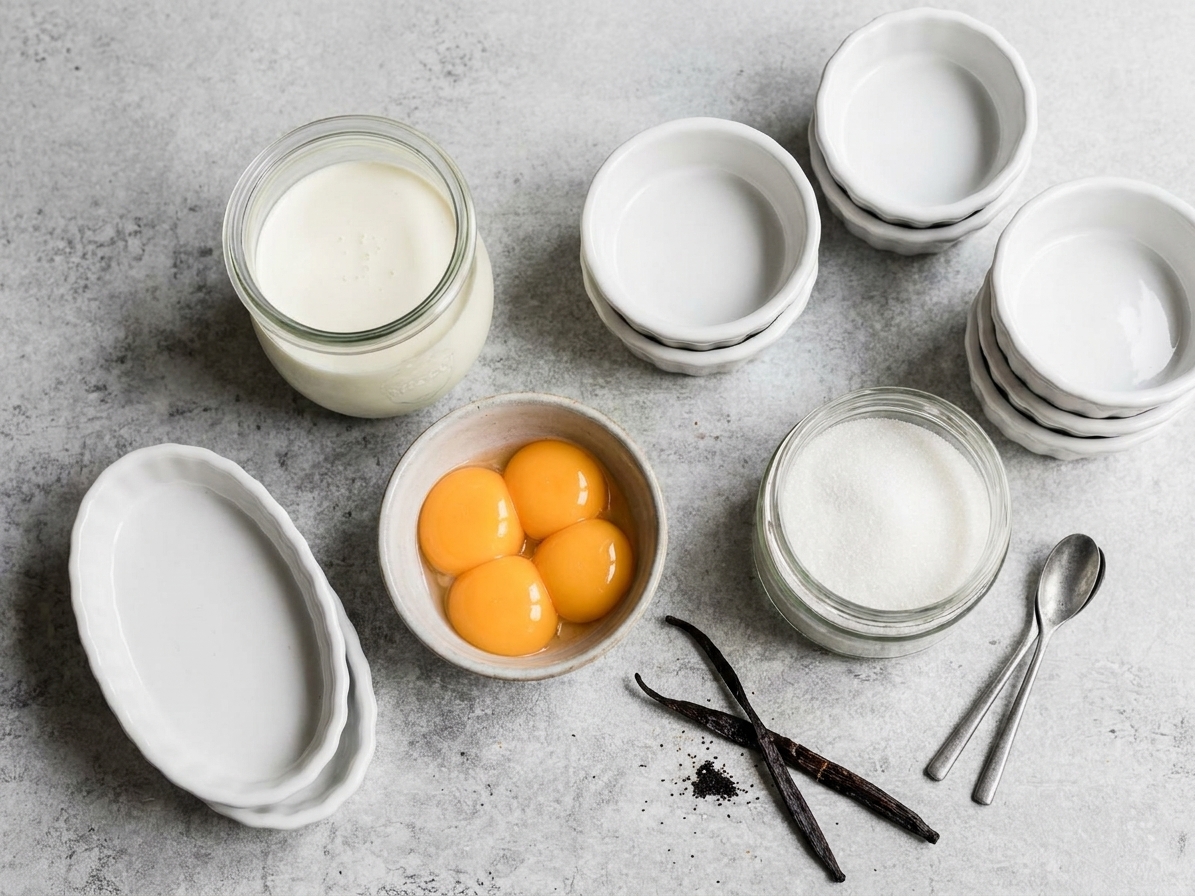
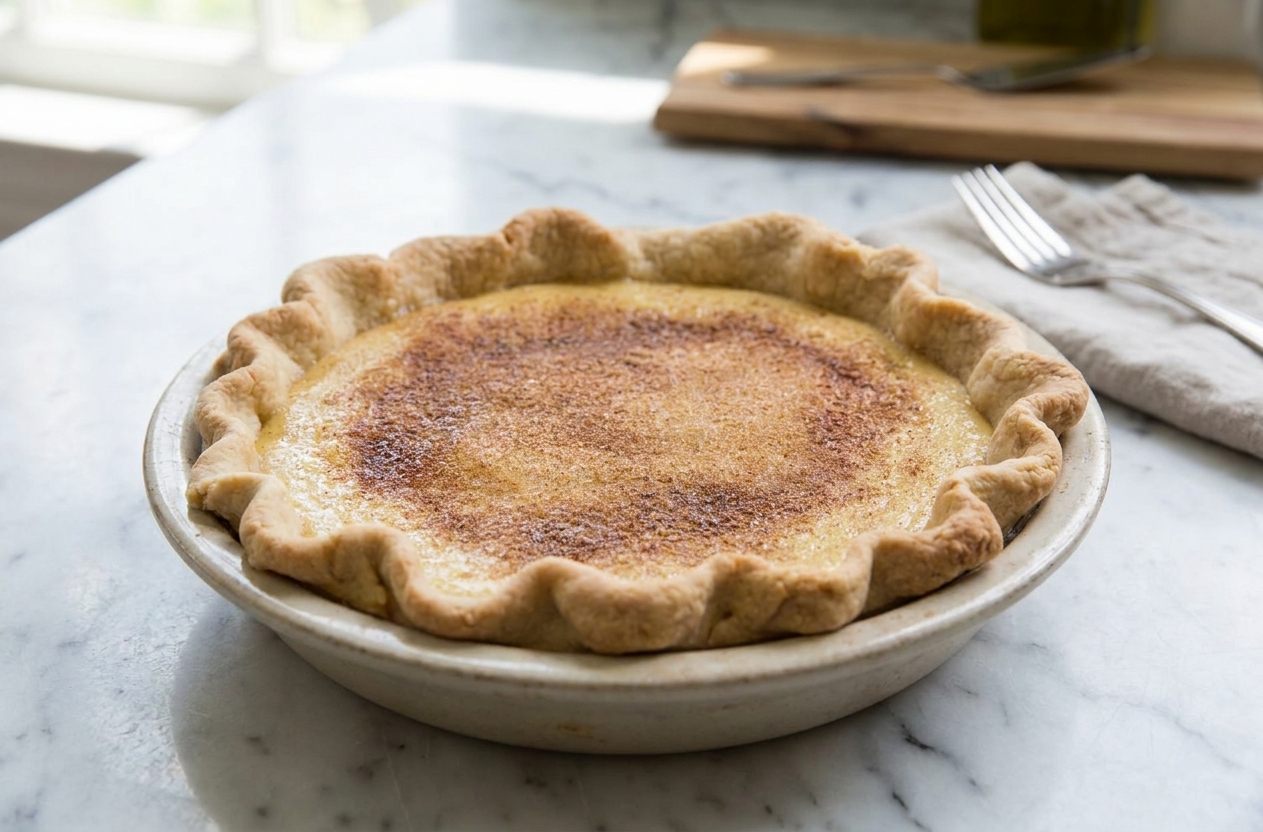
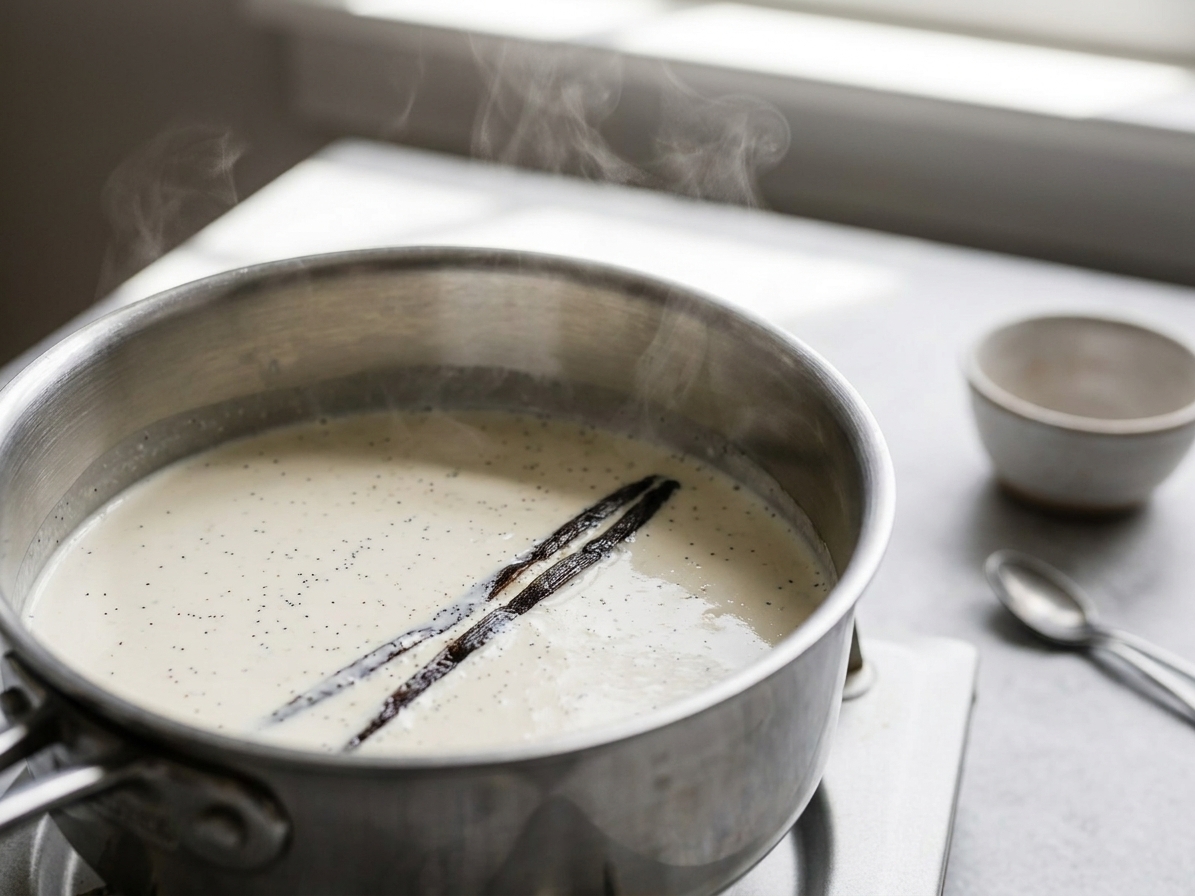
Ingredients for crème brûlée on a light kitchen counter: heavy cream, egg yolks, sugar, vanilla, and small ramekins

Why It Works

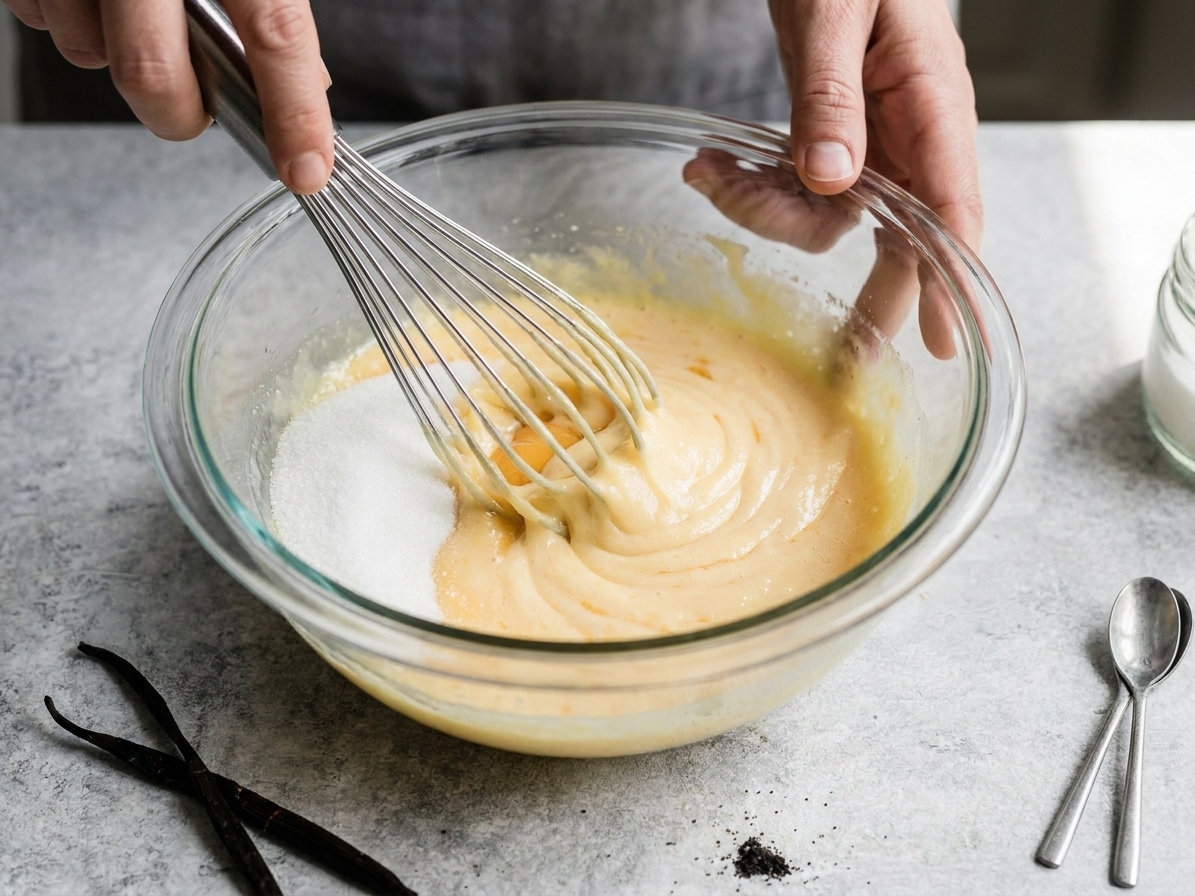
  • Silky custard, not scrambled eggs: We temper the yolks, bake in a water bath, and pull them when they still have a slight tremble.
  • Big vanilla flavor with minimal ingredients: Vanilla bean is great, but extract works beautifully. A tiny pinch of salt makes the sweetness pop.
  • That perfect crackly top: A thin, even layer of sugar plus a hot torch gives you a glassy crust instead of a chewy one.
  • Make-ahead friendly: Custards chill overnight. You torch the tops right before serving, like a magician with better snacks.

Pairs Well With

Storage Tips

Before torching: Cover ramekins tightly and refrigerate for up to 3 days (2 to 3 days is the sweet spot for best texture). This is the best way to store them.

After torching: The sugar top will soften in the fridge. Still tasty, just not crackly. If you have leftovers with torched tops, eat within 24 hours for best texture.

Freezing: Not ideal. Custard can turn a little grainy when thawed.

Common Questions

Do I need a kitchen torch?

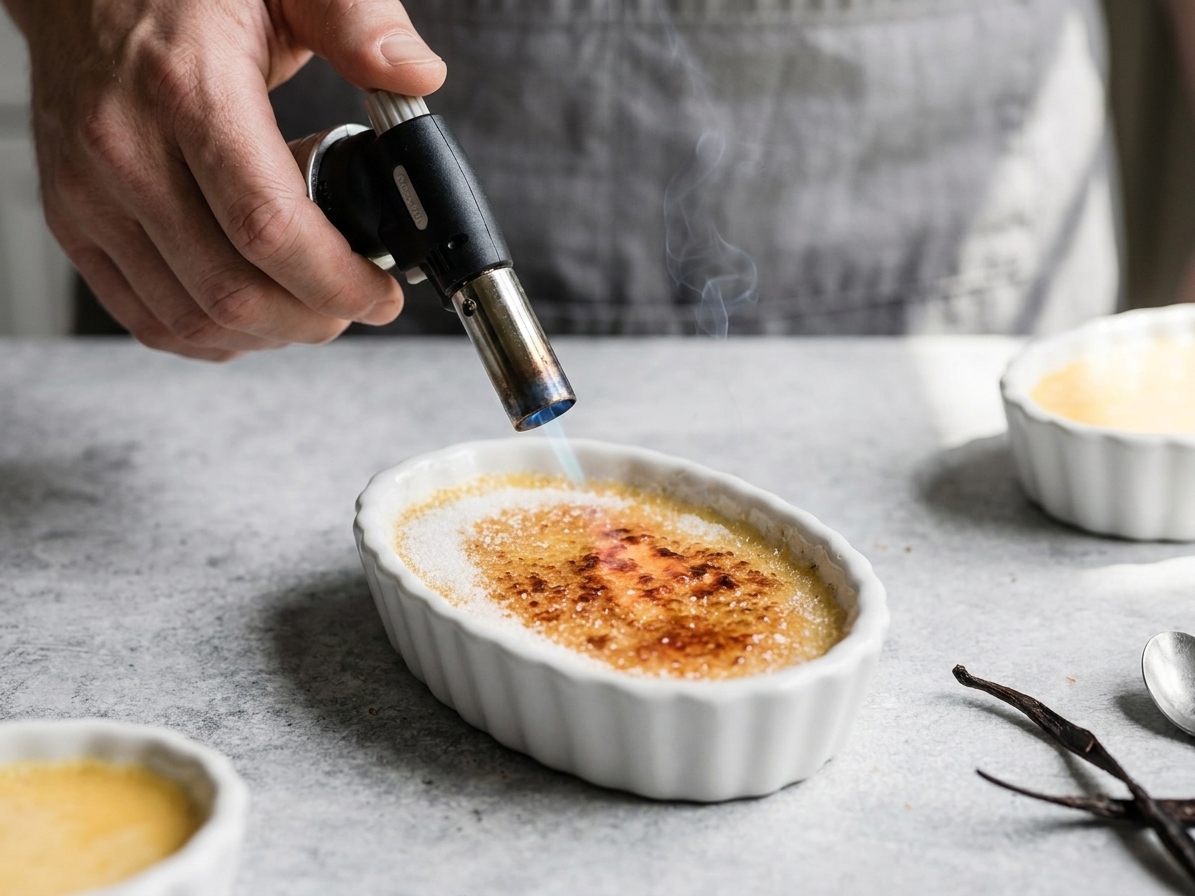
A torch is the easiest way to get a crisp, even brûlée top. If you do not have one, you can try the broiler, but it is riskier. Chill the custards very cold, sprinkle sugar, then broil very close to the heat for 1 to 3 minutes. Do not walk away. The line between caramelized and burnt is about ten seconds.

How do I know crème brûlée is done baking?

The edges should be set, and the center should tremble like a gentle jiggle when you nudge the ramekin. It should not look liquid or sloshy. If you like numbers, aim for about 170 to 175°F (77 to 80°C) in the center.

Why is my custard grainy?

Usually overcooking, either from too-hot cream, skipping tempering, or baking too long. Next time, keep the oven at a low temperature and pull them while the center still trembles.

What sugar is best for the top?

Regular granulated sugar is perfect. Superfine also works. Avoid powdered sugar because it burns fast and can taste bitter.

Can I make it without vanilla bean?

Absolutely. Use a good vanilla extract. You will still get a classic French dessert vibe, especially once that caramel top hits.

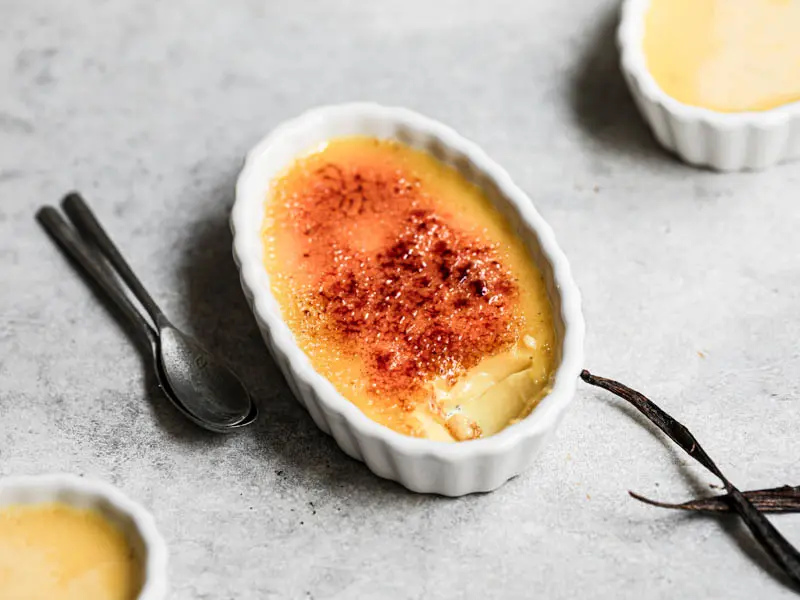
A hand using a kitchen torch to caramelize sugar on top of a chilled crème brûlée in a ramekin on a kitchen counter

The first time I made crème brûlée, I treated it like a flex and tried to rush it. Bad plan. Custard does not respond to bullying. Now I make it like a friend who wants you to win: low oven, gentle whisking, strain it, and let the fridge do the heavy lifting. Then right before serving, I torch the tops and suddenly everyone is quiet in that respectful way people get when dessert is doing the most.