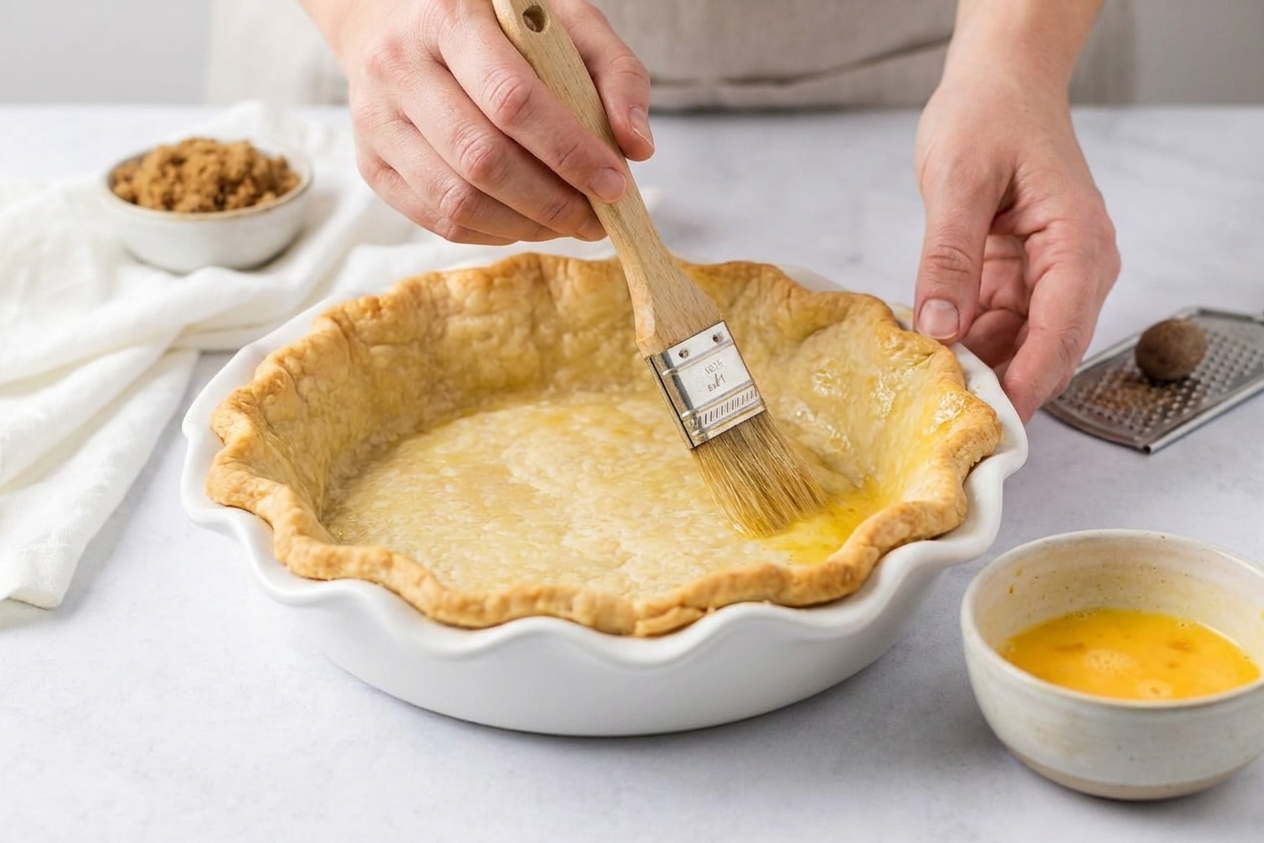
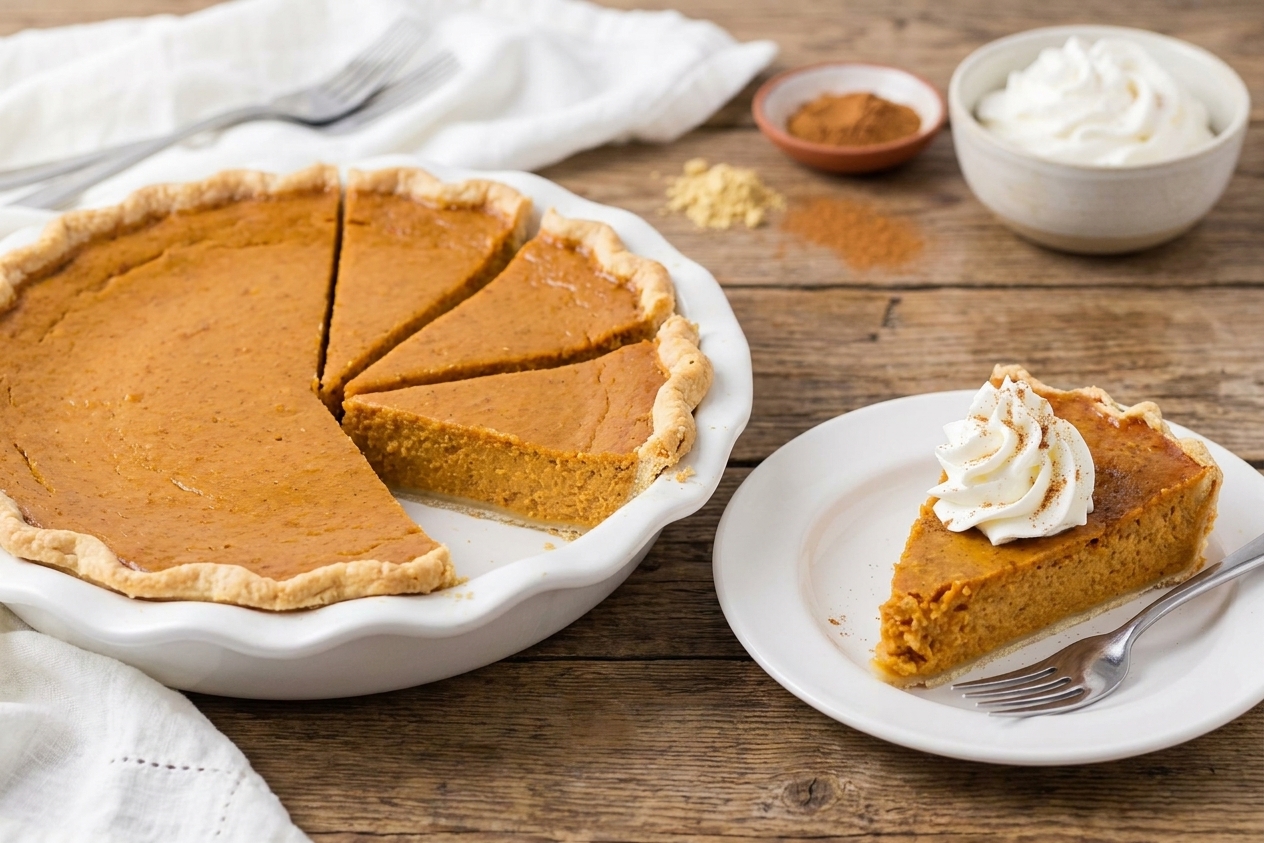
Do I have to blind bake the crust?
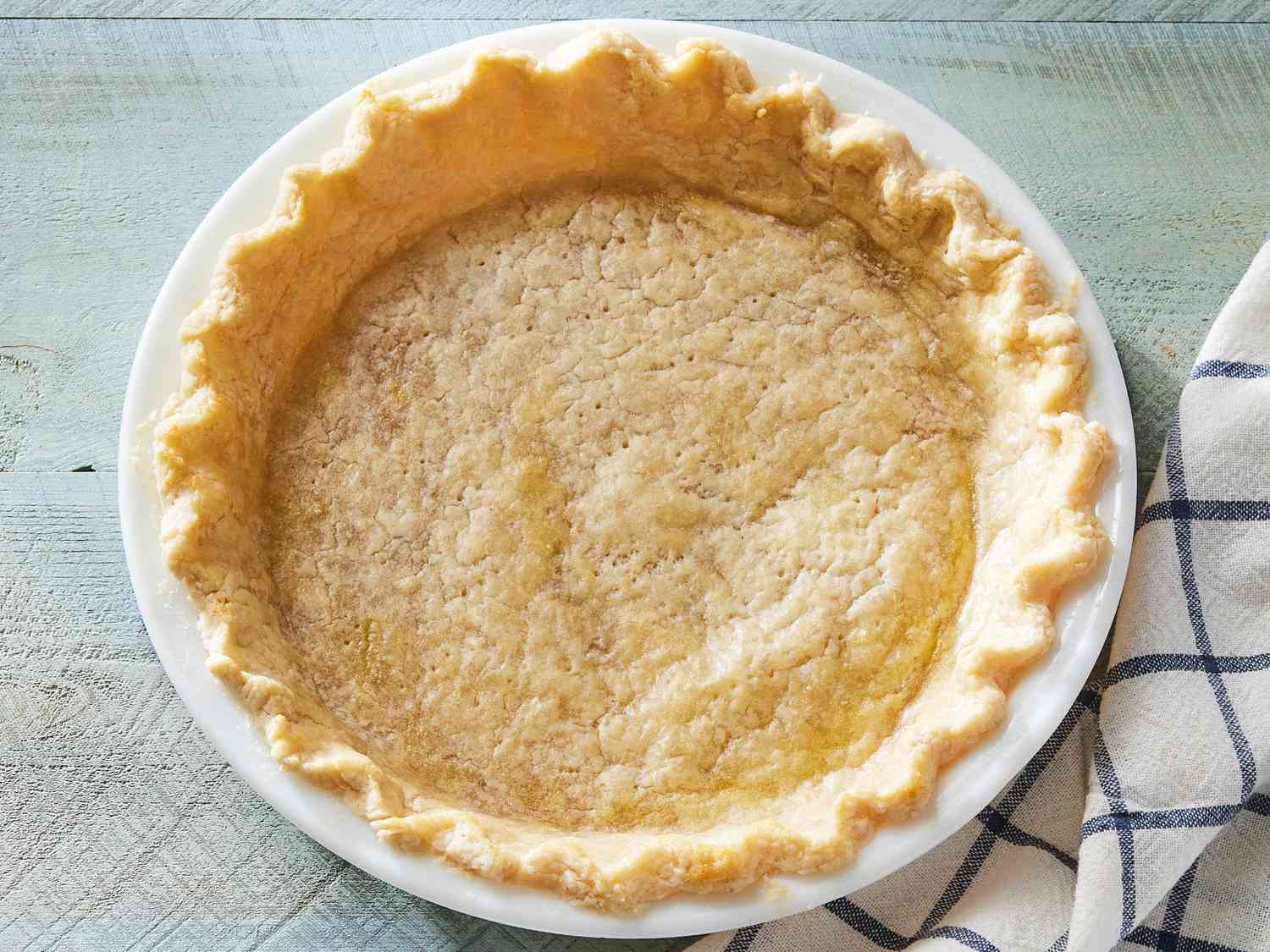
You do not have to, but you will like the results if you do. A quick par-bake keeps the bottom crust flaky instead of soft. If you skip it, expect a slightly softer base.
Should I dock the crust before using pie weights?
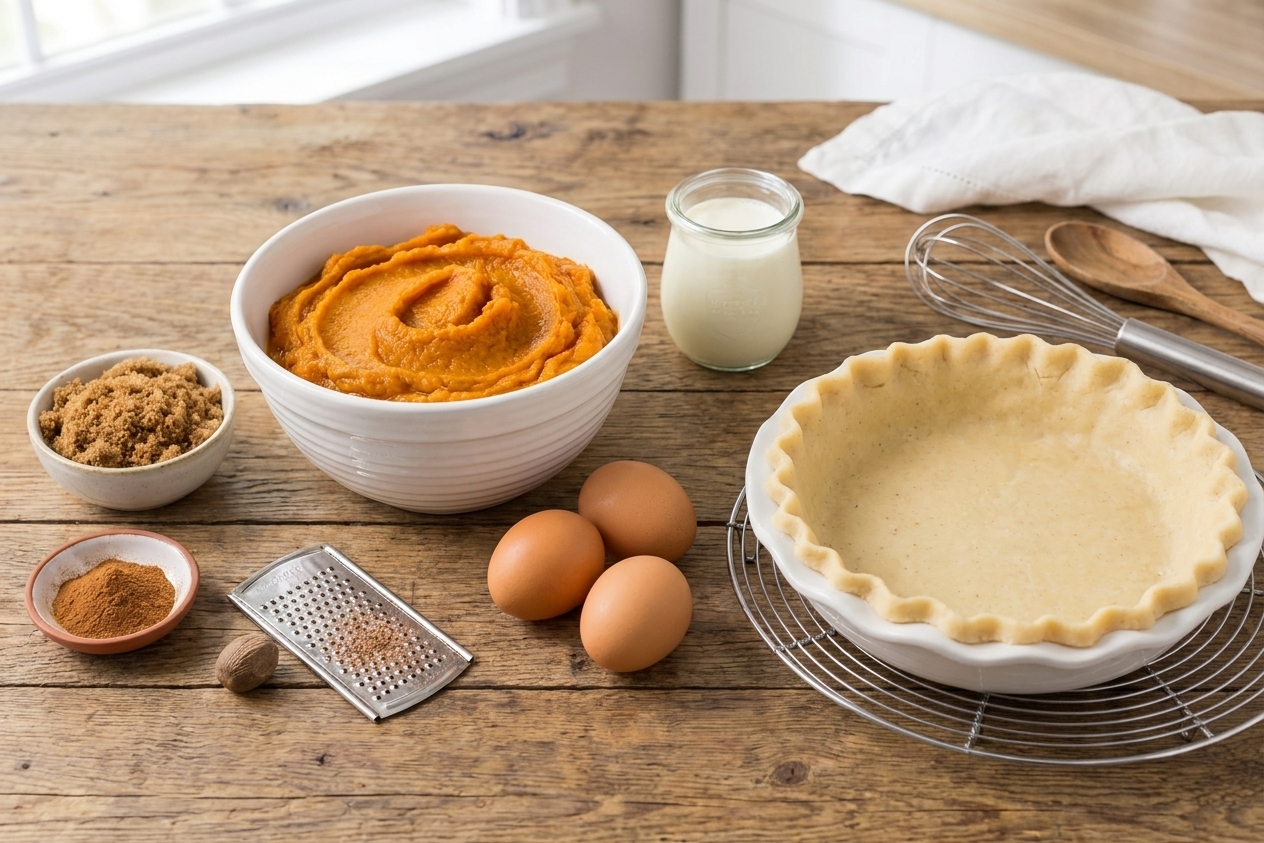
Yes, it helps. If your crust is homemade (or very puffy), prick the bottom a few times with a fork before adding parchment and weights. It is a small step that can prevent bubbles.
Can I use pumpkin pie filling instead of pumpkin puree?
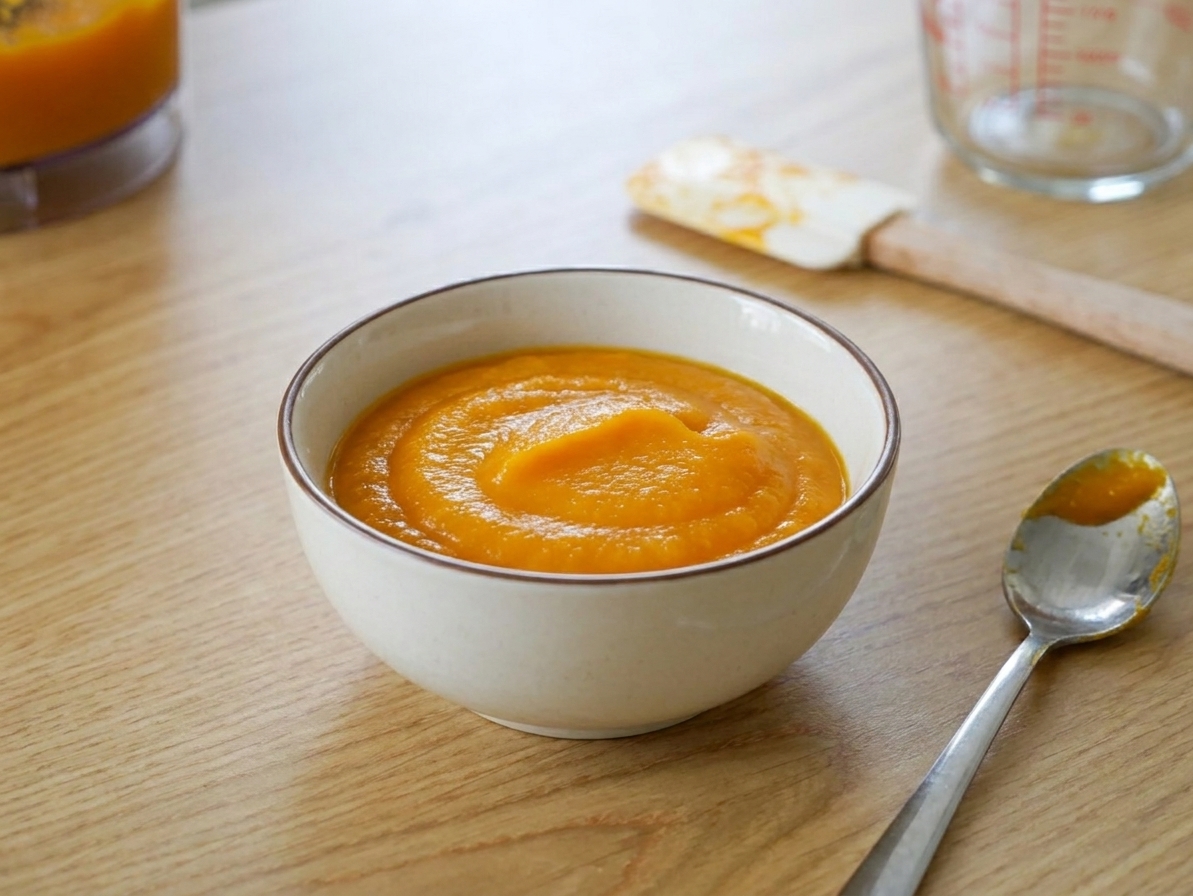
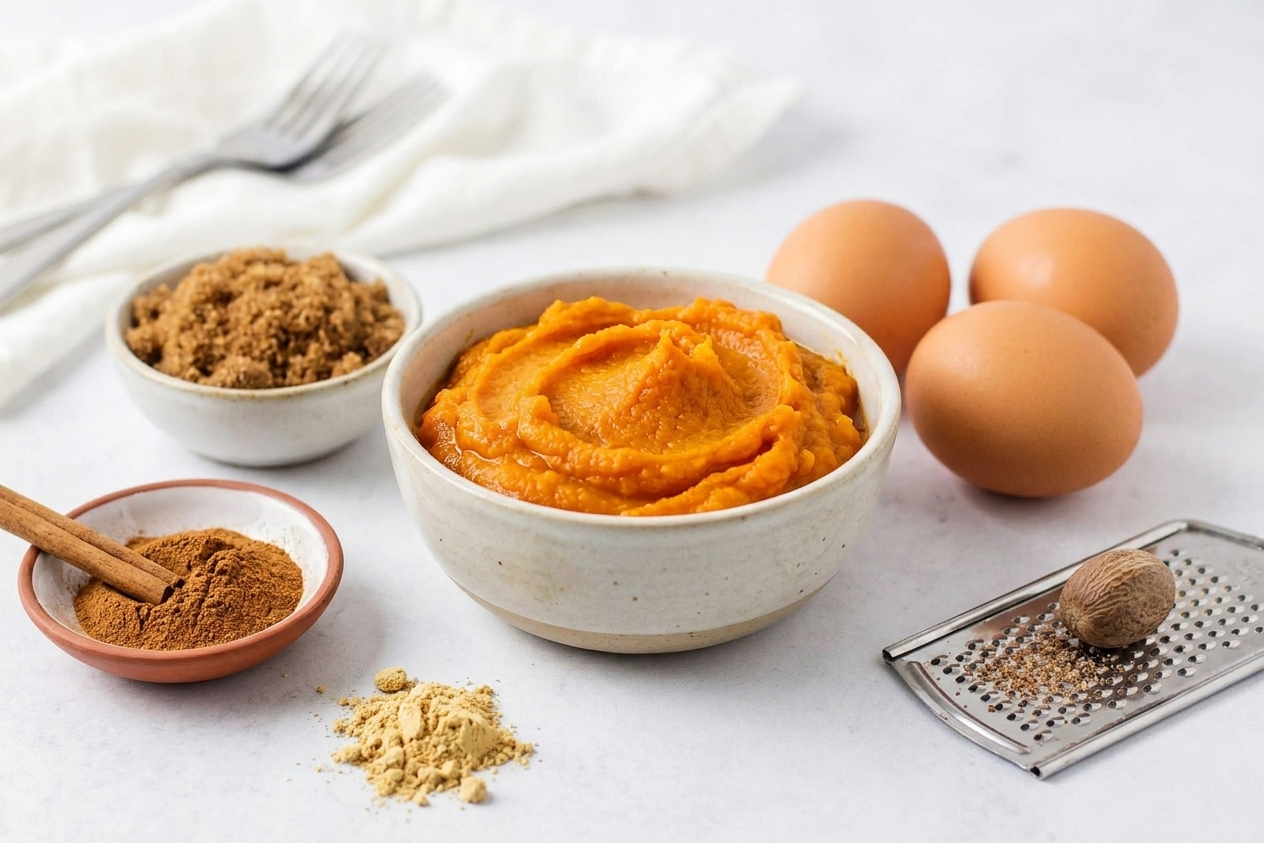
I recommend 100% pumpkin puree here (unsweetened, not pre-spiced). Pumpkin pie filling already has sugar and spices, which can throw off the sweetness and the set of the custard. If all you have is pie filling, reduce the sugar and spices, but the texture can still vary by brand.
Also, quick reassurance: many cans labeled “pumpkin” are actually a mix of winter squash. That is normal and it still bakes up delicious.
Why did my pumpkin pie crack?
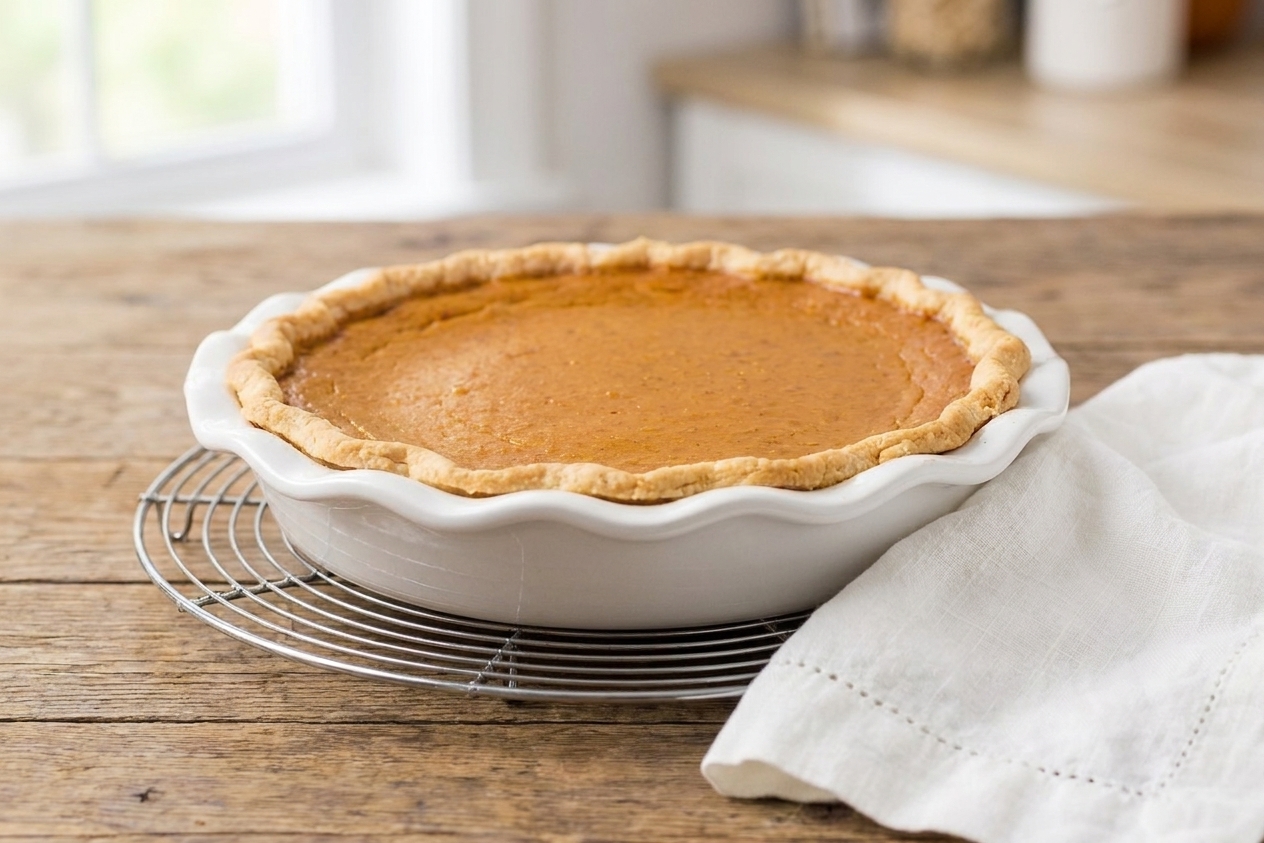
Cracks usually mean the custard went a bit too hot. Pull the pie when the center still has a gentle jiggle (like set Jell-O). It will finish setting as it cools. Also avoid over-whisking, which can whip in extra air and encourage cracking.
How do I know it is done?
The edges should look set and slightly puffed, and the center 2 to 3 inches should wobble softly when you nudge the pan. If you have an instant-read thermometer, aim for about 170 to 175°F in the center for a smooth custard that does not overcook.
Can I make this ahead?
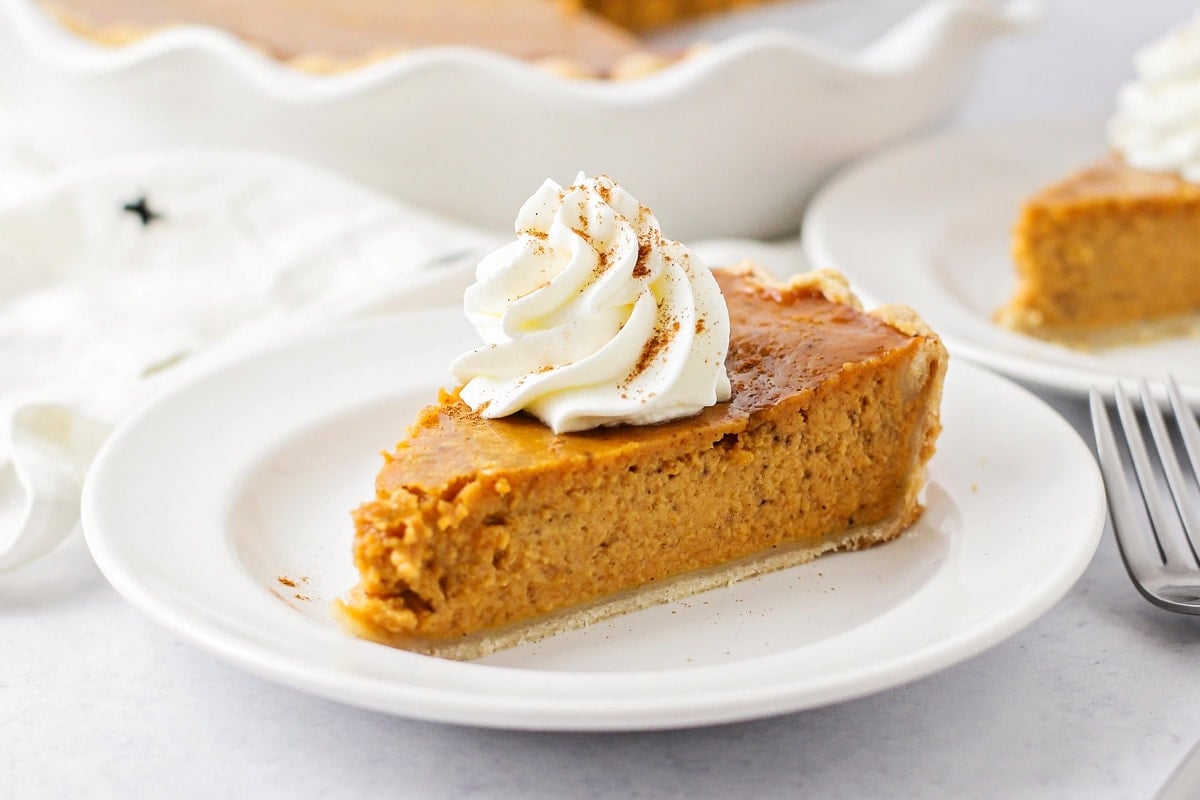
Yes, and you should. Pumpkin pie is best after a full chill. Make it 1 day ahead, refrigerate, then top with whipped cream right before serving.
How long can pumpkin pie sit out?
Because it is an egg-and-dairy custard, do not leave pumpkin pie at room temperature for more than about 2 hours (less if it is very warm in your kitchen). After that, cover and refrigerate.