Do I have to boil lasagna noodles?
Not if you use no-boil noodles. If you use regular noodles, you can boil them until just flexible (a little under al dente), or do a shortcut: soak them in a bowl of very hot water for 20 to 30 minutes while you make the sauce. (This trick can vary by brand and thickness, so check at 20 minutes and swap in fresh hot water if it cools.) Either way, avoid fully cooking them or they can turn mushy after baking.
Why is my lasagna watery?
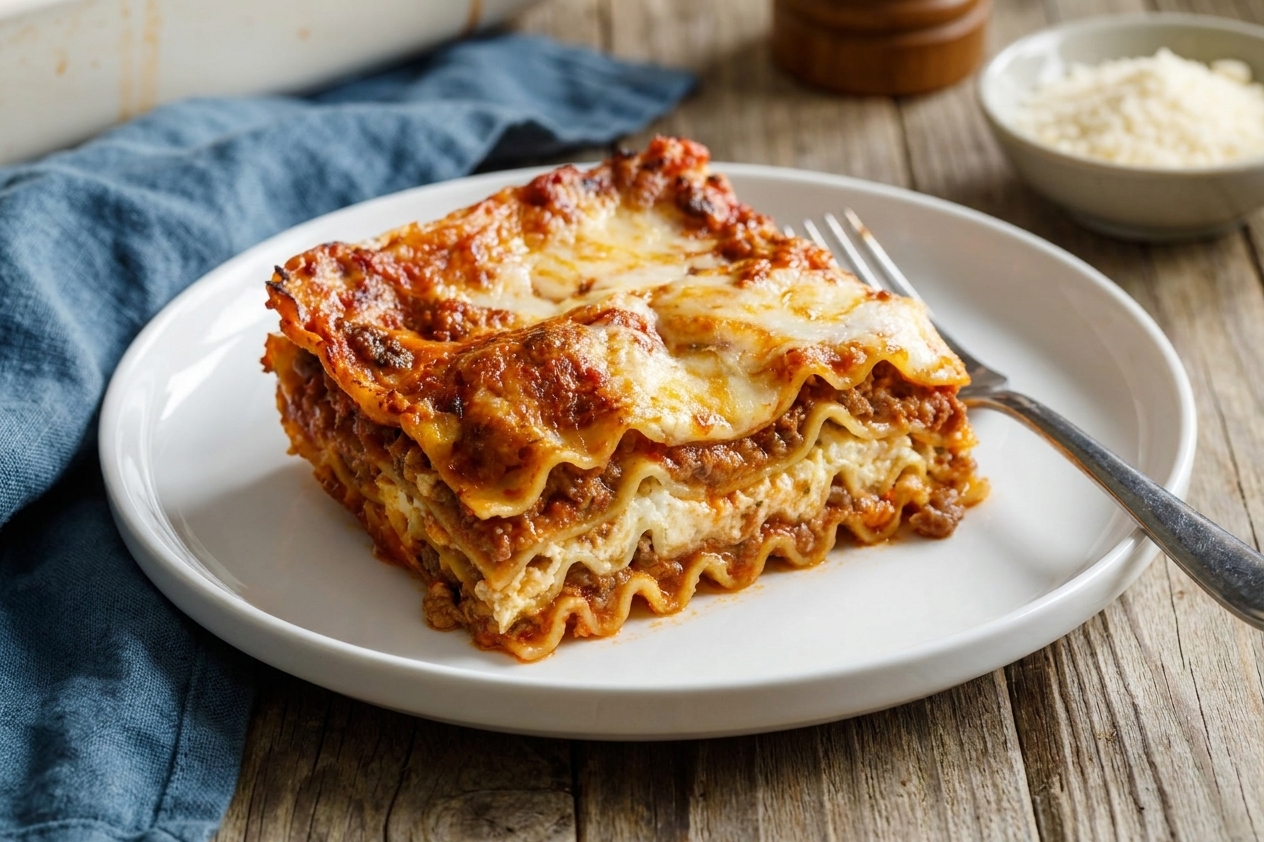
Usually it is one of three things: the sauce was too thin, the ricotta mixture had too much moisture, or the lasagna was sliced too soon. Simmer sauce until thick enough to coat a spoon, drain any excess grease, use whole milk ricotta, and rest 20 to 30 minutes before slicing.
Can I make lasagna ahead?
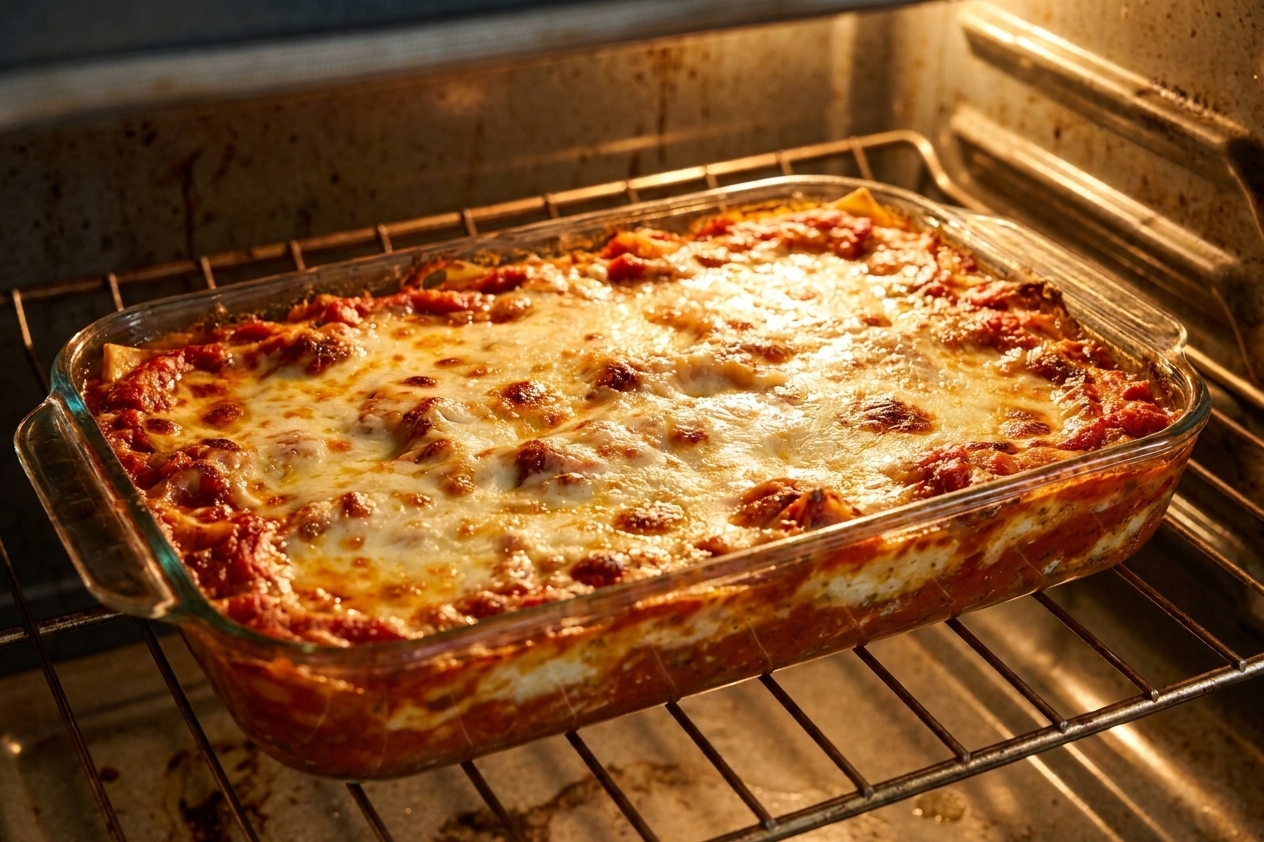
Yes, and it is honestly a power move. Assemble up to 24 hours ahead, cover, and refrigerate. Bake straight from the fridge, keeping it covered longer and adding about 10 to 25 minutes, then uncover to brown. It is done when the center is hot and bubbling, or when an instant-read thermometer in the middle reads 165°F.
What is the best cheese blend?
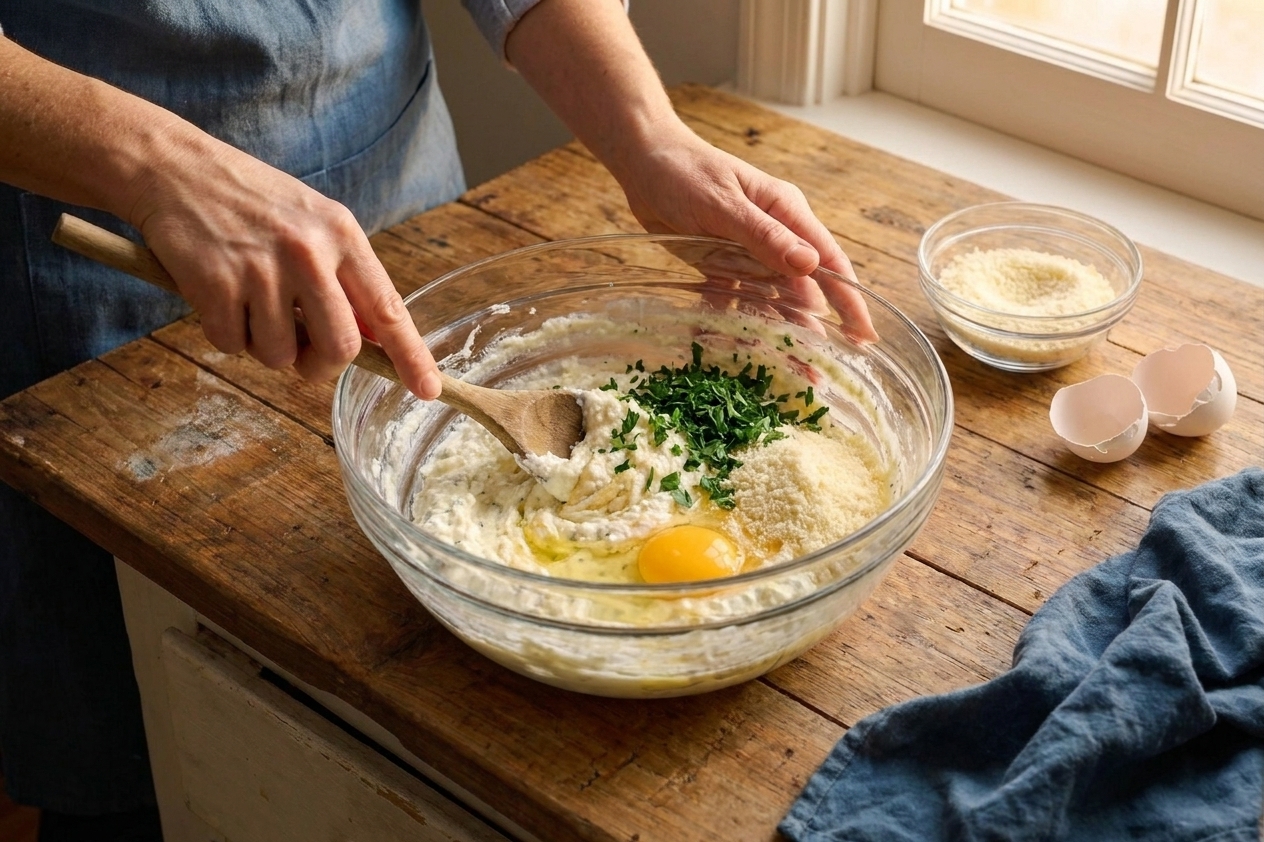
Whole milk mozzarella for melt, Parmesan for salty bite, and ricotta for creamy body. If you want extra stretch, mix in a little provolone. If you want extra richness, add a small handful of shredded fontina.
How do I keep the top from sticking to the foil?
Lightly spray the underside of the foil with oil, or tent the foil so it is not touching the cheese.
Any tips for no-boil noodles?
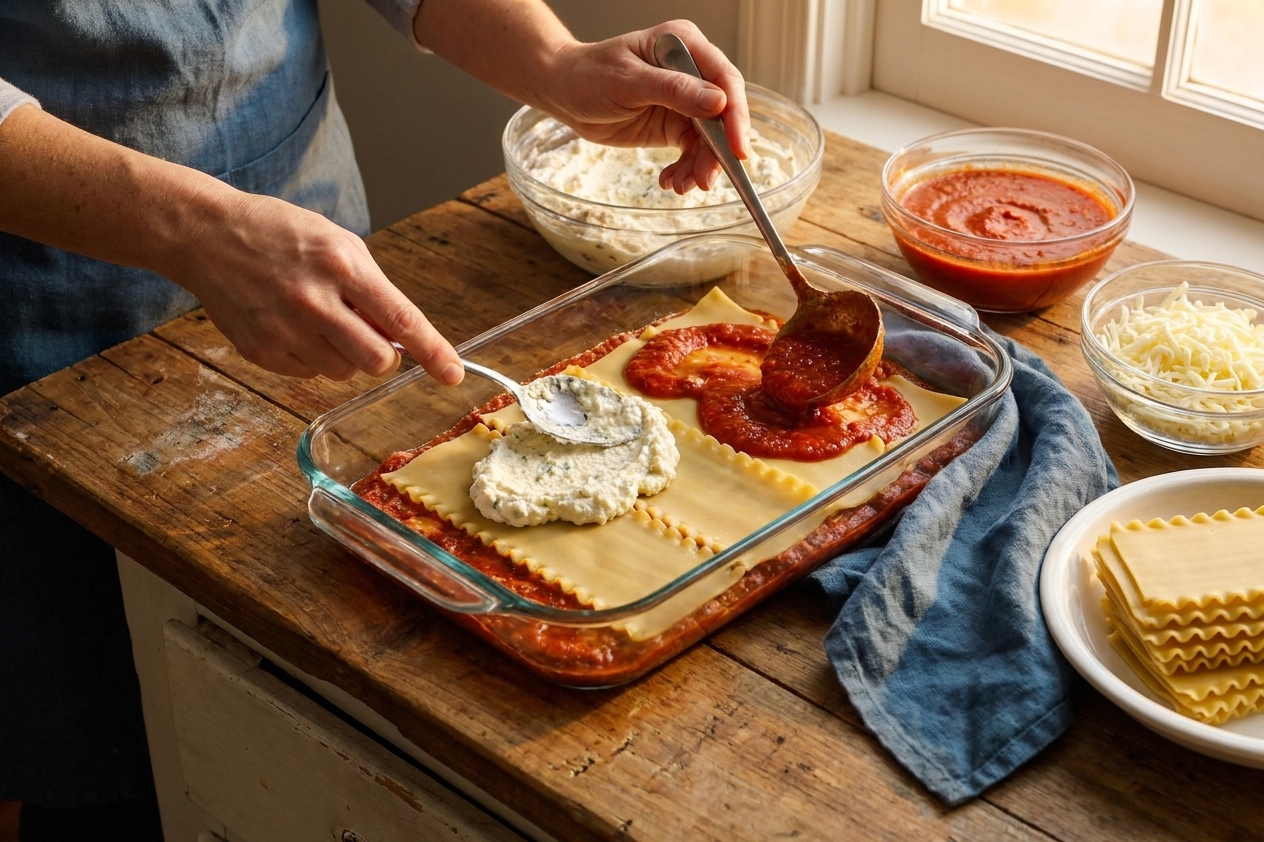
Yes: no-boil noodles absorb more liquid as they bake, so do not reduce the sauce into a super-thick paste. Keep it saucy, and make sure every noodle layer is fully covered with sauce so you do not end up with dry edges.