Mom's Best Recipes
Recipe

Classic Pastrami Sandwich

Hot, peppery pastrami piled on toasted rye with melty Swiss and a sharp mustard bite, deli vibes without the line.

Author By Matt Campbell
4.8
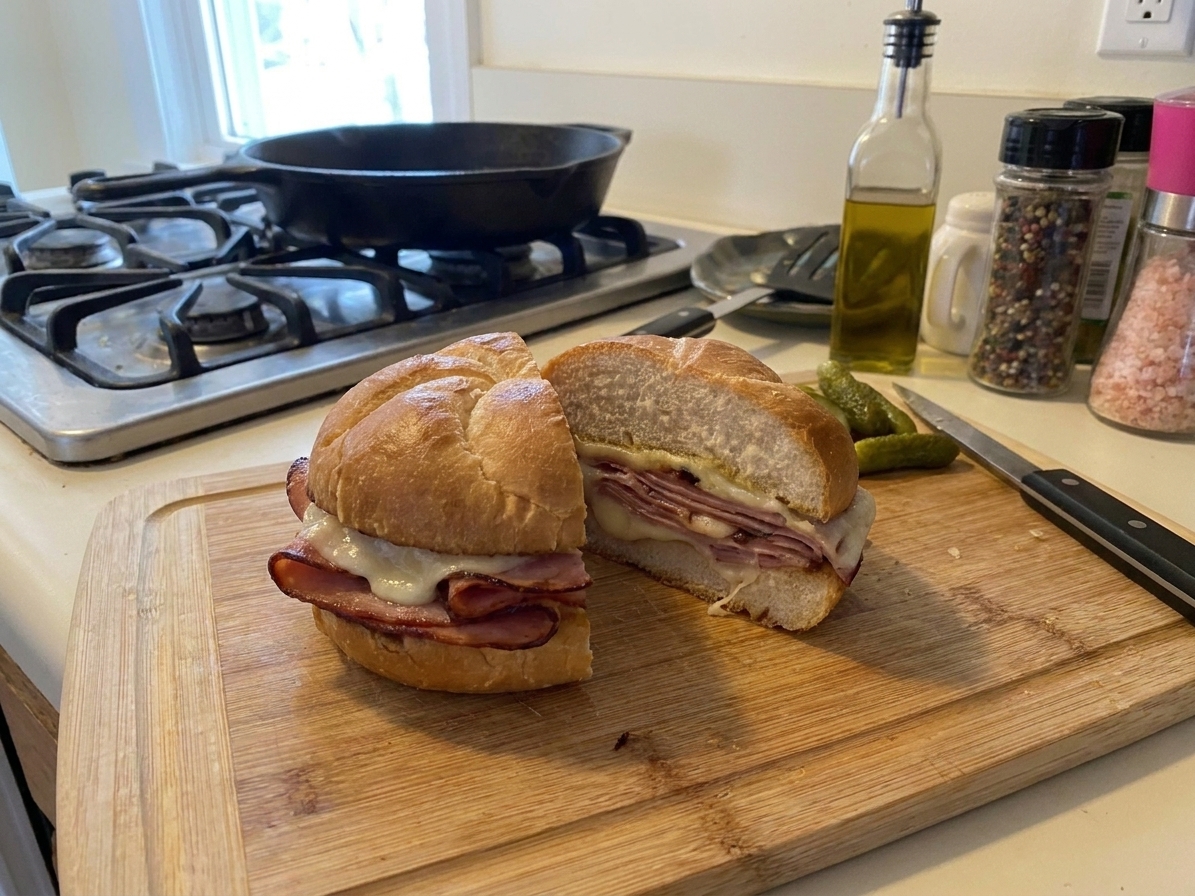
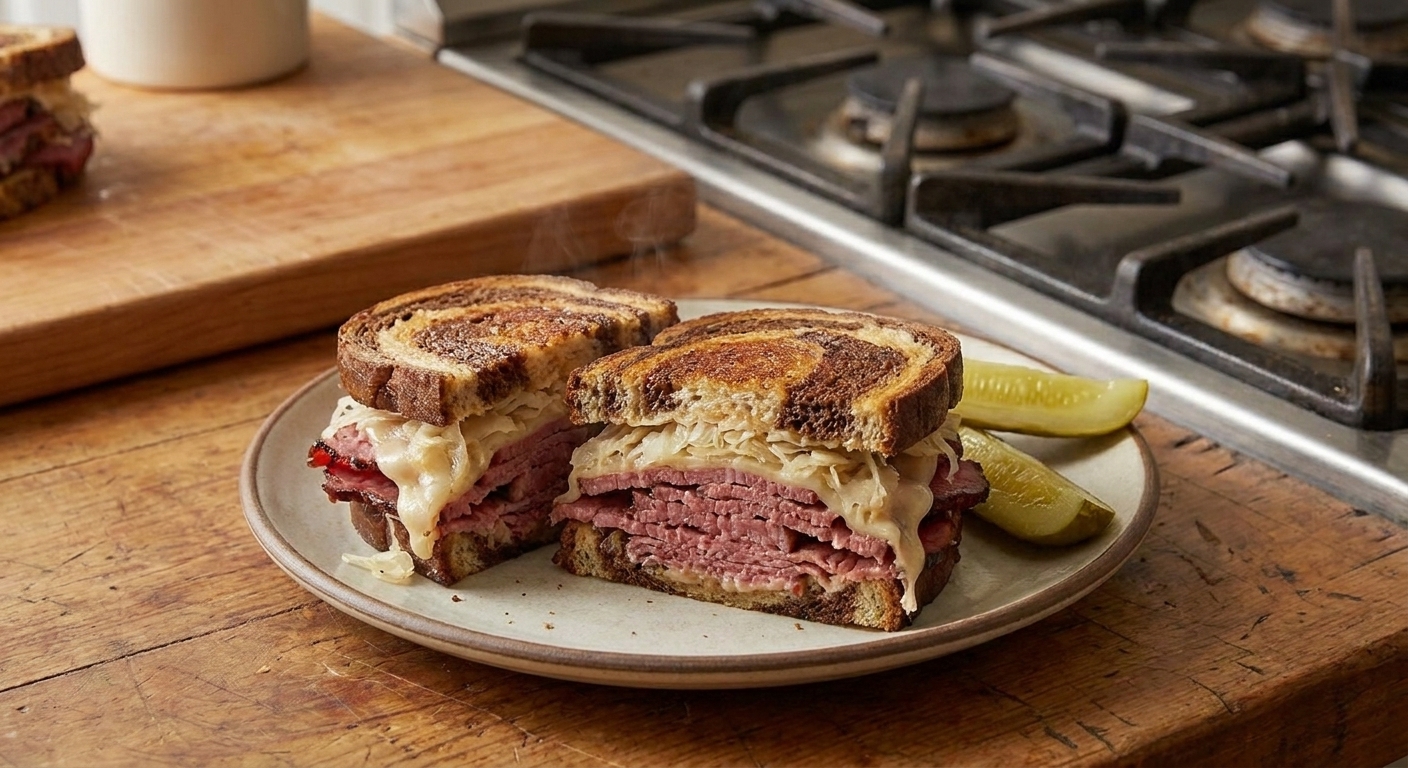
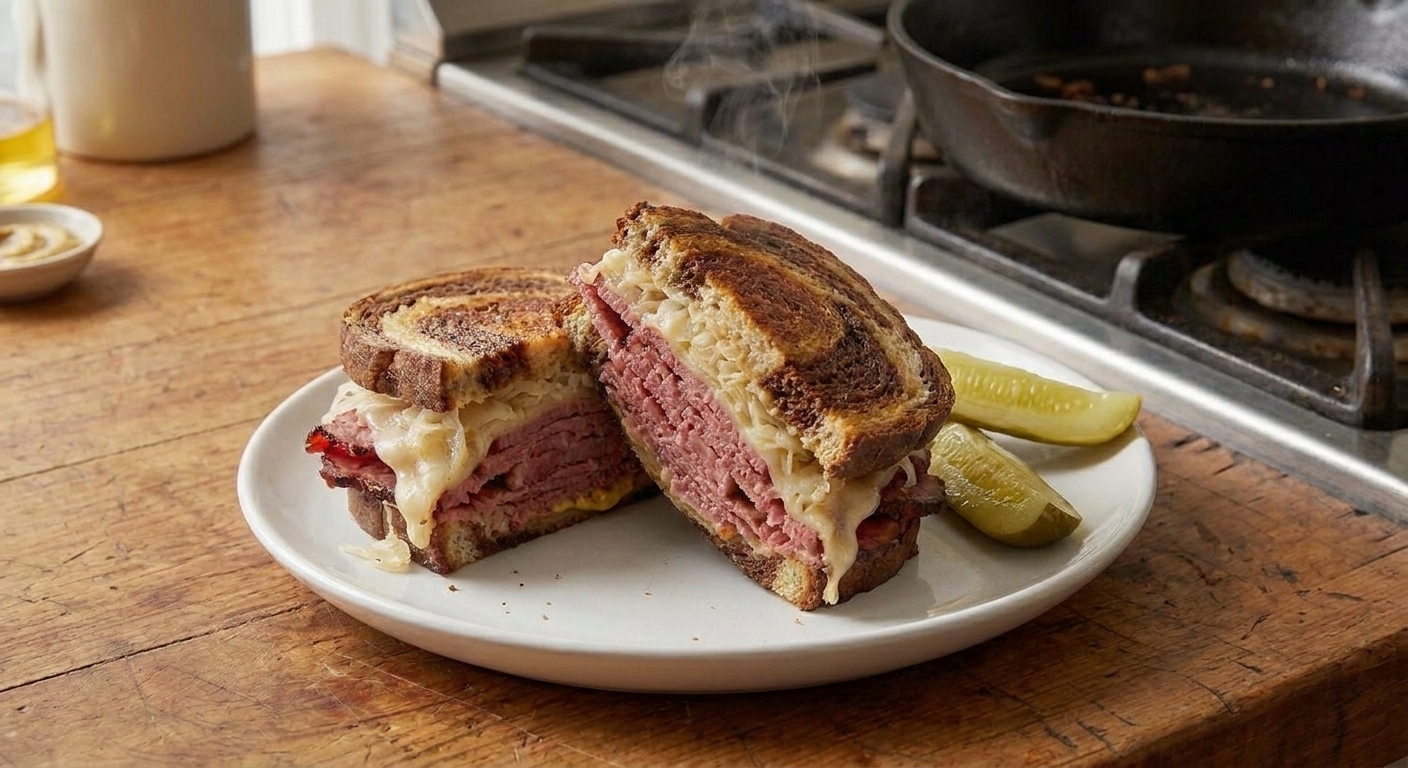
A stacked pastrami sandwich on toasted rye with melted Swiss, mustard, and pickle spears on a simple white plate at a kitchen table

If you have ever bitten into a proper pastrami sandwich and immediately started planning your next one, welcome. This is that sandwich: warm, peppery pastrami with crisped edges, Swiss that actually melts (not just sits there politely), and mustard that cuts through the richness like it has a job to do.

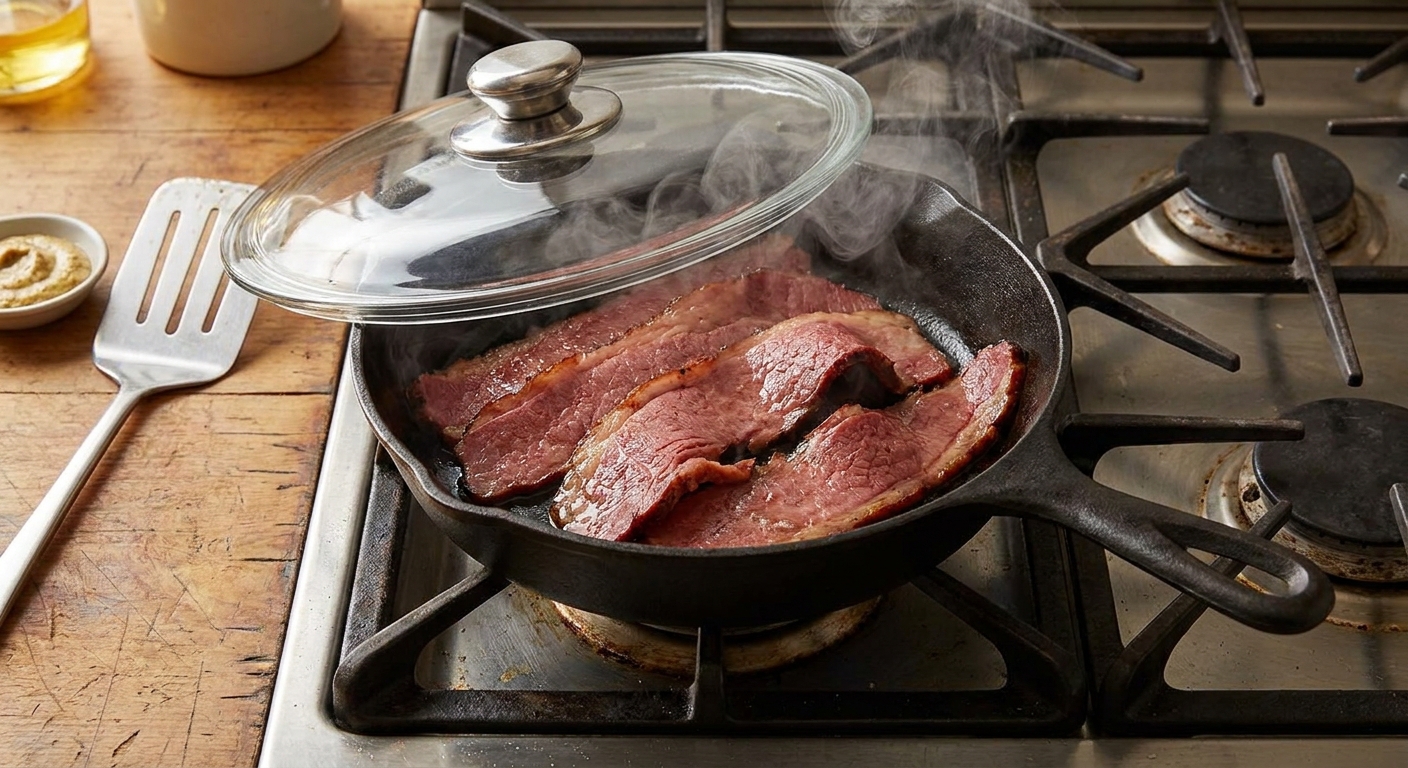
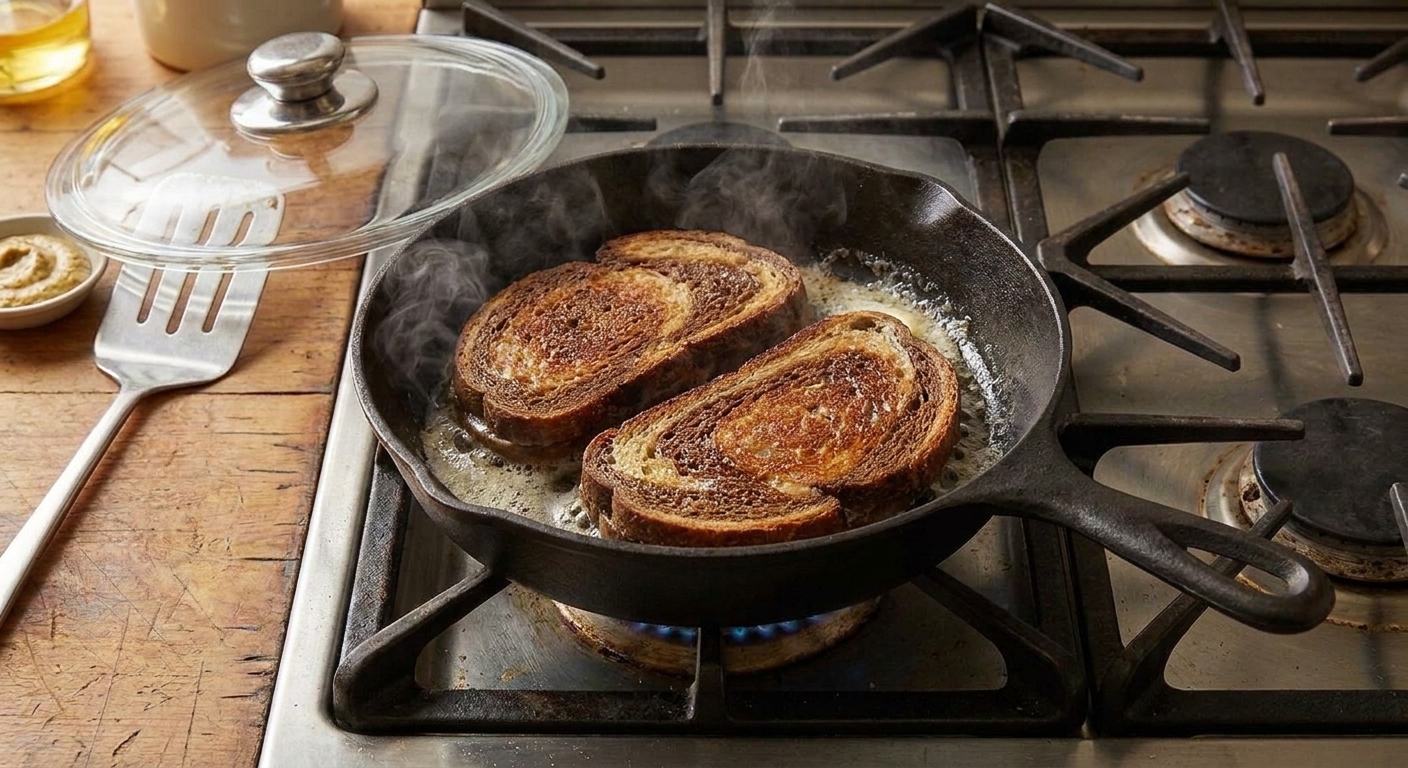
The trick is not fancy ingredients. It is heat management. Warm the pastrami gently with a splash of water so it stays juicy, then toast the rye so the sandwich has structure. From there, it is just stacking with confidence and eating over the sink if you have to. No judgment. Some sandwiches demand it.
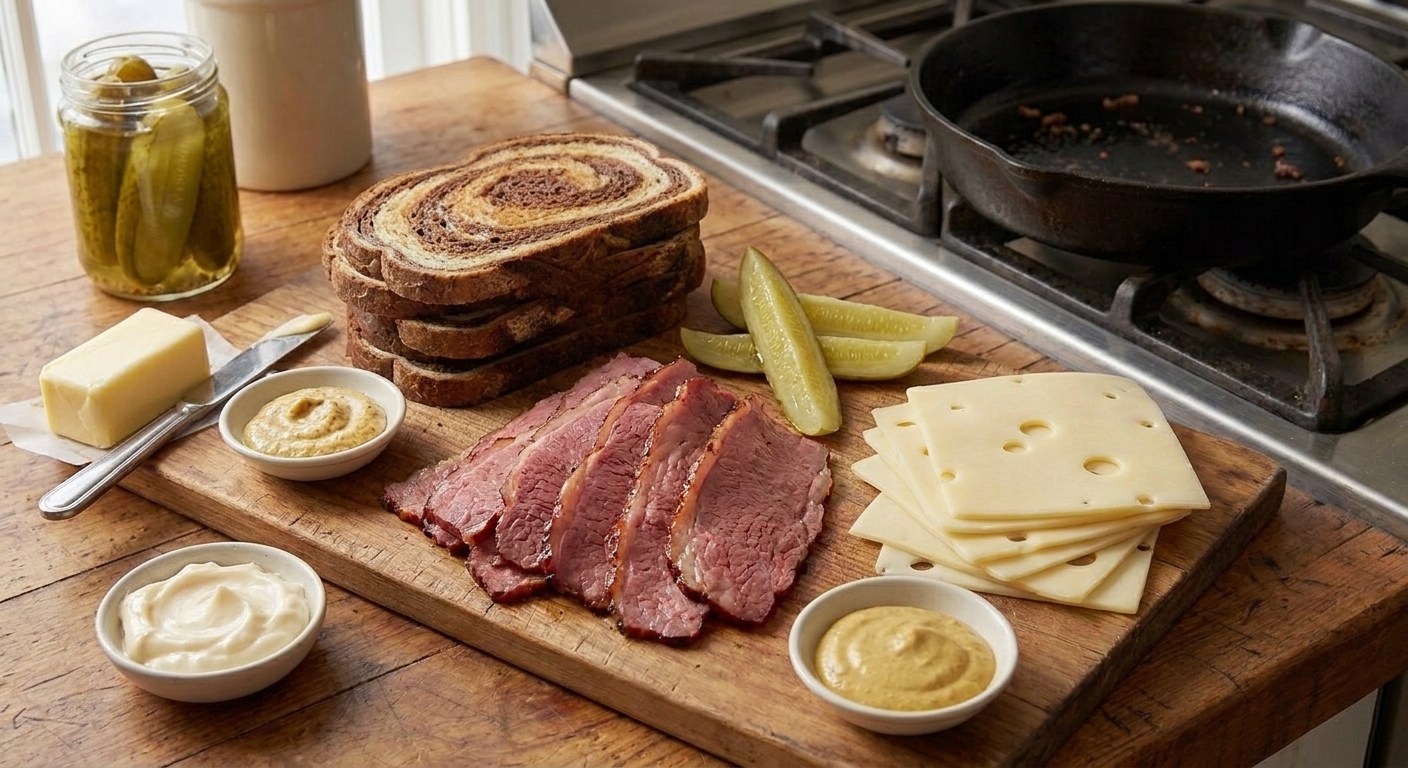
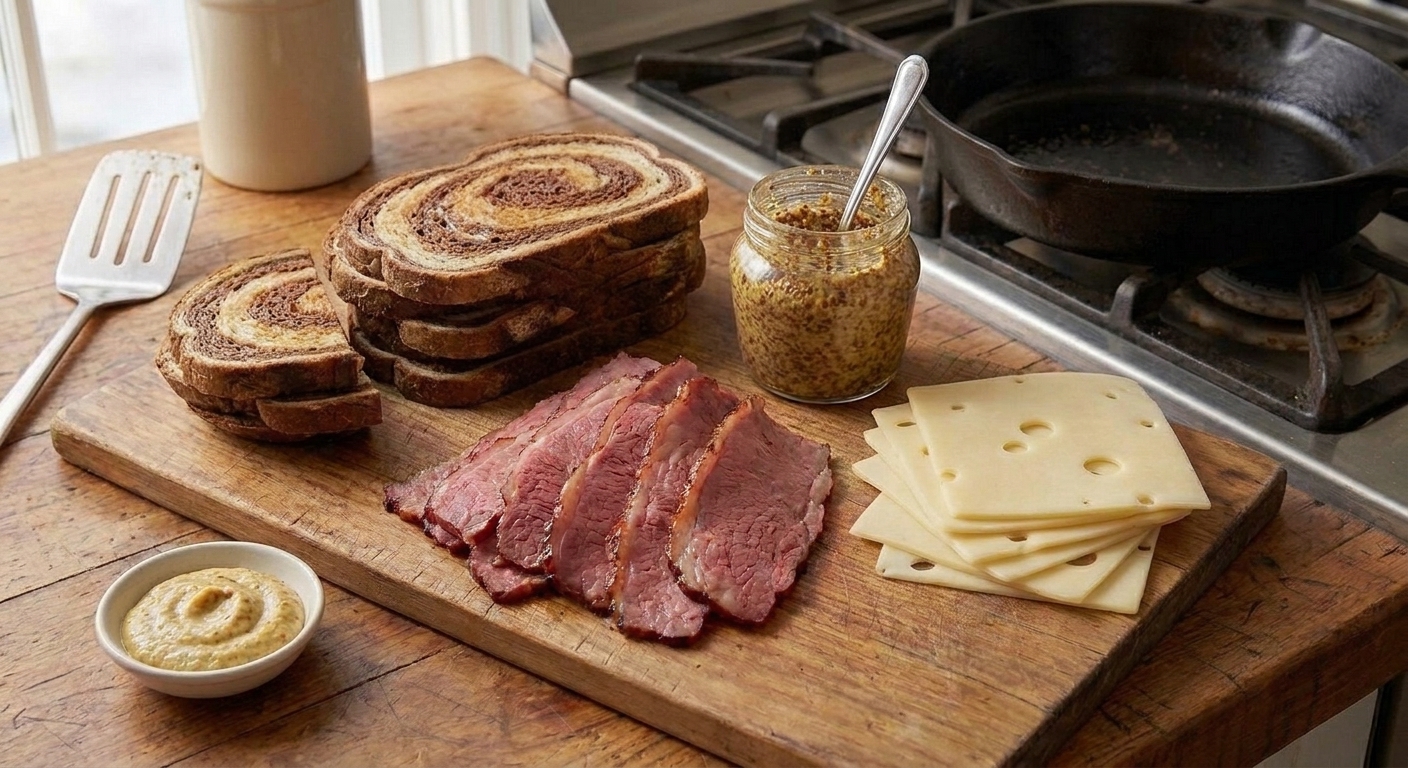
Sliced pastrami, rye bread, Swiss cheese, mustard, mayo, butter, and dill pickles arranged on a bright kitchen counter

Why It Works

  • Juicy, tender pastrami: A quick steam in the skillet warms the meat through without drying it out.
  • Toasty, not soggy: We toast the rye in butter (or mayo) so it stays crisp even with mustard.
  • Melty cheese without overcooking: Swiss goes on while the pastrami is hot so it melts fast, no rubbery edges.
  • Deli-level bite with pantry staples: Mustard and pickles do a lot of heavy lifting, in the best way.

Pairs Well With

Storage Tips

Best move: Store components separately so the bread stays crisp.

  • Pastrami: Cool, then refrigerate in an airtight container for up to 4 days. Rewarm in a skillet with a splash of water and a lid, or microwave covered with a damp paper towel.
  • Bread: Keep at room temp, tightly wrapped. If it is already toasted, it will soften. Re-toast in a dry skillet to revive.
  • Assembled sandwich: If you must, wrap tightly and refrigerate up to 24 hours. Reheat in a skillet over medium-low, covered, flipping once. Expect the bread to soften a bit.
  • Freezing: Freeze pastrami only (not the assembled sandwich) for up to 2 months. Thaw overnight in the fridge.

Common Questions

What is the best bread for a pastrami sandwich?

Classic is rye, especially seeded rye for that extra crunch and aroma. If rye is not your thing, go for sourdough or a sturdy deli roll. The key is bread that can handle heat and moisture.

Should I steam pastrami before making a sandwich?

Yes, if you want that deli tenderness. You do not need a steamer. A skillet + a splash of water + a lid gives you the same effect in about 2 minutes.

What cheese works best with pastrami?

Swiss is the classic, and it melts beautifully. Provolone is a great runner-up. If you want something sharper, try aged cheddar, just know it changes the vibe.

What is the difference between pastrami and corned beef?

Both are cured, but pastrami is typically smoked and coated with a bold peppery spice crust. Corned beef is brined and usually not smoked, so it tastes more straightforward and beefy.

Can I make this into a hot pressed sandwich?

Absolutely. Build the sandwich, butter the outside, and press in a skillet (or panini press) over medium heat until the cheese melts and the bread is crisp, 3 to 5 minutes total depending on thickness.

I love restaurant food, but I also love the little at-home victories that feel like you cheated the system. A pastrami sandwich is one of those. The first time I tried making one at home, I did the classic mistake: cold pastrami straight from the fridge, cheese that never melted, bread that went soft in about 30 seconds. Tragic.

Now I do it the way I wish someone had told me from the start: warm the pastrami with a splash of water, toast the rye like you mean it, then stack it while everything is hot. It is messy, loud, and perfect. Basically the energy I want in my future restaurant, just scaled down to one plate.

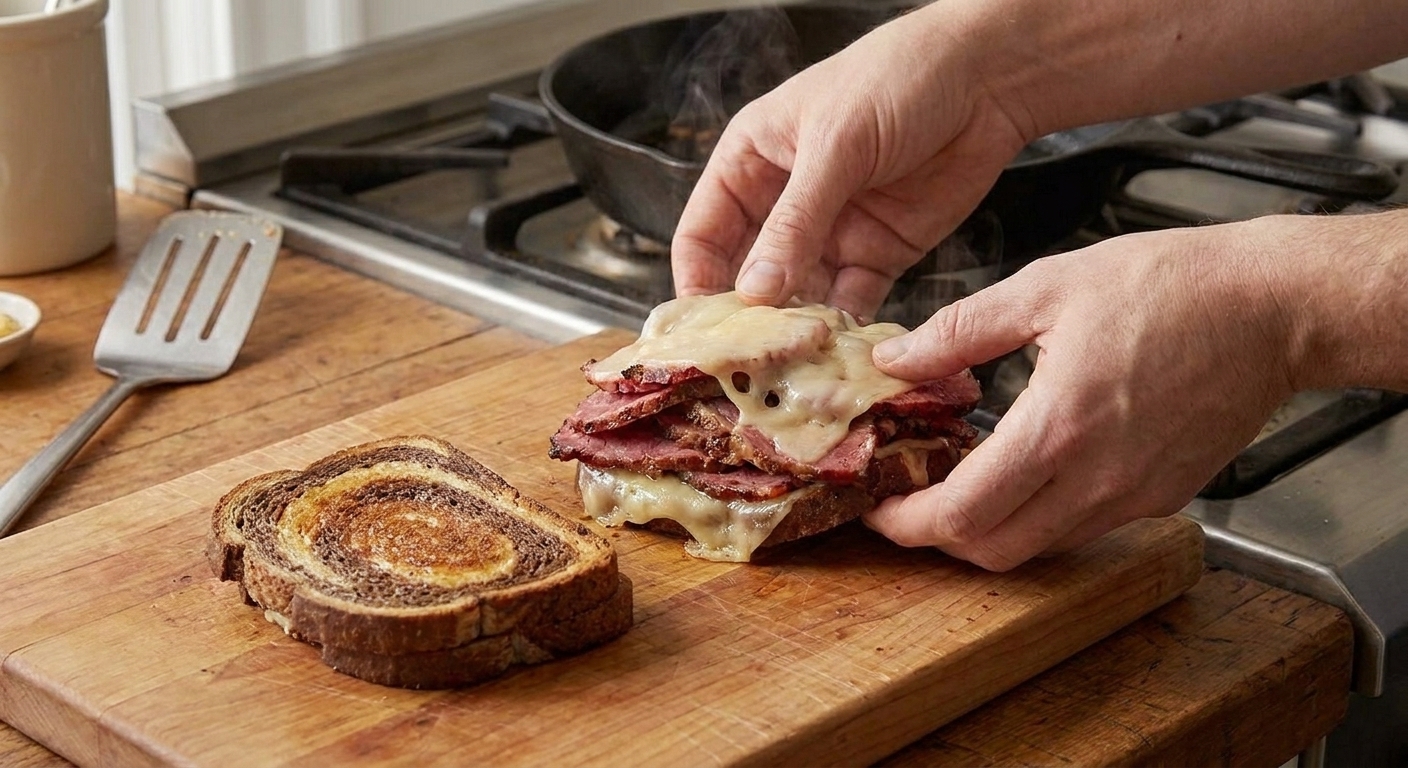
Hands stacking warm pastrami and Swiss on toasted rye over a wooden cutting board in a home kitchen