Mom's Best Recipes
Recipe

Classic Potato Dauphinoise

Thin-sliced potatoes baked in garlic cream until tender, bubbling, and perfectly bronzed on top.

Author By Matt Campbell
4.8
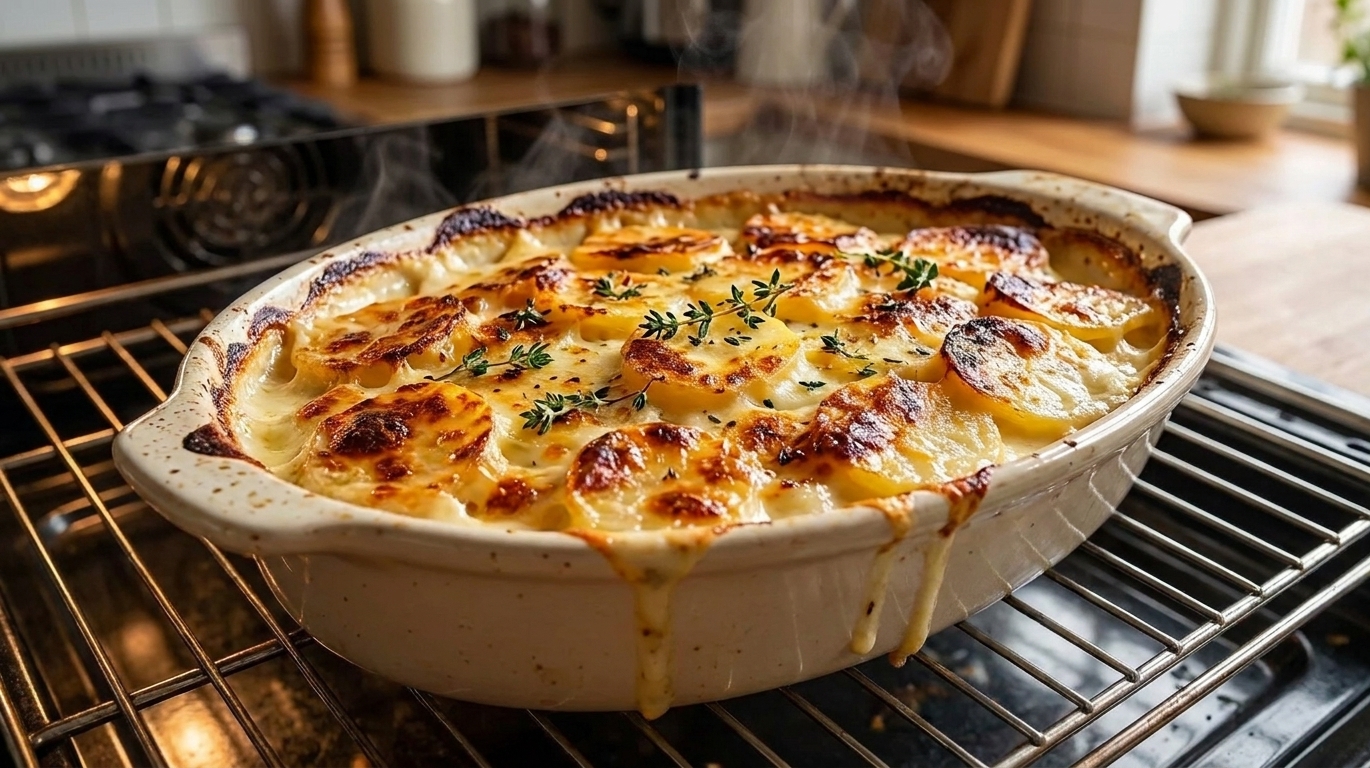
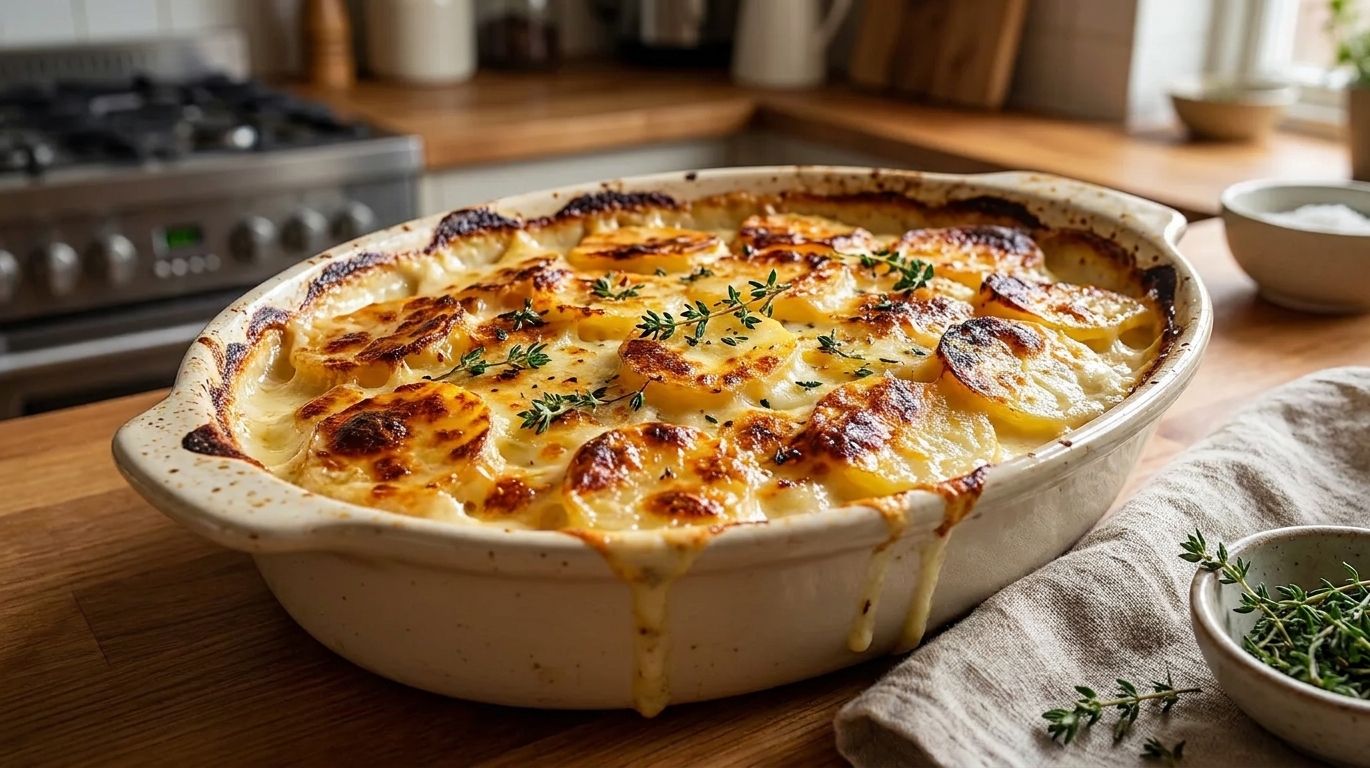
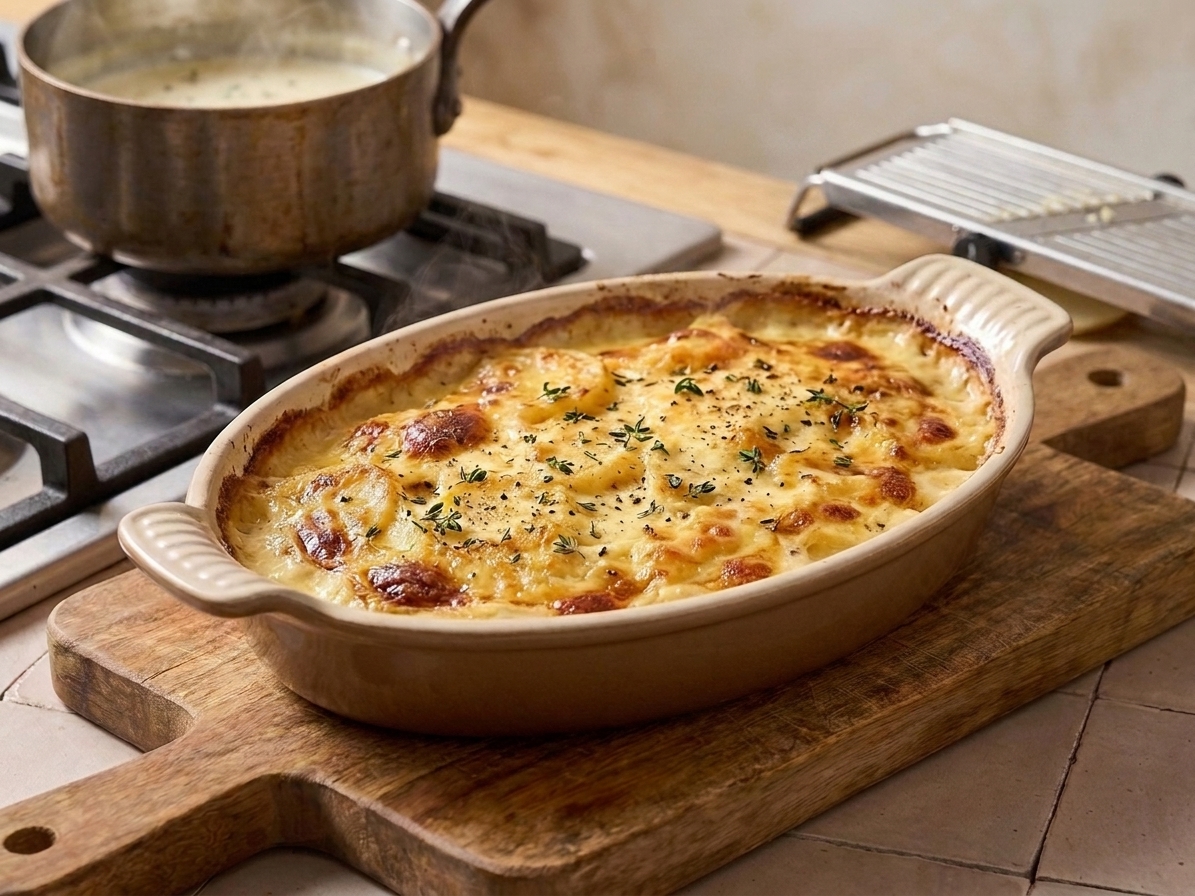
A ceramic baking dish filled with potato dauphinoise, showing a golden brown top with bubbling cream around the edges on a warm kitchen counter

Dauphinoise is one of those dishes that feels fancy without asking you to do anything weird. It is just thin potatoes + garlic cream + heat, and somehow it turns into a pan of cozy, silky layers with crisp edges that make people hover near the oven like it is a campfire.

This is the classic French-style approach, meaning typically no cheese. You can add it if you want, and I will tell you exactly how, but the real magic is in the starch. As the potatoes bake, they release starch that thickens the cream into a sauce that clings to every slice. Your job is mostly to slice evenly, season like you mean it, and not rush the bake. Also: do not rinse the potatoes. I know it is tempting. Let them be starchy.
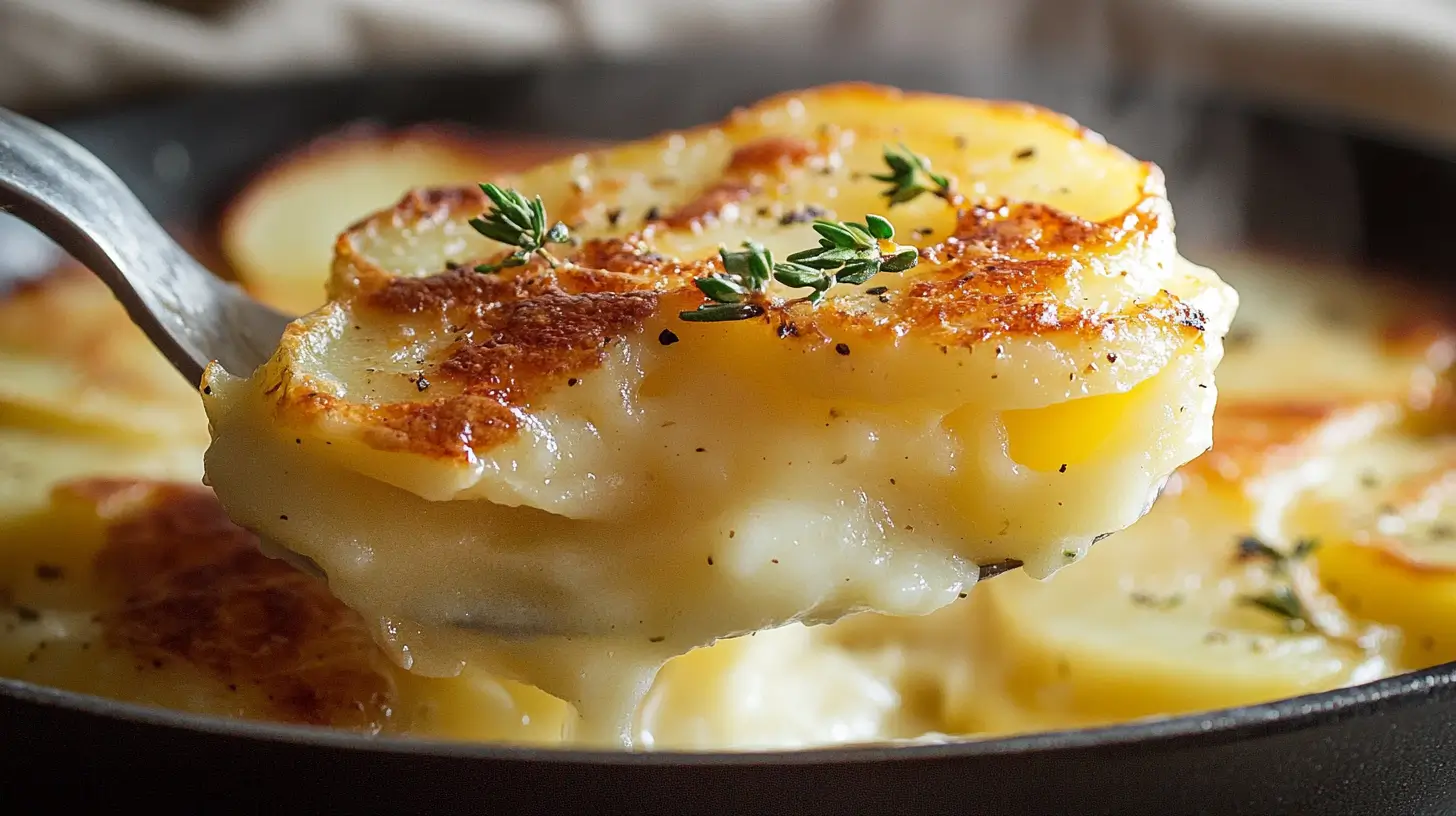
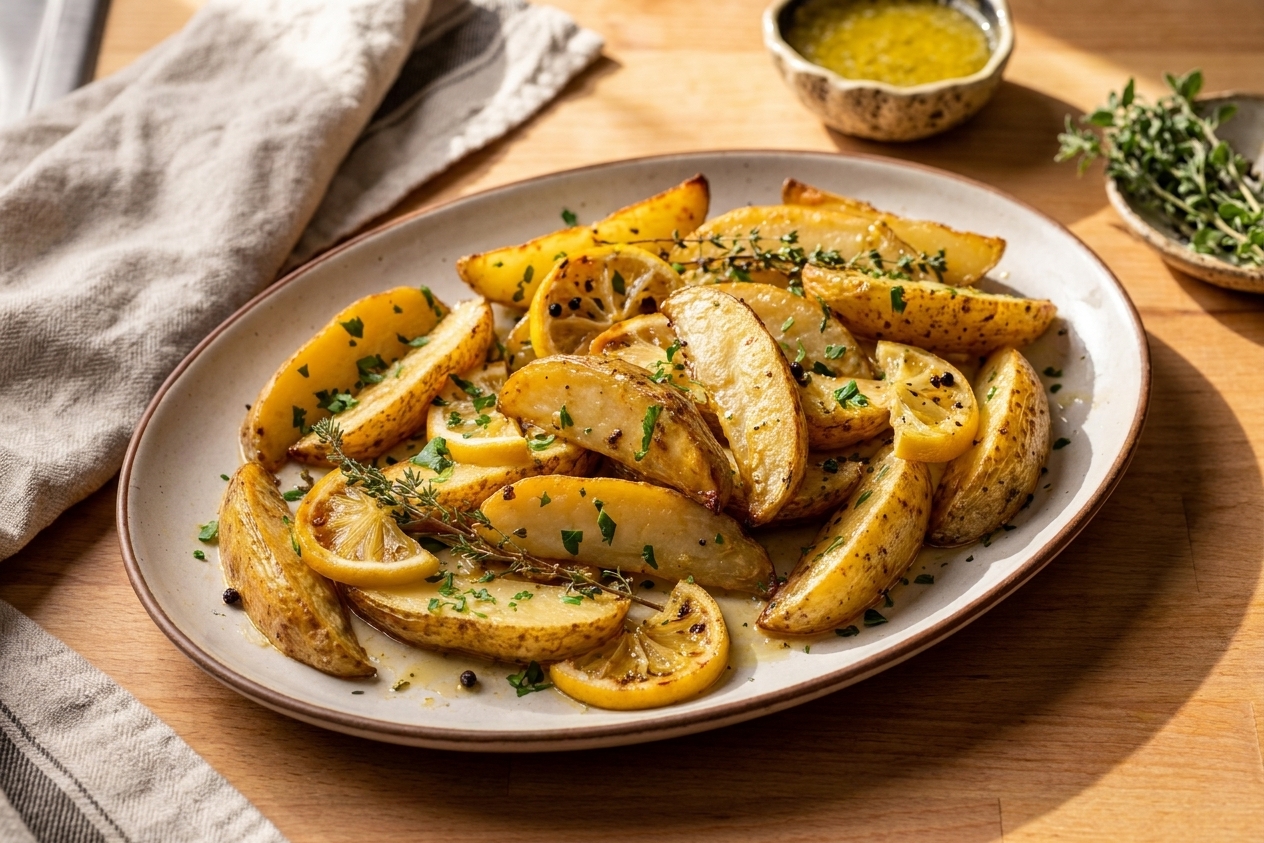
Yukon Gold potatoes, garlic cloves, a small pitcher of cream, and a dish of salt and pepper arranged on a light stone kitchen counter under soft natural light

Why It Works

  • Tender, layered potatoes that slice cleanly but still melt in your mouth.
  • A naturally thickened cream sauce thanks to potato starch, not flour.
  • Bright garlic flavor that is mellowed by the long bake.
  • Golden top and crisp edges without drying out the middle.
  • Make-ahead friendly, which is basically a love language on busy days.

Pairs Well With

Storage Tips

Refrigerate: Cool completely, then cover the baking dish or transfer to an airtight container. Store up to 4 days.

Reheat (best method): Warm in a 350°F oven, covered with foil, for 20 to 30 minutes until hot. Uncover for the last 5 minutes to bring back the top.

Microwave (fast method): Works fine for lunch portions. Add a tiny splash of milk or cream if it looks tight, then heat in 45-second bursts.

Freeze: You can, but dairy-based gratins can turn a little grainy or watery after thawing. Freeze tightly wrapped portions up to 2 months. Thaw overnight in the fridge and reheat in the oven covered.

Common Questions

What is the difference between dauphinoise and gratin?

Potato dauphinoise is typically thin-sliced potatoes baked in milk and or cream with garlic, and it is traditionally made without cheese (definitions vary a bit by region and source). A potato gratin often includes cheese and sometimes breadcrumbs, plus the top is meant to be more deliberately crusty.

Do I have to peel the potatoes?

Not strictly, but for the most classic silky texture, I recommend peeling. If you love a more rustic vibe and your potatoes have thin, clean skins (like Yukon Gold), you can leave them on.

Should I rinse the sliced potatoes?

No. Skipping the rinse is part of the point here. You want that surface starch, because it helps the cream thicken into a sauce that clings to every layer.

Why did my cream curdle?

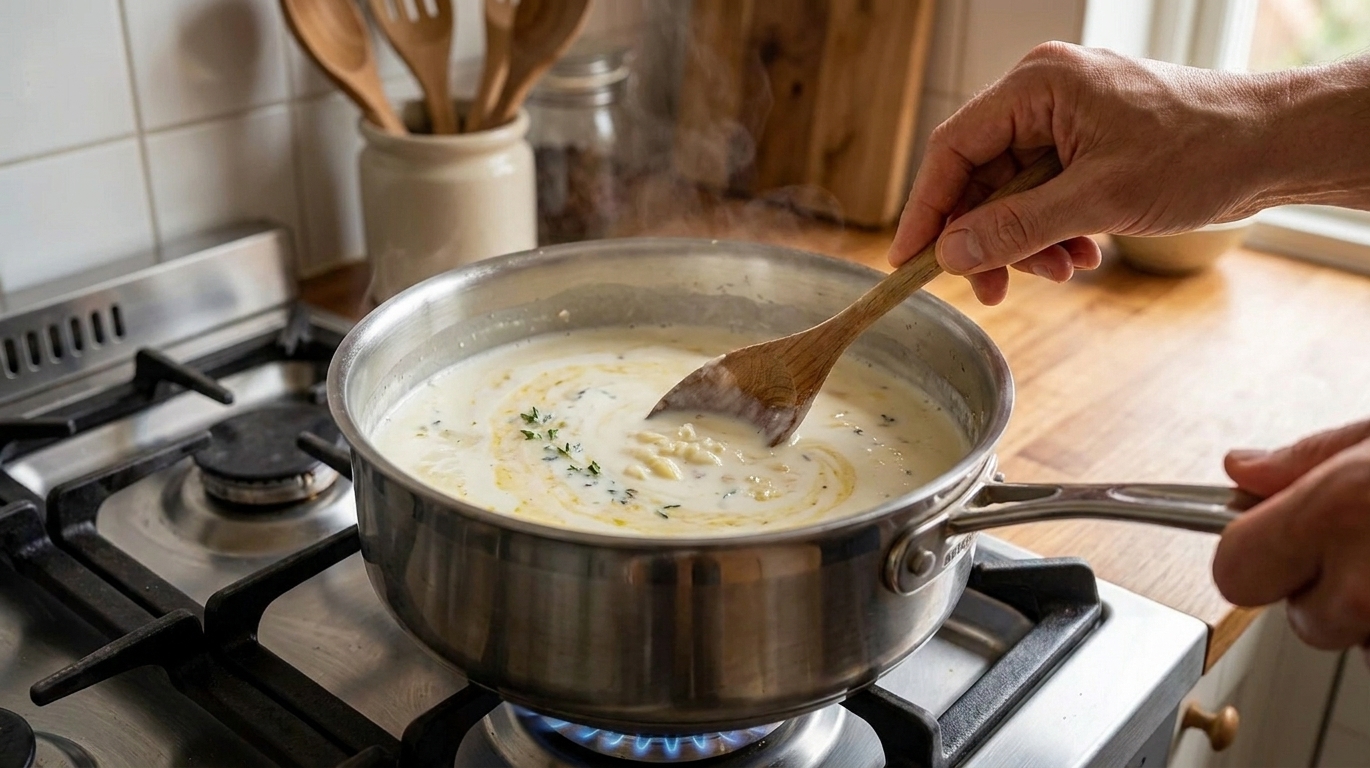
Common causes are too high of heat, using very acidic add-ins, or a lot of movement early on. Stick to the bake temp, and if you simmer the cream mixture first, keep it gentle. Also, avoid ultra-low-fat dairy here.

Can I make it ahead?

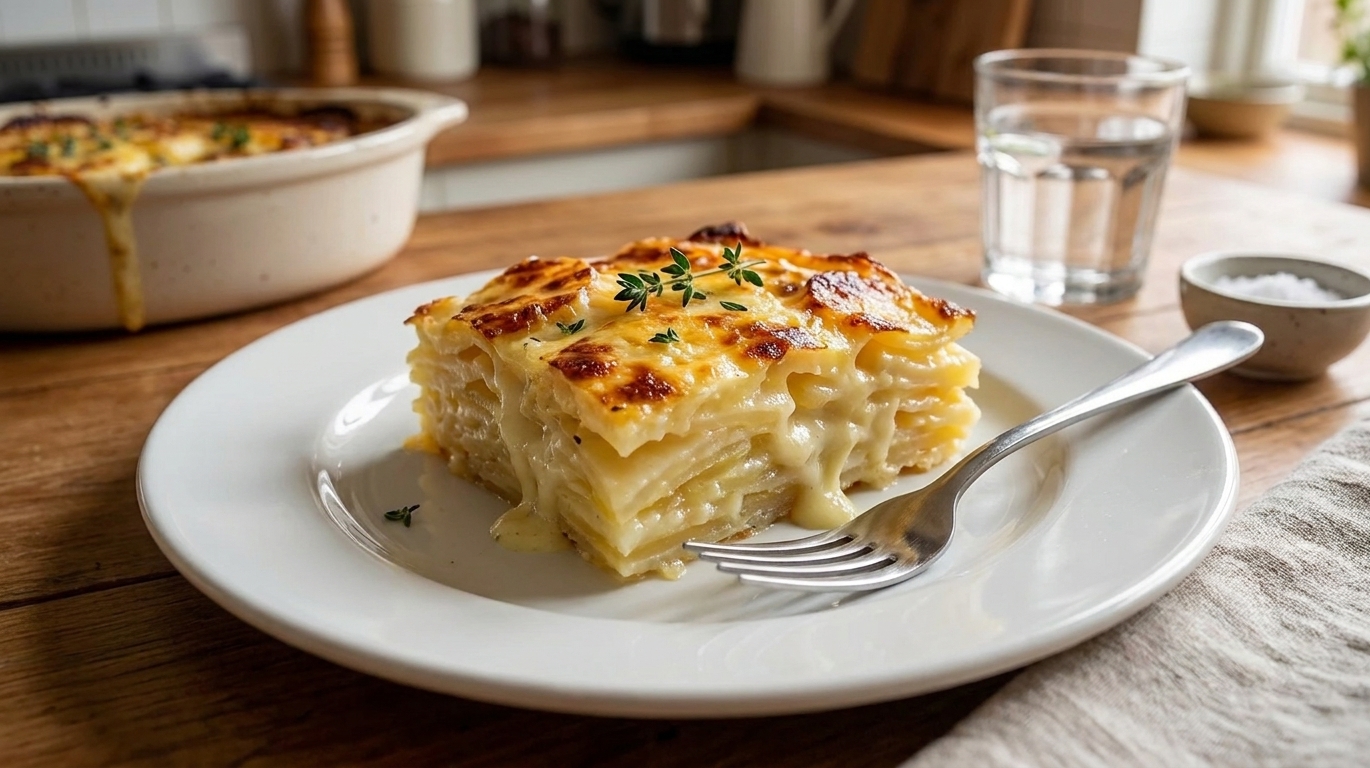
Yes. Bake it fully, cool, refrigerate, then reheat covered at 350°F until hot. It actually slices even better after a rest.

Do I need a mandoline?

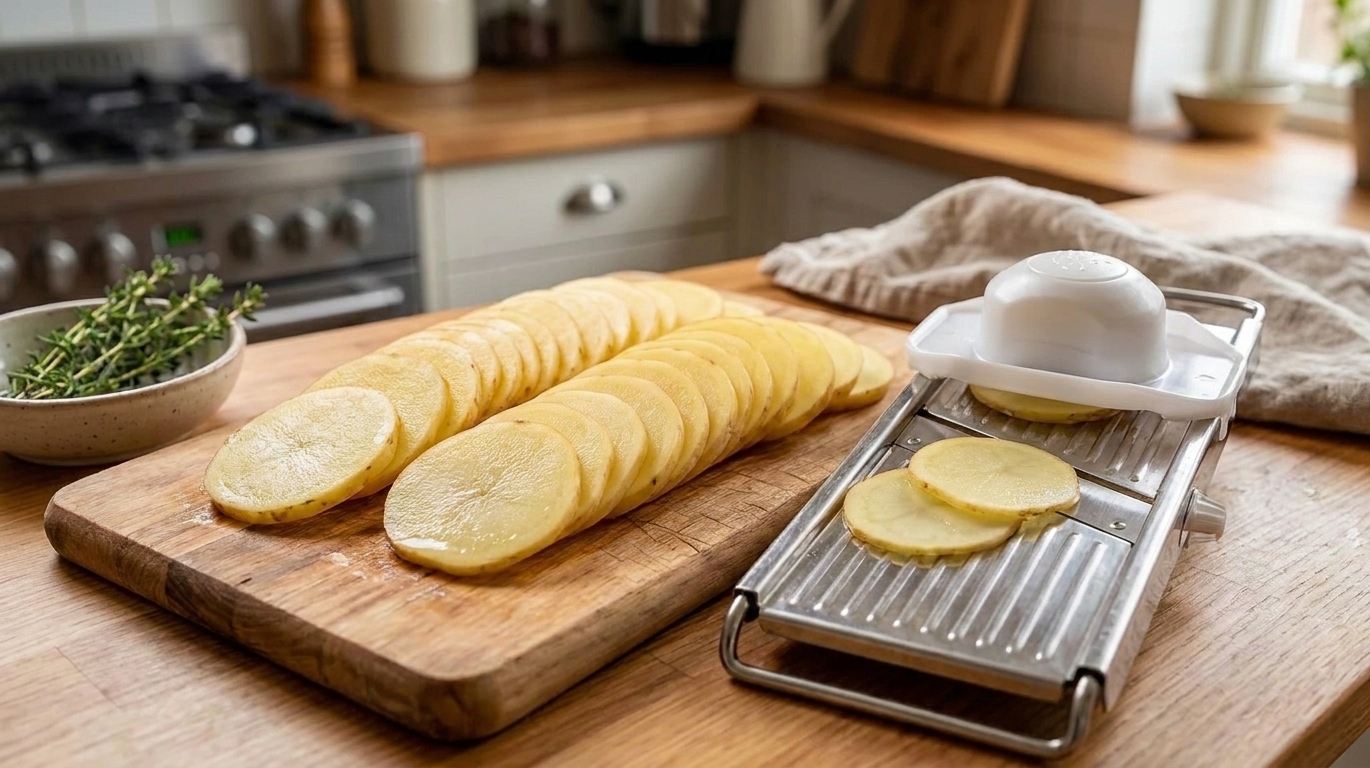
It helps for evenly thin slices, but a sharp knife works. Aim for about 1/8-inch slices so everything cooks at the same pace.

What potatoes work best?

Yukon Gold is my favorite for creamy layers that still hold together. Russets get softer and more plush, but can turn a bit more delicate. Either works, just slice evenly and bake until fully tender.

The first time I made dauphinoise, I treated it like regular scalloped potatoes and tried to rush it. Big mistake. It came out tasty but impatient, which is a polite way of saying the potatoes were still a little firm and the sauce was thin. Now I bake it like it is the main character. I slice, I season every layer, and I let the oven do the slow work. When it hits that moment where the cream is bubbling at the edges and the top goes bronzed and blistered, it feels like cheating. It is not. It is just potatoes behaving beautifully.