Mom's Best Recipes
Recipe

Dauphinoise Potatoes

Classic Dauphinoise potatoes: thinly sliced potatoes baked in a garlicky cream mixture until tender, rich, and bubbling with a golden top.

Author By Matt Campbell
4.8
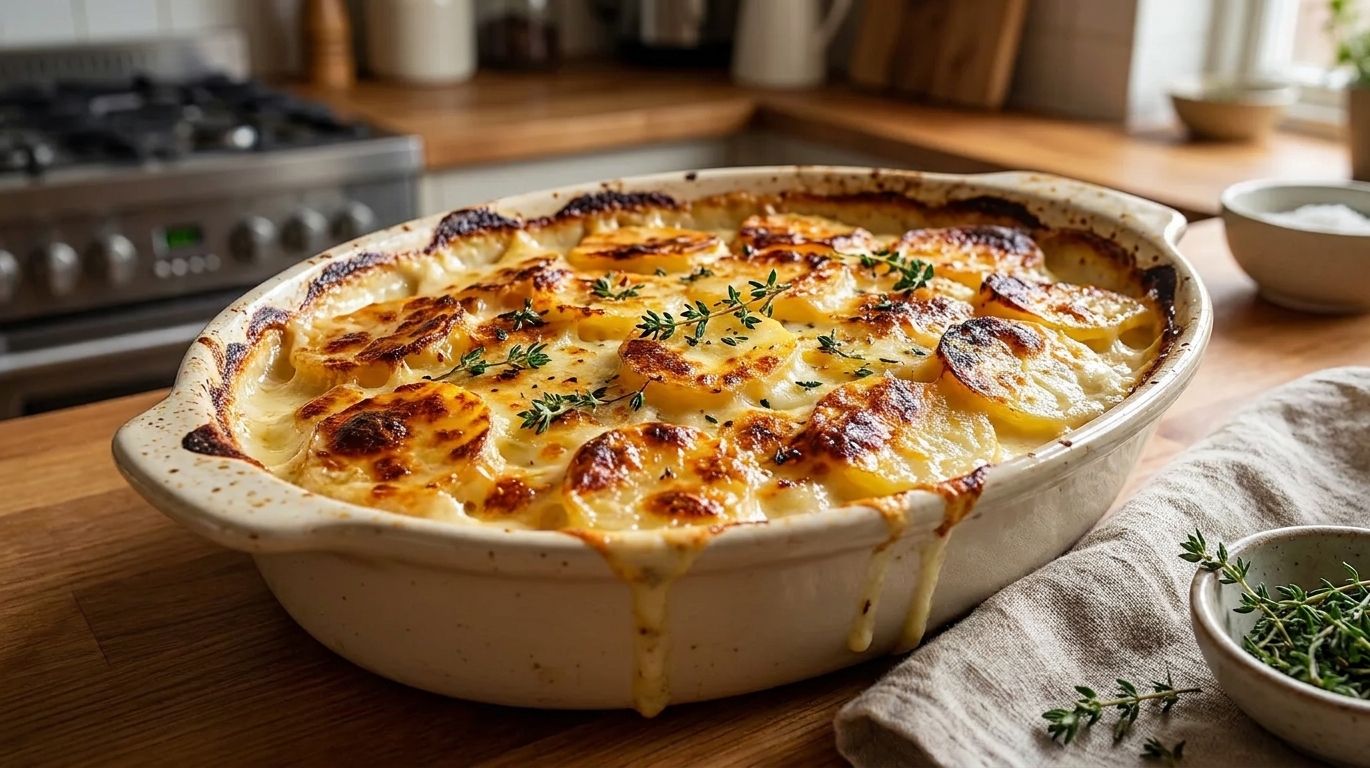
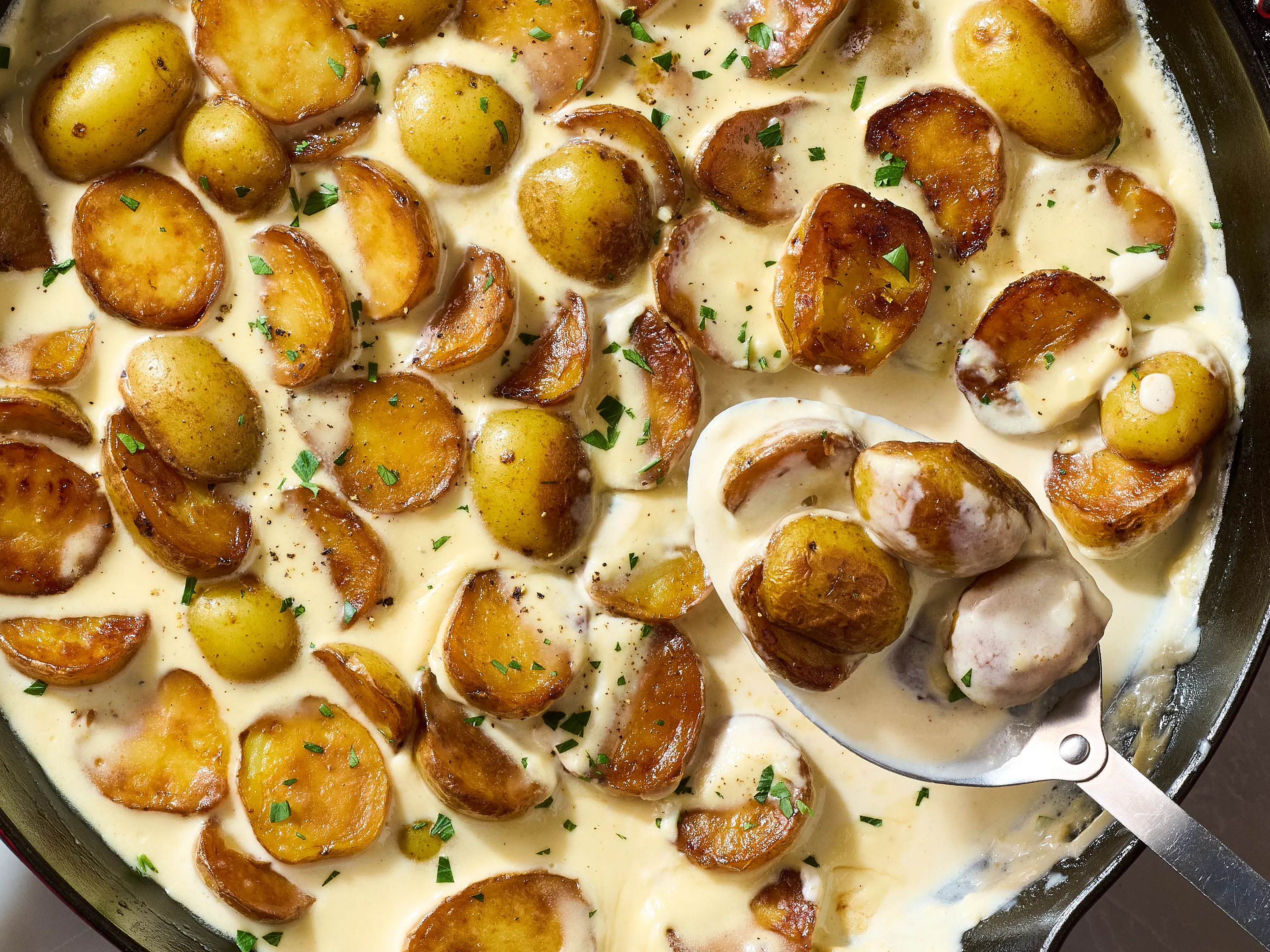
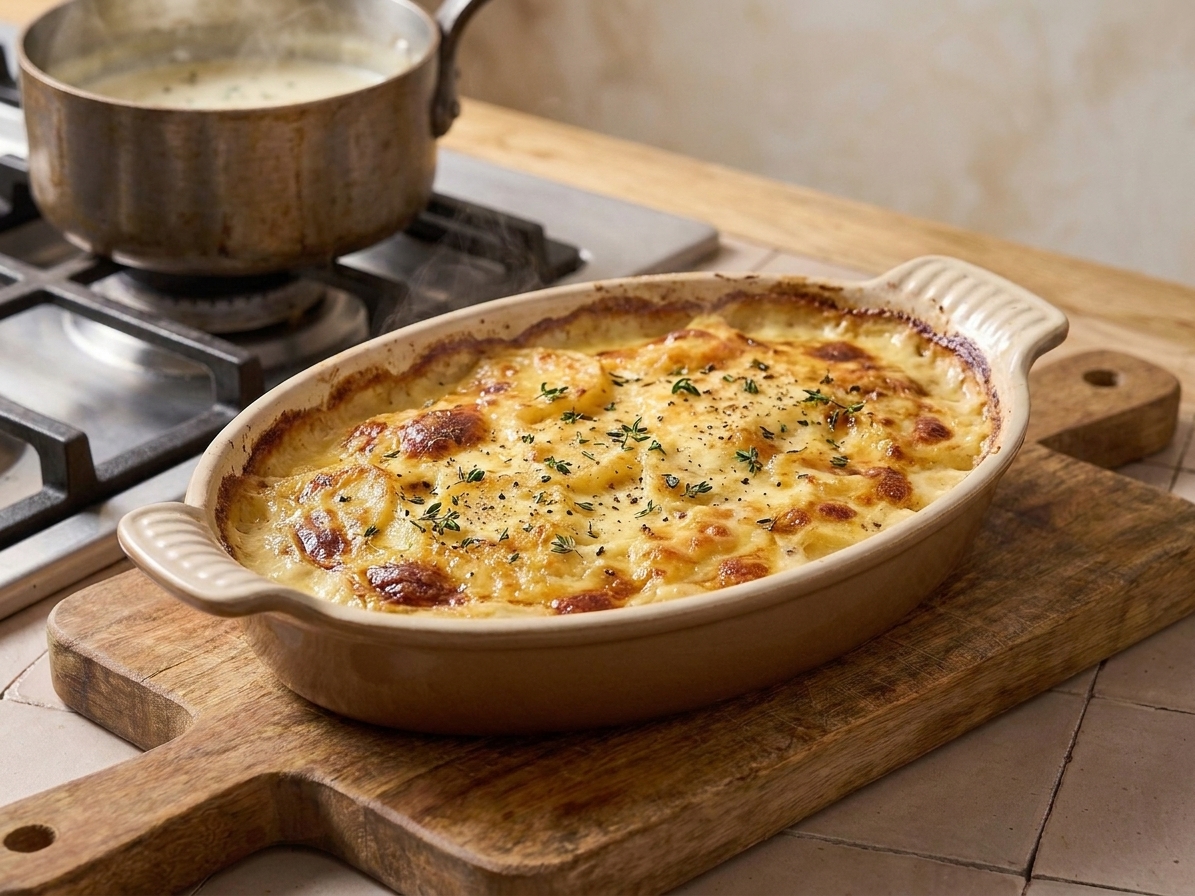
A bubbling baking dish of Dauphinoise potatoes with a golden top and creamy edges

Dauphinoise (pronounced doh-fin-wah) is the real deal: thin potatoes, garlic, cream, and heat, baked until the top turns golden and the inside goes soft and lush.

This is not a crispy roasted situation. This is a spoon-tender, rich, bubbling gratin that makes a simple dinner feel like it has plans. Serve it next to roast chicken, steak, or anything that likes a little extra comfort on the plate.

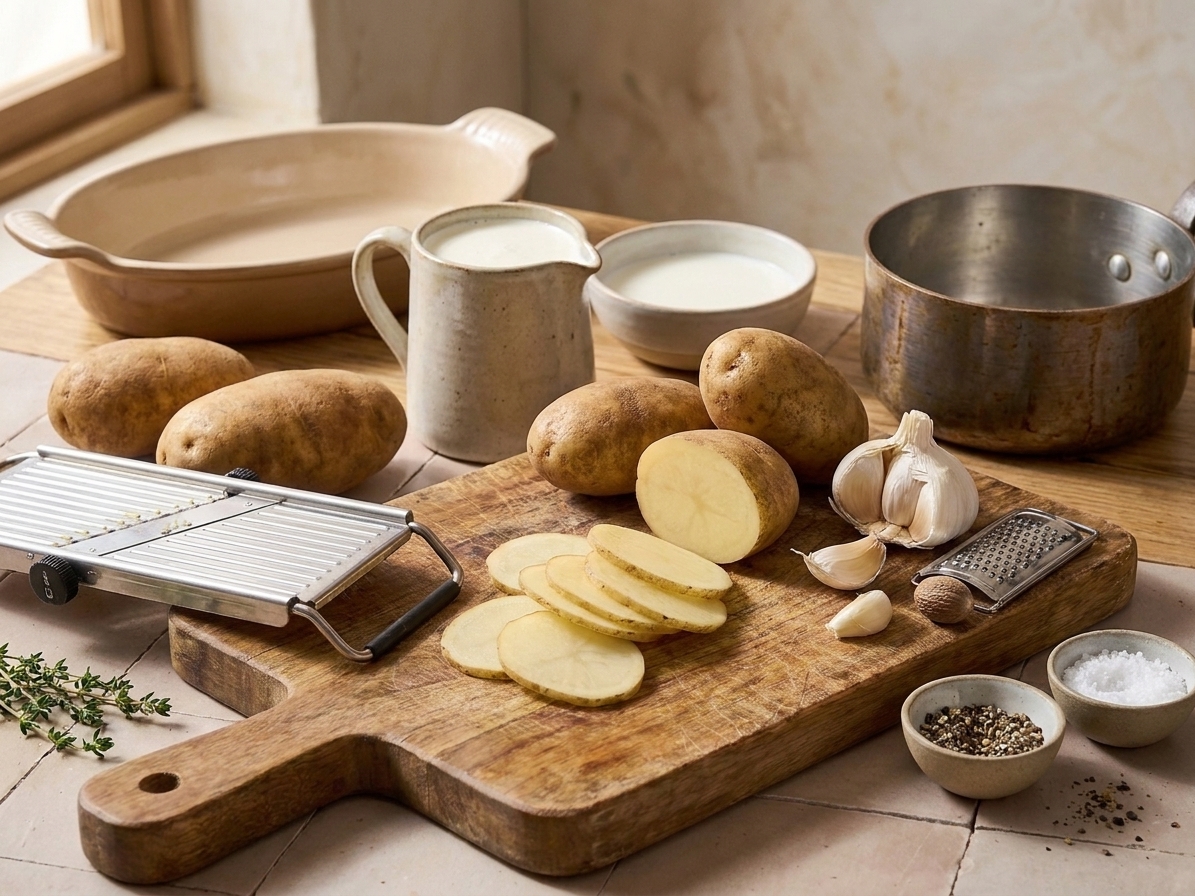
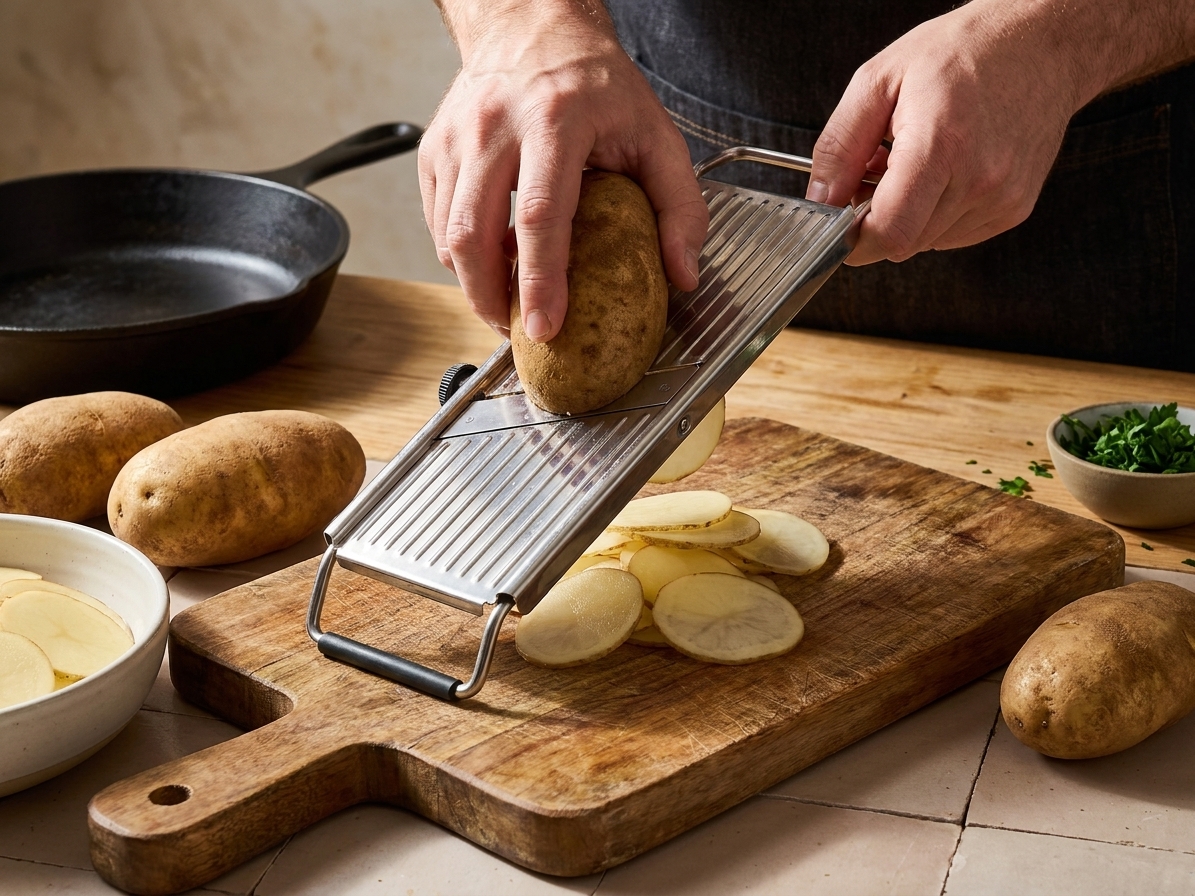
Sliced potatoes, cream, garlic, salt, pepper, and nutmeg arranged for a gratin on a kitchen counter

Why It Works

  • Tender, creamy layers: thin slices bake up soft without turning to mush.
  • Classic flavor: garlic, cream, and a whisper of nutmeg keep it rich but not flat.
  • Golden top: a final uncovered bake gives you that browned, bubbling finish.
  • Flexible: keep it traditional with no cheese, or add a little Gruyère for extra color and savor.

Pairs Well With

Storage Tips

Refrigerate: Cool completely, cover, and refrigerate for up to 4 days.

Reheat: Cover with foil and warm at 350°F for 20 to 30 minutes, then uncover for 5 to 10 minutes to re-brown and refresh the top. Single servings reheat well in the microwave, but the oven keeps the best texture.

Freeze: You can freeze it, but cream sauces can separate a bit. If you freeze, wrap tightly and freeze for up to 2 months. Thaw overnight in the fridge and reheat covered in the oven.

Common Questions

What makes Dauphinoise different from scalloped potatoes?

Dauphinoise is typically baked in cream (and often garlic) and usually does not include a flour-thickened sauce. Scalloped potatoes are often made with milk and may use a thickened sauce, though recipes vary. This one is all about that silky cream soaking into the slices.

Do I need cheese?

Traditional Dauphinoise does not require it. That said, a small handful of Gruyère on top is a very popular choice and no one will be mad about it.

Should I rinse the potatoes?

No. For Dauphinoise, you generally do not rinse the sliced potatoes. That surface starch helps the cream thicken into a soft, clingy sauce instead of staying thin.

What potatoes work best?

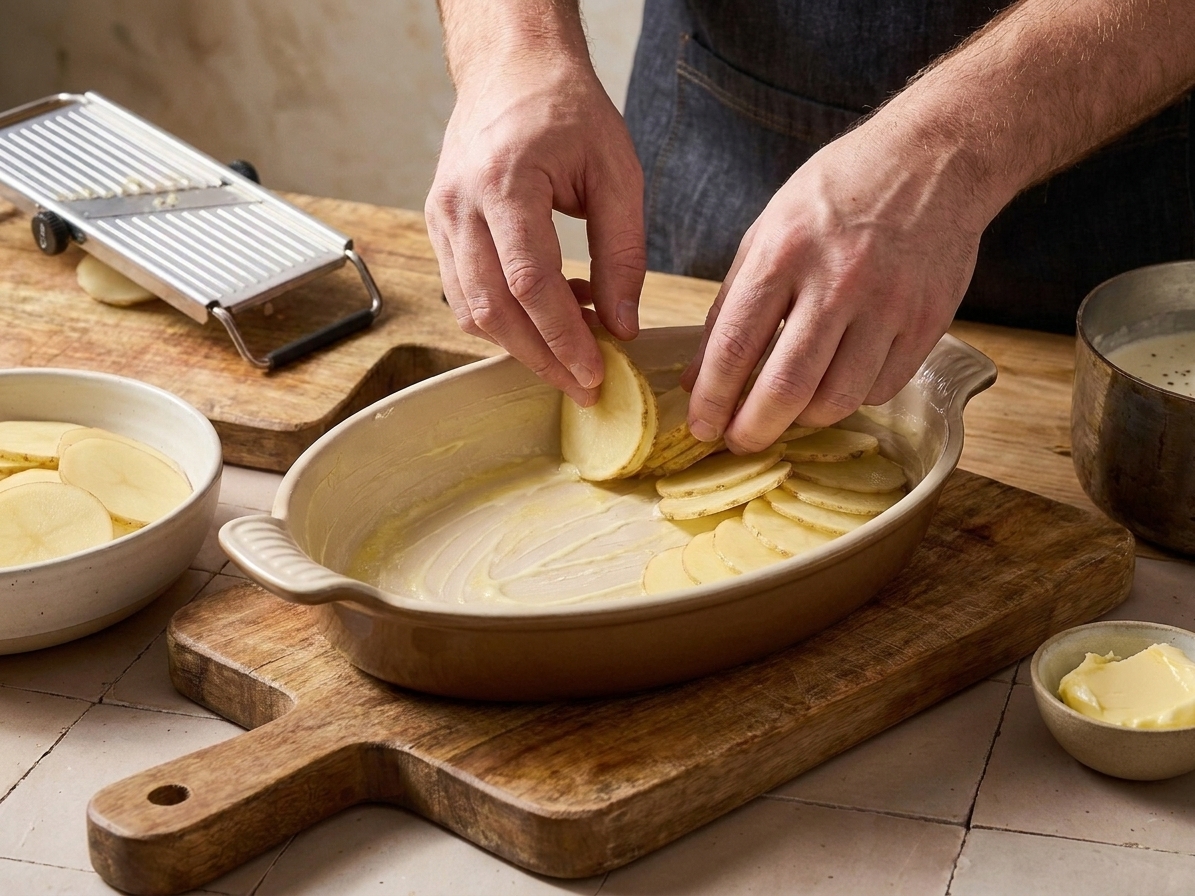
Yukon Gold are the sweet spot: tender, creamy, and not watery. Russets work too and give a softer, more custardy result, but can drink up more cream.

Can I make this ahead?

Yes. Bake it, cool it, and refrigerate covered for up to 2 days. Reheat covered at 350°F until hot, then uncover for a few minutes to re-brown the top.

Why is my gratin watery?

Usually one of these: slices were too thick, the dish was underbaked, the cream was very cold when it went in, or the potatoes were rinsed. Slice thin, bake until truly tender, warm the cream before assembling, and skip the rinse.

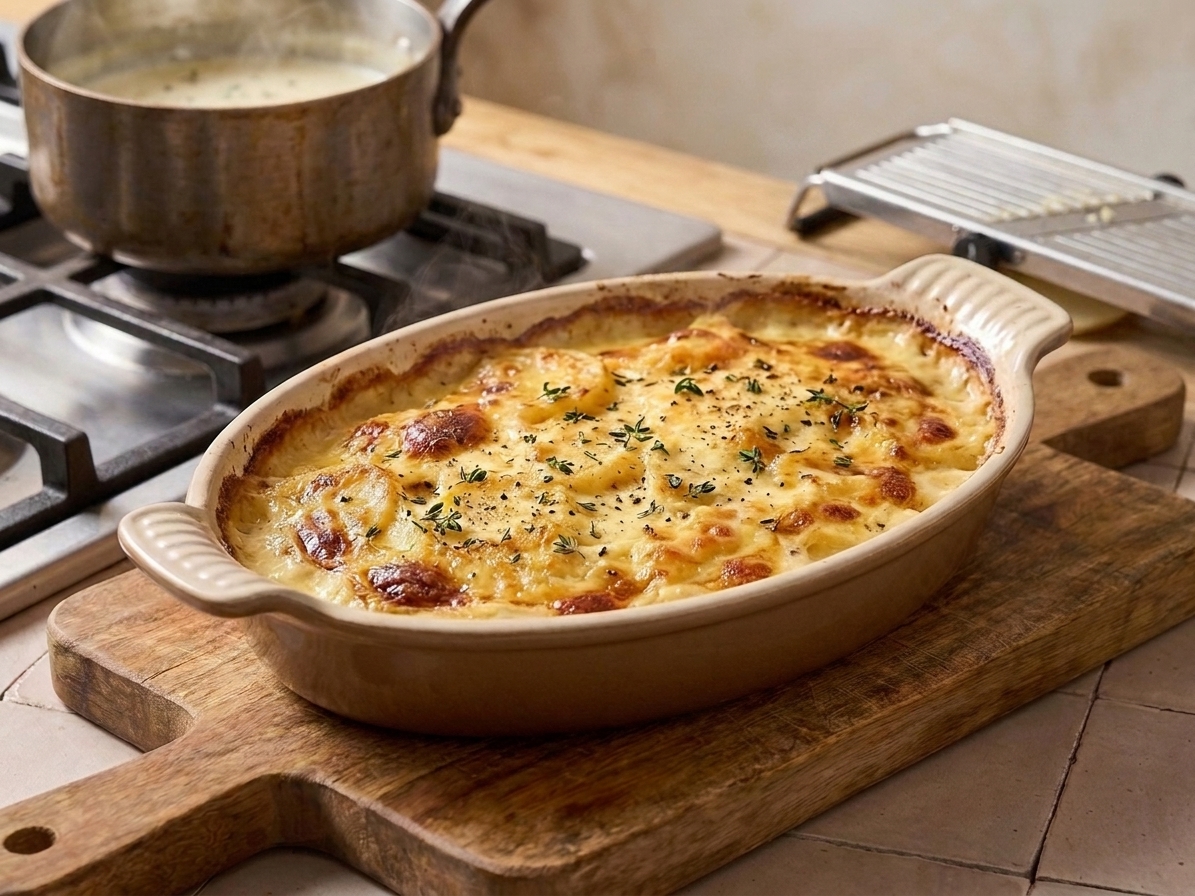
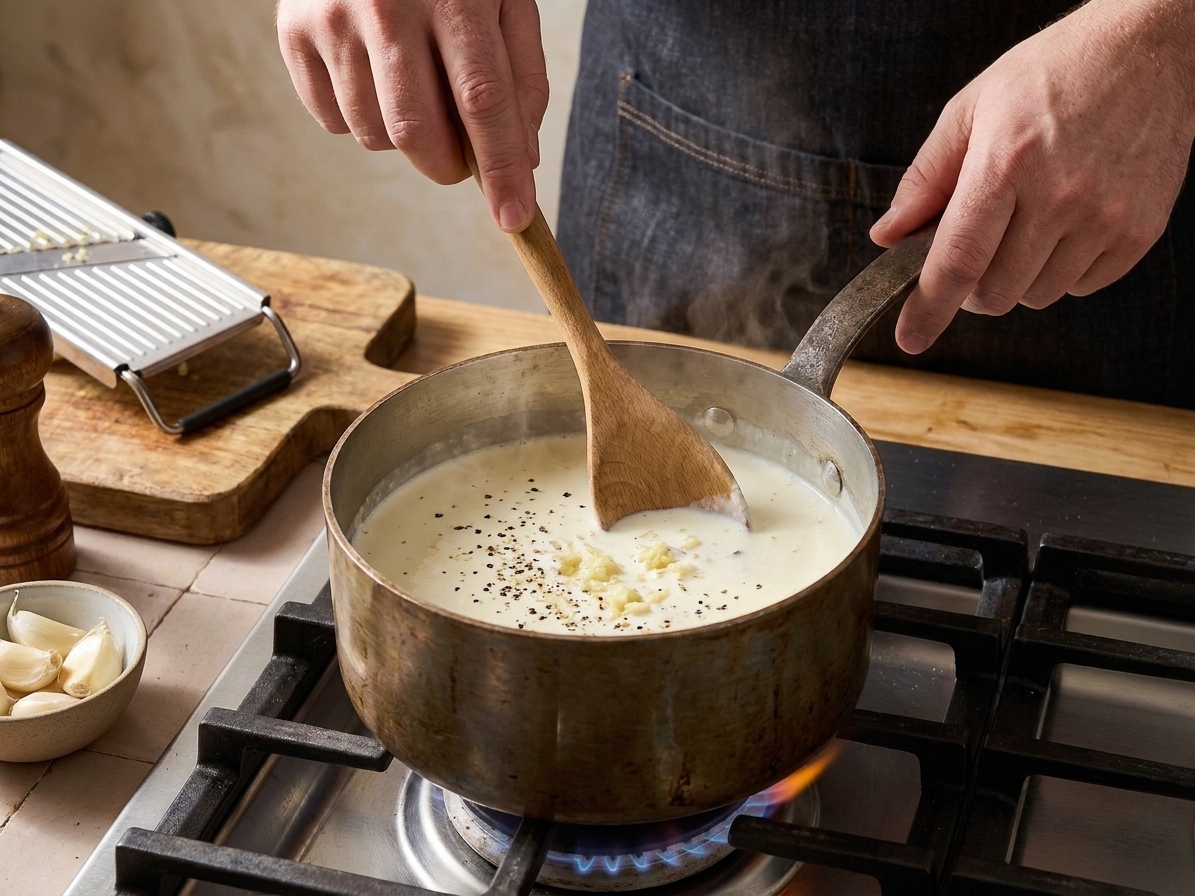
Dauphinoise is my favorite kind of kitchen magic, the quiet kind. You slice a pile of potatoes, warm some cream with garlic, and it looks almost too simple to matter. Then the oven does its thing and suddenly you have a dish that feels like it should be served with linen napkins, even if you are eating in sweatpants.

It is also one of those recipes where the details are worth it. Slice thin. Warm the cream. Bake it until it is truly tender. After that, you can let the potatoes take all the credit.