Mom's Best Recipes
Recipe

Classic Steak Tartare

Hand-chopped beef, a punchy Dijon-caper bite, and a silky egg yolk finish. Cozy bistro energy, no cooking the beef required.

Author By Matt Campbell
4.8
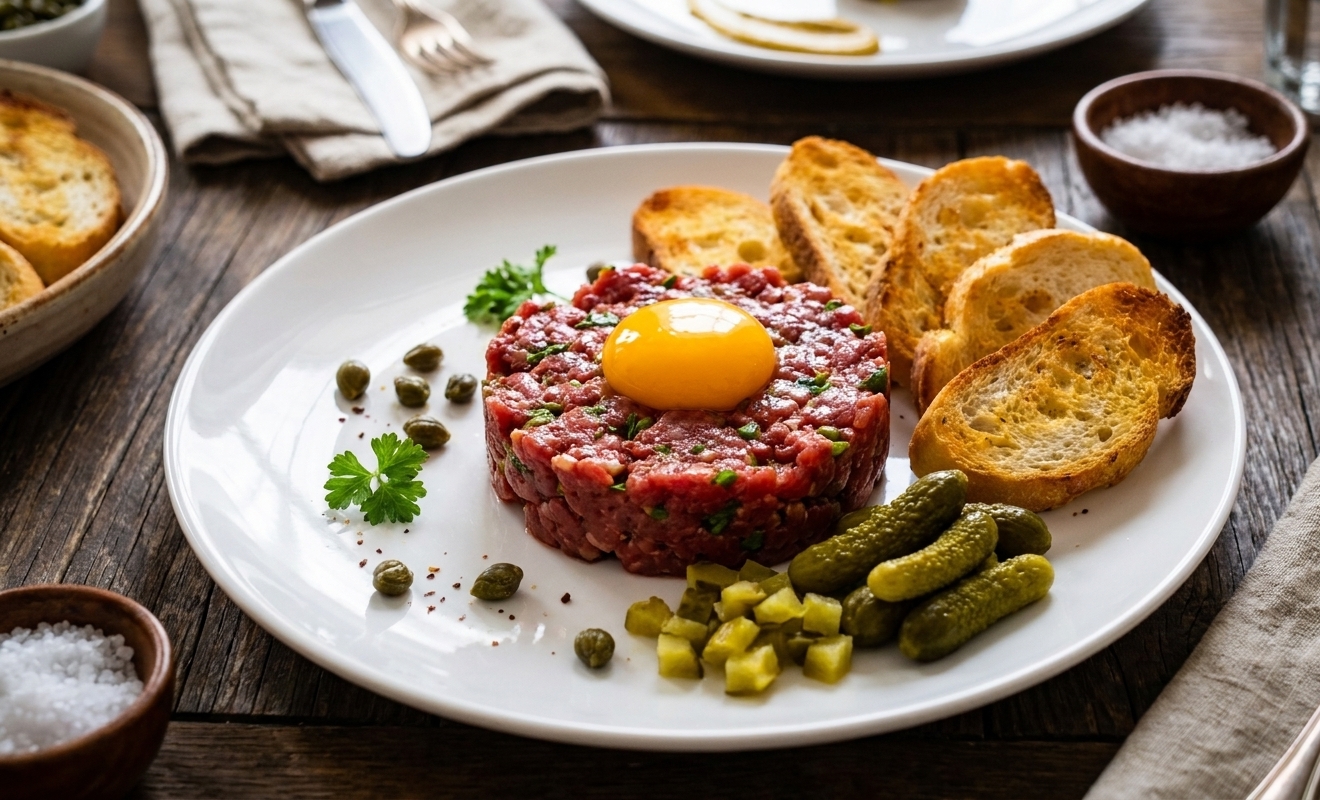
A plated classic steak tartare mound topped with a glossy egg yolk, surrounded by toasted baguette slices and cornichons on a warm kitchen table

Tartare has a reputation. It sounds fancy, it looks like something you would order in a dimly lit bistro, and it can make perfectly normal people ask, quietly, if this is a dare.

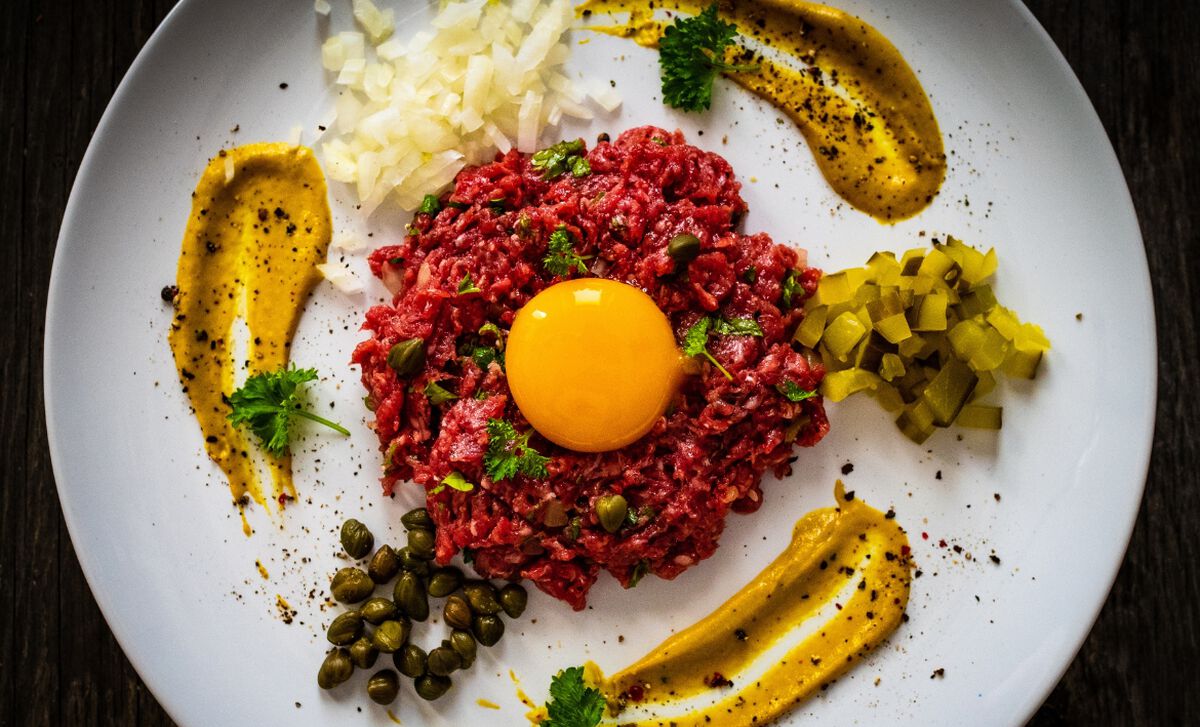
It is not a dare. It is just really good beef treated with respect and dressed like it is going out for the night. Think: briny capers, sharp Dijon, a little lemon, a little heat, and that rich egg yolk that turns the whole thing into a glossy sauce the second your fork hits it.

This is my relaxed, home-kitchen version. No grinding, no mystery ingredients, no white tablecloth required. We are going to talk safety in a straightforward way, hand-chop the beef so it stays tender, and season it until you take a bite and do that mid-chew pause like, okay, wow.
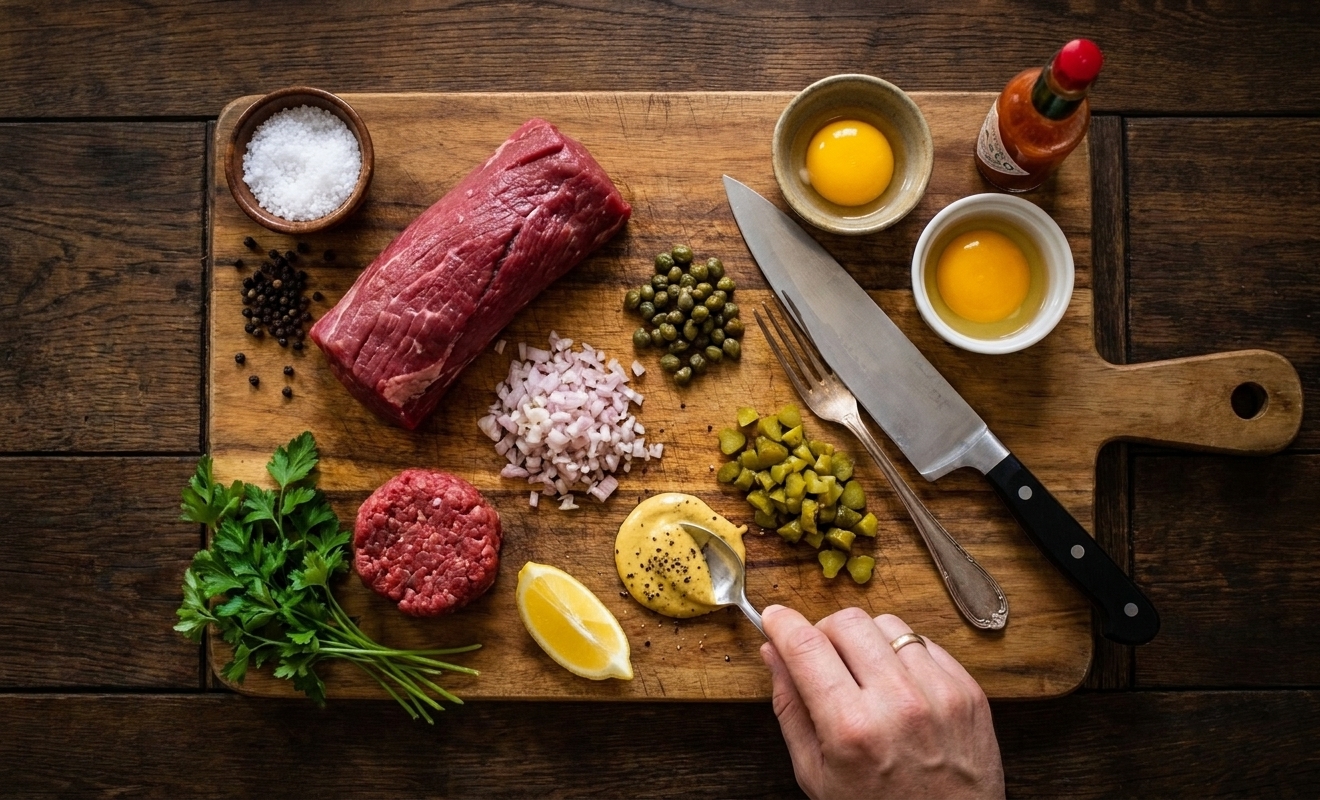
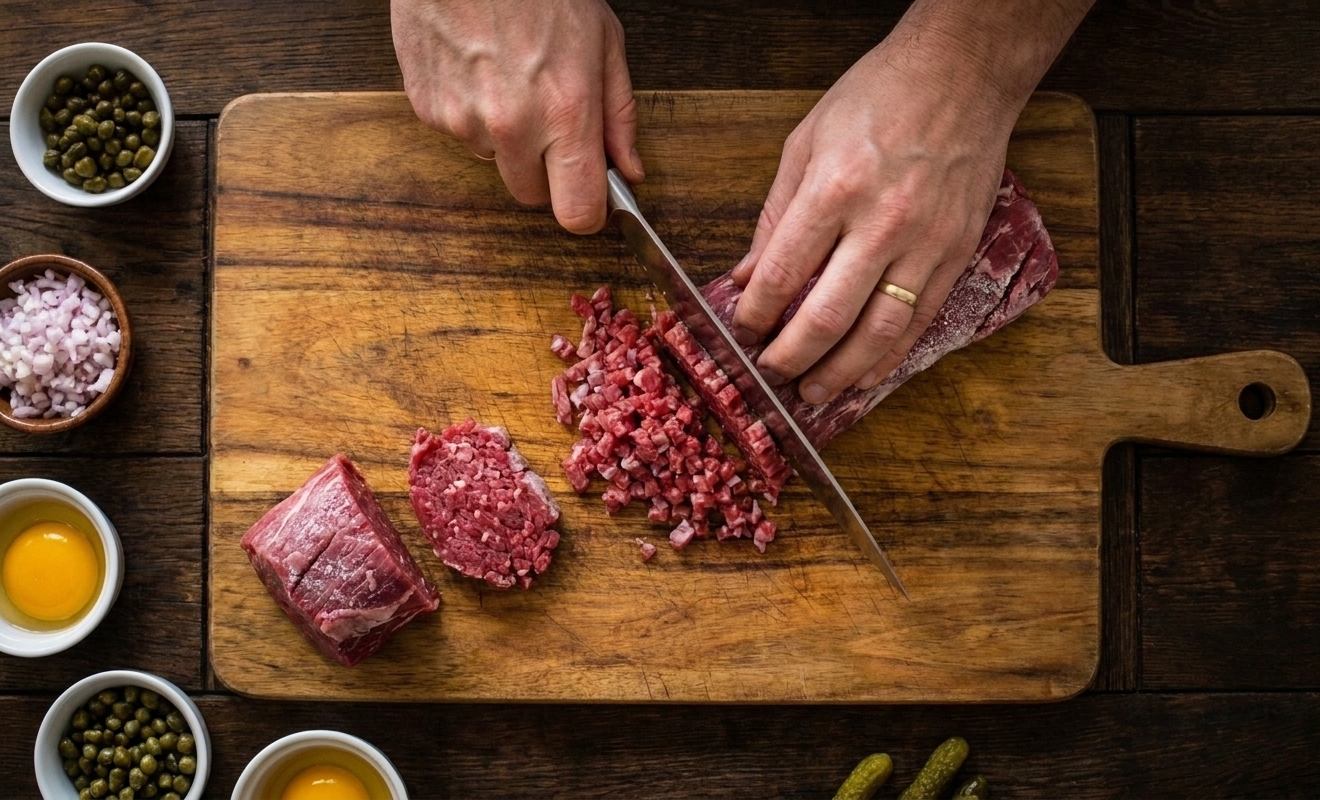
Raw beef tenderloin, shallot, capers, cornichons, Dijon mustard, lemon, parsley, egg yolks, salt, pepper, and hot sauce arranged on a wooden cutting board

Why It Works

What you will get

  • Clean, beefy flavor from hand-chopped, high-quality steak.
  • Bright, balanced seasoning that hits salty, tangy, and a little spicy without drowning the meat.
  • Great texture with small, even pieces and crisp little pops from pickles and capers.
  • A build-your-own moment at the table with toast, cornichons, and extra sauce on the side.

Safety, but make it normal

Steak tartare is raw, so the goal is to reduce risk, not pretend it disappears. Start with a whole, intact cut from a butcher you trust, keep it cold, trim the exterior, use clean tools, and serve immediately.

Servings note: This makes 4 appetizer portions, or 2 generous light entrée portions if you are going full bistro night at home.

Pairs Well With

Storage Tips

I am going to be honest: steak tartare is a make it and eat it situation. It is at its best and lowest-risk when it is fresh.

If you must store it

  • Best practice: Do not store mixed tartare. Instead, store unmixed, trimmed beef tightly wrapped in the coldest part of the fridge and use within about 24 hours for best quality and risk reduction.
  • If it is already mixed: Refrigerate immediately in an airtight container and aim to eat within about 12 hours for best quality. The texture will soften and the flavor will get more pickle-forward.
  • When in doubt, do not save it. Raw meat is not the place to push leftovers.
  • Do not freeze: Freezing changes the texture and makes it weep as it thaws.

Mom tip: If you have extra trimmed steak and decide raw is not your vibe today, just sear it hard in a hot pan and call it an audible. No shame, still delicious.

Common Questions

What meat is best for tartare?

Use a whole, intact cut like beef tenderloin (filet), which is the classic because it is tender, mild, and easy to trim cleanly. Top sirloin can work too, but it is a bit firmer, so trim carefully and chop extra fine.

Is steak tartare safe to eat?

There is always risk with raw meat, and nothing here makes it “safe” in a guaranteed way. But you can reduce risk a lot: buy from a reputable butcher, choose a whole intact cut, keep it very cold, use clean tools, and serve immediately. If you are pregnant, immunocompromised, or serving young kids or older adults, it is best to skip raw preparations.

Can I use ground beef?

I do not recommend it. Ground beef has much more surface area and higher risk. Tartare is best when you chop a whole cut yourself right before serving.

Do I have to use raw egg yolk?

No. The yolk is traditional and adds richness, but you can skip it or use pasteurized egg yolk. Pasteurization reduces (not eliminates) salmonella risk. You can also add a spoonful of mayo for creaminess if you want the same vibe.

How fine should I chop the steak?

Small, even pieces, like a tiny dice. Not paste, not big cubes. If the knife starts smearing, the meat is warming up, so chill it again for a few minutes.

What should I serve with tartare?

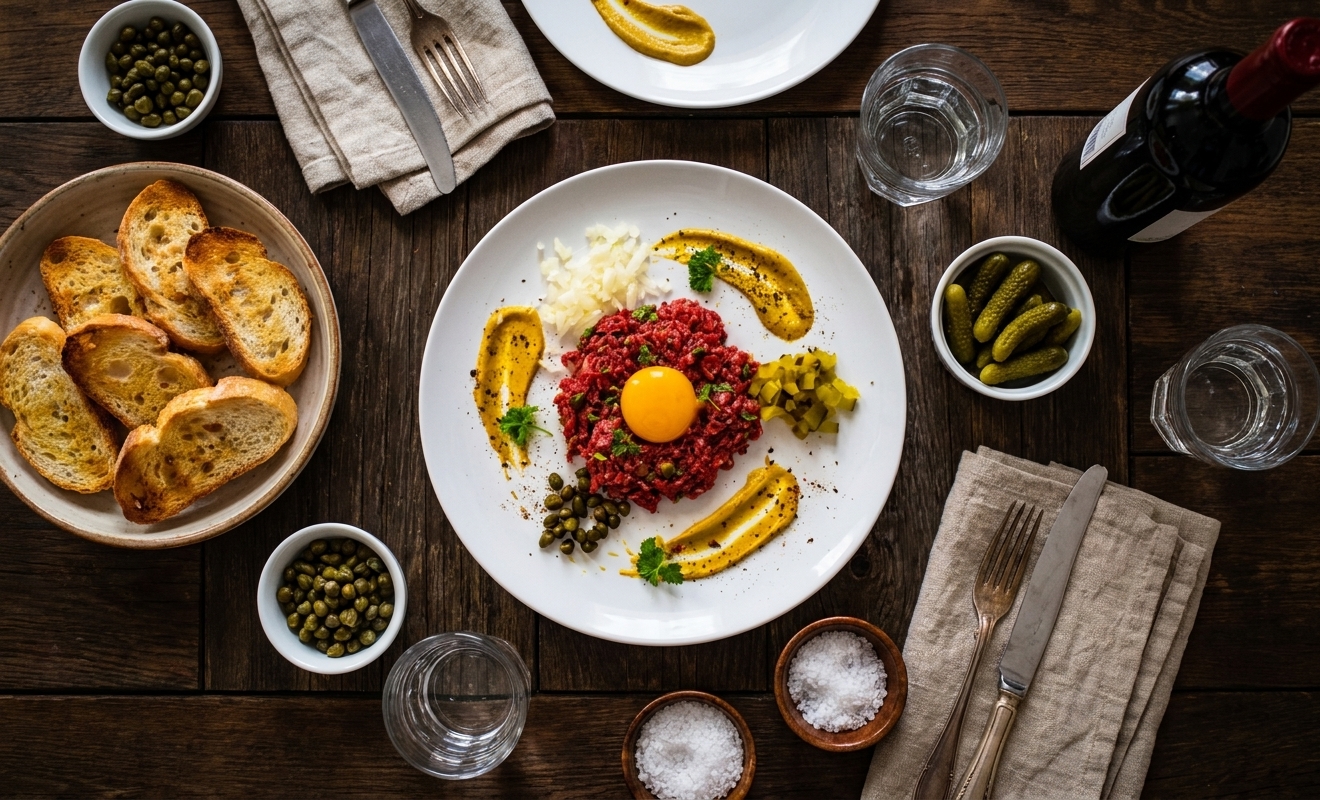
Toasted baguette, crackers, potato chips, cornichons, a simple green salad, and something bubbly or crisp to drink. Tartare likes a crunchy plus-one.

The first time I made tartare at home, I treated it like a science project. Gloves. Timers. Panic. Then I realized the real trick is way simpler: start cold, chop clean, season like you mean it, and taste as you go. Now it is one of my favorite “I want restaurant food but I also want to be in sweatpants” dinners. It feels fancy, but it is basically just steak and a killer sauce, which is honestly my love language.