What is kugel?
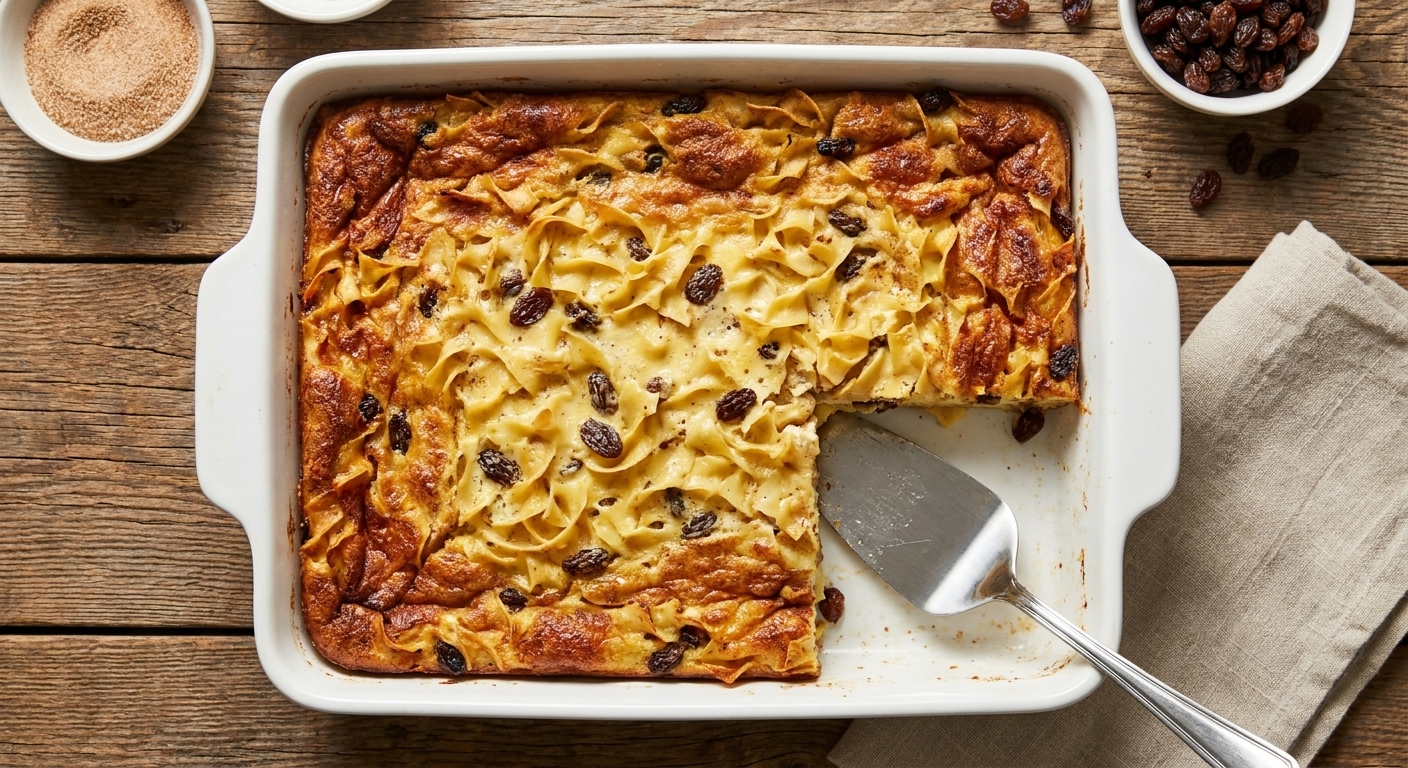
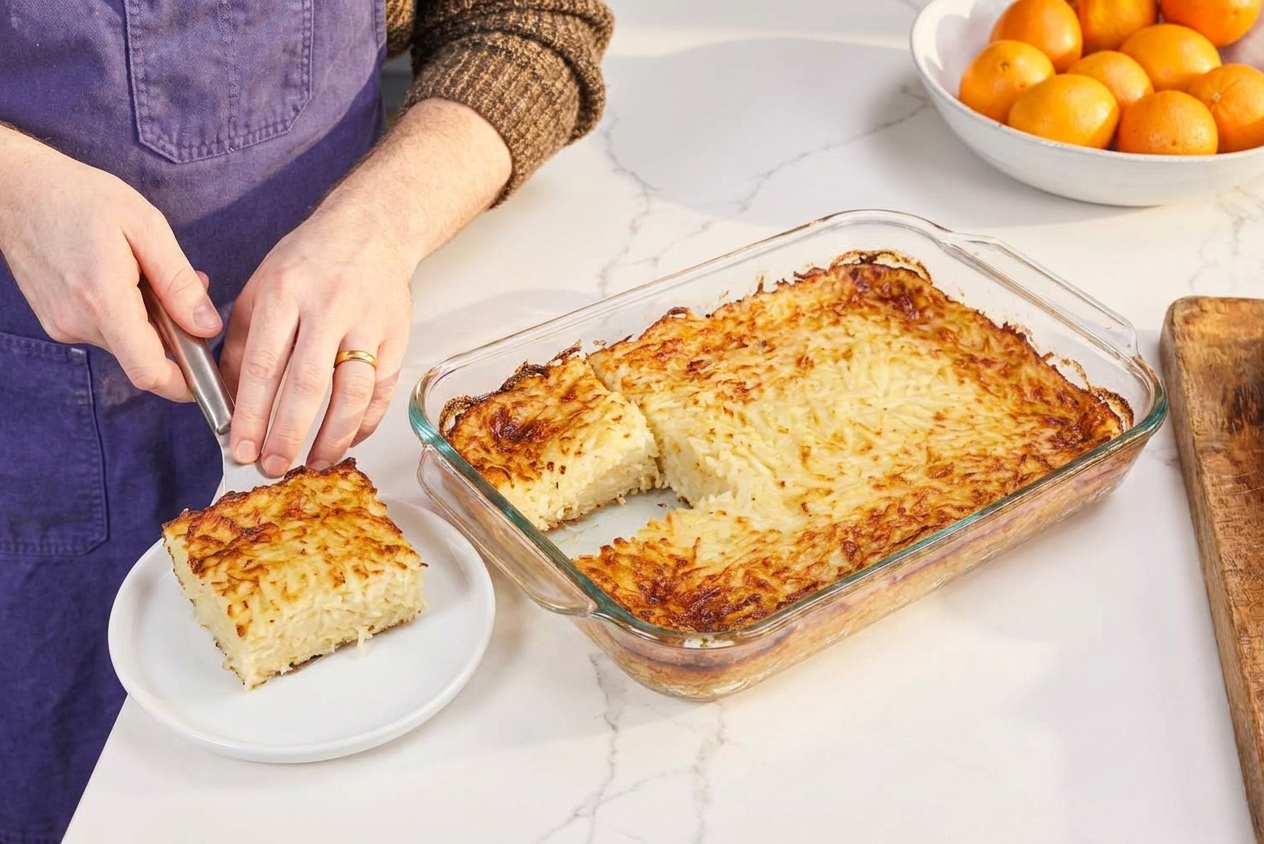
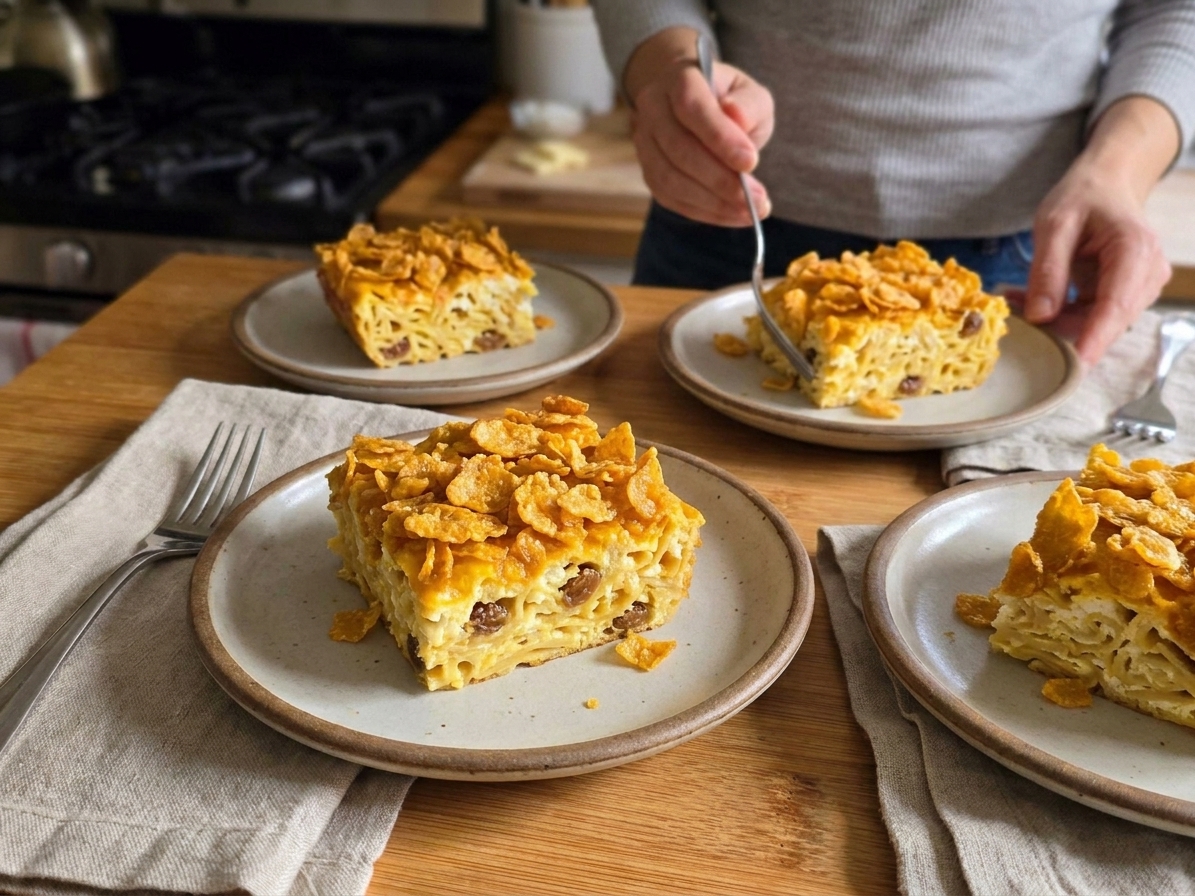
Kugel is a traditional Jewish baked casserole, often served on Shabbat and holidays. It can be sweet (like this noodle kugel) or savory (often made with potatoes, onions, and sometimes pepper).
Is kugel served as a side dish or dessert?
Yes. Sweet noodle kugel lives right in that delicious gray area. Many families serve it as a side with a holiday meal or as part of a brunch spread. It can absolutely pass for dessert too, especially with fruit on the side.
How sweet is this kugel?
This one is classic-sweet. If you prefer it a little less sugary, reduce the filling sugar to 3/4 cup. Everything else stays the same.
Can I use cream cheese instead of cottage cheese?
You can. Swap in 8 ounces softened cream cheese for the cottage cheese, or do half cottage cheese and half cream cheese. The texture will be smoother and a bit richer.
Do I have to use cornflakes on top?
Nope. Cornflakes are classic, but you can use crushed graham crackers, crushed vanilla wafers, panko (for a less sweet crunch), or even sliced almonds. The goal is a buttery, crunchy top layer.
Why is my kugel watery?
This usually comes from excess moisture in dairy or noodles that were not drained well. If your cottage cheese seems very wet, drain it briefly. Also make sure the noodles are well drained and not rinsed. One more common culprit is pulling it too early. Underbaked kugel can look set at the edges but still be loose in the center. Let it bake until the center no longer looks liquid, then let it rest so it can firm up.
How do I get crisp edges?
Butter the baking dish generously and bake until the edges are visibly browned. Let it rest 15 to 20 minutes after baking so it sets and slices cleanly.
Any easy variations?
Absolutely. Try 1 cup diced apples tossed with a pinch of cinnamon, swap raisins for dried cherries, or add a tiny pinch of nutmeg to the custard for extra warmth.