Mom's Best Recipes
Recipe

Classic Thanksgiving Stuffing

Buttery, sage-forward stuffing with crisp edges, a tender center, and make-ahead options that keep Thanksgiving calm.

Author By Matt Campbell
4.8
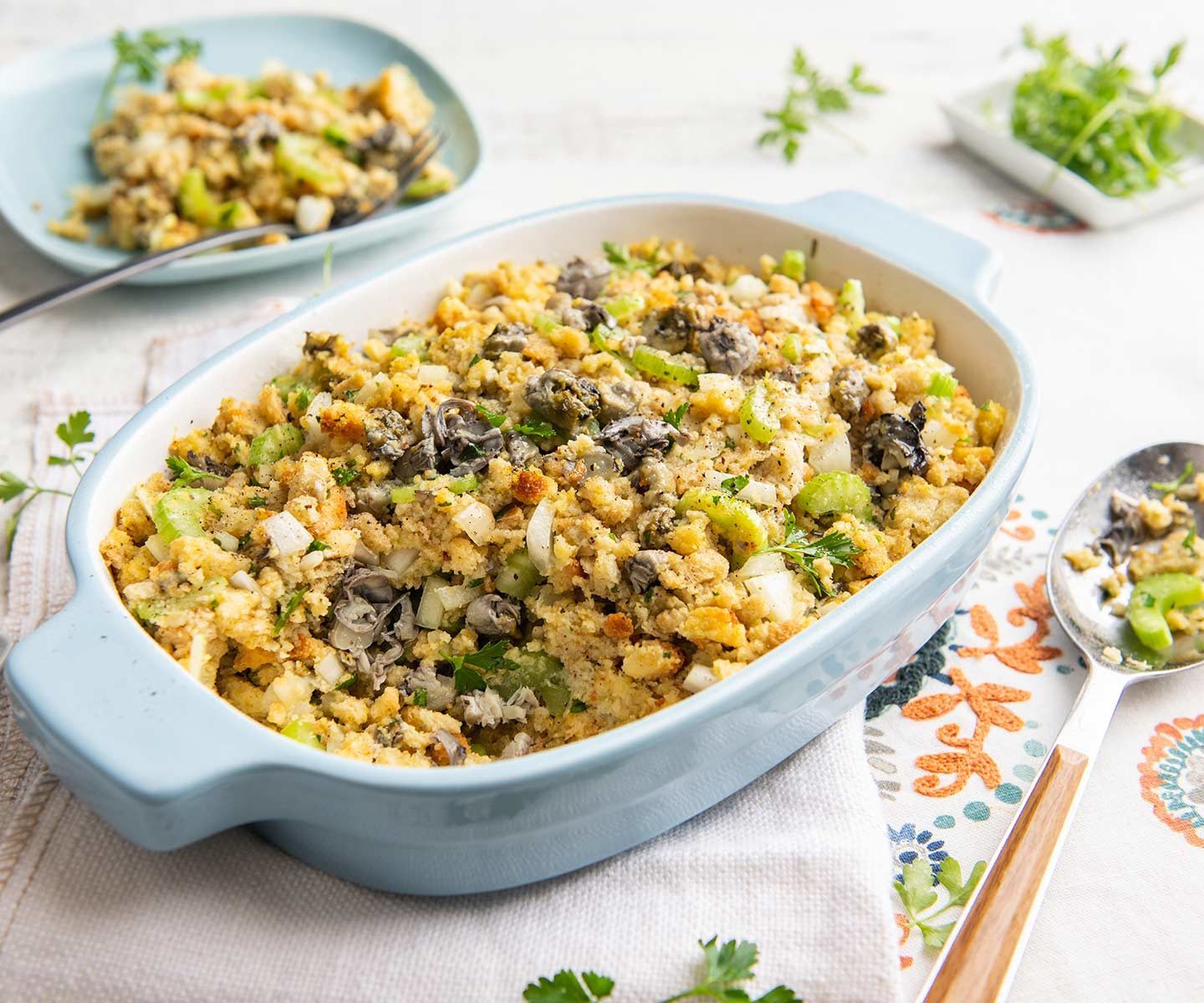
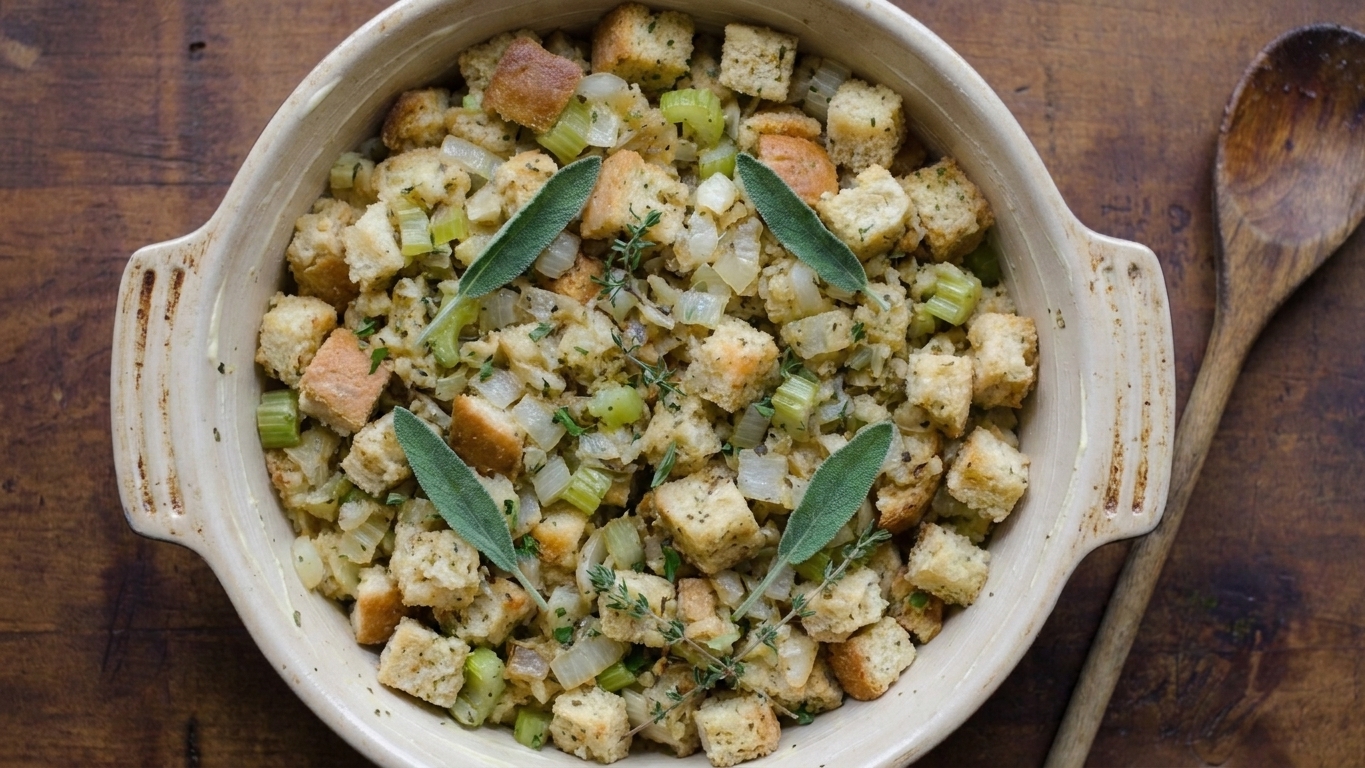
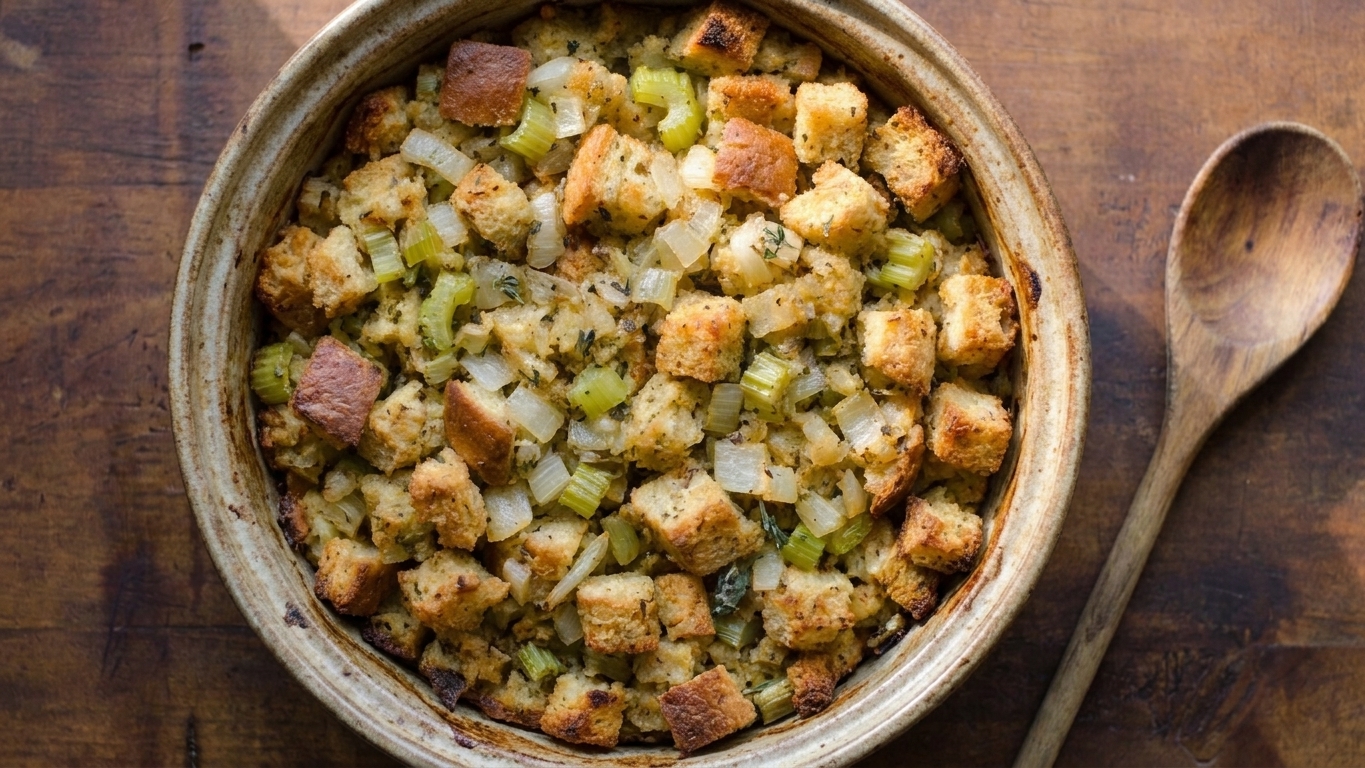
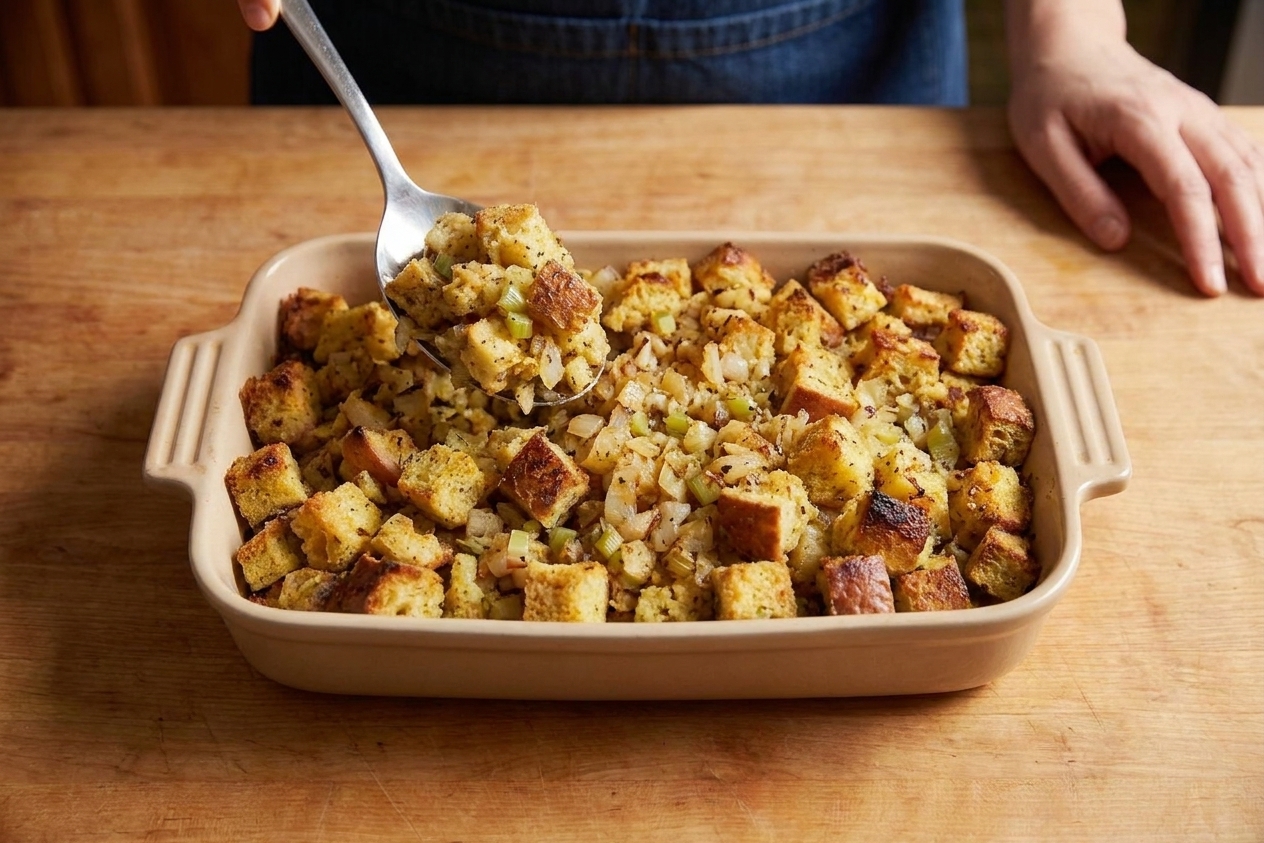
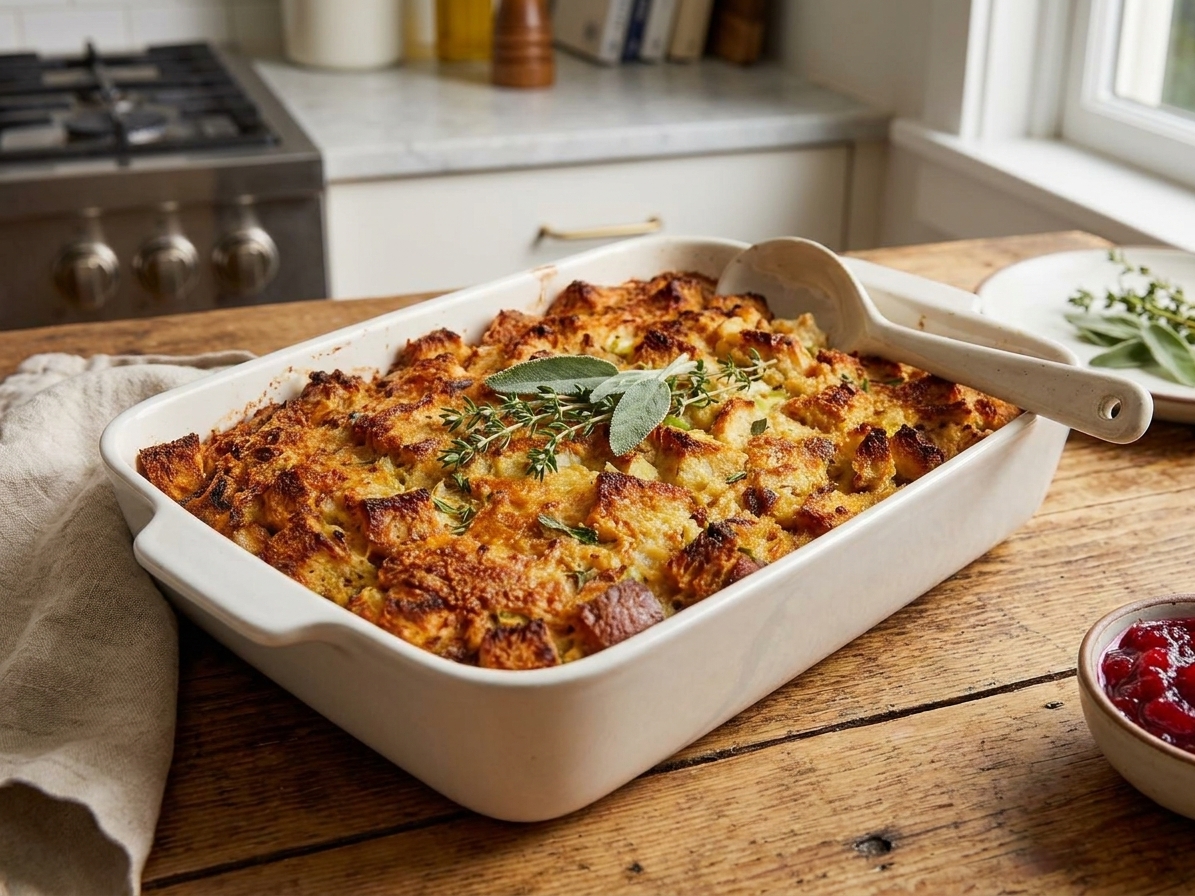
A golden brown Thanksgiving stuffing baked in a ceramic casserole dish with crisp edges and visible celery and herbs on a neutral kitchen counter under warm light

Stuffing is the side dish that turns the whole Thanksgiving plate into a coherent story. You have turkey, you have gravy, you have potatoes, and then stuffing shows up like the friend who ties the group chat together.

This version is my forever classic: toasted bread, browned butter, a mountain of sautéed onions and celery, and enough sage and thyme to make the kitchen smell like you meant to do all this on purpose. It bakes up moist and custardy in the middle with crisp edges on top, which is exactly the drama I want in a casserole.
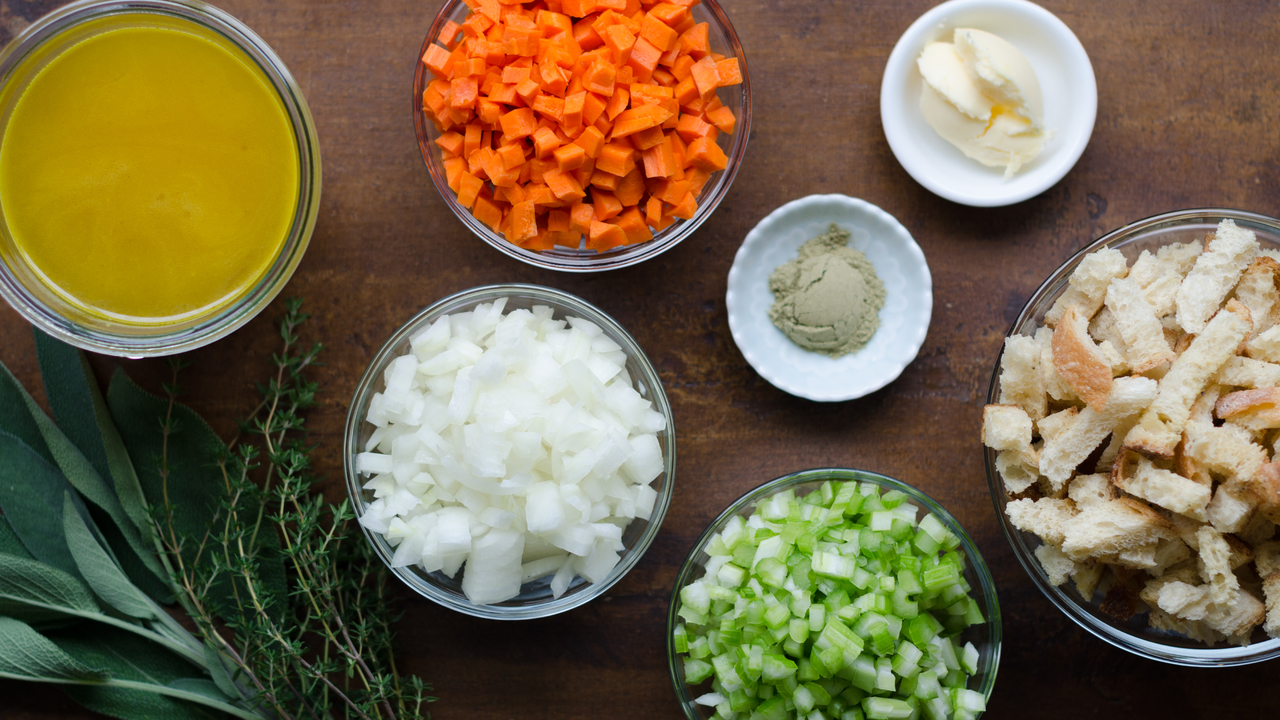
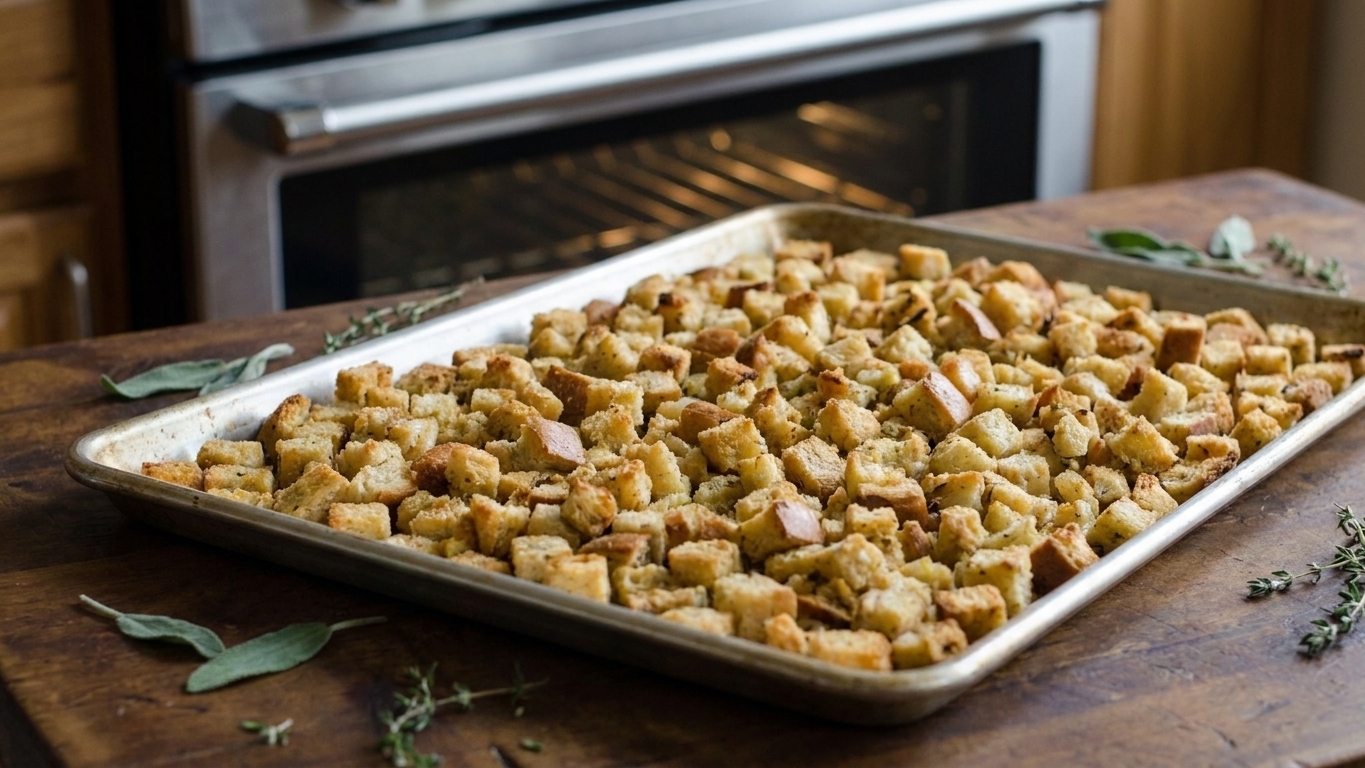
Cubes of dried bread, a bowl of chopped celery and onions, fresh herbs, eggs, and cartons of broth arranged on a wooden cutting board on a bright kitchen counter

Also, you can absolutely make most of it ahead. Future-you will be grateful, and present-you can focus on the important stuff, like stealing crispy bits straight off the spoon.
Why It Works

  • Toasted bread + browned butter gives you nutty flavor and a sturdier texture that does not collapse into mush.
  • Eggs bind the broth into a light, savory custard so the stuffing stays tender instead of wet.
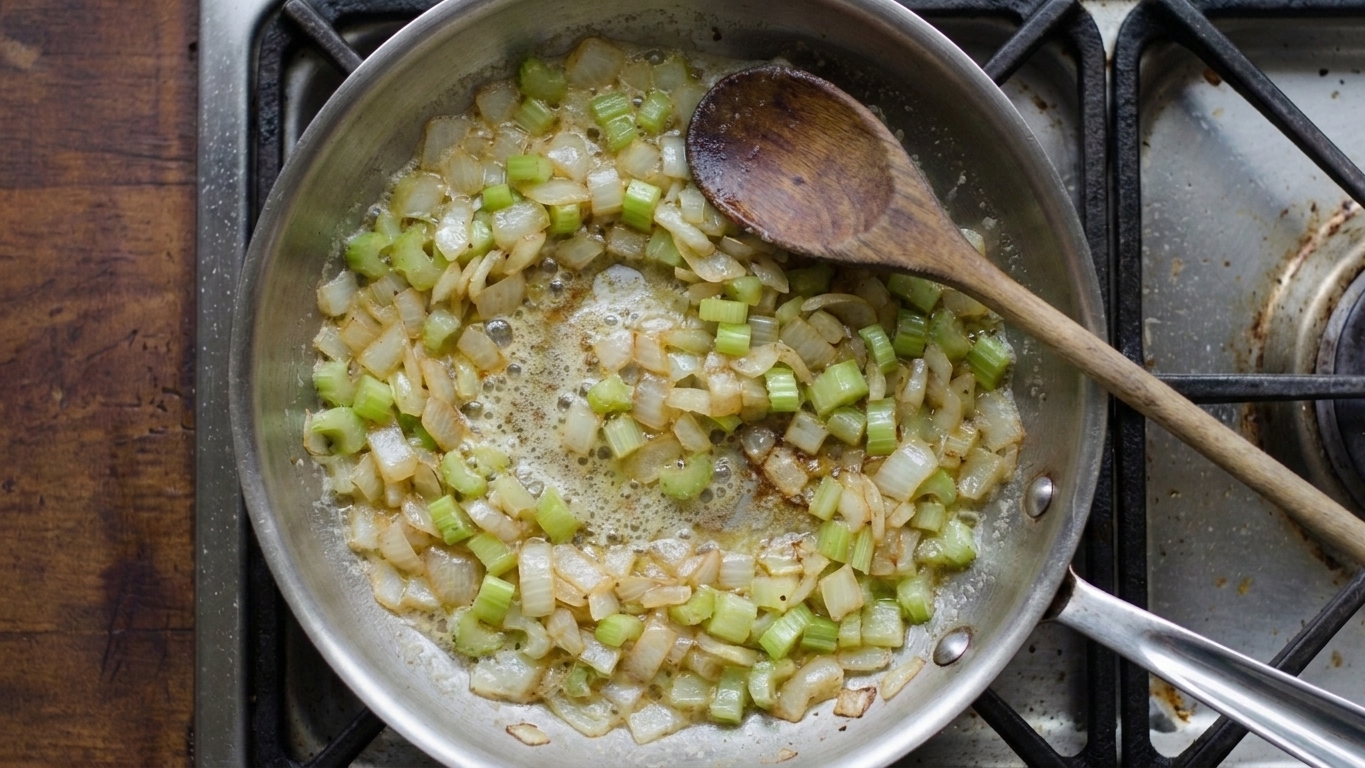
  • Sautéing the aromatics first softens celery and onions and builds sweetness, which makes the herbs pop.
  • Two-stage bake (covered then uncovered) locks in moisture, then finishes with crisp edges.
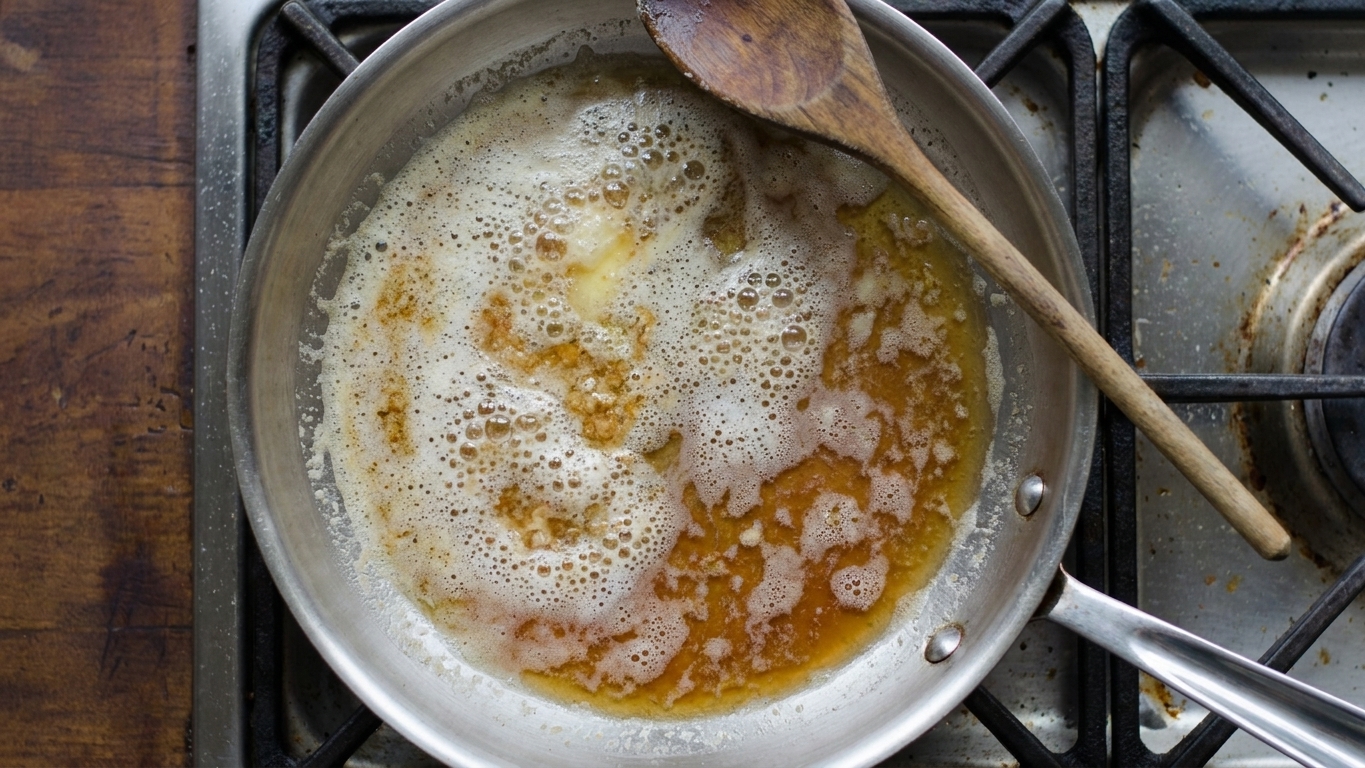
A stainless steel skillet with browned butter foaming and turning amber, with a wooden spoon resting on the rim on a stovetop

Pairs Well With

Storage Tips

How to Store Leftover Stuffing

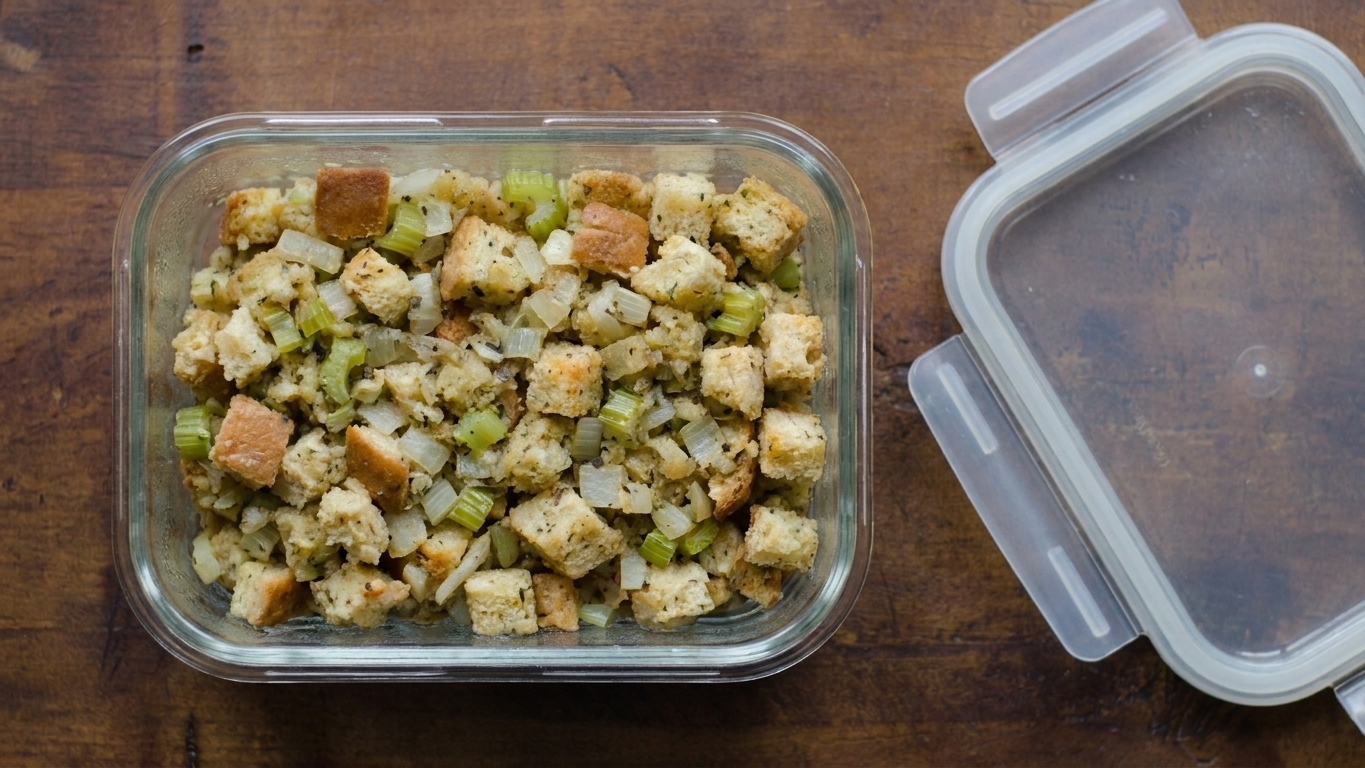
  • Refrigerate: Cool slightly, then refrigerate within 2 hours (within 1 hour if the room is very warm). Store airtight for up to 4 days.
  • Freeze: Wrap tightly and freeze up to 2 months. Thaw overnight in the fridge.
  • Reheat (best texture): Spread in a baking dish, sprinkle with a few tablespoons of broth, cover with foil, and warm at 350°F for 20 to 25 minutes. Uncover for the last 5 to 10 minutes to re-crisp the top.
  • Microwave (fast): Add a splash of broth, cover loosely, and heat in 30-second bursts.
An airtight glass container filled with leftover Thanksgiving stuffing on a kitchen counter with a lid nearby

Common Questions

Common Questions

Is stuffing the same as dressing?

Same idea, different vibe. Traditionally, stuffing is cooked inside the bird and dressing is baked in a dish, though regional habits vary. For food safety and maximum crisp edges, I bake it in a casserole dish every time.

How much broth do I add so it is not dry?

Start with 3 cups for 12 cups of dried bread cubes. After mixing, the bread should look well-hydrated and slightly shiny, with just a little liquid visible at the bottom of the bowl. Give it 1 to 2 minutes to soak in. If it still looks dusty or you spot dry corners, add more broth 1/4 cup at a time. Different breads drink differently.

Can I make it the day before?

Yes. Assemble everything in the baking dish, cover, and refrigerate up to 24 hours. Before baking, let it sit out briefly while the oven preheats, about 15 to 20 minutes (skip this if your kitchen is very warm), then bake as directed. You may need an extra 5 to 10 minutes covered.

Can I make this without eggs?

You can. Eggs help set the texture, but you can skip them and add an extra 1/2 cup broth. The result will be looser and more scoopable, still tasty.

What bread is best for Thanksgiving stuffing?

Sturdy, neutral breads win: French bread, sourdough, or a simple country loaf. Avoid very soft sandwich bread unless you love a super tender, almost pudding-like stuffing.

Can I add sausage or apples?

Absolutely. Brown 1 pound breakfast sausage first, then sauté the onions and celery in the drippings (add butter if needed). For apples, sauté 1 to 2 diced apples with the onions until just softened.

I used to think stuffing was just bread doing its best. Then I learned the tiny upgrades that change everything: toast the bread, brown the butter, and taste and adjust your broth before you whisk in the eggs. The first time I made it this way, I caught myself standing over the casserole “checking” the crisp edges like it was my job. Now it is my rule: stuffing should be cozy, yes, but it should also have at least a few bite-sized moments that crunch.