Mom's Best Recipes
Recipe

Oyster Stuffing

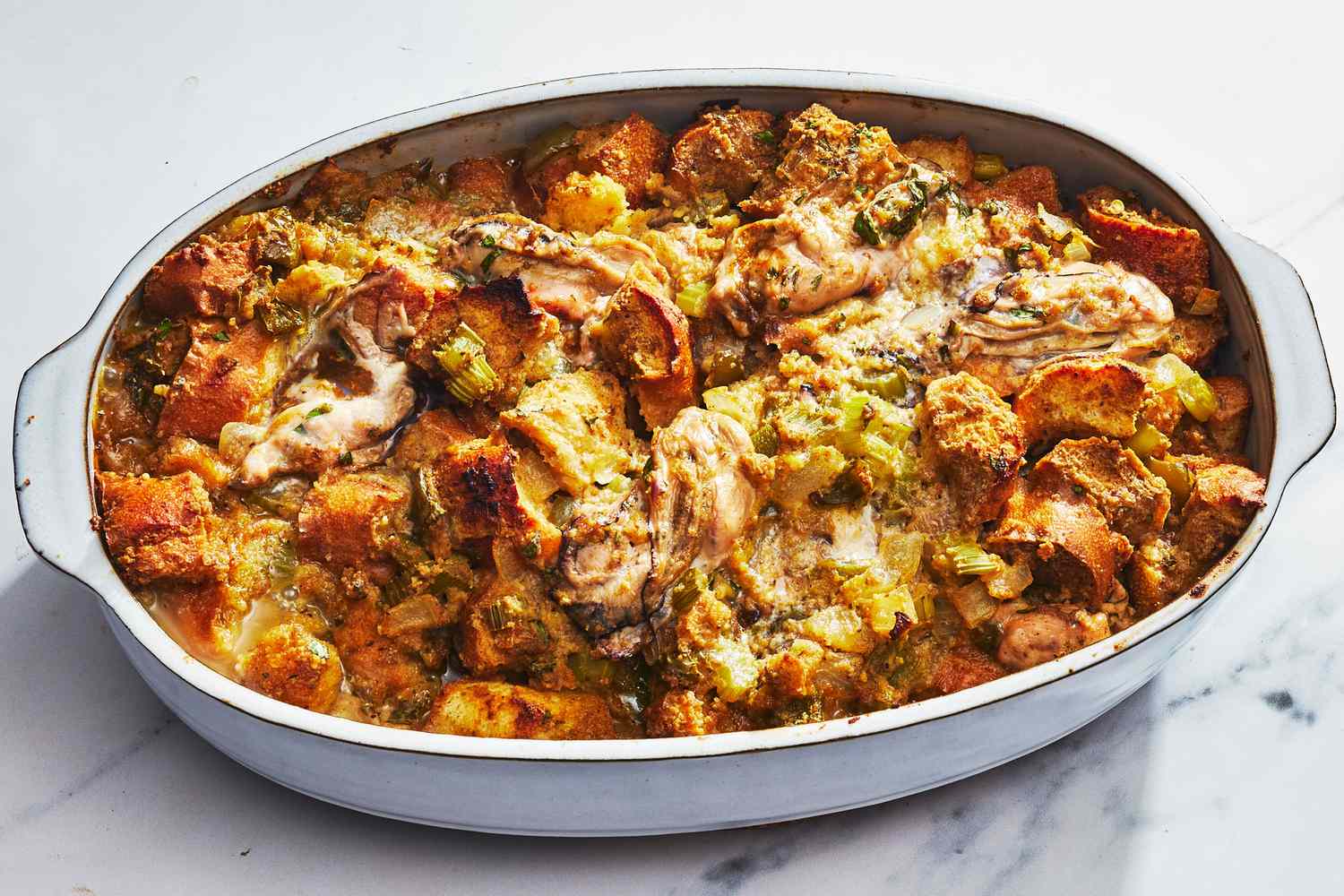
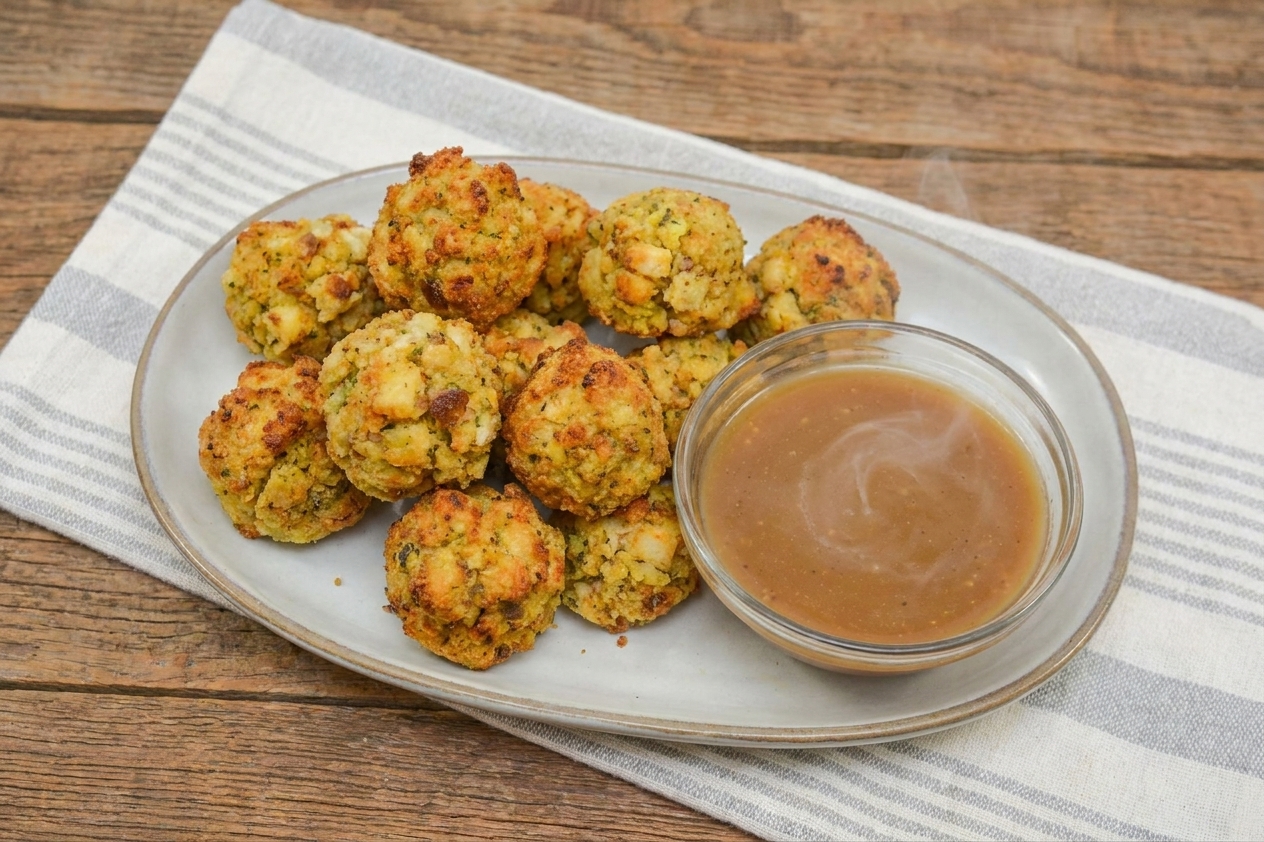
Buttery, herb-packed stuffing with briny oysters and crisp golden edges.

Author By Matt Campbell
4.8
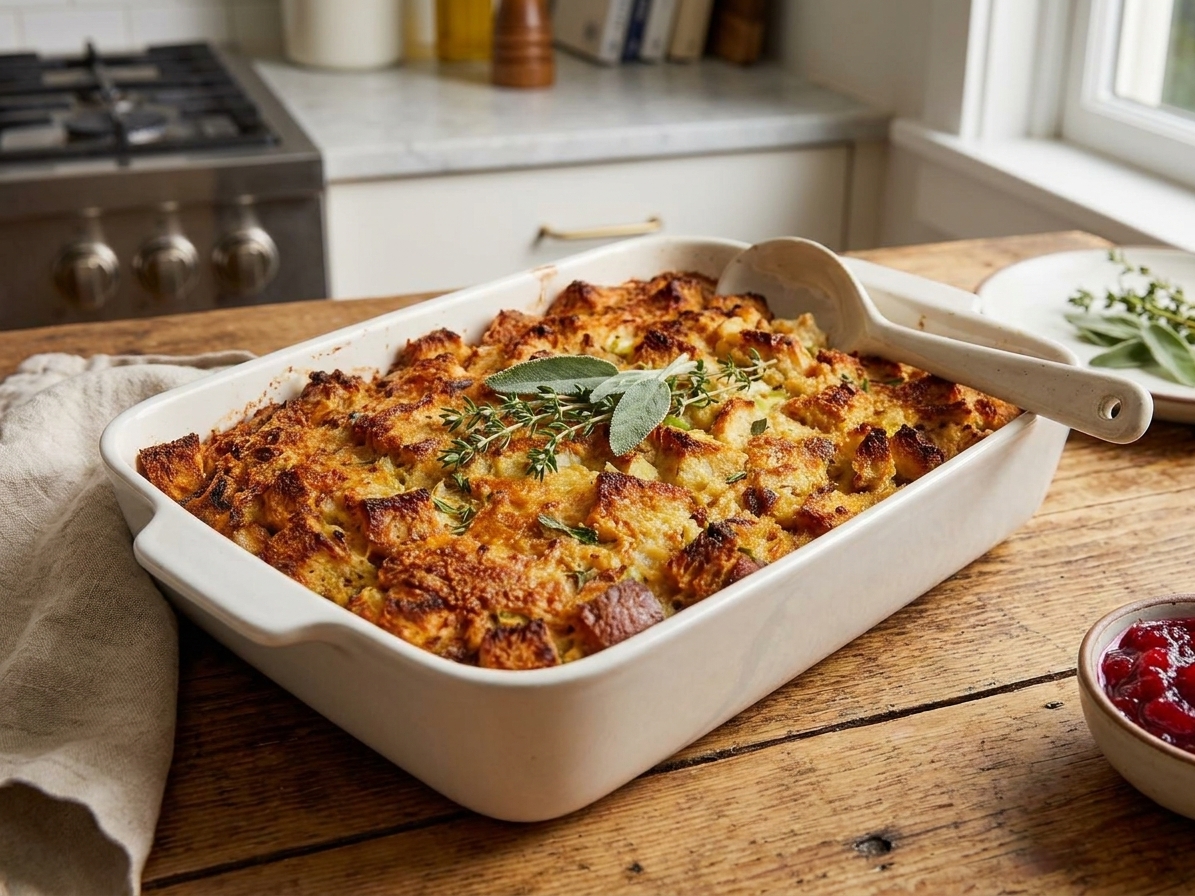
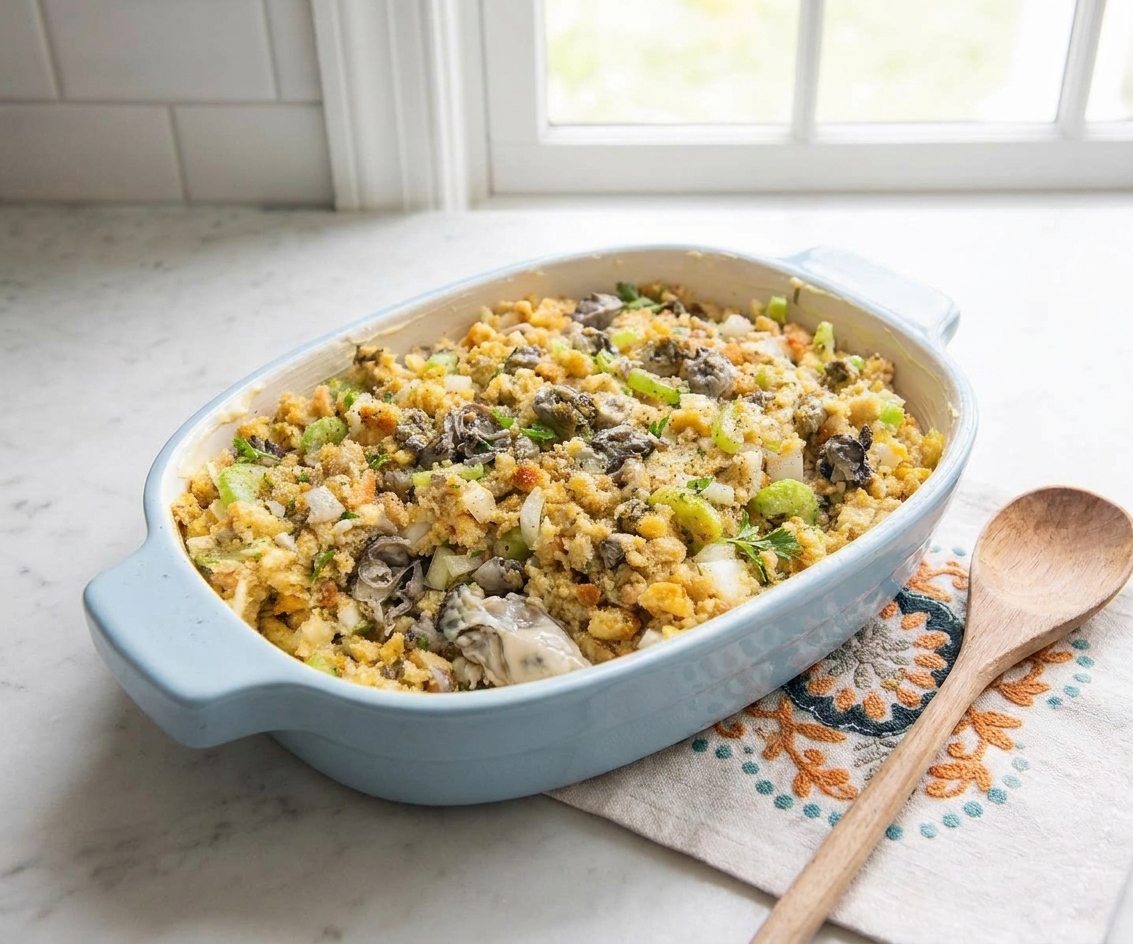
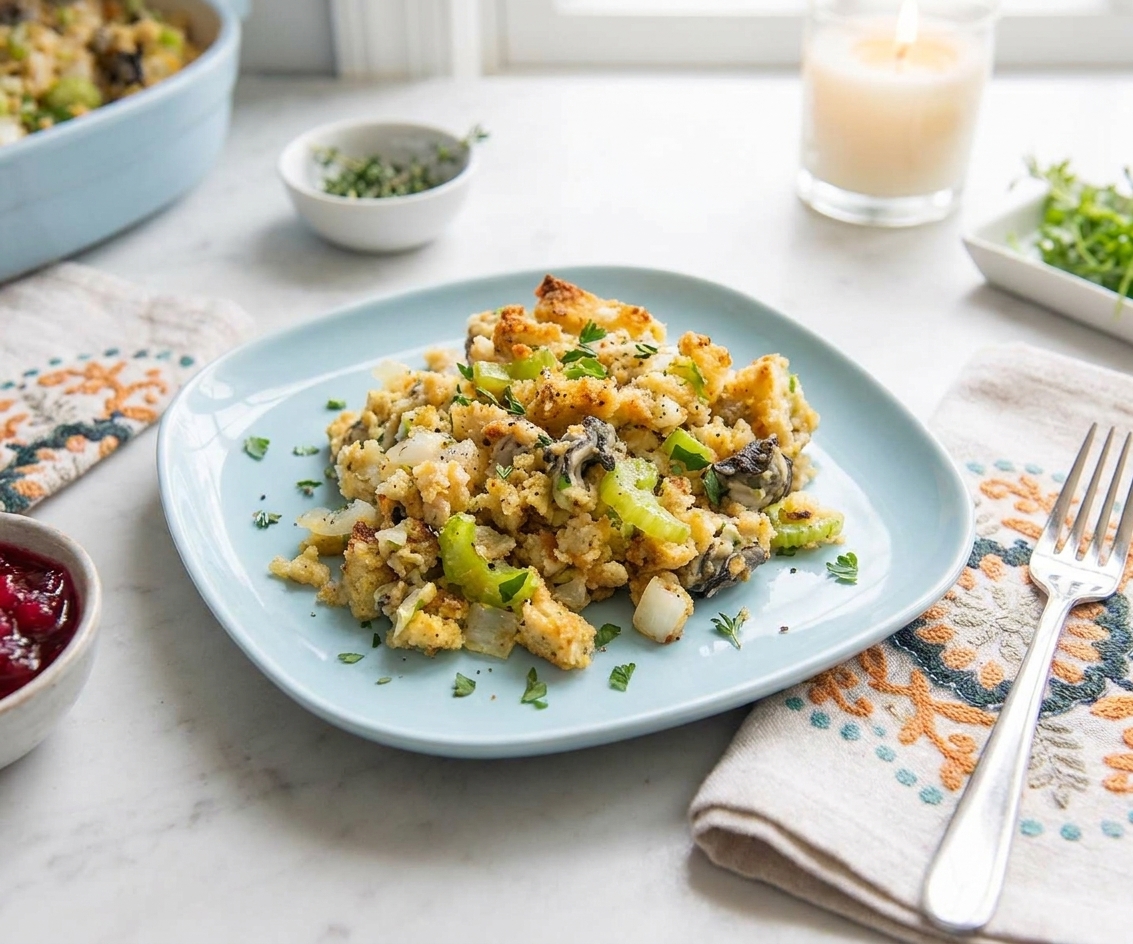
A golden-brown casserole dish of oyster stuffing with crisp edges and visible herbs, sitting on a warm kitchen table with a serving spoon

Oyster stuffing is one of those dishes that sounds fancy, maybe even a little intimidating, until you remember what it really is: cozy bread stuffing that just happens to have a salty, ocean-kissed upgrade. The oysters do not make it fishy. They make it deeper, like the difference between a good gravy and the one you keep “testing” with a spoon every time you walk by.

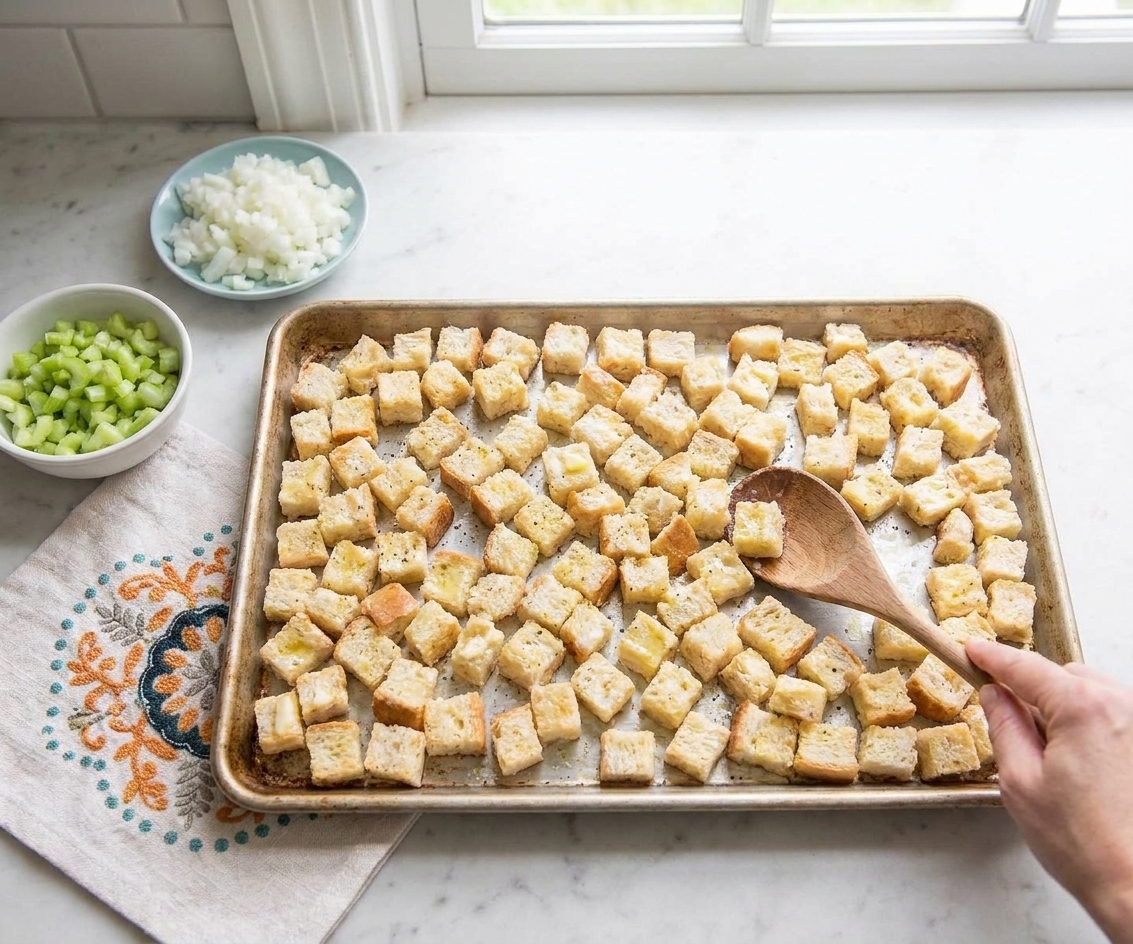
This version keeps things classic: dried bread cubes, sautéed onion and celery, lots of herbs, plenty of butter, and just enough oyster liquor to make everything taste like it was cooked by someone’s very opinionated aunt. It bakes up crisp on top, soft underneath, and dangerously scoopable.

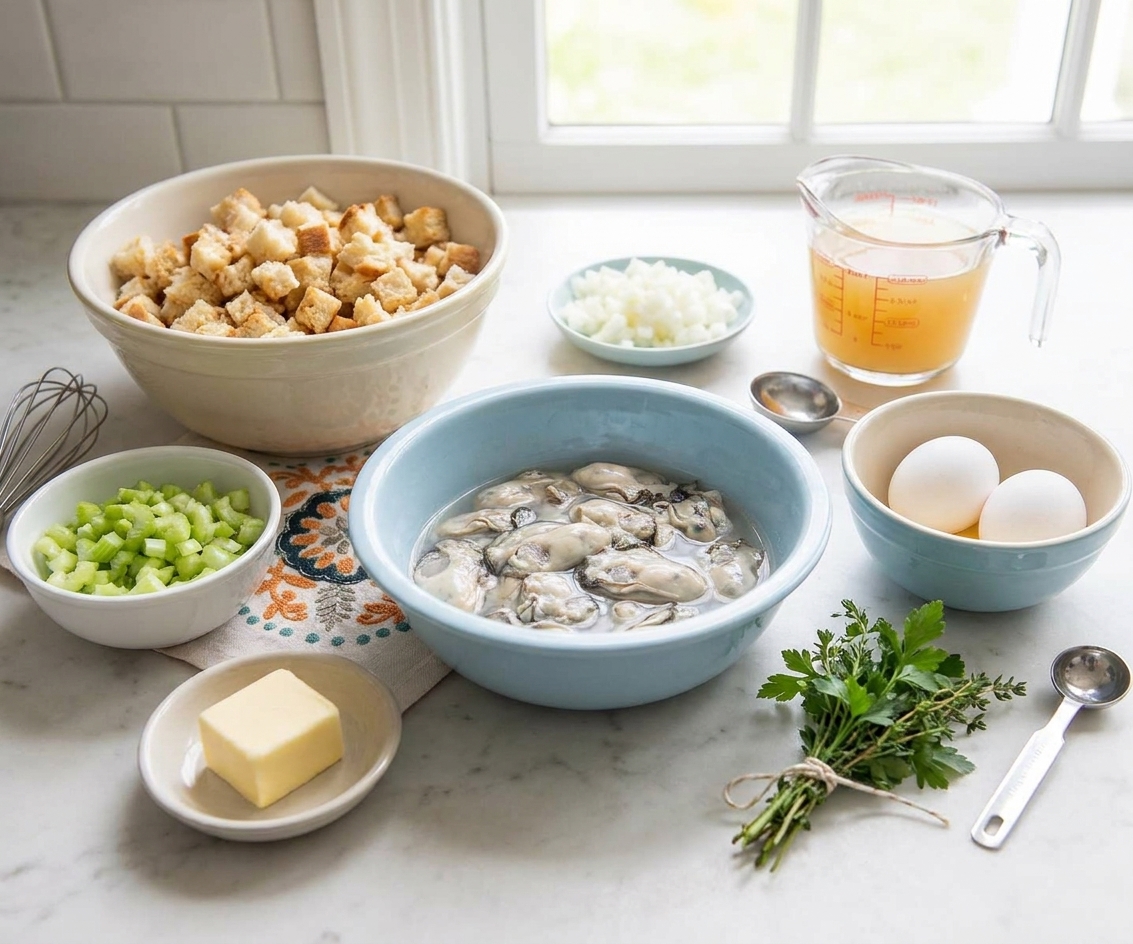
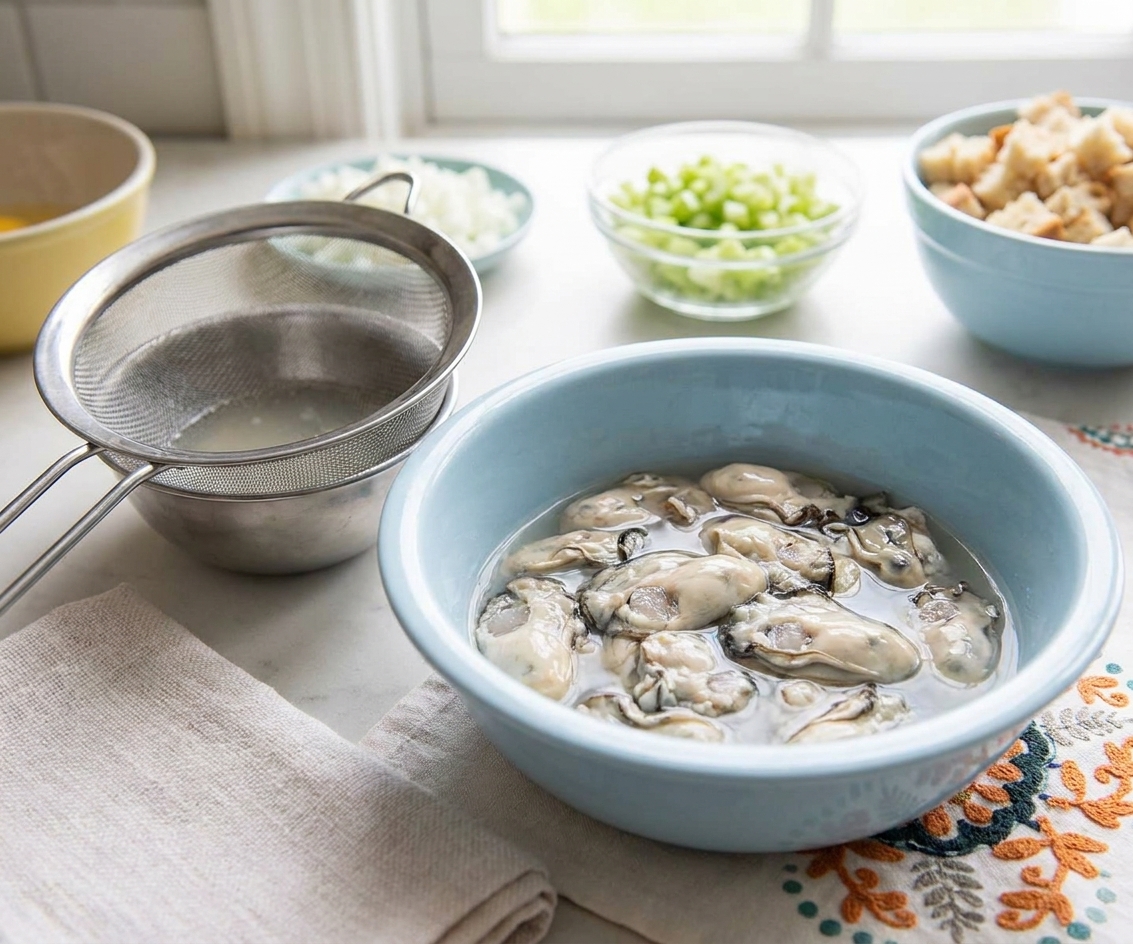
Measured ingredients for oyster stuffing on a kitchen counter including bread cubes, oysters, chopped celery and onion, herbs, butter, eggs, and broth

Why It Works

  • Crisp edges, tender center: Baked uncovered to brown the top, with enough moisture to keep the middle custardy, not soggy.
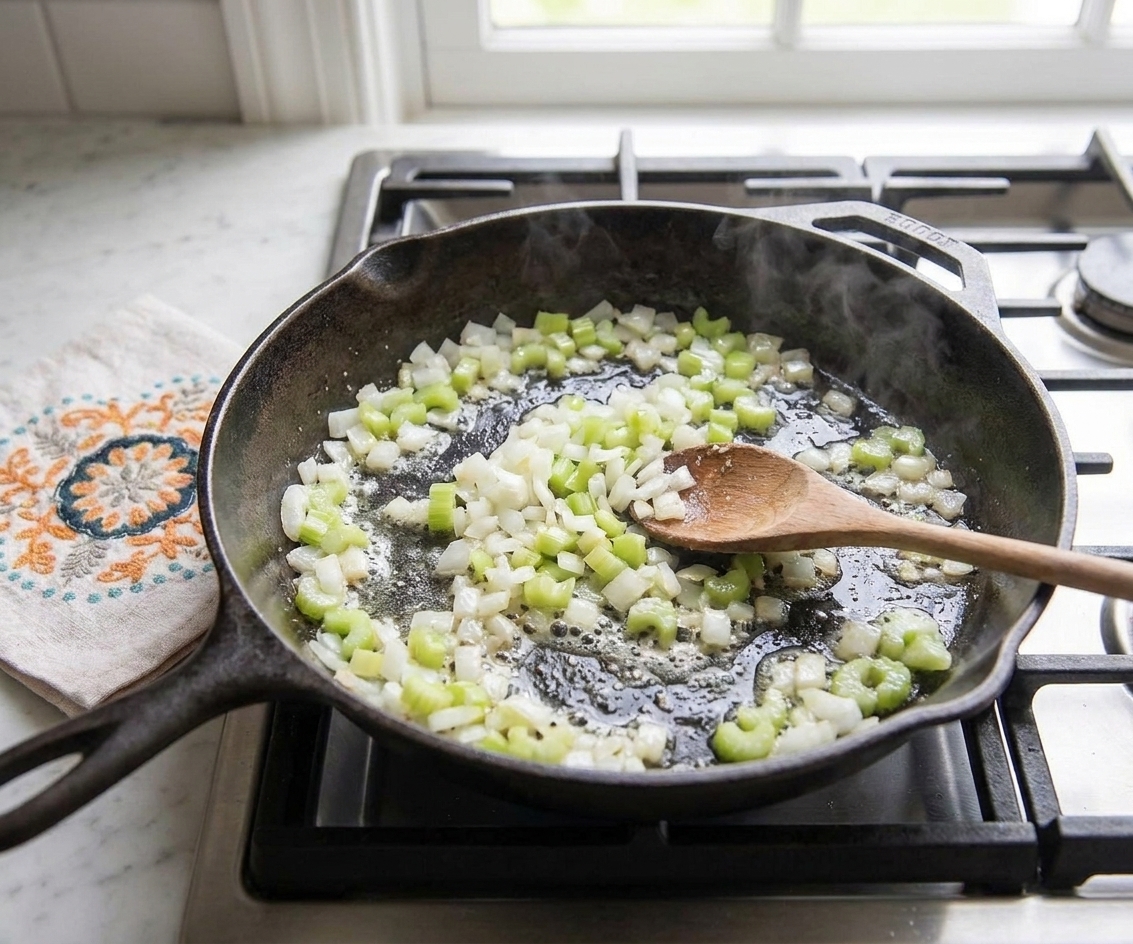
  • Big savory flavor fast: Butter plus sautéed aromatics plus herbs builds a strong base before the oysters even show up.
  • True oyster taste without being weird: Using some reserved oyster liquor gives you the briny depth, while broth keeps it familiar.
  • Flexible: Works with jarred, fresh-shucked, or good-quality refrigerated oysters, and you can bake it in a dish or stuff it into a bird.

Pairs Well With

Storage Tips

Refrigerate: Cool completely, then store in an airtight container for up to 3 to 4 days.

Reheat: For best texture, spread in a baking dish, cover with foil, and warm at 325°F until hot (about 20 minutes). Uncover for the last 5 minutes to re-crisp the top. A microwave works, but you will lose the crunch.

Freeze: Freeze baked stuffing tightly wrapped for up to 2 months. Thaw overnight in the fridge, then reheat covered at 325°F until hot. Add a splash of broth if it seems dry.

Food safety note: Because oysters are seafood, do not leave stuffing at room temp longer than 2 hours (or 1 hour if it is above 90°F).

Common Questions

Do I have to like oysters to like oyster stuffing?

If you hate oysters, this probably will not convert you. But if you are oyster-curious, stuffing is a friendly on-ramp. The oysters read more like a savory seasoning plus tender bites than a big seafood moment.

What kind of oysters should I buy?

Fresh-shucked is great. Refrigerated oysters in their liquor are also totally workable for home cooking. If you use canned smoked oysters, you will get a different flavor profile and a softer texture, so I do not recommend them for this classic style.

Can I make it ahead?

Yes. Assemble the stuffing (do not bake), cover, and refrigerate up to 24 hours. Let it sit on the counter 20 to 30 minutes before baking so it heats more evenly (do not let it hang out longer than 1 hour total out of the fridge). If it looks a little dry on top, drizzle on a few tablespoons of broth before it goes in the oven.

Can I cook this inside the turkey?

You can, but it is trickier with seafood. If you do stuff the bird, pack loosely and make sure the center of the stuffing hits 165°F. Honestly, baking in a dish is lower drama and gives you better crisp edges.

Why is my stuffing mushy?

Most common causes: bread was not dry enough, too much liquid, or it was covered the whole time. Dry the bread well, add broth gradually, and bake uncovered to crisp the top.

Can I make it without eggs?

You can, but it will be a little looser. The eggs help it set into that scoopable, holiday-stuffing texture. If skipping, reduce liquid slightly and press it down gently before baking.

How do I taste for seasoning safely?

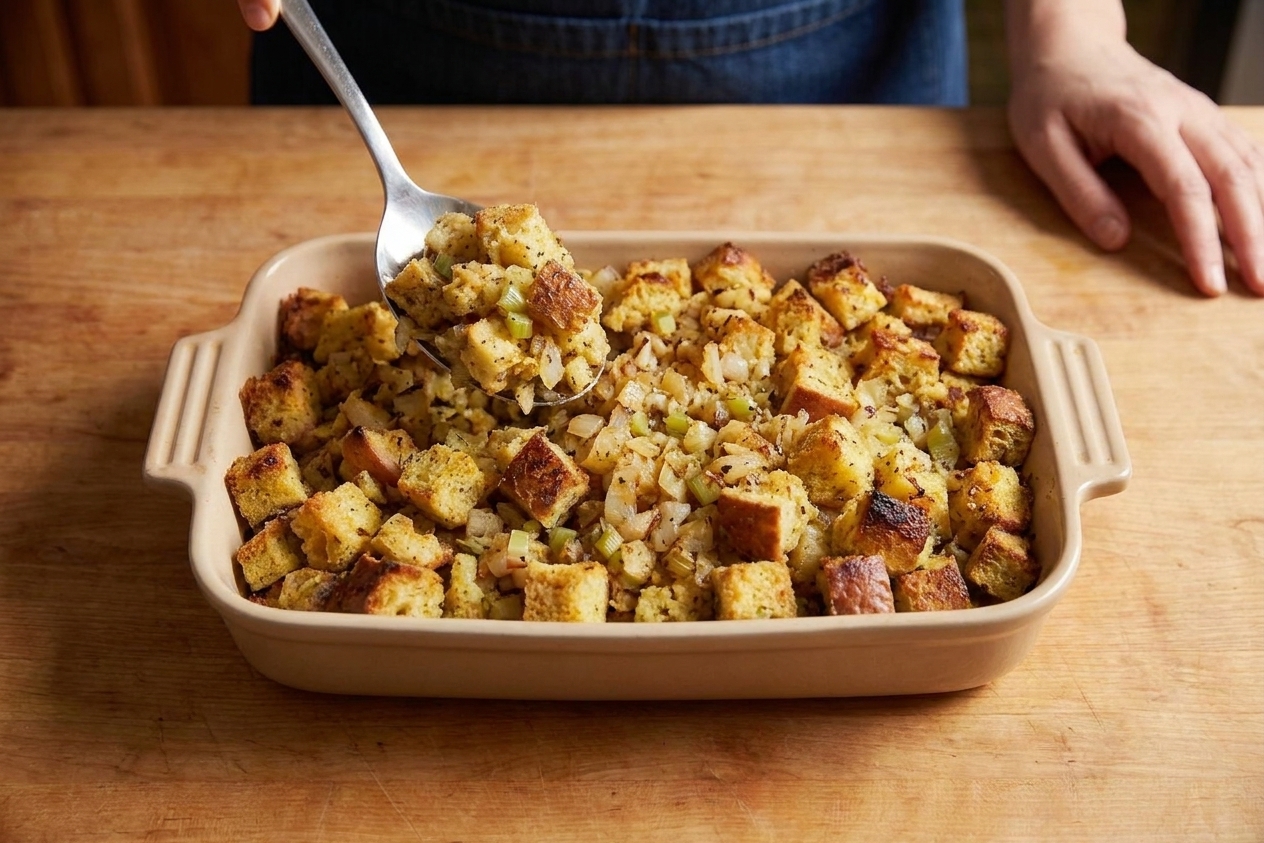
Season the bread and veggie mixture before the eggs and oysters go in. If you still want to double-check at the end, cook a small spoonful in a skillet (or microwave it until steaming hot) and taste that. Do not taste the raw mixture once eggs and oysters are added.

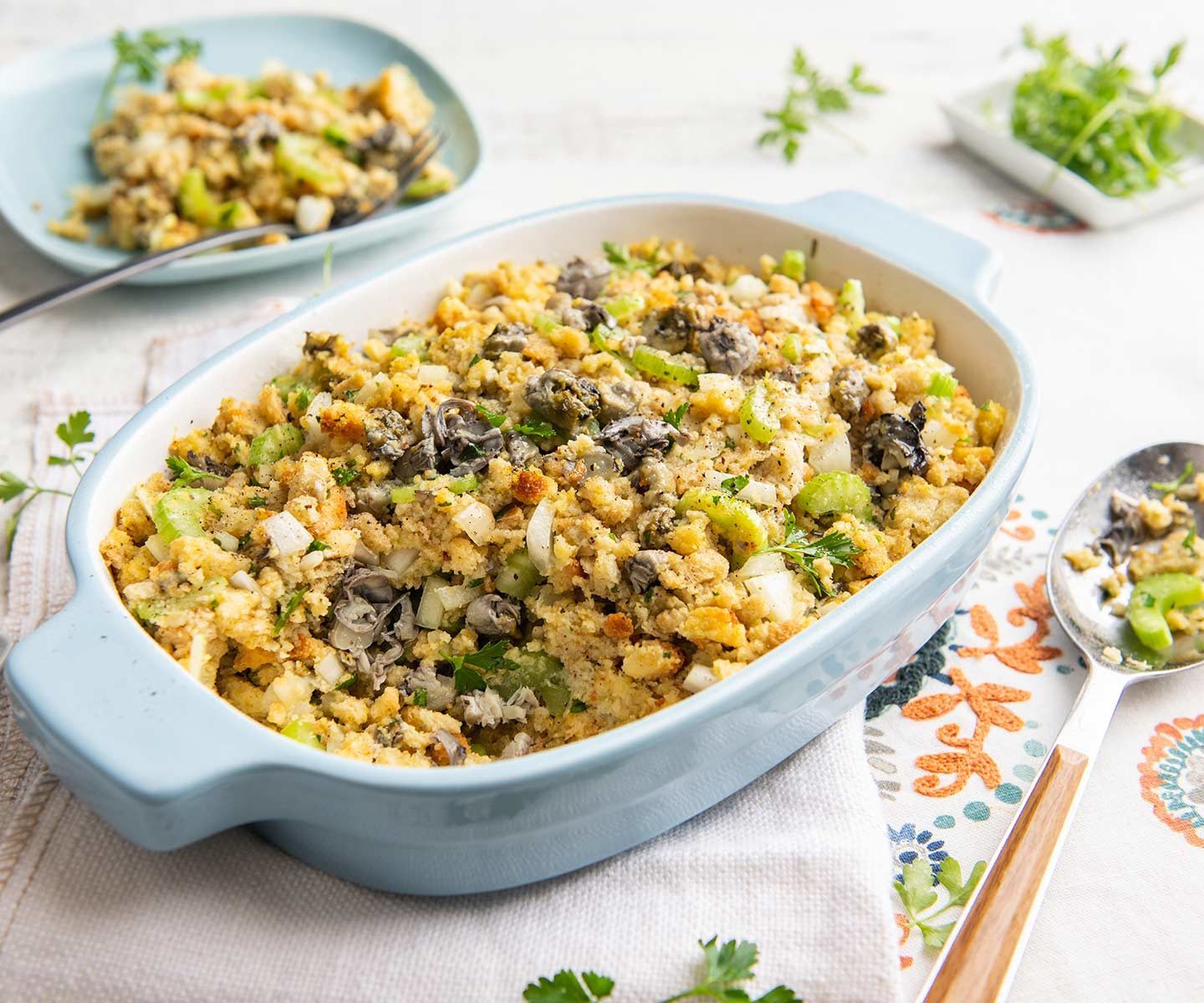
The first time I made oyster stuffing, I treated it like it was going to judge me. I overthought every step, especially the oysters. Then I tasted the bread and herb base before the eggs and oysters went in and had that little pause where your brain goes quiet for a second. Butter, herbs, pepper, that briny promise. It felt like the grown-up version of the stuffing I already loved.

Now I make it the same way every year: keep the bread dry, sauté the veggies until they smell sweet, and save some oyster liquor because that is where the magic lives. Also, I always bake it in a dish. I want crisp edges, and I want them on purpose.