What is the difference between a frittata and an omelet?
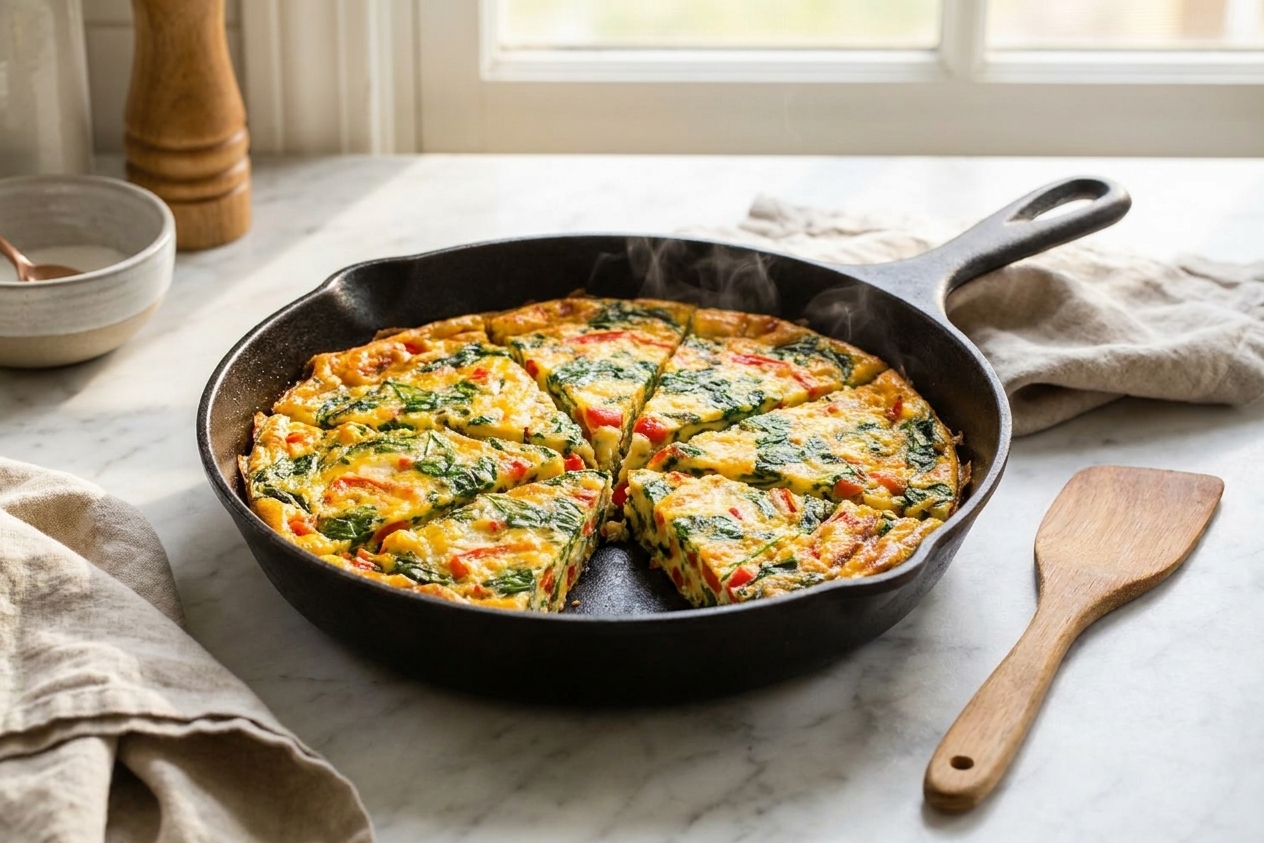
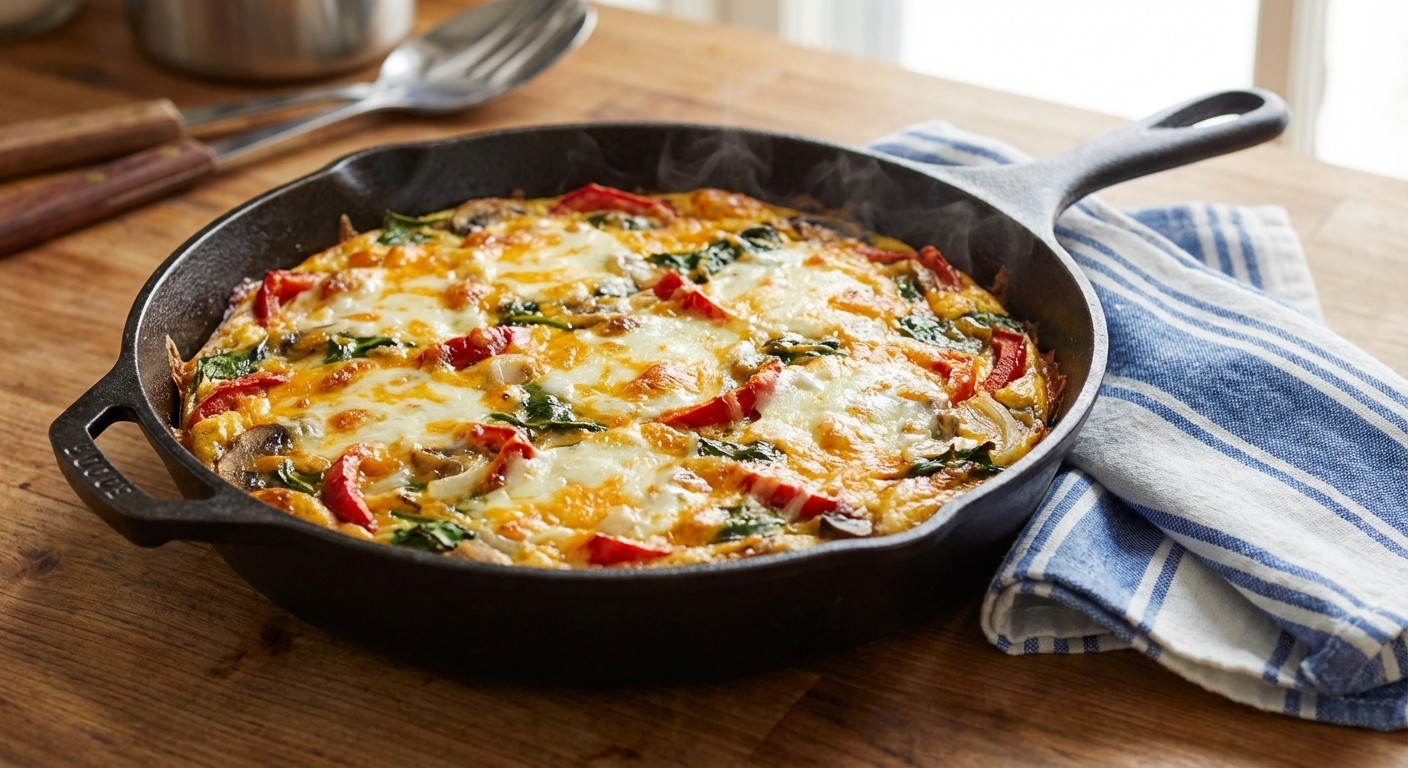
An omelet is cooked quickly on the stovetop, folded, and usually served right away. A frittata is started on the stovetop, then finished in the oven and sliced like a pie, which makes it great for feeding a group or meal prep.
Do I have to use a cast iron skillet?
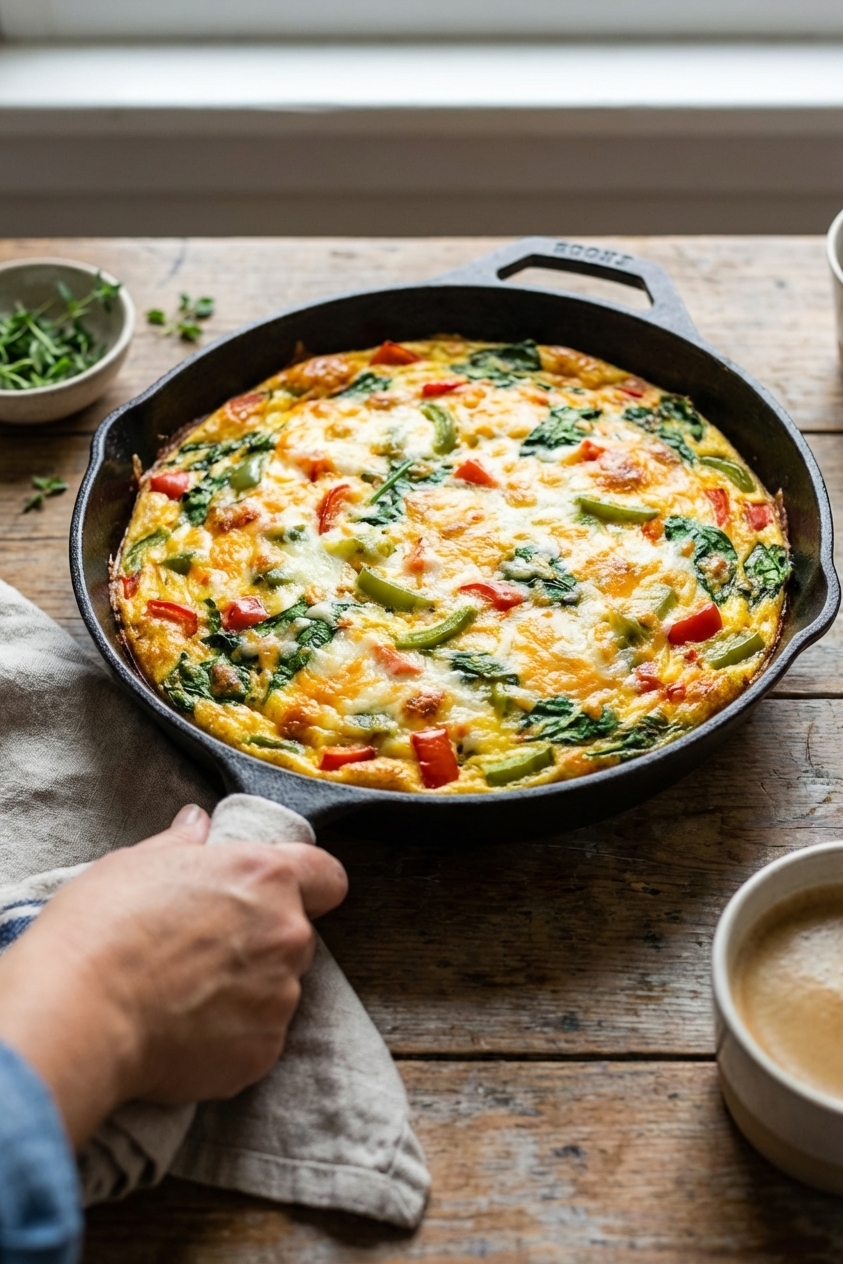
No. Any oven-safe nonstick or stainless skillet works. The key is that it can safely go from stovetop to oven. Check the manufacturer’s oven-safe temperature rating for your pan and handle.
Why is my frittata watery?
Usually it is the vegetables. Mushrooms, zucchini, tomatoes, and spinach release water. Saute them until the pan looks dry, and consider patting very juicy add-ins (like chopped tomatoes) with a paper towel before adding.
How do I know when a frittata is done?
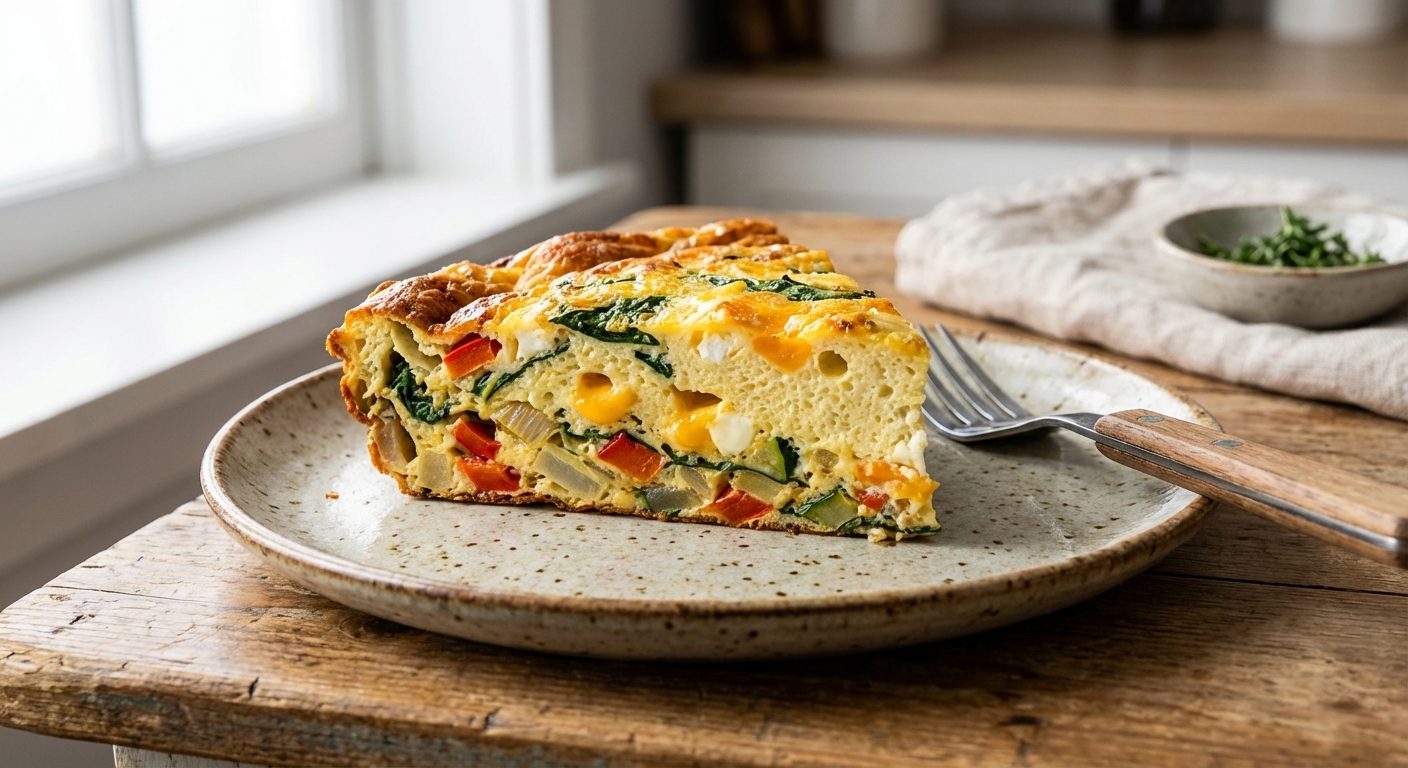
The center should look set (no wet, shiny egg) and the edges should be lightly puffed. It is done when the middle is barely jiggly, not sloshy. For extra confidence, use a thermometer: aim for 160 to 165°F in the center.
Can I make this dairy-free?
Yes. Skip the cheese or use a dairy-free shreds option. You can also swap milk for unsweetened almond or oat milk. The texture will be slightly less rich but still solid. You can also skip the milk entirely if you prefer.
What if I only have a 12-inch skillet?
You can use a 12-inch skillet, but the frittata will be thinner and may bake faster. Start checking a few minutes early. If you want the same thickness, bump the eggs up to about 10.