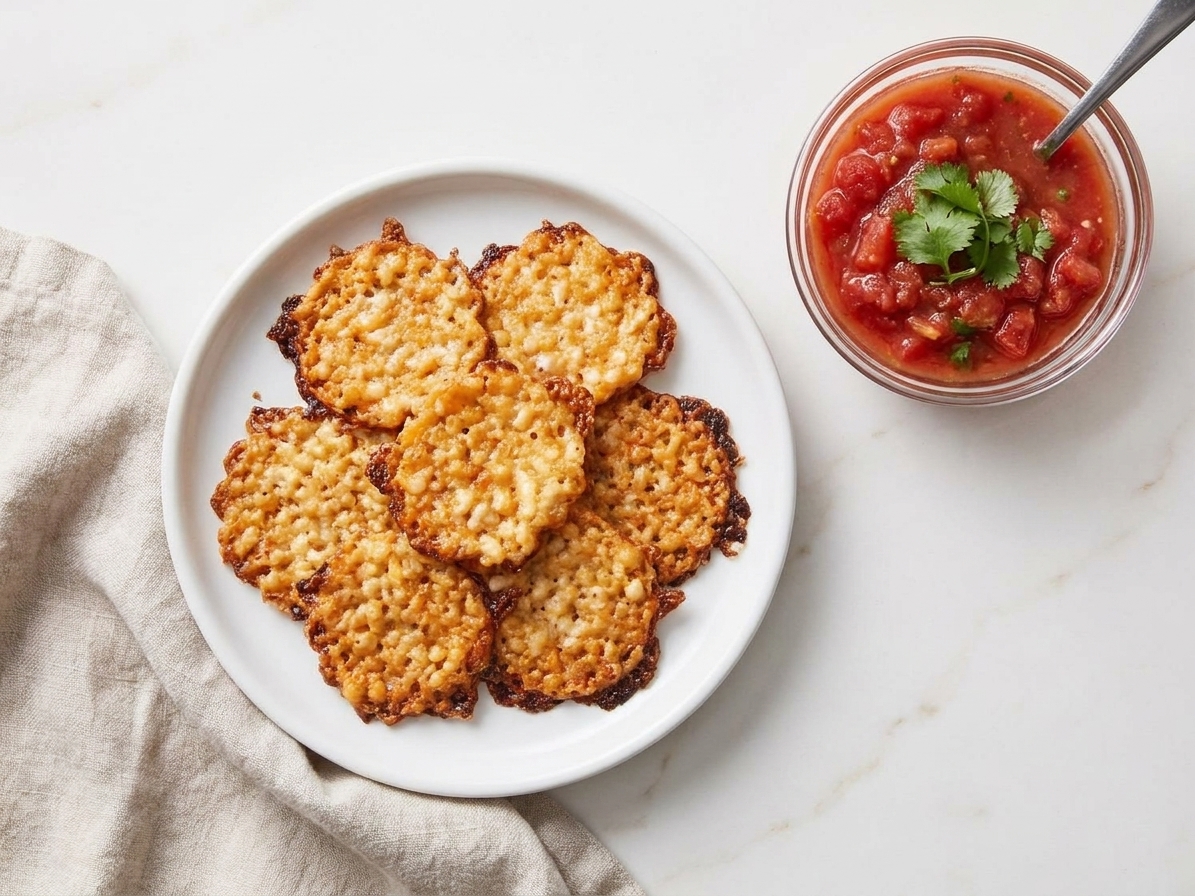
Do cottage cheese chips really get crispy?
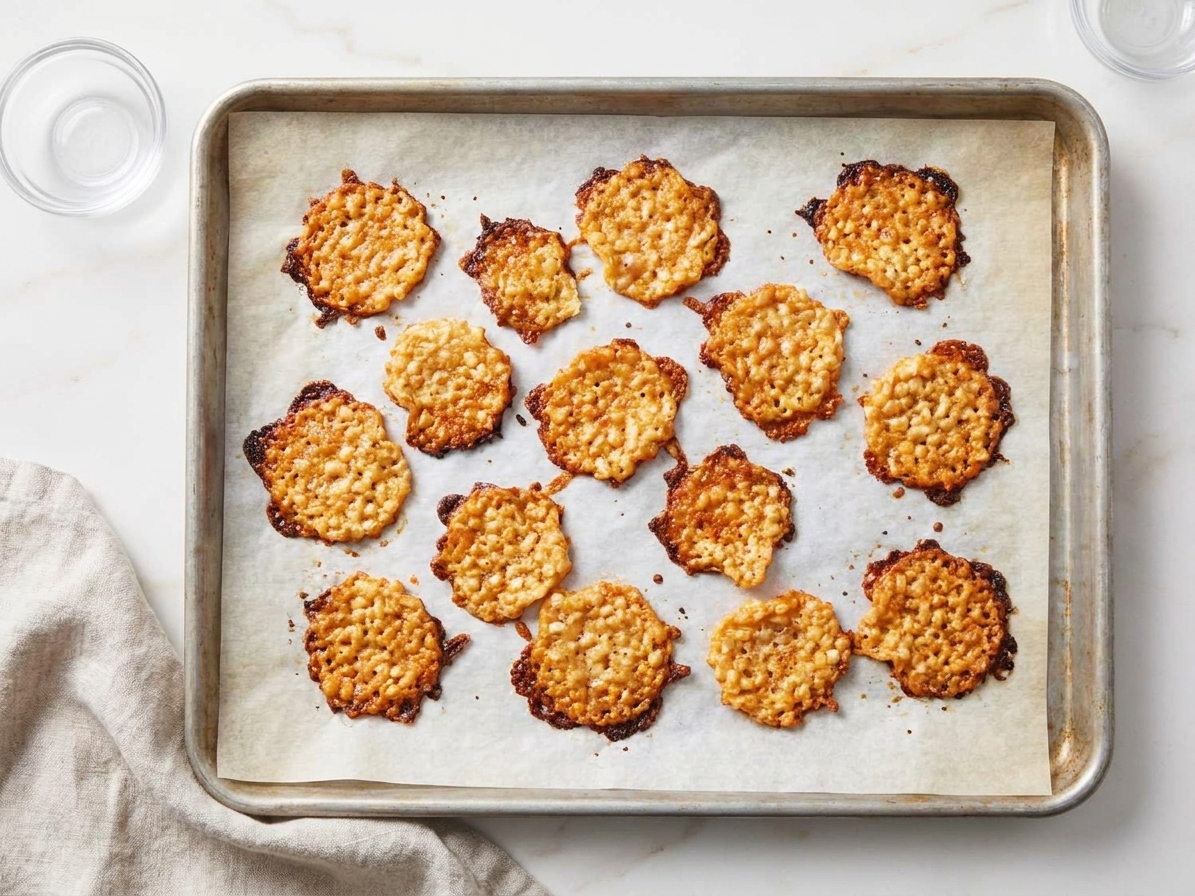
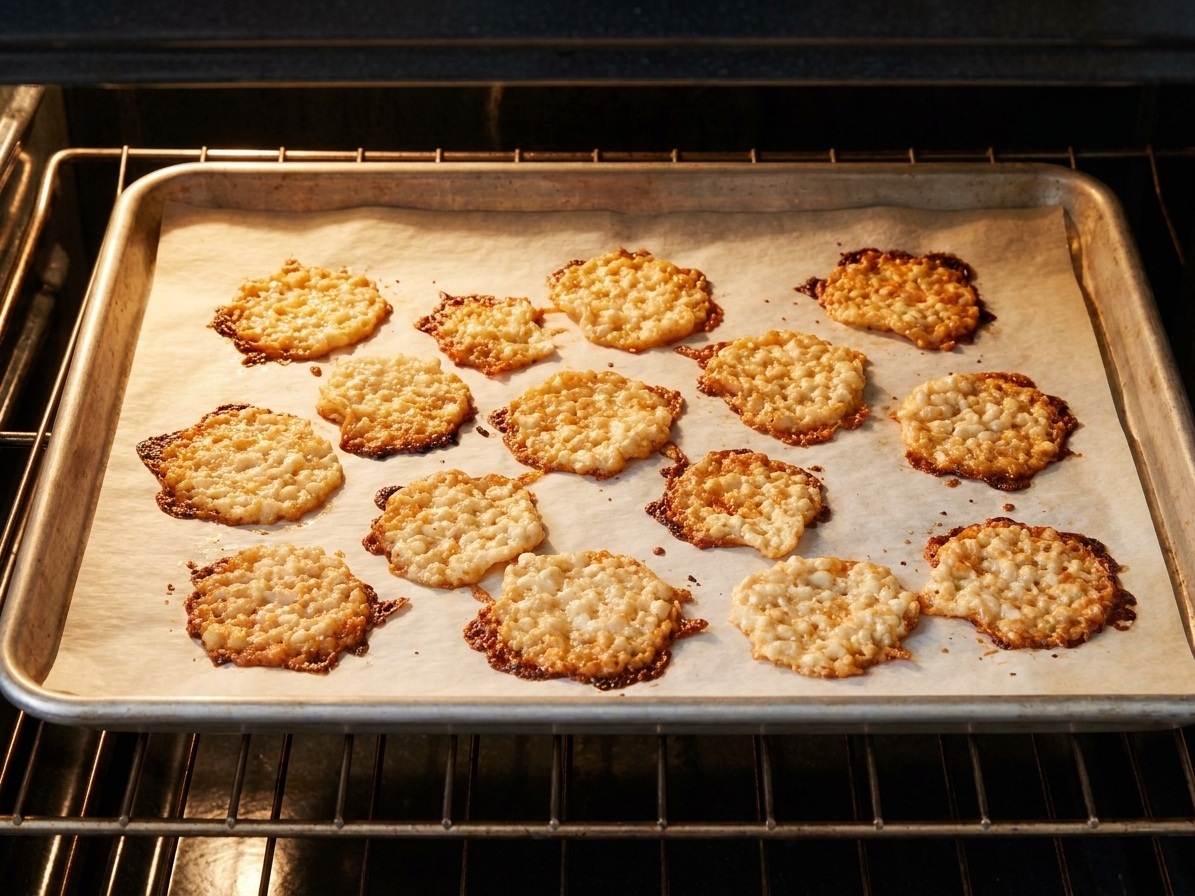
Yes, but the level of crisp depends on the brand and moisture of your cottage cheese. Expect crisp edges with a firmer, sometimes slightly chewy center. For the crunchiest results, keep the rounds thin, bake until the edges are deeply golden, and let them cool completely on the pan to finish setting.
What kind of cottage cheese works best?
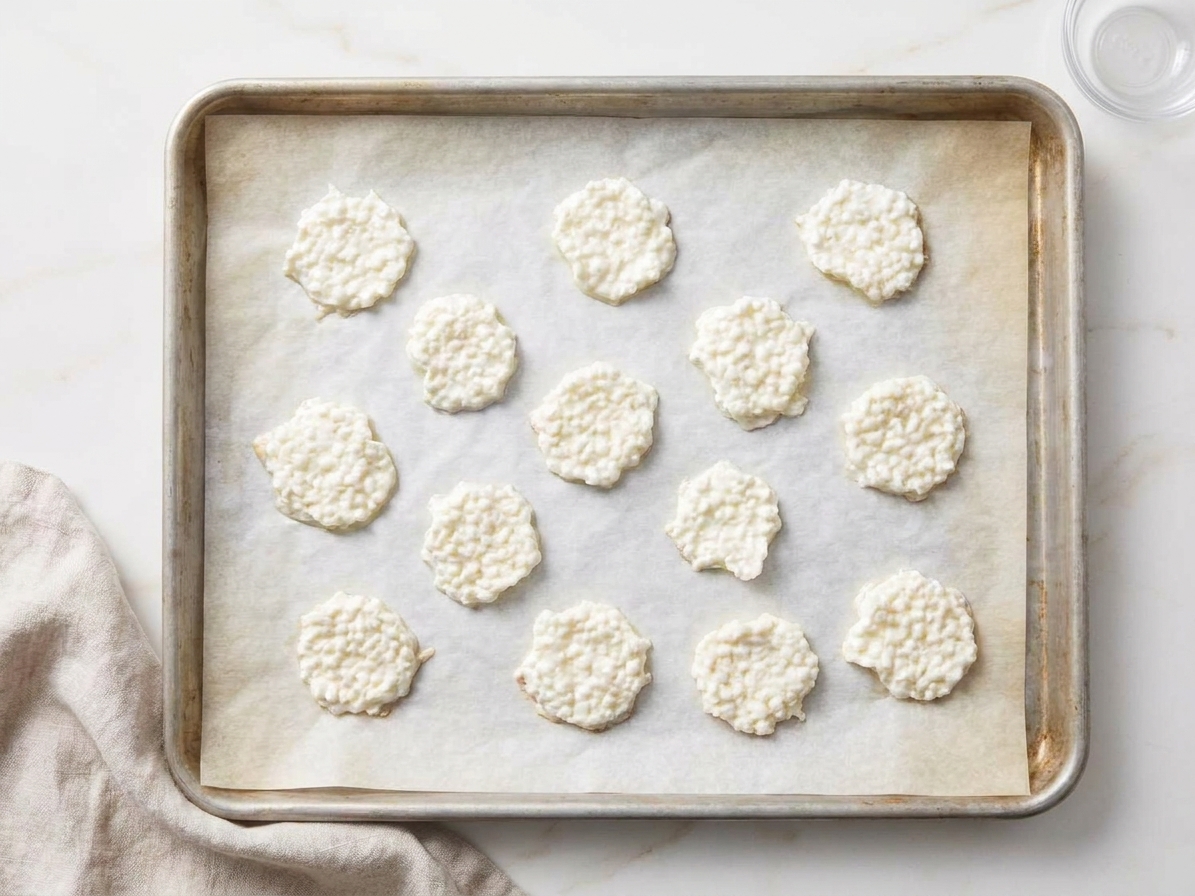
Small curd spreads more evenly. Whole milk tends to taste richer and brown better, but 2% works too. Avoid cottage cheese with lots of added liquid. If yours looks watery, stir it well and blot a spoonful on a paper towel before baking, or drain it briefly (see the optional step in the instructions).
Why did mine stick to the pan?
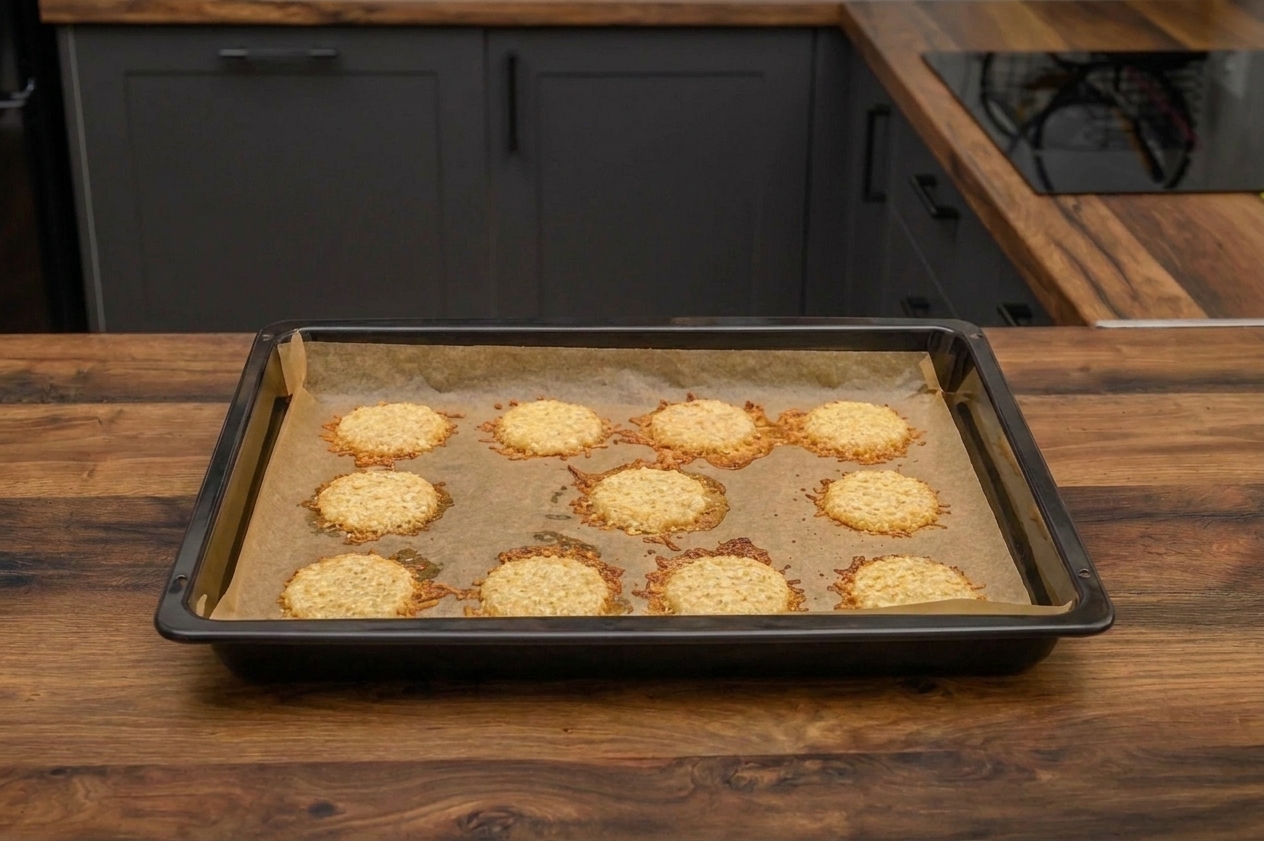
Usually it is the liner. Use parchment paper, not wax paper. Let the chips cool fully before lifting. If you try to peel them while hot, they are more likely to tear. Silicone mats can also make them softer and more prone to sticking, so parchment is your best bet.
Why are my chips chewy or soft?
They likely needed more time, the mounds were too thick, or your cottage cheese was extra moist. Make them thinner, bake until the edges are browned and the centers look dry (not glossy), and let them cool completely. If needed, re-crisp at 350°F for a few minutes.
Can I make these in the air fryer?
Yes, but do it in small batches on perforated air-fryer parchment (or trim parchment to fit). Make sure the chips are on the paper before you start so the parchment cannot lift into the element. Cook at 325°F to 350°F until browned, usually 8 to 12 minutes depending on size. Keep an eye on them because they can go from golden to too-dark fast.
Are these gluten-free?
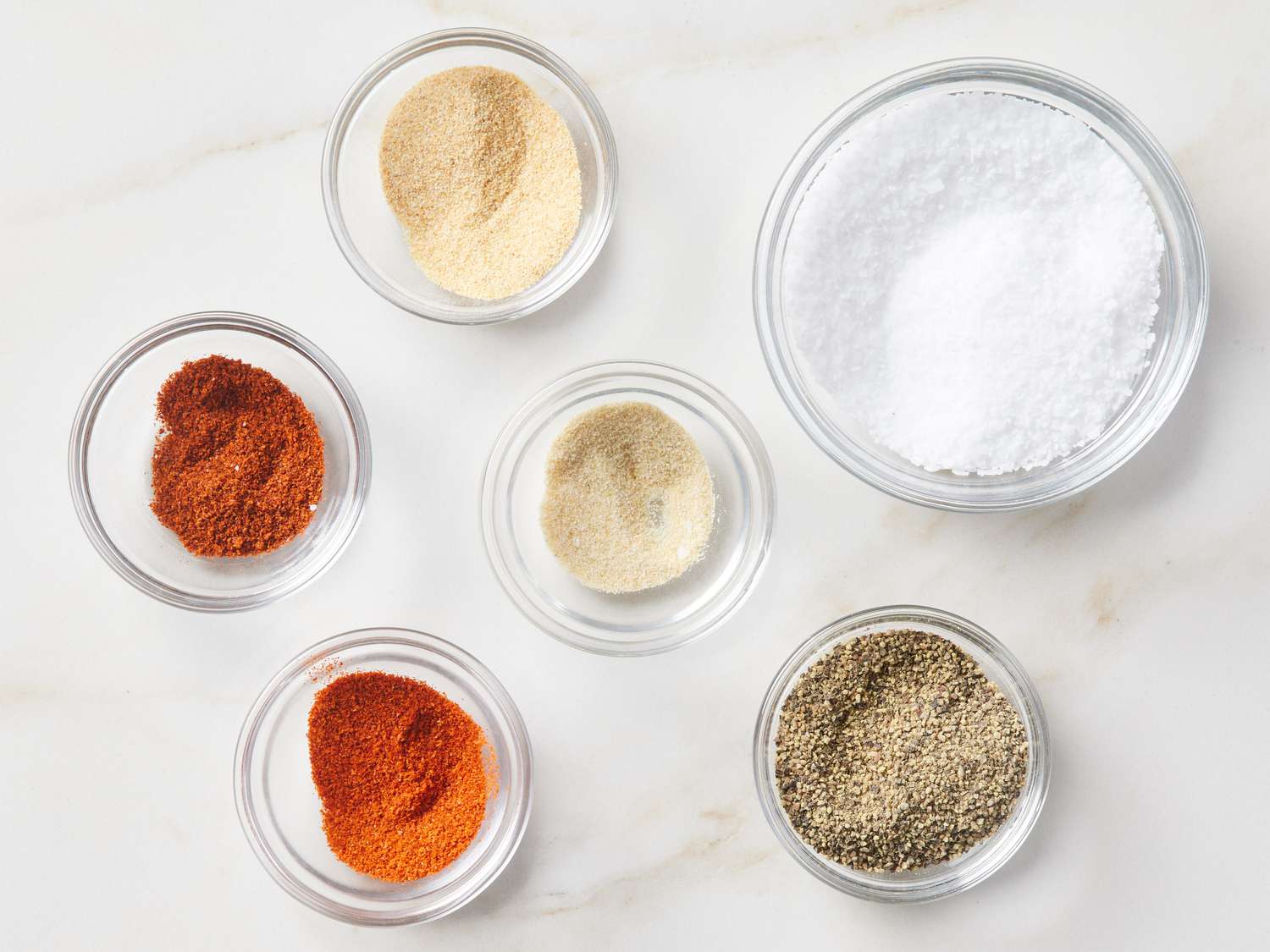
They can be, as long as your seasonings are gluten-free. The base recipe is naturally gluten-free.