What potatoes are best for fluffy mashed potatoes?
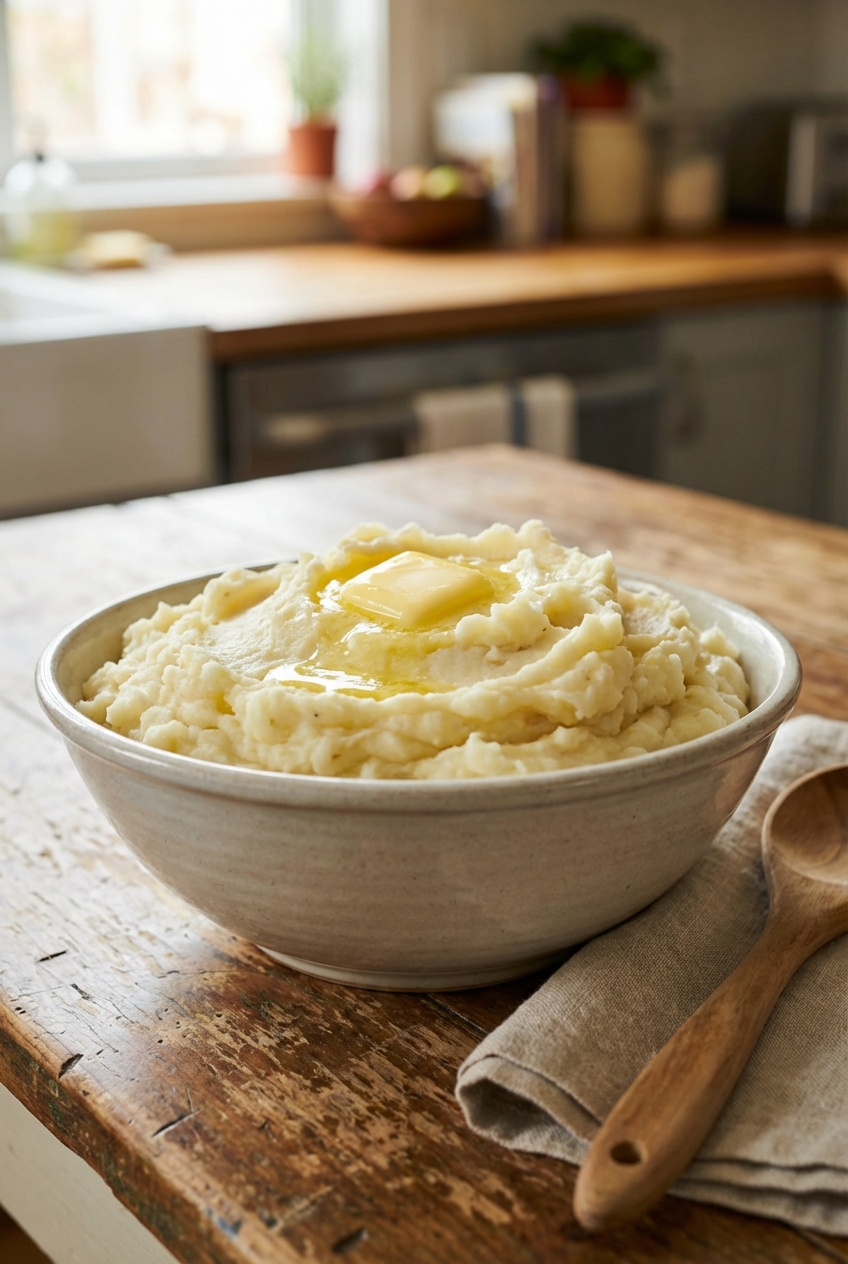
Yukon Gold gives you a naturally buttery, creamy mash. Russets are the fluffiest. If you want the best of both worlds, do a 50/50 mix.
Why did my mashed potatoes turn gluey?
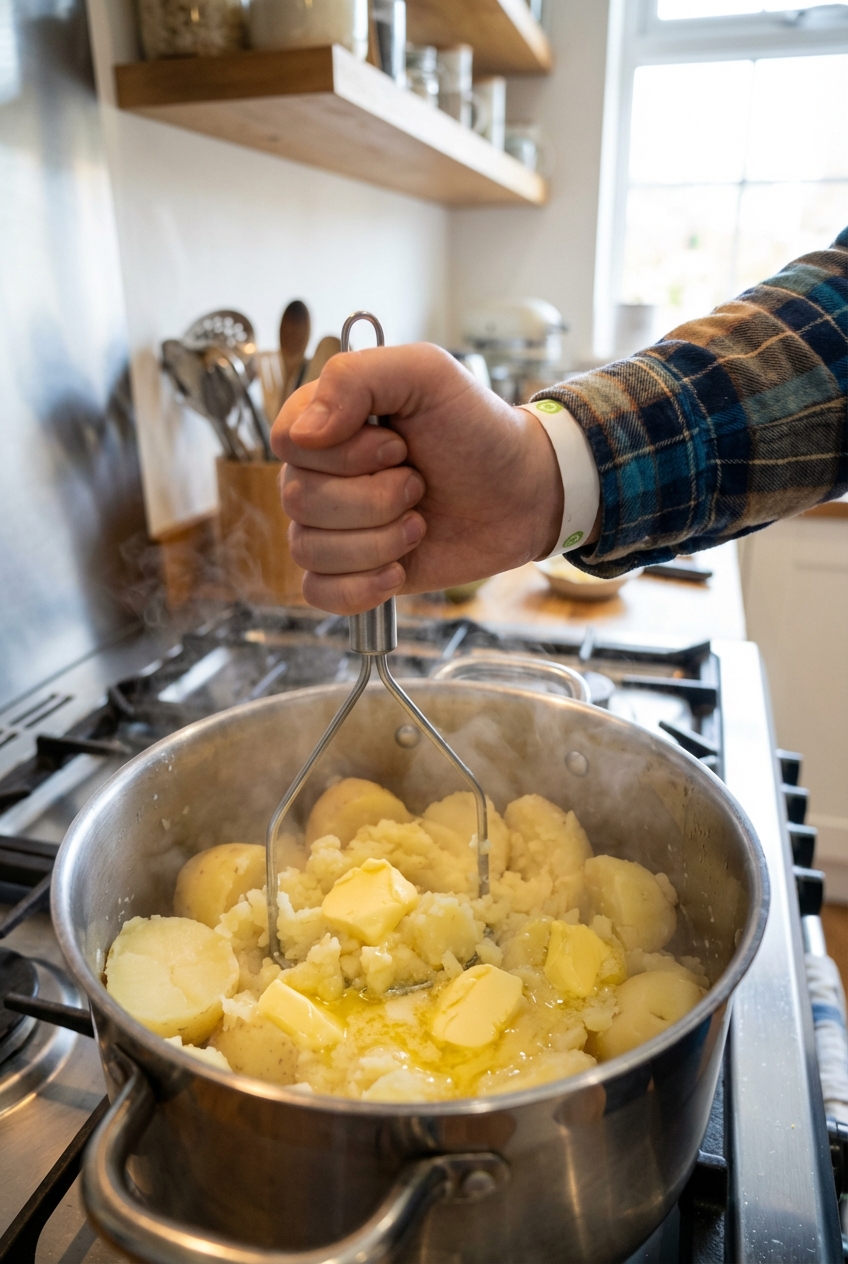
Usually one of two things: you used a blender or food processor, or you overmixed with a hand mixer (stand mixer can do it too). Potatoes have a lot of starch, and aggressive mixing turns that starch into paste. Use a potato masher or ricer, and stop as soon as they are smooth.
Do I have to peel the potatoes?
Nope. For ultra smooth mash, peel them. For a more rustic vibe, leave some skin on. Just scrub well.
Should I start potatoes in cold water?
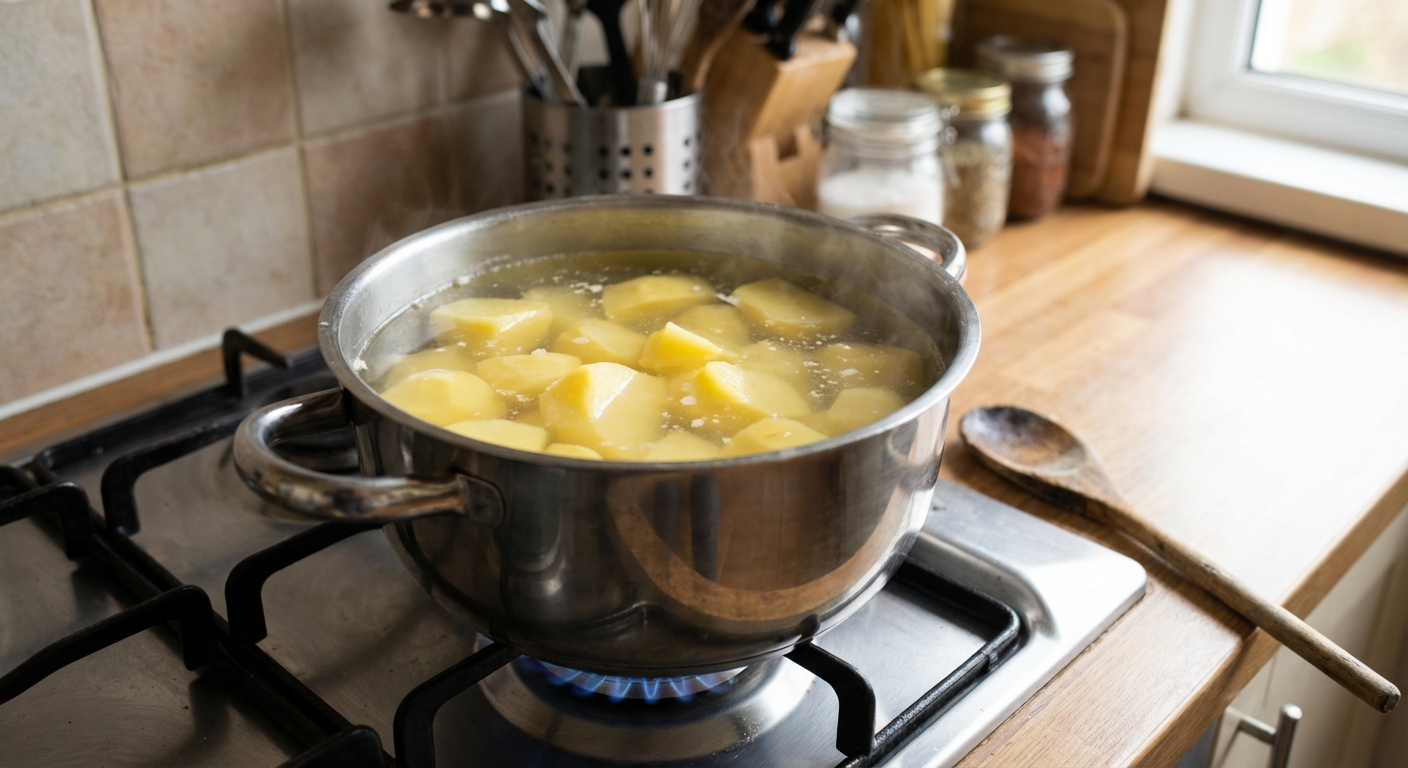
Yes. Starting in cold water helps them cook evenly so the outside does not overcook and break down before the center is tender.
How do I know the potatoes are done?
A knife should slide in with zero resistance, and a chunk should crush easily between a spoon and the side of the pot. You will also see some edges starting to crumble, which is exactly what you want.
Can I make mashed potatoes ahead of time?
Yes. Make them up to 2 days ahead. Reheat gently with extra butter and a splash of milk or cream, keep them covered, and avoid high heat (that is where the texture gets weird). If you riced the potatoes, they can tighten up a bit in the fridge, so plan on loosening with warm dairy when reheating. For a crowd, keep them warm in a slow cooker on low with a little butter on top.
Can I freeze mashed potatoes?
Yes, with a small caveat: texture can turn a little grainy after thawing depending on the potato and how rich they are. Yukon Gold (and potatoes with more butter and dairy) generally freeze better than straight Russets. Freeze airtight up to 2 months, thaw overnight in the fridge, then reheat gently with extra butter and warm milk or cream. A good, thorough stir (or even a quick whisk by hand) brings them back.